The shape of it
The Phantom of Liberty is a 1974 French surrealist film directed by Luis Buñuel, co-written with Jean-Claude Carrière and produced by Serge Silberman. It does not tell a story in sequence but arranges a chain of loosely connected episodes — a firing squad in Toledo, a Parisian nanny’s dismissal, a nurse’s road trip, a police prefect’s arrest in a crypt — linked only by the lateral movement of characters or motifs. Its aim is structural and philosophical: to demonstrate that causality, decorum and social logic are arbitrary scaffolds, easily unmoored by chance, dream or bodily impulse. Buñuel treats narrative continuity as a bourgeois habit, not a necessity. The film’s form mirrors his lifelong conviction that freedom is illusory — not because of ideology or oppression, but because human behaviour is governed by unconscious drives and random encounters. It is neither satire of a specific target nor parody of genre, but a sustained experiment in disorientation, using repetition, inversion and non-sequitur to erode the viewer’s reliance on expectation. At 74, Buñuel makes no concession to accessibility; he assumes the audience will follow not plot, but pattern — and that pattern is one of recurrence without resolution. (158 words)
The look of it
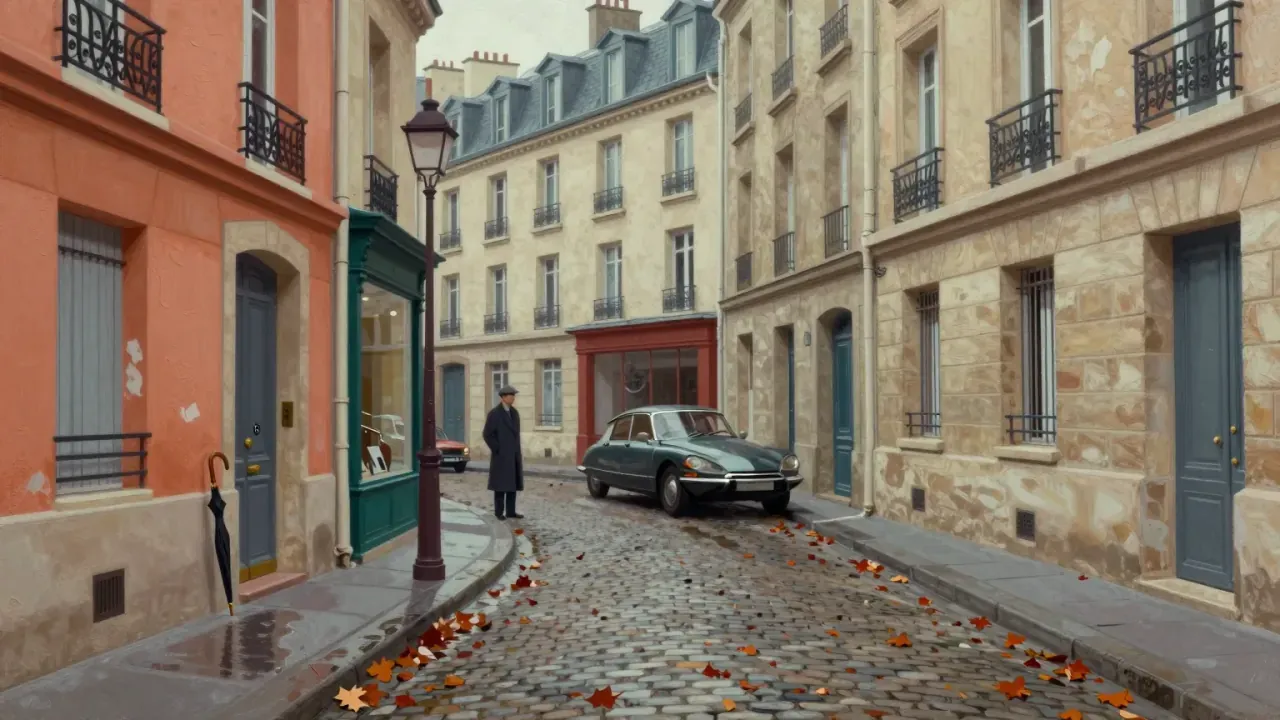
It works through discontinuity: scenes begin mid-action, end without closure, and reappear later in altered contexts. Edmond Richard’s cinematography is unshowy — flat lighting, steady framing, neutral colour — which makes the absurdity land with dry weight rather than theatrical flourish. Performances are uniformly restrained: Jean Rochefort, Michel Piccoli and Monica Vitti play their roles without winking, treating each bizarre situation — a dinner around toilets, a necrophiliac captain, an invisible schoolgirl — as if it were mundane. Hélène Plemiannikov’s editing sustains this rhythm, cutting not for emphasis but for ellipsis: one scene bleeds into the next via a shared object or gesture, like a rooster appearing in a bedroom then reappearing in a park. There is no score beyond diegetic sound, no voiceover, no explanation. Dialogue is functional, often banal, never expository. The film refuses to clarify its own logic, trusting the viewer to notice repetitions — the cry of ‘Long live chains!’, the motif of mistaken identity, the recurrence of authority figures undone by trivialities. Its craft lies in subtraction: removing psychological motivation, causal links and moral framing leaves only the skeleton of ritual, habit and accident. (159 words)
What sticks
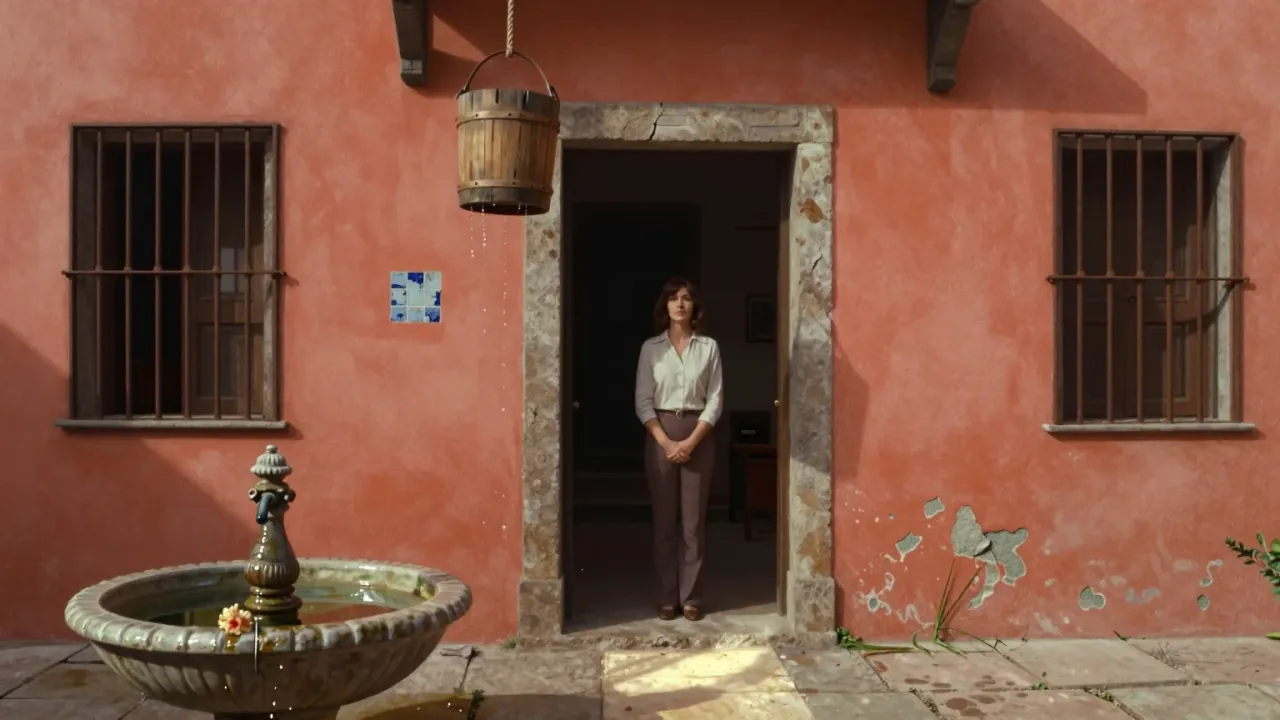
What lands is the cumulative pressure of the irrational made ordinary. A man slaps his doctor after being told he has cancer; a policeman fails to see his own daughter standing beside him; a nun plays poker while smoking — these do not shock because they are exaggerated, but because they are presented without inflection, as if such things happen daily. The film’s deadpan tone allows its most unsettling ideas — about the fragility of perception, the arbitrariness of law, the body’s refusal to obey decorum — to settle slowly, like sediment. The repeated image of people sitting on toilets at a formal dinner achieves its effect not through grotesquerie but through sheer, unblinking normalcy. Similarly, the opening execution — rebels shouting ‘Long live chains!’ — gains force from its placement before any context, making obedience and rebellion indistinguishable at first glance. The structure itself lands: the viewer begins to anticipate disjunction, to expect logic to fail, and that anticipation becomes a kind of participation. Buñuel does not ask for laughter or outrage, but for recognition — that many social rules are just habits we have forgotten we invented. (157 words)
What slips
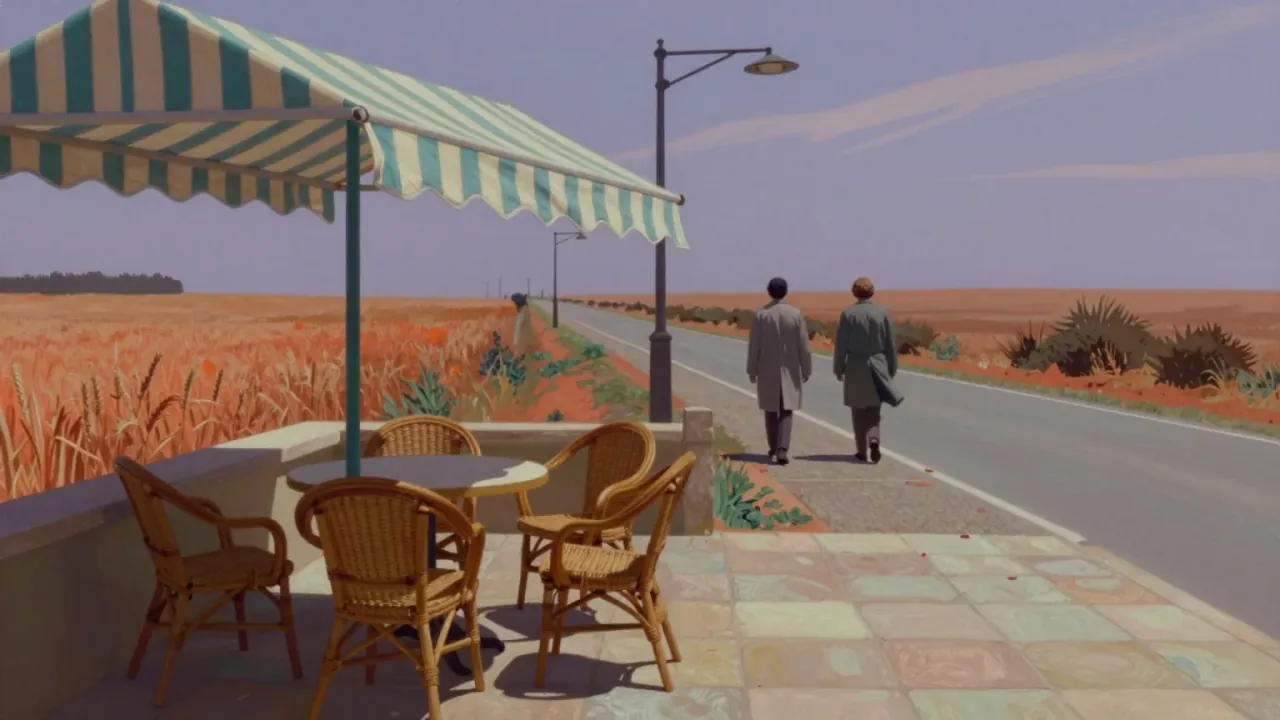
What does not land is any attempt to read the film as allegory or political parable. Its references — to Marx, to Catholic ritual, to Francoist Spain — are present but not elaborated, and treating them as keys leads only to frustration. The film resists interpretation as much as it resists narrative: there is no hidden message behind the emu in the bedroom or the sniper on Montparnasse. Some sequences — the aunt’s rejuvenation, the dominatrix scene — feel less like thematic extensions and more like dream fragments retained for texture rather than meaning. The pacing, though deliberate, can blur: without tonal shifts or visual variation, the 103 minutes risk monotony for viewers expecting escalation or payoff. A few episodes — the professor’s lecture to policemen, the hatter’s humiliation — rely on a very specific kind of intellectual exhaustion that may not translate across generations or cultures. The film assumes familiarity with Buñuel’s preoccupations — the sacred and profane, the tyranny of routine — and offers no foothold for those unfamiliar with his work. Its refusal to explain means some viewers will find it inert rather than incisive, opaque rather than elusive. (156 words)
What it’s really about
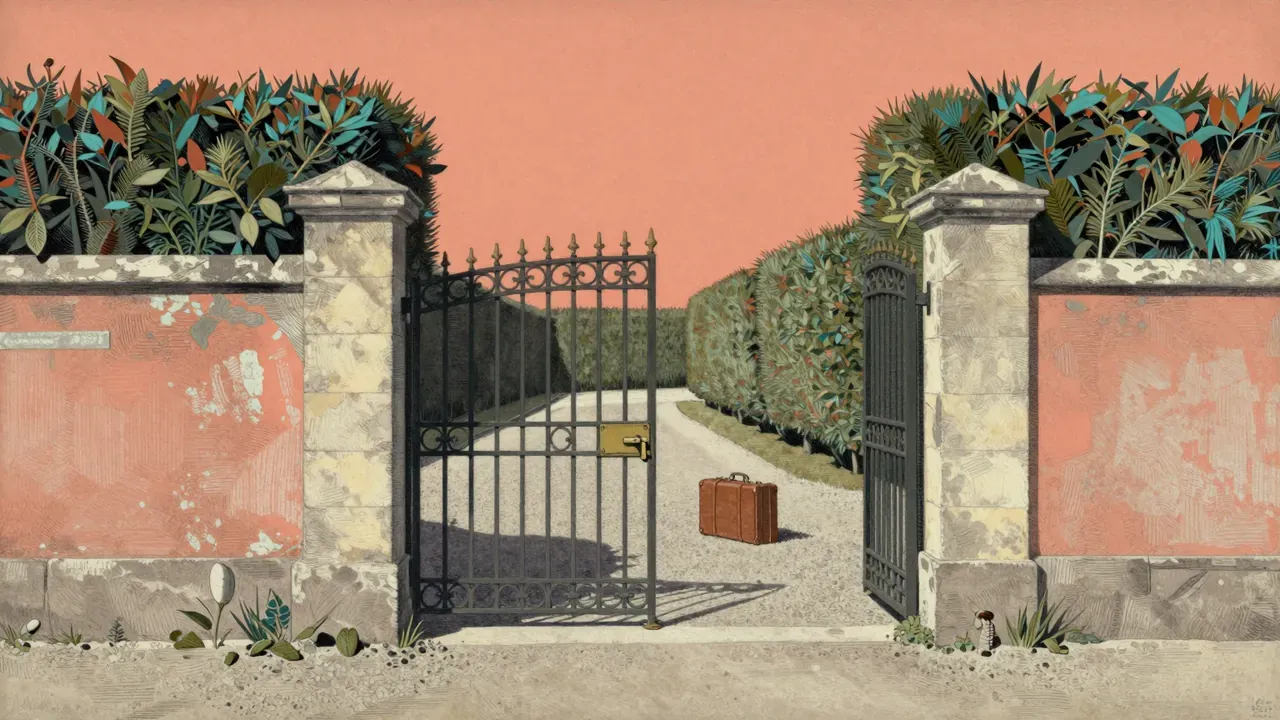
The themes that matter are freedom as illusion, chance as sovereign, and social order as performance. Buñuel returns repeatedly to moments where authority collapses under minor contradictions: a prefect arrested in his own crypt, a doctor dismissing evidence of a visitor because it contradicts diagnosis, policemen ignoring a child who stands before them. These are not critiques of institutions per se, but demonstrations of how easily consensus unravels when confronted with the body, the unconscious or coincidence. The film treats morality, medicine, law and religion as systems built on shared fiction — useful fictions, but fictions nonetheless. Its most persistent motif is invisibility: the girl unseen by her parents, the postman’s letter dismissed as dream, the phantom liberty itself — something named but never located. This is not nihilism, but a kind of humility: an acknowledgment that human frameworks are provisional, and that beneath them lies a reality indifferent to reason. The title’s reference to Marx is ironic, not ideological — liberty here is not political but metaphysical, and just as spectral. Buñuel’s late-life reflection is not on what society should be, but on how little control any of us ever had over what it is. (159 words)
Who it’s for
It is for viewers who value structure as argument, who find pleasure in sustained ambiguity, and who have already met Buñuel in films like The Discreet Charm of the Bourgeoisie or Belle de Jour. It rewards patience with pattern, not plot. It is not for those who require emotional arcs, character development or narrative resolution — anyone expecting satire with a target or surrealism with a punchline will leave unsatisfied. Those who dislike long takes, static framing or dialogue stripped of subtext may find it airless. It also assumes some fluency in European art-film grammar: the absence of exposition, the use of repetition as rhythm, the treatment of absurdity as fact. A viewer who prefers clarity over complicity, or who reads films for message rather than method, would likely reject it as self-indulgent. That verdict would change only if the film were recut with explanatory intertitles or a guiding voiceover — but that would violate its central premise. Its value lies precisely in its refusal to accommodate. (158 words)
What it costs
Yes, it is worth your evening — provided you set aside the expectation of being led, explained to or resolved. Its 103 minutes unfold with the quiet insistence of a clock whose hands move backward: disorienting at first, then strangely calming. It does not demand attention so much as recalibrate it — training the eye to notice echoes, the ear to catch tonal shifts, the mind to hold contradiction without rushing to reconcile it. Anyone who has ever felt trapped by routine, baffled by bureaucracy or unsettled by their own impulses will recognise something here. It is not entertaining in the conventional sense, but it is deeply companionable for those who trust cinema to unsettle rather than soothe. Those who disagree — critics who call it ‘cold’ or ‘arid’ — mistake restraint for emptiness. What feels withholding is in fact precision: Buñuel gives only what is necessary to make the mechanism visible. To watch it is to participate in an act of gentle demolition — of assumptions, hierarchies, even time itself. (159 words)