The shape of the studio
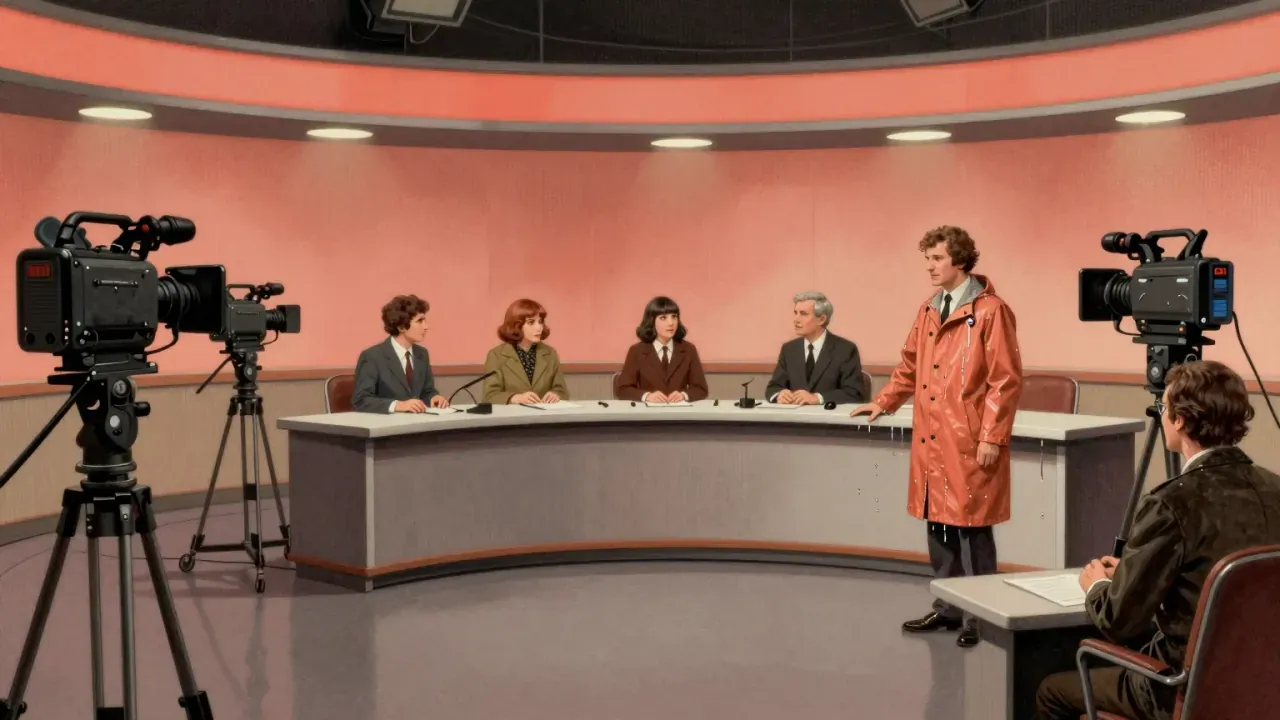
Hail, Caesar! is a studio-system satire set in early-1950s Hollywood, centred on Eddie Mannix — a fictionalised version of the real MGM fixer — who juggles crises across multiple concurrent film productions while concealing a kidnapping from the press and studio brass. The Coens treat the era not as myth but as machinery: a network of contracts, costumes, camera cranes, and Communist screenwriters meeting in parking lots. Their aim is structural rather than biographical; they reconstruct the studio system’s internal logic — its genre quotas, star management protocols, and moral hygiene departments — not to celebrate it, but to expose its absurd, frictionless efficiency. The film does not dramatise decline or nostalgia so much as routine: the daily labour of manufacturing belief. It mimics mid-century studio product not by replicating its aesthetics alone, but by replicating its workflow — shooting five distinct film-within-films, each with period-accurate choreography, costume, lighting, and dialogue cadence. This is not homage. It is forensic replication, performed with deadpan fidelity.
The look of it
The story proceeds via parallel threads — Mannix’s search for missing actor Baird Whitlock (Clooney), the aquatic ballet starring DeeAnna Moran (Johansson), the Roman epic’s logistical collapse, the tap-dancing sailor number, the ballroom drama, and the philosophical debates among Communist writers — all held together by Brolin’s tightly wound, perpetually adjusting presence. Performances are calibrated to genre convention: Clooney plays Whitlock as vacuous charm incarnate; Fiennes’ Laurence Laurentz speaks in clipped, precise vowels; Tatum’s Burt Gurney commits fully to the physical grammar of 1950s musical masculinity. Roger Deakins shoots on film, using shallow depth and muted contrast to flatten glamour into bureaucracy. Carter Burwell’s score avoids pastiche, opting instead for functional underscoring that mirrors editing rhythms. The Coens edit their own film with surgical pacing — scenes cut on action, not reaction — reinforcing the sense of production as process, not personality. Costume design by Mary Zophres supplies texture: Brolin’s suit blends with his skin tone; Tatum’s sailor cap sits just so; the Roman extras wear painted foam armour, not metal — a detail that signals both craft and compromise.
The sound of the lot
What lands is the precision of the genre parodies. Each film-within-the-film operates as a self-contained unit of tone and technique: the biblical epic’s stilted diction and slow zooms; the aquatic ballet’s languid symmetry and underwater distortion; the tap sequence’s relentless forward momentum and unbroken takes. These are not jokes at the expense of old Hollywood, but demonstrations of how its grammar worked — and how easily it could be reassembled. The bureaucratic banter between Mannix and studio executives lands because it feels drawn from memos, not memory: clipped, transactional, devoid of sentiment. Frances McDormand’s editor C.C. Calhoun delivers exposition like a union steward reading a clause. Even the Communist writers’ arguments feel less ideological than occupational — a break in the schedule, a shared cigarette, a complaint about script revisions. The film’s quietest strength is its refusal to condescend: it treats every department head, every extra, every prop master as a specialist doing a job, not a caricature waiting for ridicule. That consistency sustains the world without needing punchlines.
The weight of the plot
What does not land is the central mystery’s emotional weight. Whitlock’s abduction lacks stakes beyond procedural inconvenience; his return is met with shrugs, not relief. The Coens withhold psychological interiority from Mannix — no crisis of faith, no moral reckoning, no private doubt — which leaves his arc functionally inert. The film’s refusal to grant him an inner life makes his final choice — to stay in the system — feel unearned, not resolved. Similarly, the Cold War subplot remains decorative: the Communist writers speak in broad strokes, their politics flattened into plot devices rather than convictions. The film’s most ambitious idea — that Mannix is both enforcer and hostage of the system — is implied but never dramatised. There is no scene where he questions his role, only scenes where he performs it. The satire thus stays external, observing machinery without ever opening the casing. Some viewers will find this restraint rigorous; others will find it withholding — a film that maps the factory floor but never shows anyone sweating.
The work behind the curtain
The themes that matter are institutional continuity and the labour of illusion. Hail, Caesar! treats the studio not as a dream factory but as a maintenance depot: a place where stars are serviced, scripts revised, sets rebuilt, and ideologies laundered through genre conventions. The film’s recurring motif is repetition — reshoots, retakes, rewrites, reruns — suggesting that Hollywood’s output is less about creation than curation and correction. Its Cold War setting is not about ideology but infrastructure: the same men who manage extras also manage informants; the same accounting department that tracks costume rentals also tracks loyalty oaths. Religion appears twice — in the biblical epic and in Mannix’s Catholic confession — not as spiritual inquiry but as another system of ritual, language, and accountability. The film’s deepest concern is not what films say, but how they are made: the invisible labour — the seamstresses, the grips, the editors — that sustains the illusion of seamlessness. It asks, quietly, what happens when belief is outsourced to process.
Who it is for
This is for viewers who value formal control over emotional payoff — those who watch films to see how they are built, not to feel what they mean. It rewards attention to costume texture, editing rhythm, and the spatial logic of studio backlots. It is not for those seeking narrative propulsion, character revelation, or thematic resolution. Anyone expecting a moral about Hollywood’s corruption or redemption will leave unsatisfied; the film offers neither condemnation nor celebration, only taxonomy. Those who disliked the Coens’ similar approach in Burn After Reading or A Serious Man may find this equally withholding. A viewer who values ambiguity as rigour will find it rich; one who reads ambiguity as evasion will find it hollow. Change the verdict? Give Mannix one private moment of doubt — a hesitation before signing a contract, a glance at a photo he keeps in his desk — and the film shifts from observation to inquiry.
What it costs you
Yes, it is worth your evening — if you accept that comedy here means precision, not punchlines, and that satisfaction comes from seeing a complex system rendered with exactitude. It is 106 minutes long, evenly paced, visually coherent, and never dull. Its pleasures are cumulative: the way Deakins lights a soundstage, the way Fiennes pronounces ‘theatricality’, the way the editing cuts away from a crisis just as it peaks. It does not ask for investment in outcomes, only in mechanics. Those who want catharsis or clarity will not find them; those who find pleasure in craftsmanship, irony without sneer, and satire without sermon will. It is not a film to love, but one to admire — and admiration, sustained over two hours, is its own kind of reward. It earns its runtime not by building to a climax, but by sustaining a register.