The premise is a frame, not a plot
All These Women is Ingmar Bergman’s 1964 colour comedy, his first in that medium and one of only two he made in the genre. It sets out to parody Federico Fellini’s 8½ — not through mimicry but by reversing its inwardness: where 8½ orbits a director paralysed by self-doubt, Bergman’s film places a biographer at the centre of a harem-like household where identity, authorship and artistic legacy are treated as farcical propositions. The film attempts structural irony: a man hired to write a definitive life story cannot locate the subject, who remains physically present but narratively inaccessible. It leans on theatrical framing, musical interludes and recurring visual motifs — mirrored surfaces, repeated entrances, symmetrical groupings — to sustain a tone of orchestrated absurdity. Its ambition is not laughter alone but a dismantling of the biographical impulse itself, using comedy as a scalpel rather than a bludgeon. Bergman and co-writer Erland Josephson treat fidelity, memory and reputation as unstable currencies, and the film’s form mirrors that instability: scenes loop, characters double back, motivations blur. It is less a satire of celebrity than of the apparatus built around it — the impresario, the lover, the critic, the widow — each performing a role they mistake for truth.
The look of it
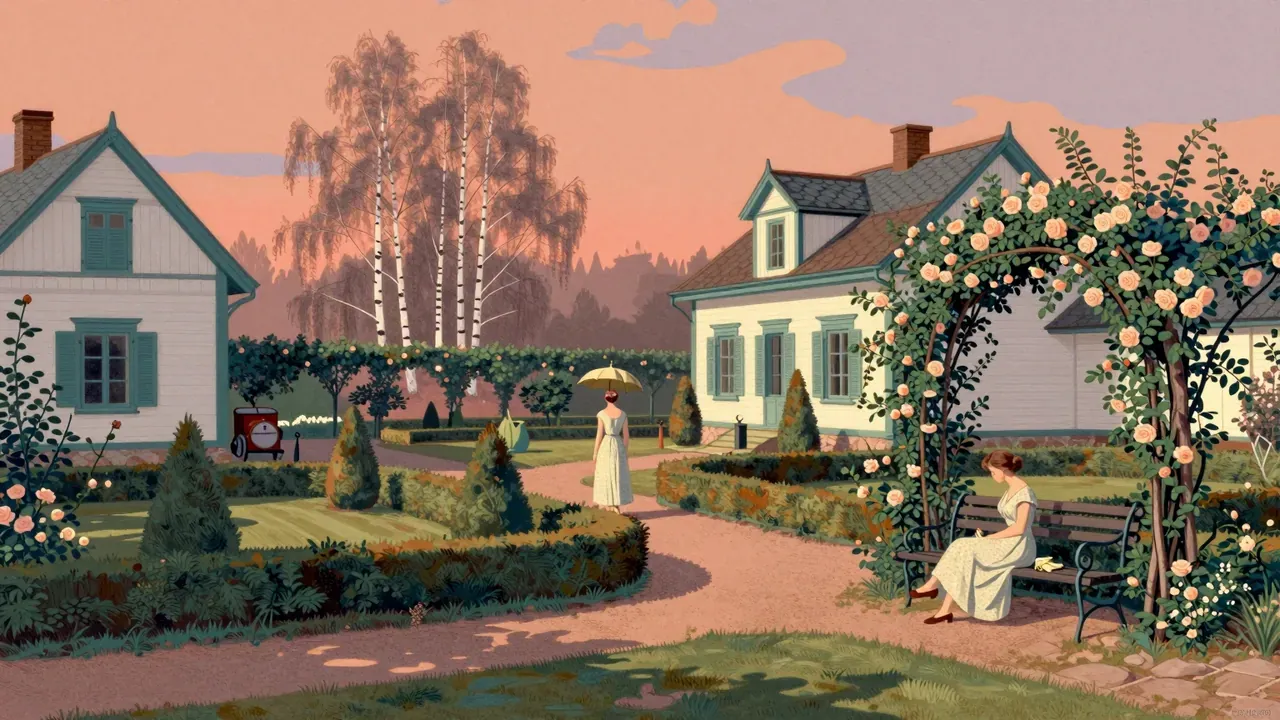
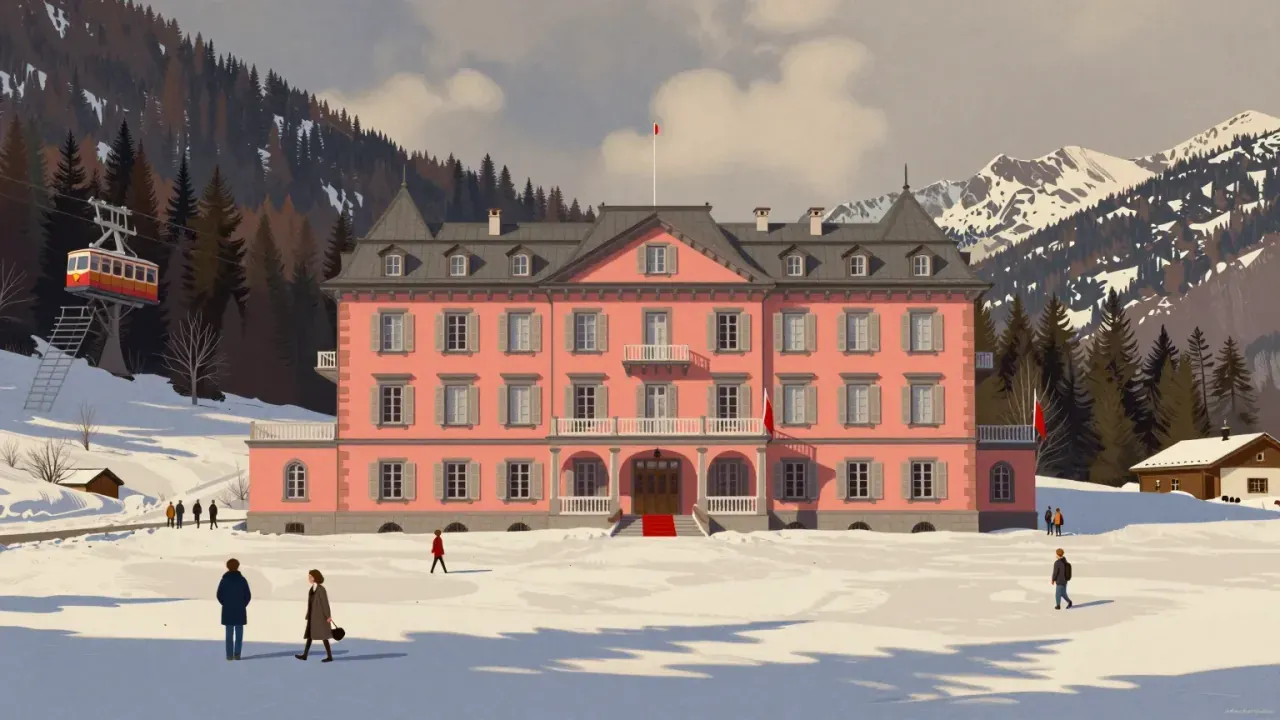
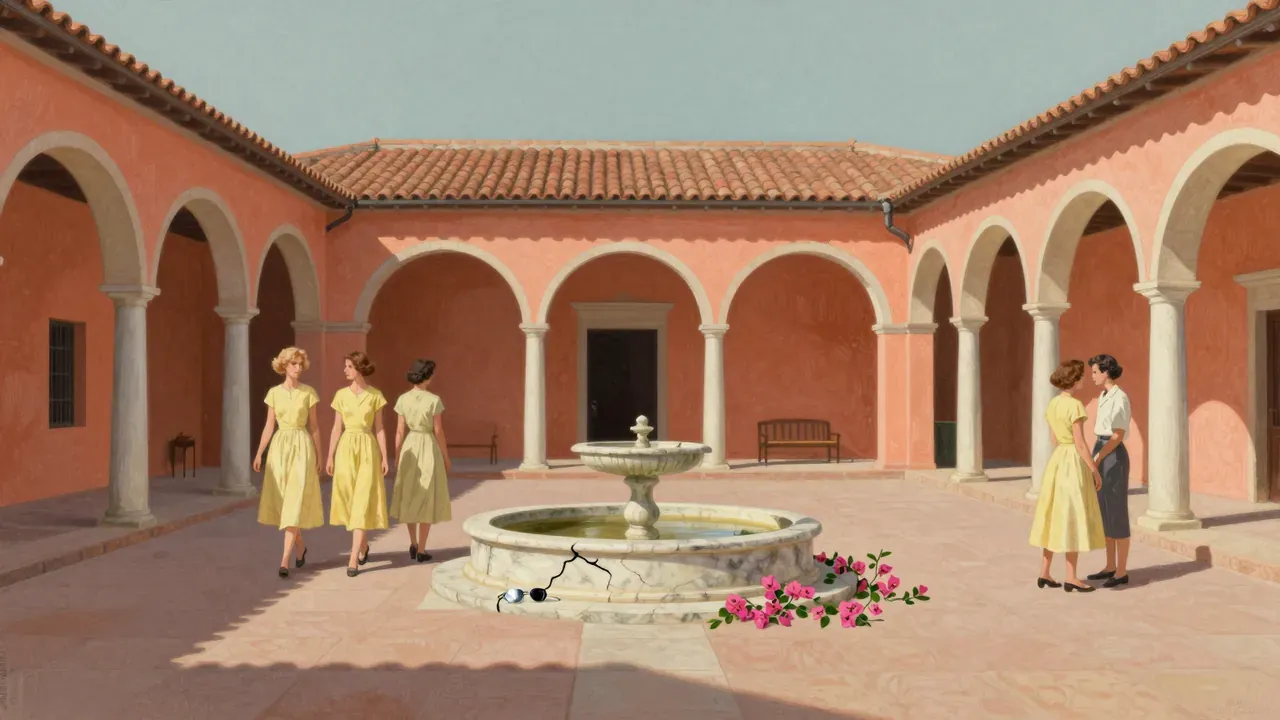
The story unfolds over four days at Villa Tremolo, a sun-drenched estate where narrative logic gives way to rhythmic recurrence. Sven Nykvist’s colour cinematography avoids naturalism: interiors glow with saturated pastels, shadows are softened, and compositions privilege symmetry over spontaneity — a deliberate contrast to Bergman’s usual chiaroscuro. Performances are stylised, not naturalistic: Bibi Andersson’s Ms. Bumblebee moves with clipped precision; Harriet Andersson’s Adelaide delivers lines with deadpan gravity; Allan Edwall’s Jillker speaks in proverbs delivered like verdicts. Erik Nordgren’s score alternates between waltz-time whimsy and dissonant stings, underscoring the gap between surface charm and underlying unease. Editing is unhurried, often holding on faces mid-reaction, letting pauses accumulate weight. There are no close-ups that seek intimacy; instead, the camera observes from a polite distance, as if attending a recital rather than witnessing life. The film’s craft is unified in its refusal of psychological realism — every decision reinforces the idea that this world operates by its own internal, slightly arbitrary, rules.
The rhythm of it
What lands is the film’s tonal consistency: its refusal to resolve ambiguity into meaning or farce into catharsis. The repeated image of Felix’s lovers filing past his open coffin — each remarking that he looks ‘the same, yet different’ — works precisely because it resists interpretation. It is neither ironic nor sincere, but a formal punctuation mark. The casting of multiple Bergman regulars (Andersson, Dahlbeck, Fridh) as distinct yet interchangeable women creates a subtle layer of meta-commentary on typecasting and authorial repetition. The use of colour feels purposeful, not decorative: the pinks and golds of Villa Tremolo do not signify warmth but artifice — a stage set lit for performance, not life. Even the pistol shots, which miss their target and leave no injury, land as pure theatrical gesture — violence reduced to punctuation, threat stripped of consequence. The film’s most effective moments are those where language and action diverge: when characters speak gravely about love or death while arranging flowers or adjusting a cufflink. That disjunction is sustained, unbroken, and quietly relentless.
The shape of it
What does not land is the central conceit of Cornelius as a proxy for the audience. His bewilderment is never clarified into insight, nor his professional frustration into thematic resonance. He remains an inert vessel, reacting without evolving, and his presence makes the film’s structure feel less like parody and more like stasis. The parody of 8½ is too oblique to register without prior knowledge, and too literal in its borrowing — the unseen artist, the crowd of women, the collapsing finale — to function as critique. Some performances tip into mannerism without payoff: Göran Graffman’s Tristan the chauffeur delivers monologues with such studied blankness they evaporate on contact. The musical numbers, though technically polished, lack diegetic justification — they interrupt rather than deepen. Most damagingly, the film’s refusal of emotional access becomes indistinguishable from indifference. Where Smiles of a Summer Night uses comedy to expose vulnerability, All These Women uses it to seal it off. The result is not detachment but distance — a film that watches itself watching, without ever inviting the viewer in.
The ending of it
The themes that matter are authorship as performance, biography as fiction, and mortality as aesthetic event. Felix is never seen writing, rehearsing or even speaking at length — he exists only as a name, a silhouette, a sound of a cello bow drawn across strings. His biography is therefore written in absence, by people who know him only as lover, husband or employer. The film treats memory not as recall but as improvisation: each woman remembers Felix differently, not because she lies, but because her version serves her present need. Colour itself becomes thematic — the first Bergman film in colour, it treats hue not as realism but as convention, a code that signals artifice rather than authenticity. The recurring motif of the mirror reflects not self-knowledge but self-presentation: characters check themselves before entering rooms, adjust posture for unseen audiences, speak lines they seem to have rehearsed. Even death is staged: Felix collapses mid-performance, not mid-sentence, and his corpse is displayed not for grief but for appraisal — a final work to be judged on appearance alone.
The tone of it
This film is for viewers who value structural rigour over emotional engagement, who find pleasure in watching a master dismantle his own tools. It rewards attention to repetition, palette, and cadence — not plot or character arc. It is not for those who expect Bergman’s usual psychological density, or who require narrative momentum or moral stakes. Anyone seeking the existential weight of Winter Light or the emotional precision of Persona will find All These Women frustratingly light — not in tone, but in consequence. Those who admire Fellini’s playful formalism may respond more readily than fans of Bergman’s dramatic austerity. A viewer who values irony as architecture rather than weapon will find much to consider; one who reads comedy as release or relief will leave unsatisfied. Its worth depends entirely on whether you see constraint as invitation or obstruction — and whether you believe a film can be serious without being solemn.
The place of it
It is worth your evening only if you approach it as a controlled experiment in tonal suspension — not as entertainment, biography or satire. At eighty minutes, it demands little time but exacts a particular kind of patience: the willingness to sit with unresolved dissonance, to accept that some jokes land not in laughter but in silence. It is not a failure, but it is narrow in scope and uncompromising in method — a film that knows exactly what it refuses to do. Those who admire Bergman’s late-period clarity or his early intensity may find it alienating; those attuned to his mid-60s formal restlessness will recognise its place in his evolution. It is not essential viewing, but it is revealing — a hinge point where colour, comedy and self-reference converge. To dismiss it as ‘Bergman’s worst’, as Roger Ebert did, is to misread its aims; to praise it unconditionally is to ignore its limitations. Its value lies in its singularity — not its success.