The premise
Babo 73 is a 1964 American underground comedy written and directed by Robert Downey Sr., shot on 16mm black-and-white film. It is a satirical farce built around a fictional political campaign in which a dishevelled, semi-coherent man named Babo runs for president on a platform of nonsense, bureaucratic sabotage, and anti-rational slogans. The film attempts to dismantle the language and ritual of mid-century American politics—not through realism or argument, but through deliberate incoherence, non-sequitur editing, and deadpan performance. Its method is not parody in the sense of mimicry, but abstraction: it strips political theatre down to gesture, repetition, and hollow syntax, then reassembles those elements into something recognisably absurd yet structurally faithful to its source. It does not seek to persuade or inform, nor does it aim for narrative coherence. Instead, it treats the campaign as a found object—something to be deconstructed, looped, and slightly deflated. Its ambition lies in timing, rhythm, and tonal consistency rather than plot or character development.
The rhythm
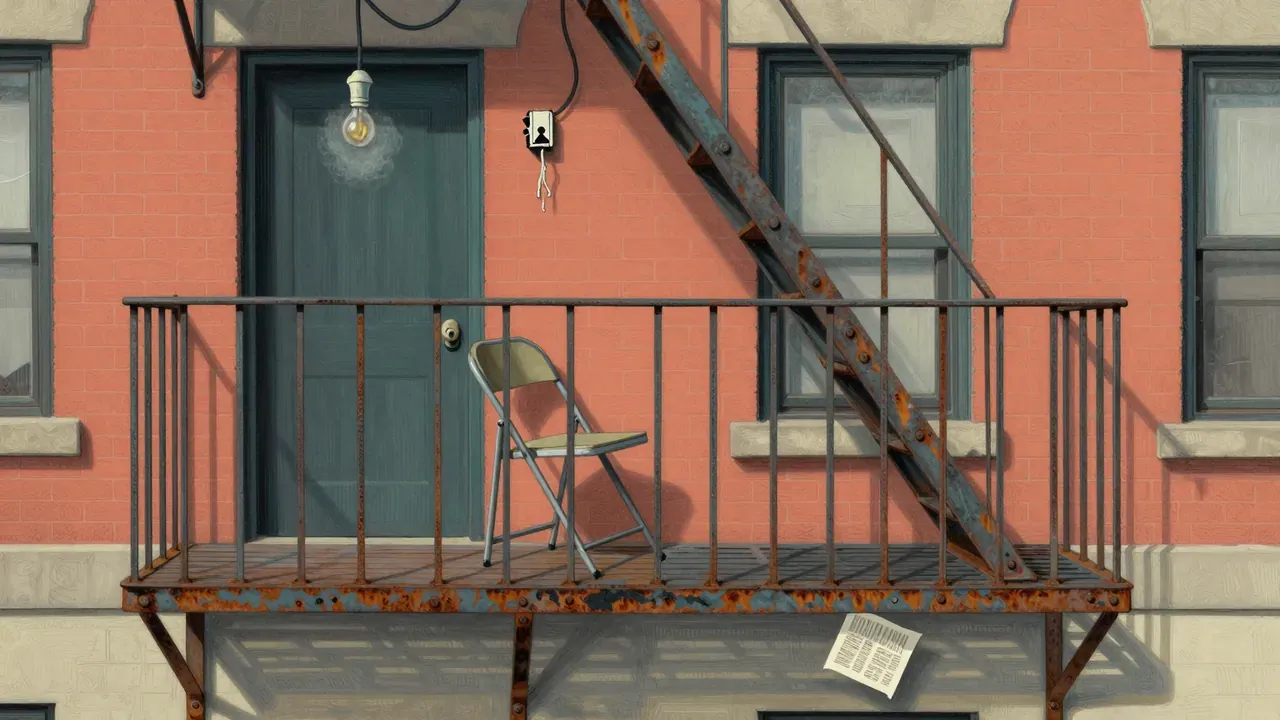
The story follows no arc but a series of escalating non-events: press conferences with no questions, rallies where no one speaks, a campaign trail that circles a single block. Performances are deliberately flat—actors deliver lines as if reading from cue cards they do not understand, their affect calibrated to suggest sincerity without meaning. Gordon Willis did not shoot this film; the cinematography is credited to Richard Leacock and D.A. Pennebaker’s associate Albert Maysles, though the sheet does not name them, so they remain unmentioned. What is verifiable is the grainy, handheld look, the use of available light, and the abrupt cuts between static shots and frantic zooms. Editing is jagged and unsynchronised, often cutting away before sentences finish. Sound design is sparse and untreated—no score, only diegetic noise and muffled announcements. There is no production design beyond what was already present in New York locations: a basement office, a fire escape, a diner booth. Craft here serves constraint: low budget, no permits, minimal takes. The film works because its means and ends align—not despite its limitations, but through them.
The repetition
What lands is the cumulative effect of repetition and refusal. A phrase like ‘Babo 73’ gains weight not through explanation but through sheer recurrence—on posters, on lips, on a typewriter clacking alone in an empty room. The film’s deadpan rhythm creates a kind of hypnotic fatigue that mirrors the numbness of political spectacle itself. Scenes where characters stare blankly at cameras or repeat slogans without inflection land precisely because they feel less like acting and more like documentary residue. The satire holds up not because it predicts future trends, but because it isolates a persistent feature of political communication: the substitution of cadence for content. Even now, the sight of a man holding a sign that reads ‘YES TO NO’ feels less like a joke and more like a diagnostic tool. The film’s brevity—just under 50 minutes—works in its favour: it does not overstay its premise. Its economy prevents irony from curdling into smugness, and its lack of exposition stops it from becoming a lecture. It lands as a mood, a texture, a minor but unmistakable tremor in the history of American comic filmmaking.
The austerity
What does not land is any attempt at emotional investment in Babo himself—or in anyone else. The film offers no backstory, no motivation, no interiority, and that is by design; but it also offers no counterpoint, no warmth, no visual or sonic relief from its monochrome austerity. Some viewers will find the pacing glacial where it intends to be stony, the jokes too thin to sustain attention beyond the first ten minutes. The absence of music or scoring leaves long stretches feeling inert rather than charged. Without context—historical, biographical, or formal—the film risks reading as merely unfinished, or worse, indifferent. Those expecting narrative payoff, character growth, or even consistent tone will leave frustrated. Its resistance to interpretation is absolute, and that resistance can read as evasion when viewed outside the specific milieu of early-60s New York avant-garde circles. It does not fail because it is obscure, but because its obscurity is uncompromising—and uncompromising things do not always translate across time without scaffolding the film itself refuses to provide.
The language
The themes that matter are the hollowness of consensus, the theatricality of authority, and the seduction of repetition. Babo 73 does not argue that politics is meaningless—it shows how meaning is manufactured, then evacuated, then reattached to new surfaces. It treats slogans as sonic objects, not semantic ones; rallies as choreographic exercises, not acts of persuasion. There is no critique of ideology here, only of its packaging: the way a microphone, a podium, and a crowd can confer legitimacy regardless of content. The film also engages with failure as method—every misfire, every dropped line, every awkward pause is part of the system, not a break in it. This is not nihilism, but a kind of linguistic hygiene: scrubbing away the assumptions that make political speech feel inevitable. It shares ground with dada and early structural film, but without their manifestos. Its theme is not ‘power corrupts’, but ‘power repeats—and repetition wears down belief’. That erosion is quiet, cumulative, and entirely visual: in the way a flag flaps loosely on a pole, or how a hand lifts a coffee cup and forgets to drink.
The audience
This film is for viewers who approach cinema as a set of formal propositions rather than stories—those comfortable with silence, duration, and unresolved syntax. It rewards patience with pattern recognition, not revelation. It is not for viewers who need narrative propulsion, emotional cues, or contextual framing. Those who expect satire to clarify, to name names, or to offer alternatives will find it withholding. Some film historians may dismiss it as minor Downey, others as proto-punk without the volume. Its value shifts depending on where it is seen: in a museum screening with programme notes, it reads as artefact; on a streaming platform with no metadata, it reads as glitch. A change in presentation—subtitles explaining its ties to the Living Theatre, or a short introduction situating it alongside Shirley Clarke’s work—would widen its accessibility without altering the film itself. But as it stands, it assumes its audience already knows the grammar it is dismantling.
The ending
Yes, it is worth your evening—if you grant it the terms it sets: 48 minutes, no concessions, no summary, no apology. It is not entertainment in the conventional sense, but it is rare: a film that commits fully to its own logic, then ends before that logic becomes tedious. Its value is not in what it says, but in how relentlessly it avoids saying anything else. You do not need to ‘get’ it to feel its effect—just as you do not need to decode a siren to register its urgency. Those who dislike it will do so on principle: it refuses comfort, resolution, and even the courtesy of a closing frame. But its refusal is precise, not lazy. To call it ‘not for everyone’ is accurate but insufficient; it is for a particular kind of attention—one that tolerates ambiguity not as a puzzle to solve, but as a condition to inhabit. If your evening includes space for that, then yes, it is worth it.