What it is
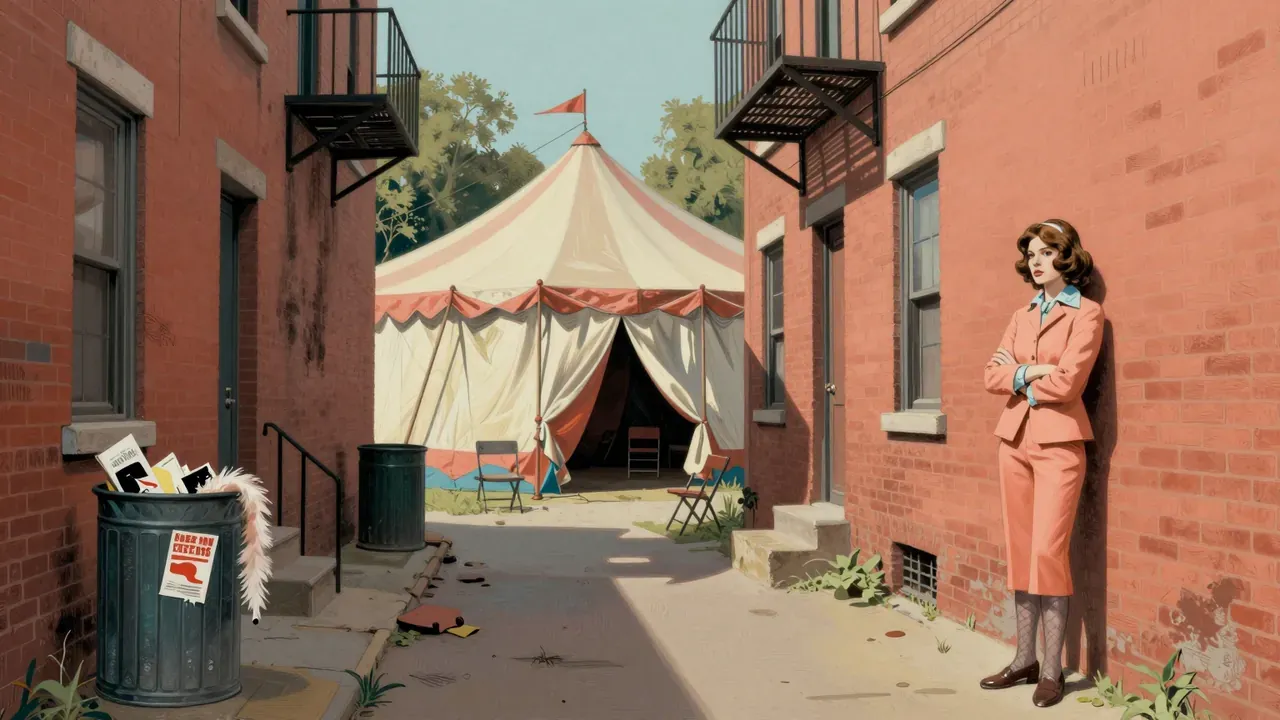
Multiple Maniacs is a low-budget American comedy film made in 1970 by John Waters, shot on 16mm black-and-white reversal stock in and around Baltimore. It functions as both a satire of middle-class morality and a deliberate assault on cinematic convention—rejecting narrative coherence, polished performance, and technical polish in favour of provocation, repetition, and tonal whiplash. Waters wrote, directed, produced, photographed, edited, and composed the music, consolidating control to ensure every frame reflects his sensibility: one that treats outrage as punctuation and bad taste as structural principle. The film centres on Lady Divine’s travelling carnival, ‘The Cavalcade of Perversion’, and its collapse into violence and surreal transgression. Its aim is not to amuse in any conventional sense but to destabilise assumptions about decency, genre, and audience complicity—using comedy not as relief but as a delivery system for discomfort. It does not seek broad appeal; it courts alienation as aesthetic policy.
How it works
The story follows Divine’s character as she leads a troupe of misfits performing grotesque tableaux for paying audiences, then pivots abruptly into betrayal, murder, rape, and divine retribution via a giant lobster. Performances are stylised and unmodulated—Divine glowers with operatic disdain, David Lochary plays a weak-willed lover with deadpan vacancy, Edith Massey delivers lines like incantations, and Mink Stole embodies adolescent spite with unnerving precision. Waters’ cinematography keeps shots static or clumsily reframed, often using available light and abrupt zooms; the editing favours jarring cuts over continuity, and the soundtrack consists of library music, off-key singing, and sudden silences. There is no attempt at realism: sets are bare, props are thrift-store flotsam, and dialogue is declaimed rather than spoken. Every craft choice reinforces the film’s anti-professionalism—not as incompetence, but as a rejection of the values underpinning mainstream production. The result is a tightly controlled chaos, where amateurishness is rehearsed, not accidental.
What lands
What lands is the sheer consistency of its contempt—for propriety, narrative expectation, and viewer comfort. The film’s most effective sequences rely on repetition and escalation: the ‘rosary job’ scene builds through rhythmic absurdity until it collapses into blasphemy; the lobster attack works because it arrives with no warning and no justification, making literal the film’s refusal of cause and effect. Divine’s physical presence dominates every frame she occupies—not through charisma in the traditional sense, but through sheer scale, stillness, and timing. The use of Baltimore locations, particularly the interiors of boarded-up shops and vacant lots, gives the film a grounded grubbiness that offsets its surreal turns. Even the music cues land with ironic precision: a jaunty big-band number underscoring a murder, a hymn played on a wheezing organ during sacrilege. These choices do not ask for empathy or understanding—they demand attention on their own terms, and they hold it by refusing to soften or explain themselves.
What does not
What does not land is any sustained emotional arc or psychological plausibility—even as parody, the motivations remain opaque and the character relationships arbitrary. The shift from carnival satire to apocalyptic vengeance feels less like thematic development and more like narrative exhaustion; the final act abandons even the pretence of causality, substituting spectacle for consequence. Some gags rely too heavily on shock value without sufficient setup or payoff—the crucifixion sequence, for instance, reads as blunt rather than barbed, its blasphemy diluted by its lack of irony or counterpoint. The sound recording is frequently muffled or distorted, not always in service of tone: at times, dialogue is simply lost, not stylised. And while the film’s anti-polish is deliberate, certain technical lapses—especially in focus and exposure—cross from intentional roughness into incoherence, breaking immersion without replacing it with anything else. A viewer expecting satire with scaffolding will find only rubble.
What it says
The themes that matter are the sanctity of bad taste as resistance, the hypocrisy of moral consensus, and the theatricality of identity. Waters treats perversion not as pathology but as performance—and therefore as political. The carnival is both a microcosm of marginalised desire and a mirror held up to normative society’s own staged rituals of purity and punishment. Class is rendered through texture: the characters wear polyester and thrift-store furs while quoting scripture and committing atrocities with equal conviction. Religion appears not as belief but as costume and prop—its symbols stripped of reverence and repurposed as weapons or punchlines. There is also a persistent, unsentimental engagement with bodily autonomy: Divine’s body is neither eroticised nor vilified, but presented as an immovable fact—capable of violence, appetite, endurance, and indifference. These themes are not argued but enacted, repeated, and exaggerated until their contradictions become visible. The film refuses resolution, insisting instead that disgust, desire, and dogma coexist without hierarchy.
Who it is for
This film is for viewers who approach cinema as a site of ideological friction rather than passive consumption—those familiar with Dada, early Warhol, or the Theatre of the Absurd, and who value intention over polish. It rewards attention to texture, repetition, and subtextual alignment between image and ideology. It is not for viewers who require narrative legibility, emotional continuity, or technical competence as baseline conditions for engagement. Anyone unsettled by graphic blasphemy, non-consensual sexual imagery, or the deliberate flattening of moral distinction should not watch it—not because it is dangerous, but because its provocations are calibrated to bypass caution and land directly on nerve. A viewer who finds the film merely ‘shocking’ has missed its architecture; one who dismisses it as ‘amateurish’ has mistaken method for failure. Its worth depends entirely on whether you accept that some art exists not to be liked, but to recalibrate what can be seen.
Is it worth your evening
It is worth your evening if you are prepared to meet it on its own terms: as a document of a specific cultural moment, a manifesto in celluloid, and a demonstration of how much can be done with almost nothing but conviction and contempt for convention. It demands active interpretation, not passive reception—and repays that effort with a clarity of purpose rare in any era. It is not ‘enjoyable’ in the usual sense, but it is galvanising, precise, and utterly coherent within its own logic. Those who expect entertainment, catharsis, or even consistent tone will leave frustrated. But for anyone interested in how comedy can function as critique, how marginality can be weaponised aesthetically, or how a single filmmaker can build a world from trash and spite—yes, it is worth your evening. Not because it is flawless, but because its flaws are inseparable from its argument.