A donation that was never meant to happen
Toy Story 3, directed by Lee Unkrich and released in 2010, closes out the original trilogy by sending Andy’s toys, now facing his departure for college, into a daycare centre after a mix-up leads his mother to donate the whole box rather than store it in the attic as intended. The premise, developed after Disney’s earlier Circle Seven Animation version was scrapped entirely, pushes the series’ founding anxiety, a toy’s fear of being discarded and forgotten, to its most direct form yet: an entire building full of toys already living out that fear as their permanent, ongoing condition.
A bear who runs the daycare like a yard boss
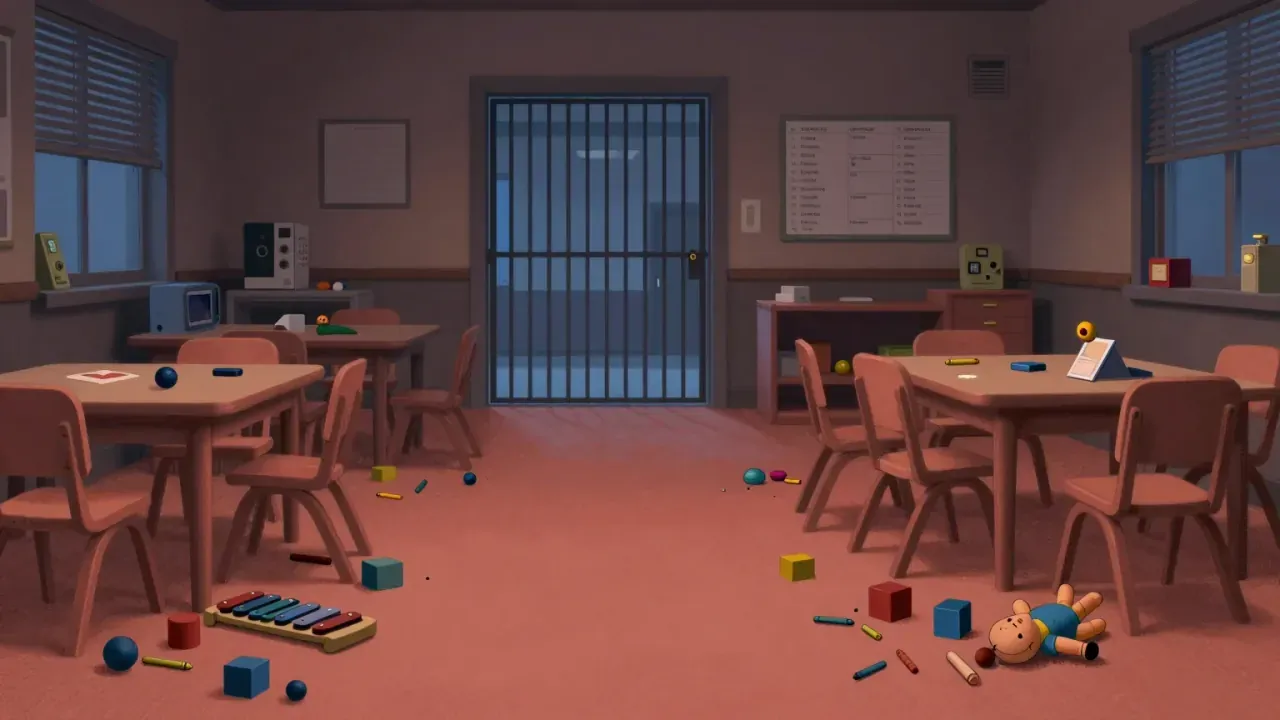
At Sunnyside Daycare, the toys meet Lotso, a folksy pink strawberry-scented bear voiced by Ned Beatty who runs the facility as a rigid hierarchy, sending new arrivals to the roughest play room reserved for younger, harder-handed children while he and his allies enjoy the gentler one for themselves. The film eventually explains Lotso’s cruelty through his own history of being accidentally replaced by his original owner decades earlier, a piece of writing that gives the villain real motive without ever asking the audience to forgive what he goes on to do with that grievance.
A landfill sequence built from actual research trips
The film’s most sustained set piece sends the toys through a garbage-processing facility toward an incinerator, a sequence Pixar built after research trips to real landfills and incinerators in Northern California, aiming, according to art director Daisuke Tsutsumi, for something the crew described as believable but more dramatic and dangerous-feeling than an actual working facility would be. It is the tensest sustained scene across the entire trilogy, and one that plays the threat of total destruction as genuinely close rather than as a feint the film will predictably pull back from at the last second.
Getting the model files to open again
Production on the film ran into an unglamorous but telling technical problem: when the team tried to reopen the original character model files from the first film, released in 1995, the files would load on screen but could not actually be edited, forcing a full rebuild of every character from scratch fifteen years after they were first designed. It is a small, easily overlooked production fact, but it underlines just how much technical ground the studio, and the wider animation industry, had covered in the long interval between the trilogy’s start and its eventual finish.
What loyalty costs once the child stops needing it
The film’s real subject, more than escape or rescue from the daycare, is what a toy, or by extension a person, is actually for once the relationship that gave their life its whole meaning changes shape or ends. Andy is not cruel or even particularly forgetful; he has simply grown up on schedule, and the film treats that ordinary fact as its own genuine kind of loss rather than reducing it to a problem with a villain standing conveniently behind it, which is a harder and more honest note than most family films are willing to attempt.
Who should watch it
This is best suited to viewers who have followed Woody, Buzz and the rest of the cast since the earlier two films, since the accumulated fifteen years of history is exactly what makes the closing scenes land with their full, considerable weight. Newcomers can still follow the plot on its own terms, since Randy Newman’s score and Michael Arndt’s script make sure of that much, but they will be watching an ending without having earned the years of investment that make it genuinely devastating for longtime viewers of the series.
An ending that earns its length
At 103 minutes, Toy Story 3 became the first animated film to cross a billion dollars worldwide, taking $1.07 billion against a $200 million production budget, and won the Academy Award for Best Animated Feature along with a rare Best Picture nomination for an animated film. It closes a fifteen-year story with a finale that trusts sadness rather than avoiding it at the last moment, and that trust in the audience is exactly what makes it worth the evening, even on a rewatch when the ending’s shape is already known in advance.