Feathers McGraw returns for revenge
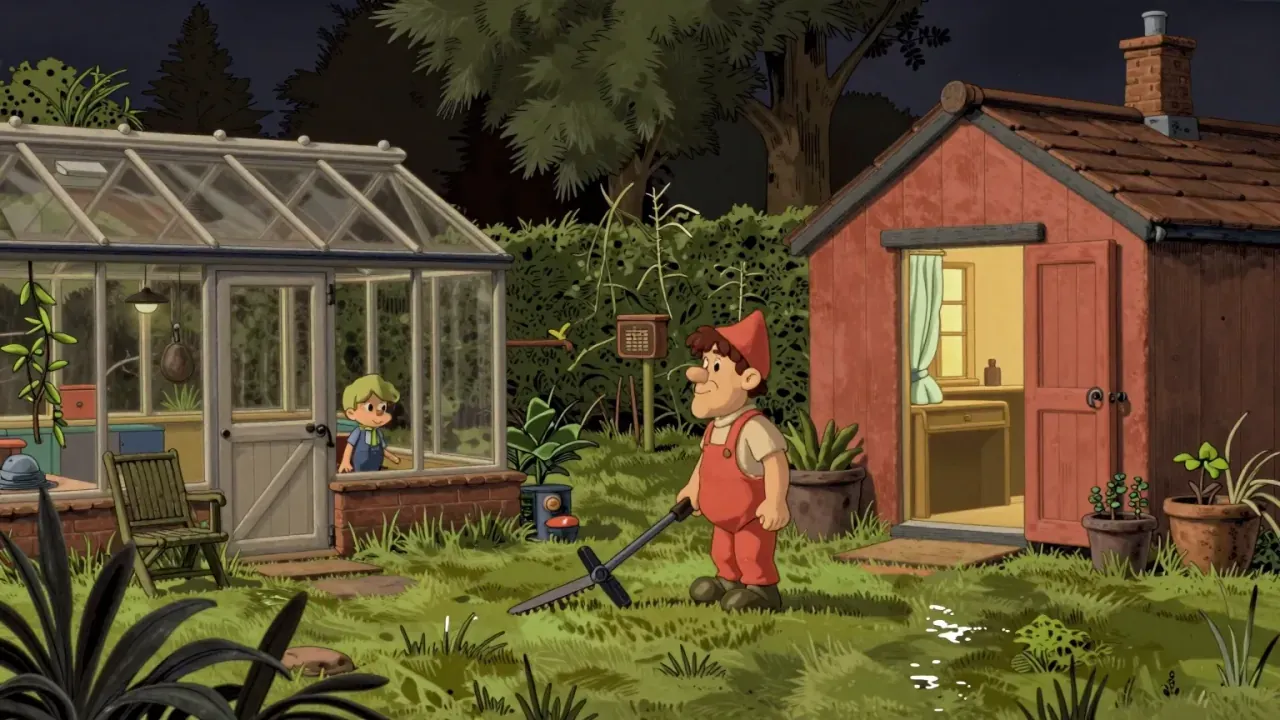
Vengeance Most Fowl brings back Feathers McGraw, the silent criminal penguin from 1993’s The Wrong Trousers, who hijacks Wallace’s newest invention, a robotic garden gnome called Norbot, to rebuild a gnome army and settle his old score over the Blue Diamond heist Wallace and Gromit foiled decades earlier. Nick Park and Merlin Crossingham direct from a screenplay by Mark Burton, making this only the second feature-length entry in the Wallace and Gromit series after The Curse of the Were-Rabbit in 2005. Ben Whitehead voices Wallace in his first full feature appearance in the role, following original performer Peter Sallis’s retirement in 2010 and death in 2017, after several years of voicing the character in games and commercials before this.
A director who avoided features for nearly twenty years
Park has said that frequent studio notes and demands to broaden the material’s appeal for American children during production of The Curse of the Were-Rabbit discouraged him from attempting another feature for years, with producer Peter Lord noting Park’s preference for the half-hour format the series was built on. The new film was announced in January 2022 and originally conceived as another thirty-minute short before it expanded into a feature during development. Production also had to work around the March 2023 closure of Newclay Products, the factory that made the specific modelling clay Aardman used, forcing the studio to buy up remaining stock rather than immediately switch materials mid-project.
A short film that grew into one almost by accident
What lands is how directly the story turns Gromit’s long-running skepticism of Wallace’s inventions into the plot’s actual engine: Gromit’s irritation at Norbot isn’t just a running gag but the thing that lets him notice the gnome’s reprogramming before anyone else does, so his suspicion of automation is vindicated rather than just played as a personality quirk. Whitehead’s vocal performance, deliberately styled as a tribute to Sallis rather than an attempt to replace him outright, keeps Wallace recognizable without pretending nothing has changed. Feathers McGraw’s return, silent as before, still generates tension through posture and eye animation alone, proof the character never needed dialogue to be unsettling in the first place.
A new Wallace, a discontinued clay, one producer swap
Where the film runs thinner is pacing and joke density: reviewers have noted the feature-length runtime spreads its gags out more than the half-hour format the series built its reputation on, with a greater reliance on dialogue and plot mechanics than the visual gag-per-minute rate longtime fans associate with Wallace and Gromit. Chief Inspector Mackintosh’s retirement subplot and PC Mukherjee’s promotion, while giving the human police characters a clean arc, take up time that arguably could have gone to more of the physical slapstick the earlier shorts were built around instead of procedural detail.
Automation gets weaponized, then grudgingly trusted
Underneath the heist-comedy plot, the film runs a straightforward argument about automation replacing care: Wallace’s enthusiasm for outsourcing garden work to Norbot puts a machine between him and the hands-on tinkering the series has always associated with affection, and it takes Feathers McGraw actually weaponizing that machine for Wallace to conclude, out loud, that machinery cannot replace the human touch. Gromit’s arc runs the opposite direction, ending not in vindication over Wallace but in a grudging new respect for Norbot once the gnome helps save him, which keeps the film’s technology anxiety from resolving into a simple anti-machine moral for younger viewers to absorb.
Who this is for
This suits longtime fans of the series first, since Feathers McGraw’s return and Whitehead’s continuation of Sallis’s performance carry more weight if you know what came before, though the plot is self-contained enough for newcomers to follow without prior instalments. Families remain the obvious audience, and the film’s gentle satire of smart-home technology gives it a hook for adults alongside younger viewers. It’s a slightly lesser choice for fans specifically chasing the density of visual gags the half-hour shorts built their reputation on, since the feature’s extra runtime is spent more on dialogue and procedural plotting than pure slapstick comedy.
A record-breaking Christmas Day, on its own terms
The film holds a 100% Tomatometer score and an 83 on Metacritic, won the inaugural BAFTA for Best Children’s and Family Film, and, after airing on BBC One on Christmas Day, became the broadcaster’s most-watched scripted programme since 2002 within four weeks of catch-up viewing. Park has since said this won’t be the series’ last feature, undercutting the idea that his years of reluctance after the DreamWorks experience were a permanent retirement from longer format. Worth the evening for the McGraw rematch and Whitehead’s careful continuation of Wallace alone, even if it’s a notch busier and less visually dense than the shorts that built the series’ reputation.