What freedom looks like
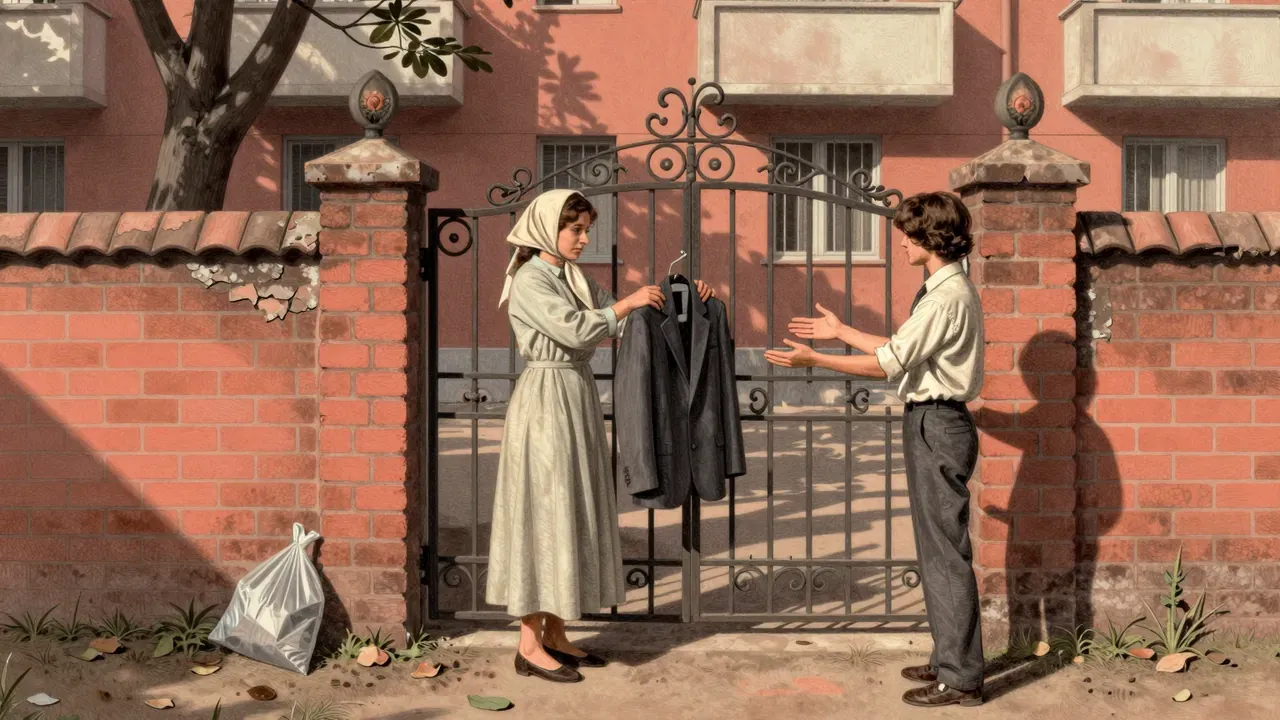
À Nous la Liberté is a French sound comedy from 1931, written and directed by René Clair, that uses satire to trace the arc of two convicts — one who escapes into poverty, the other into industrial capitalism — and their reunion in a phonograph factory whose rhythms echo the prison they fled. It is trying to do several things at once: to test the formal possibilities of early sound cinema, to lampoon mechanisation and social mobility, and to stage a gentle, music-led argument about freedom as something neither granted by law nor secured by wealth, but enacted in gesture, timing and refusal. Its tone is light, its method precise; it treats class not as tragedy but as farce with recurring motifs — hooks, ropes, phonographs, flowers — that recur like musical phrases. The film does not aim for realism, nor for moral instruction, but for a kind of rhythmic coherence between image, sound and social observation. It assumes the audience will follow logic not through exposition but through repetition, contrast and visual pun. That assumption shapes every decision, from Georges Périnal’s deep-focus compositions to Georges Auric’s score, which supplies diegetic sound where none exists.
How it moves
The story moves in clean, symmetrical arcs: escape, ascent, re-encounter, recognition, dissolution of pretence. Henri Marchand and Albert Broquin play Émile and Louis with minimal inflection — their performances rely on posture, pause and physical contrast rather than emotional range. Clair’s direction keeps action centred and uncluttered; even crowd scenes are choreographed like ballets, each worker on the assembly line moving in time with the others. Georges Périnal’s cinematography avoids dramatic lighting or movement, favouring steady frames and measured tracking shots that make the factory feel both vast and legible. Auric’s music does not accompany but constructs the soundscape: xylophones mimic machinery, choral voices stand in for unseen singers, silence arrives only when the phonograph winds down. Editing by René Le Hénaff is economical — cuts land on beats, not reactions — and the production design (nominated for an Academy Award) renders prison and factory as mirror institutions, both built around long tables and regimented labour. There are no close-ups of anguish, no lingering glances; everything is stated, then repeated, then varied.
Where the laughter lives
What lands is the film’s structural wit: the way the prison’s wooden clogs become the factory’s clattering rhythm; how the flower-singing sequence sets up the phonograph reveal not as a trick but as a principle — that sound can be borrowed, misattributed, then reclaimed. The satire holds because it is specific: the factory foreman’s authoritarianism is drawn from the same stock as the prison guard’s, and the workers’ blank compliance feels less like passivity than learned habit. The comedy works physically — Émile’s chase across the factory floor, Louis’s stiff-lipped dinner-party collapse — but also intellectually, in the way Clair makes hierarchy audible (through marching cadences) and visible (through identical uniforms and identical desks). Even the romantic subplot lands lightly: Jeanne’s handkerchief is less a token of love than a narrative hinge, dropped and retrieved with the same casual precision as a gear in the assembly line. Nothing feels forced; every gag has been prepared three scenes earlier, often in silence, often in music.
What it leaves out
What does not land is the film’s reliance on period-specific class shorthand. Some of the satire — particularly the portrayal of Jeanne’s uncle as a grasping, socially mobile accountant — depends on assumptions about bourgeois aspiration that now read as broad rather than pointed. The 1950 re-release cut two scenes: the singing flowers and Émile’s date with Jeanne. Their absence is noticeable not because they deepen character, but because they soften the film’s austerity; without them, the romance feels perfunctory, the emotional stakes thin. The factory’s critique of automation is sharp, but the film offers no counter-image of collective action — just Émile and Louis retreating into private laughter and drunken iconoclasm. That retreat works as comedy, but not as politics. Some viewers may find the pacing too deliberate, the jokes too dry: there is no slapstick escalation, no rising tension, only recurrence and variation. The ending — a return to open road, no resolution — satisfies formally but leaves little residue beyond the tune. It asks for attention, not empathy, and that choice excludes some kinds of engagement.
What it says about work
The themes that matter are freedom as rhythm, not condition; sound as social construct; and modernity as repetition with altered context. The film treats liberty not as legal status but as the ability to interrupt a pattern — Émile throwing the rope, Louis pausing the phonograph, both men laughing during the dinner party. Class is shown not through dialogue but through acoustics: the clog-march of prisoners, the xylophone-clatter of the factory, the sudden hush when the record stops. Technology is neither demonised nor celebrated, but treated as a system of habits: the phonograph plays back life, the assembly line repeats it, the prison enforces it. Clair’s interest lies in how people adapt — or fail to adapt — to systems that mimic each other across social strata. There is no utopia proposed, only moments of release: a field, a shared memory, a broken portrait. The film’s enduring relevance lies in its refusal to separate form from function — its sound design is its argument, its editing its ethics, its music its moral compass.
Who it speaks to
This film is for viewers who value formal coherence over emotional immediacy, who enjoy watching how a joke is built across three scenes rather than delivered in one. It rewards patience with density: every shot contains information about power, every musical cue signals a shift in perspective. It is not for those who need clear protagonists, psychological motivation or narrative escalation — Émile and Louis are types before they are individuals, and Jeanne exists primarily as a plot device and visual counterpoint. Those who dislike silent-era pacing or find early sound experimentation alienating may struggle with its restraint. It is also not for viewers seeking historical authenticity: the interwar France it depicts is stylised, not documented. Anyone expecting Chaplin-style pathos or Tati-like observational detail will find it too abstract. But for those attuned to the grammar of 1930s European modernism — to the weight of a pause, the meaning of a repeated prop — it remains deeply accessible, precisely because it refuses to explain itself.
Why it lasts
Yes, it is worth your evening — provided you watch it as a piece of choreographed thought, not a story to be followed. Its eighty minutes unfold with the inevitability of a well-tuned mechanism, and its pleasures are cumulative: the satisfaction of a motif returning, the surprise of a sound revealing its source, the quiet triumph of two men choosing laughter over loyalty to system. It does not ask for investment in outcome, only attention to pattern. Some will find it too cool, too detached — those who prefer films that build feeling through accumulation of detail rather than through repetition of form. Others may miss the warmth of later Clair or the bite of contemporaries like Bunuel. But its clarity, its economy and its sustained musical logic make it more than a curiosity: it is a working model of how comedy can carry ideas without ever sounding like lecture. It earns its place not through force, but through fidelity to its own rules.