The look of it
Eyes Wide Shut is Stanley Kubrick’s final film: a psychological mystery set in late-1990s New York, adapted from Arthur Schnitzler’s 1926 novella Dream Story. It attempts to trace the disturbance that follows a married couple’s mutual admission of sexual fantasy — not infidelity, but the mere idea of it — and to map how that admission fractures domestic certainty. Kubrick transposes the Viennese Carnival setting to Christmas-time Greenwich Village, replacing Freudian symbolism with late-capitalist surfaces: doormen, penthouse lobbies, boutique pharmacies, and a meticulously constructed Pinewood Studios replica of Manhattan streets. The film does not seek erotic release or thriller momentum; rather, it sustains a low-frequency hum of unease, treating desire as a diagnostic tool for social hierarchy, male anxiety, and the performative nature of consent. Its ambition is structural and tonal: to make the viewer feel the weight of unspoken complicity, not through exposition but through repetition, withheld information, and the slow erosion of Bill Harford’s professional composure. It is less about what happens than about how long it takes for a man to recognise he has no authority over his own narrative. (159 words)
How it moves
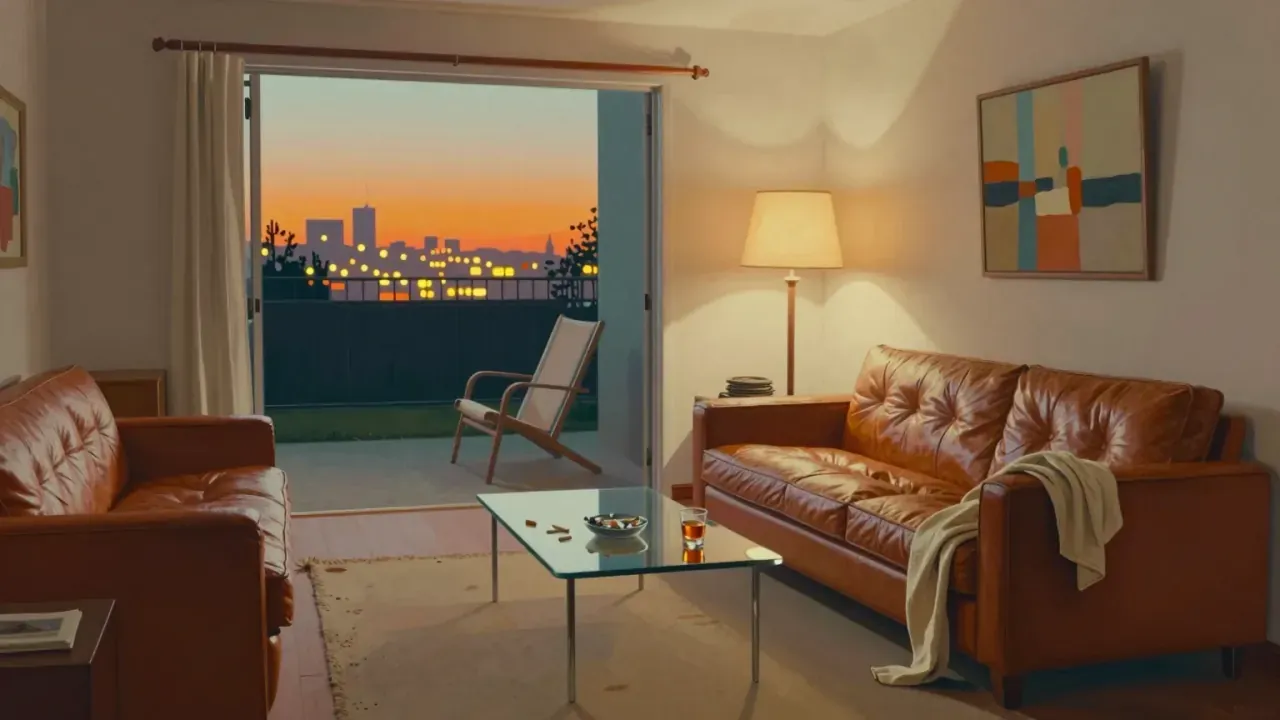
The story unfolds over one night and the following day, its rhythm dictated by Bill Harford’s increasingly disoriented movements through zones of privilege and exclusion. Nicole Kidman’s performance as Alice is anchored in stillness and vocal precision — her monologue about fantasy is delivered without flourish, yet carries the film’s moral centre. Tom Cruise’s Bill is tightly coiled, his doctorly confidence dissolving into near-catatonia. Larry Smith’s cinematography avoids dramatic lighting shifts; instead, he holds interiors in a consistent, slightly desaturated amber, letting shadows pool without revealing their source. Jocelyn Pook’s score — built around a recurring, distorted music-box motif — works against expectation, refusing to heighten suspense and instead deepening disorientation. The masked orgy sequence uses wide lenses and static framing, denying voyeuristic satisfaction. Dialogue is often muffled or overlapped; entrances and exits are lingered on, not rushed. Even the editing resists conventional punctuation: scenes bleed into one another, held just past comfort. This is not atmospheric filmmaking — it is architectural. Every shot is calibrated to sustain a single, sustained mood: the quiet dread of being watched while believing you are observing. (158 words)
What stays
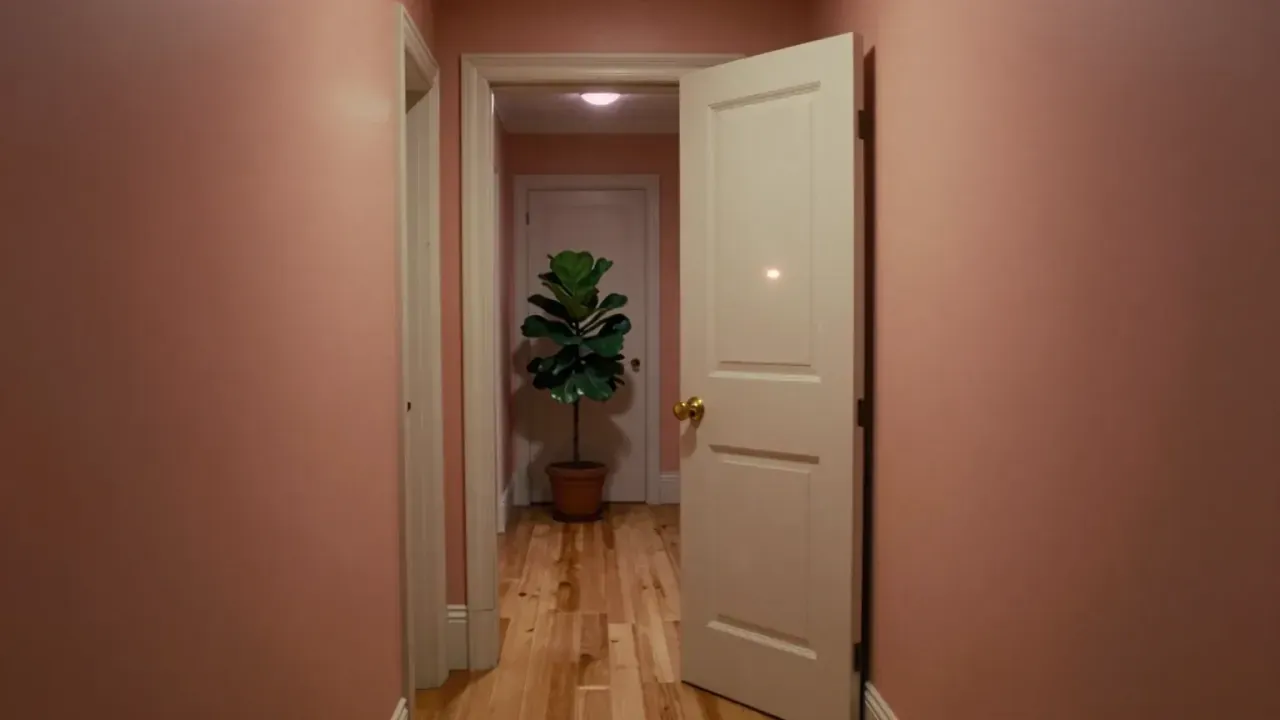
What lands most firmly is the film’s texture of lived-in privilege — the way money insulates, distorts, and ultimately isolates. The Greenwich Village street sets, built at Pinewood, feel both hyper-real and subtly wrong, like a memory recalled with too much clarity. Sydney Pollack’s Ziegler operates with the calm menace of someone who has never had to justify himself; his final monologue lands not because it explains, but because it confirms the film’s central proposition: that power does not need to be hidden, only unexamined. The recurring motif of doors — opened, closed, guarded, left ajar — functions without exposition, accumulating meaning across repeated compositions. Kidman’s delivery of Alice’s confession remains singular in Kubrick’s filmography: unadorned, unsentimental, and devastating in its economy. The film’s refusal to resolve its central question — whether the orgy was real, staged, or hallucinated — is not evasion but fidelity to the novella’s ambiguity. That uncertainty is sustained not through plot tricks but through persistent visual restraint: no close-ups during key revelations, no score swells at moments of crisis, no cutaways to reaction shots when tension peaks. The effect is cumulative, not climactic. (157 words)
Where it slips
What does not land is the film’s attempt to anchor its psychological inquiry in contemporary New York. The city feels like a stage set without civic life — no traffic noise beyond what is scripted, no bystanders with independent motion, no sense of a functioning metropolis beyond what serves Bill’s itinerary. Several supporting performances falter under Kubrick’s exacting repetitions: Todd Field’s Nick Nightingale lacks the spectral ambiguity the role demands, and Sky du Mont’s Mandy feels theatrically detached from the film’s prevailing naturalism. The dialogue occasionally stiffens into exposition — particularly Ziegler’s explanation of the orgy’s ‘staging’, which reads more like a director’s note than a character’s speech. The film’s pacing, while deliberate, risks monotony in its second hour: the repeated pattern of entry, observation, withdrawal begins to feel procedural rather than revelatory. Some viewers will find the erotic charge muted not by discretion but by detachment — the sex is present but rarely felt, the danger abstracted into costume and protocol. Crucially, the adaptation excises the novella’s nun-and-monk iconography, which carried theological and moral weight; its absence leaves the ritual sequences visually potent but spiritually hollow. (156 words)
What it says
The themes that matter are not sexuality per se, but the architecture of secrecy: how class, gender, and professional status determine who may enter, observe, or speak. The film treats marriage as a contract whose terms are renegotiated daily through silence, gesture, and withheld knowledge. It interrogates male entitlement not through caricature but through Bill’s assumption — never voiced, always implied — that his access to spaces of power is earned, not granted. The mask motif operates on three levels: literal (at the orgy), social (in Bill’s medical practice), and psychological (in Alice’s confession). The film’s preoccupation with sound — muffled voices, distant sirens, the unnerving clarity of a single footstep on marble — points to a broader theme of failed perception: Bill hears everything but understands nothing until it is too late. The Christmas setting is not decorative; it underscores the dissonance between public celebration and private rupture. Money appears not as wealth but as infrastructure — the invisible scaffolding that permits certain kinds of transgression while forbidding others. There is no moral judgement in the frame, only relentless observation: the film asks what happens when the observer becomes the observed, and finds that the shift changes nothing except the observer’s sense of safety. (159 words)
Who it’s for
This film is for viewers who value sustained tone over narrative propulsion, who find discomfort generative rather than alienating, and who trust that ambiguity can be a form of rigour. It rewards attention to composition, sound design, and the weight of pauses. It is not for those who require clear causality, emotional catharsis, or characters whose motivations unfold in linear fashion. Anyone expecting an erotic thriller — as Warner Bros.’ marketing suggested — will feel misled, not because the film conceals its nature, but because it refuses to meet genre conventions. Those who dislike Kubrick’s formal control, or who find his late style emotionally withholding, will find little here to persuade them otherwise. A viewer who values psychological realism over plot mechanics, or who responds to films that operate like slow-acting sedatives rather than stimulants, will find it compelling. Those who need resolution, warmth, or even basic narrative orientation will leave frustrated. The film’s endurance depends entirely on whether its method feels like precision or paralysis — and that distinction rests on temperament, not taste. (159 words)
Why it lasts
Yes, it is worth your evening — but only if you approach it as a study in duration and restraint, not as entertainment. Its 159 minutes accumulate meaning through repetition, not revelation; its power lies in what it withholds, not what it delivers. It repays close viewing not because it hides clues, but because its textures — the grain of a carpet, the echo in a hallway, the way light falls on Kidman’s collarbone — deepen on second glance. Those who dismiss it as cold or pretentious often mistake its stillness for emptiness; its silence is not absence but pressure. Critics who found it opaque were not wrong — they were reacting to its refusal to translate. The film would change its verdict only if viewed without expectation of narrative payoff, or if approached as one might listen to Shostakovich: not for story, but for structure, tension, and the resonance of unresolved chords. It is not a film to be solved, but inhabited — and that demands patience, not passive consumption. (159 words)