The length of it
Gertrud is a Danish drama film from 1964, Carl Theodor Dreyer’s final work, adapted from Hjalmar Söderberg’s 1906 play. It attempts something rare in cinema: to make speech the primary carrier of meaning, not image or movement. Dreyer stripped away visual ornament, narrative compression, and psychological exposition, instead holding long takes on actors speaking in measured, uninflected tones. He sought what he called ‘penetration to my actors’ profound thoughts by means of their most subtle expressions’, treating dialogue not as exposition but as ritual—repetition, hesitation, misalignment, silence all weighted equally. The film’s structure mirrors its theme: no plot propulsion, no rising action, only a series of encounters where characters circle the same emotional truths without resolution. It is less a story about love than an architecture of refusal—refusal to simplify, to flatter, to yield. Its ambition is not accessibility but fidelity: to the texture of lived contradiction, to the weight of words spoken and unsaid, to the quiet violence of moral consistency in a world that rewards compromise. This is not minimalism for austerity’s sake, but for precision.
The look of it
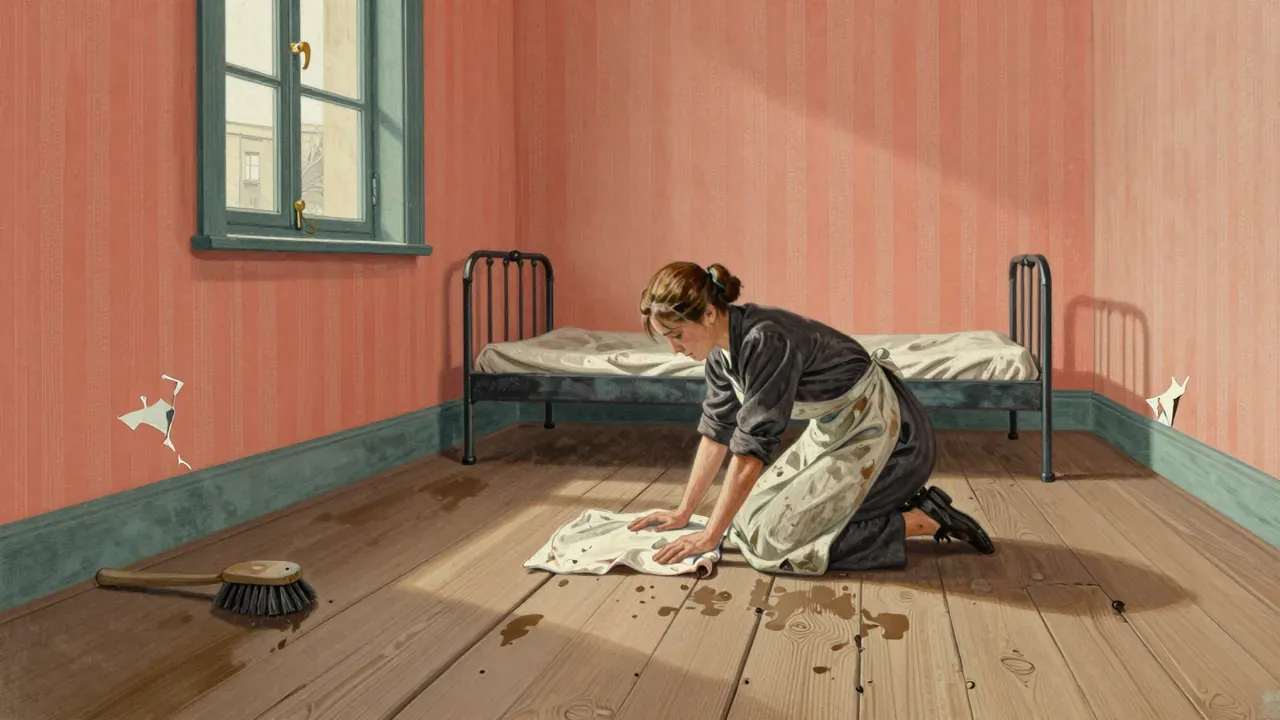
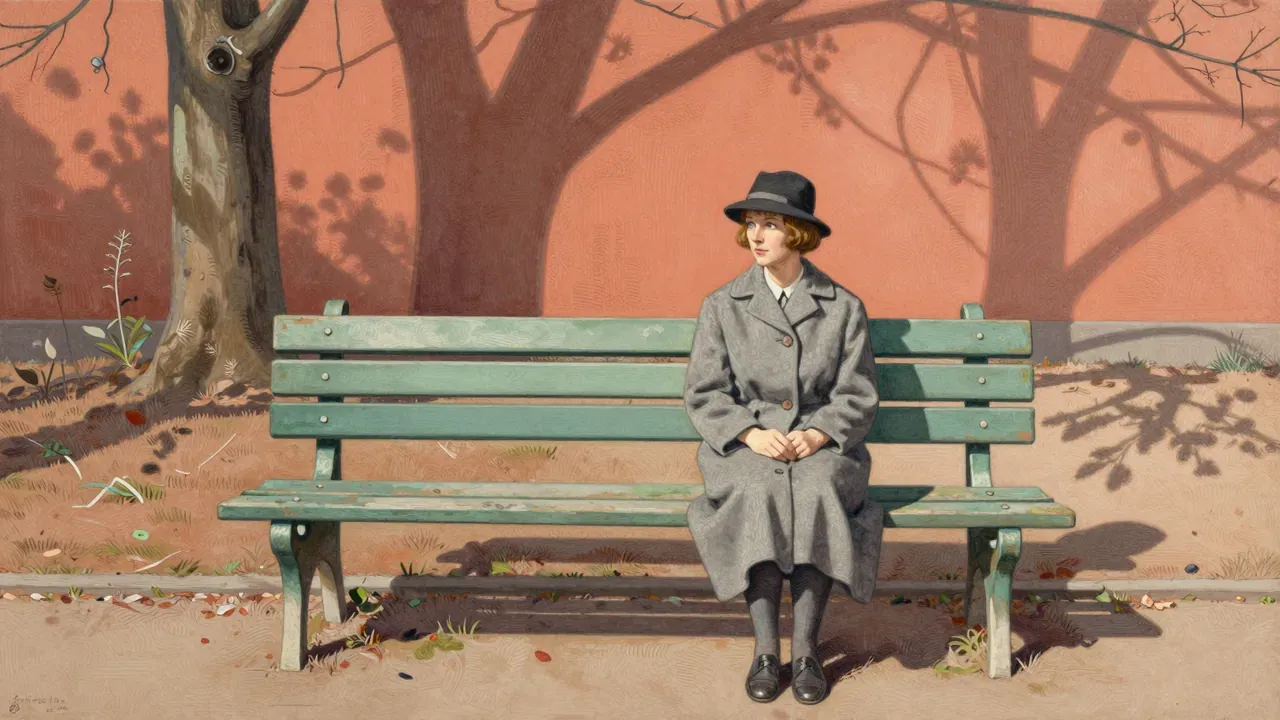
The story unfolds across five domestic interiors and one park, each scene built around two or more characters speaking in real time. Henning Bendtsen’s cinematography avoids movement: static frames, shallow depth, muted palette, soft focus on backgrounds. Edith Schlüssel’s editing sustains takes so long they test attention—some exceed nine minutes—with no cutaways or reaction shots to relieve the pressure. Nina Pens Rode’s Gertrud speaks with deliberate slowness, her face often still, her eyes rarely blinking; Baard Owe’s Erland Jansson gestures with nervous energy but never lands emotionally; Bendt Rothe’s Gustav Kanning delivers speeches like legal arguments, precise and hollow. Jørgen Jersild’s score is sparse, mostly piano motifs repeated with slight variation, underscoring rhythm over mood. The craft is unified: every decision reinforces the central idea—that meaning resides in duration, in the space between utterances, in what remains unspoken when people talk past one another. There are no flashbacks, no music swells, no lighting shifts to signal revelation. The film trusts the text, the actors’ restraint, and the viewer’s willingness to sit inside ambiguity.
The weight of it
What lands is the cumulative force of Gertrud’s unwavering position—not as dogma but as embodied consequence. Her final monologue, delivered thirty years later beside Axel Nygren in a sunlit Paris garden, carries no irony, no regret, no theatricality; it simply is. That moment works because everything before has been calibrated to make her solitude legible, not pitiable. The long takes succeed when they expose how language fails: Gabriel Lidman’s confession of past betrayal, Gustav’s offer of open marriage, Erland’s evasion about fatherhood—all land with quiet devastation because the camera refuses to look away. The film’s rigour makes its emotional payoffs rare but undeniable: the pause before Gertrud says ‘I am alone’ is heavier than any close-up could be. Its formal austerity becomes expressive when it reveals how much we rely on cinematic shorthand to avoid discomfort—and how much honesty costs when those shortcuts are removed. The epilogue, added by Dreyer, does not soften the ending but deepens it: time confirms, rather than contradicts, her choice.
The sound of it
What does not land is the assumption that all viewers will find value in its method. Some scenes—particularly the ten-minute dialogue between Gertrud and Gabriel—feel structurally necessary but dramatically inert, their length outpacing their psychological yield. The performances, deliberately muted, can read as blank rather than restrained; Ebbe Rode’s Gabriel sometimes seems less conflicted than disengaged, Baard Owe’s Erland less passionate than petulant. The absence of visual variety—no establishing shots, no weather, no street life—makes the film’s world feel hermetically sealed, which may intensify its themes but also limits its resonance beyond its own logic. The pacing resists absorption: it asks for patience not as virtue but as prerequisite, and while that serves its ideas, it risks alienating anyone who reads slowness as emptiness rather than density. Those expecting psychological insight through gesture or subtext may find the surface too smooth, the interior too guarded. It is not that the film lacks feeling—it is that it refuses to signpost it.
The shape of it
The themes that matter are love as non-negotiable principle, not feeling; integrity as social rupture; time as confirmation, not correction; and language as both bridge and barrier. Gertrud’s insistence that ‘love is the only thing that means anything’ is neither romantic nor naive—it is ontological. Her rejection of Gustav, Erland, and Gabriel is not personal but categorical: none love her as she is, only as accessory, conquest, or memory. The film treats compromise not as maturity but as erasure—of self, of truth, of consequence. Ageing here is not decline but distillation: the final shot of Gertrud, older, calm, unrepentant, reframes everything that came before not as tragedy but as necessary unfolding. The film’s preoccupation with failed communication—misheard declarations, boasts mistaken for confessions, professions of devotion undercut by timing—suggests that misunderstanding is structural, not incidental. Its quietest theme is freedom’s cost: not loss of comfort, but loss of reciprocity, of shared illusion, of being understood on terms other than one’s own.
The pace of it
This film is for viewers who treat cinema as a discipline of attention, not diversion—who value sustained inquiry over narrative payoff, who find tension in stillness, who trust that silence can hold more than exposition. It rewards those familiar with Dreyer’s earlier work, or with Söderberg’s literary tone, or with mid-century European art-film conventions of duration and restraint. It is not for those who require momentum, psychological clarity, or visual variety; nor for those who equate emotional engagement with catharsis or character growth. Anyone expecting a portrait of female liberation as triumph will find Gertrud’s ending austere, even withholding. Those who read minimalism as indifference, or slowness as failure, will reject it outright. A change in verdict would require accepting that some truths are only legible at this pace, in this light, with this silence—and that not all films exist to meet the viewer halfway.
The end of it
Yes, it is worth your evening—if you are prepared to give it your full, unmediated attention for 119 minutes. Not as background, not as study, but as encounter. Its value lies not in what it says but in how it insists you listen: to the weight of a pause, the fatigue in a voice, the distance between two people who speak the same language but inhabit different moral geographies. It will not entertain, distract, or reassure. It may frustrate, bore, or unsettle. But if you let it, it recalibrates your sense of what cinema can hold—how much thought, how much sorrow, how much resolve can reside in a single, unmoving frame. Those who leave impatient or unmoved are not wrong; they are simply outside its contract. Its worth is conditional, exacting, and absolute—for the right viewer, at the right time, with the right expectation.