The look of it
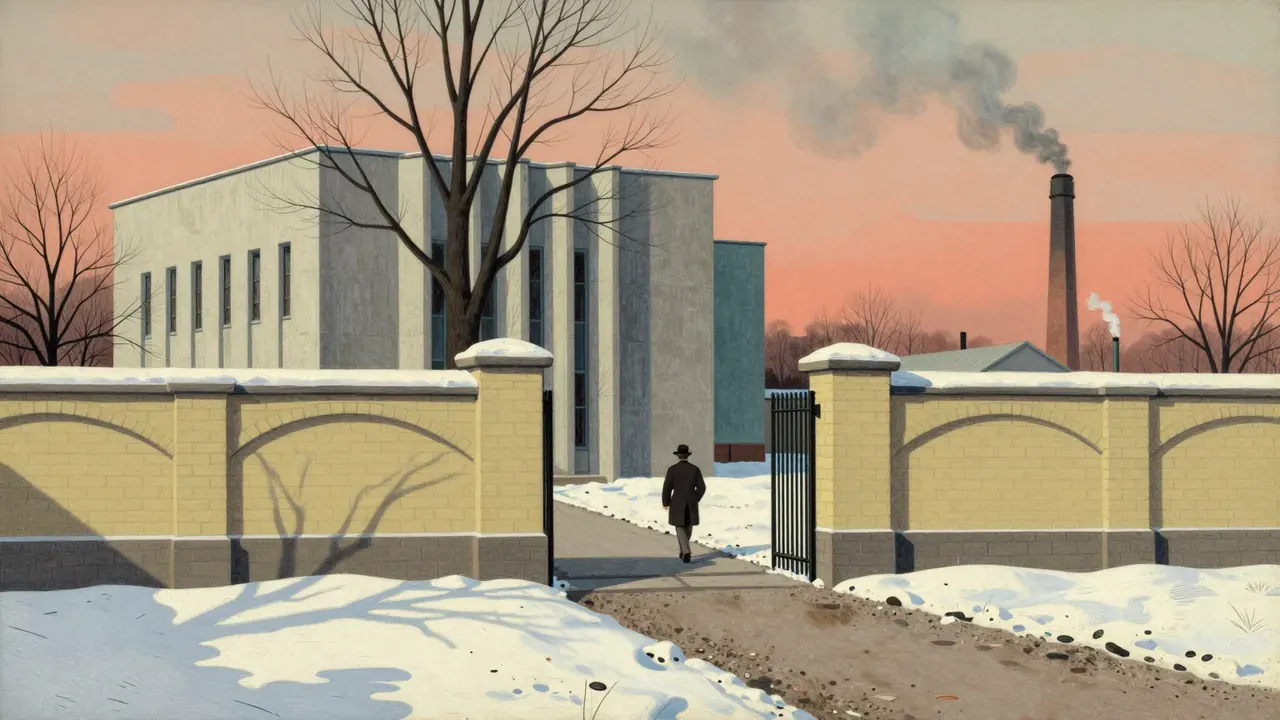
Nosferatu is a silent German Expressionist film that adapts Bram Stoker’s Dracula without permission, renaming characters and shifting the setting to northern Germany to evade copyright while retaining the novel’s core structure: a real estate agent travels to Transylvania, encounters a vampire, and unwittingly brings him home, where the creature preys on his wife and spreads plague. It is trying to do two things at once — to translate Gothic horror into a visual language of shadow, architecture and physical distortion, and to ground supernatural dread in tangible, local detail: rats on ships, damp harbour walls, the weight of a coffin lid. Its ambition is not psychological realism but symbolic density — every frame calibrated to evoke unease through imbalance, asymmetry and scale. It treats vampirism as contagion, not seduction; as infestation, not romance. The film’s form — stark silhouettes, exaggerated sets, slow, deliberate pacing — serves that aim directly. It does not seek to explain or rationalise the vampire, but to make him felt as an irruption of decay into ordered life. That effort is inseparable from its production context: a small occult-obsessed studio making its only film, with limited resources and urgent thematic conviction.
The rhythm of it
The story unfolds in three acts: Hutter’s journey east, Orlok’s sea voyage west, and his arrival in Wisburg, where he moves through the town like a stain spreading across cloth. Max Schreck’s performance as Count Orlok is physical rather than emotive — his posture, gait and stillness are choreographed to unsettle, not to charm. Wolfgang Heinz and Gustav von Wangenheim play supporting roles with restrained naturalism, anchoring the film’s more stylised elements. Günther Krampf and Fritz Arno Wagner’s cinematography uses deep focus, high contrast, and carefully composed frames: doorways frame figures like coffins; windows cut the sky into jagged shards; staircases coil like vertebrae. Albin Grau’s set and costume design embeds esoteric symbols — Enochian script on contracts, alchemical motifs in textiles — without exposition. Henrik Galeen’s screenplay is rhythmic and poetic, avoiding exposition in favour of image-led progression. Murnau directs with metronomic control, using sketches for each shot and insisting on precise timing. The intertitles are sparse and functional, never explanatory. There is no attempt to simulate speech or interiority — meaning resides in movement, texture, and spatial relationship.
The body of it
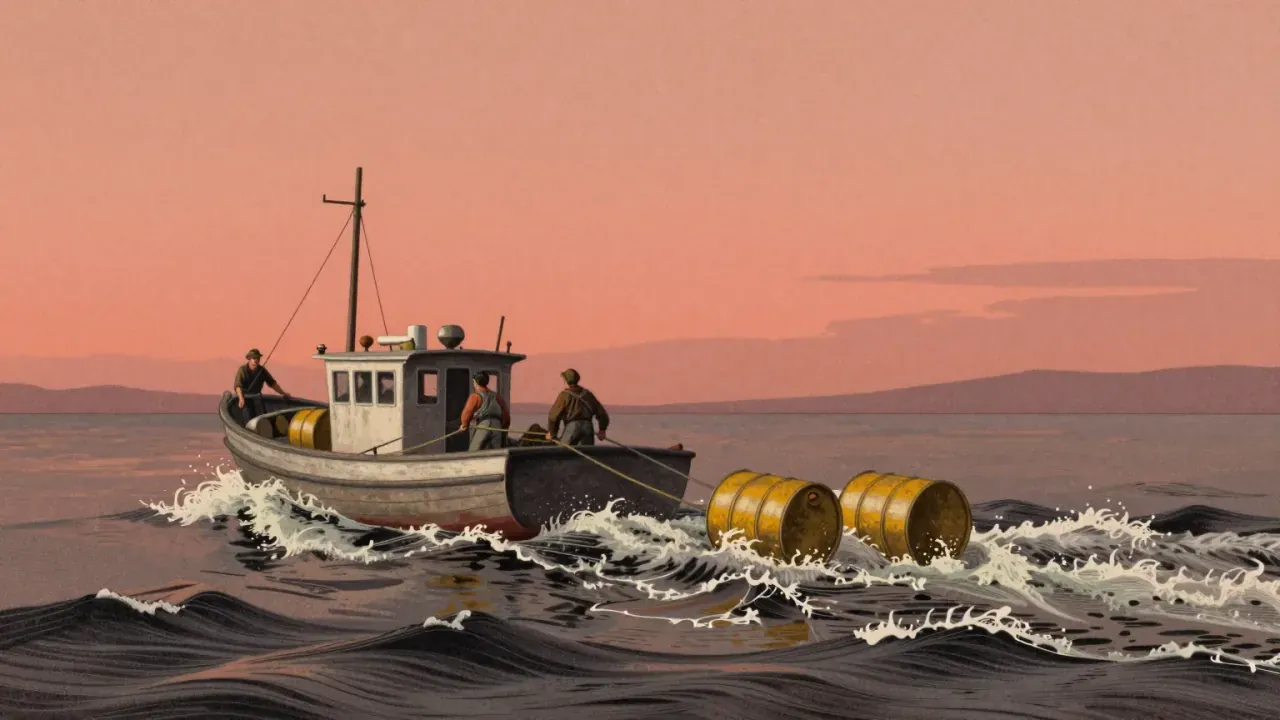
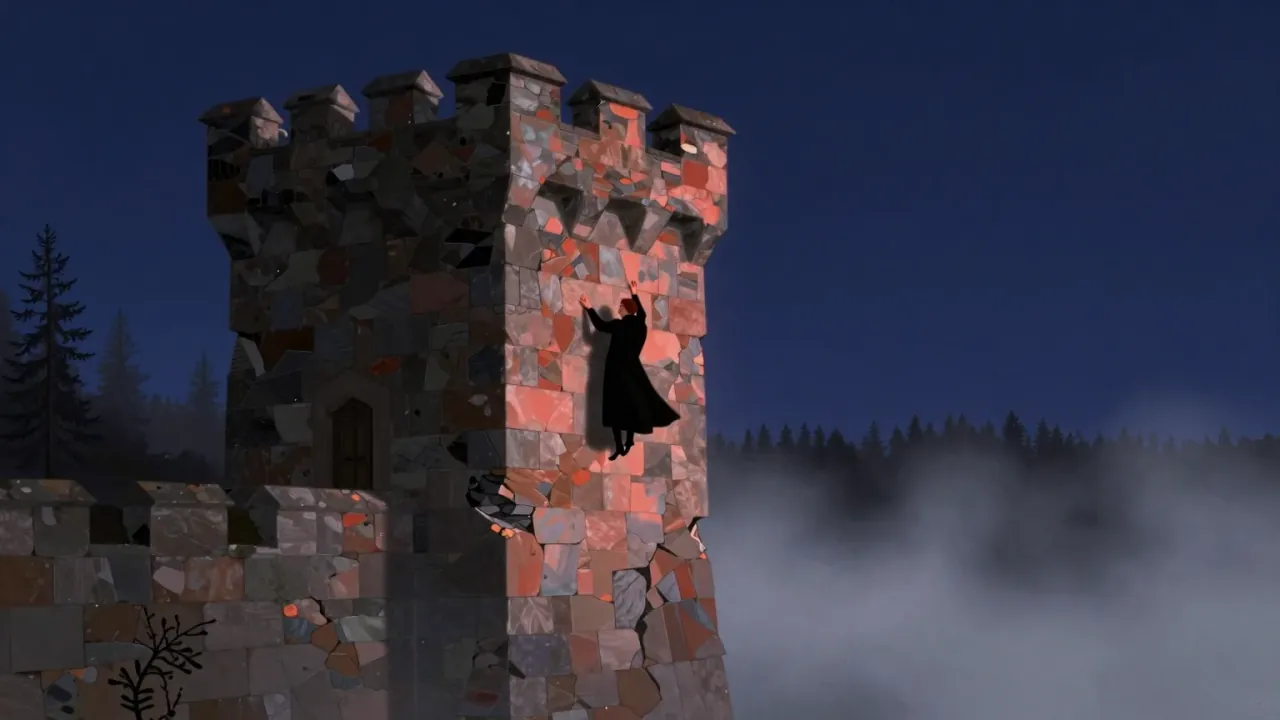
What lands most firmly is the sustained atmosphere of encroaching wrongness. Orlok’s first appearance — rising stiffly from his coffin, then crawling down a vertical wall like a spider — remains unnerving not because it is shocking, but because it is so methodical, so unblinking. The ship sequence, with its empty deck, flapping sails and silent rats, conveys contagion as inevitability. The plague scenes in Wisburg work through accumulation: shutters nailed closed, bodies stacked in carts, the town’s geometry slowly emptied of life. Grau’s production design gives the film its tactile weight — the grain of wood in Orlok’s castle, the damp stone of Wisburg’s alleys, the coarse weave of Ellen’s shawl. Schreck’s face, under heavy prosthetics and lighting that hollows his cheeks, reads as both ancient and insectile, not monstrous in the conventional sense but biologically alien. The final sunrise sequence — Ellen holding Orlok until dawn — gains power from its simplicity: no music swells, no close-up lingers, just light filling the room as he crumbles. These moments land because they rely on duration, not punctuation; on implication, not emphasis.
The spread of it
What does not land consistently is the human drama outside Orlok’s presence. Ellen’s sacrifice, though central, feels narratively abrupt — her resolve arrives without psychological preparation, and her death lacks emotional counterweight in the preceding scenes. Hutter’s character arc dissolves after his return from Transylvania; his passivity makes him a vessel rather than a protagonist. Some transitions between locations are jarring: the jump from Slovak mountains to Lübeck’s Salzspeicher is visually coherent but geographically disorienting, and the film offers no anchor for the viewer to reconcile them. The intertitle translations — especially in later restorations — sometimes flatten nuance or introduce inconsistencies in names and relationships, weakening continuity. The pacing, while deliberate, can feel inert in stretches where nothing changes except light or position. A modern viewer may find the absence of reaction shots or subjective editing distancing: we see Orlok’s effect on others, but rarely inhabit their fear as lived experience. The film assumes a shared cultural grammar of Gothic signifiers — bats, coffins, crucifixes — which some contemporary audiences may read as cliché rather than code.
The air of it
The themes that matter are contagion, isolation, and the collapse of boundaries — between life and death, self and other, civilisation and wilderness. Orlok is less a person than a vector: his arrival coincides with rats, his touch with fever, his presence with silence. The film treats disease not as metaphor but as structural principle — the town’s social fabric unravels in the same way its buildings lean and warp. There is also a quiet critique of professional complicity: Hutter signs a contract without reading it, Knock brokers the deal without conscience, and the town’s authorities respond to plague with denial, not action. Grau’s occult framing adds another layer: Orlok is not evil in a moral sense, but an embodiment of forces older than ethics — prana inverted, life force turned to consumption. The film’s German setting matters: Wisburg is not generic, but specifically north German — Protestant, maritime, pragmatic — making the intrusion of superstition and decay all the more destabilising. Time itself behaves strangely: days blur, journeys stretch and compress, and the final sunrise arrives not as relief but as a mechanical, indifferent event.
The silence of it
It is for viewers who value composition over exposition, who find tension in stillness and dread in proportion, and who accept that horror need not be loud or fast to be effective. It rewards attention to texture, light and negative space. It is not for those who require narrative clarity, psychological motivation or emotional scaffolding — the film refuses to explain why Ellen chooses sacrifice, or how Orlok sustains himself beyond blood. Those expecting the conventions of later vampire fiction — romance, glamour, moral ambiguity — will find Nosferatu withholding. Nor is it suited to viewers who rely on sound or rhythm to sustain engagement: the silence is absolute, and even restored scores are interpretive additions, not recoveries. Anyone put off by slow pacing, monochrome austerity or non-naturalistic acting will likely disengage before the halfway mark. That said, the film’s influence is so pervasive that its tropes now feel familiar — which means its power depends on approaching it as a system of images, not a story waiting to be decoded.
The end of it
Yes, it is worth your evening — provided you watch it as a designed object, not a narrative puzzle. Its ninety-four minutes unfold with the gravity of a ritual: every shot calibrated, every pause intentional. You do not need to ‘get’ it to feel its weight — the chill of Orlok’s stare, the dread of the ship’s empty deck, the exhaustion in Ellen’s final stillness all register physically. Those who dislike it tend to expect classical storytelling or emotional payoff, and find its restraint alienating. A different verdict would follow if the film were shorter, or if it offered more psychological access to its characters — but that would contradict its purpose. Its endurance lies precisely in its refusal to accommodate. To watch it is to submit to its logic, not to interrogate it. That demands patience, but repays it with a singular kind of immersion: one where atmosphere is argument, and silence is syntax.