The shape of the story
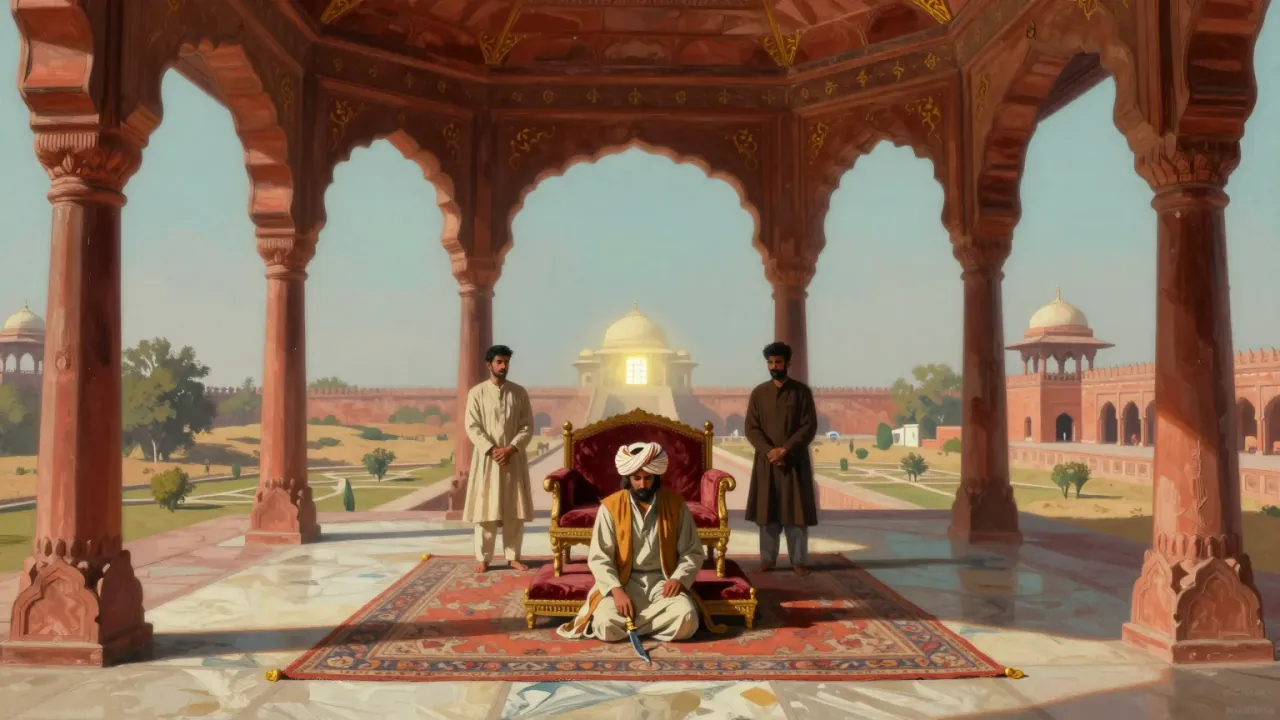
Devdas is a Hindi-language period romance film, adapted from Sarat Chandra Chattopadhyay’s 1917 novel, set in early-twentieth-century rural Bengal. It attempts to render the novel’s psychological and social gravity with fidelity: not as melodrama but as moral anatomy — tracing how caste hierarchy, filial duty, and masculine indecision corrode love until it becomes indistinguishable from self-annihilation. Bimal Roy’s direction treats the story as a closed system, where every gesture, silence, or refusal has structural weight. The film does not seek to modernise or ironise its source; instead, it deepens its fatalism through restraint — holding shots longer than necessary, letting Dilip Kumar’s Devdas register hesitation before speech, allowing Suchitra Sen’s Paro to absorb rejection without overt weeping. It aims for tragic inevitability, not catharsis. The period detail is functional rather than ornamental: no lavish sets, no historical exposition — only what the characters inhabit and obey. This is not a film about rebellion, but about the quiet suffocation of consent withheld, permission denied, and agency deferred. Its ambition is classical: to make inevitability feel earned, not imposed. (158 words)
The look of it
The story unfolds in three acts: village childhood, urban dissolution, and terminal return — each governed by unspoken rules that characters internalise before they articulate them. Dilip Kumar’s performance anchors the film: his Devdas is physically slack, voice low and hesitant, eyes often downcast or unfocused, registering shame before anger, grief before resolve. Suchitra Sen, in her Hindi debut, plays Paro with contained precision — her stillness after Devdas’s letter is more devastating than any outburst. Vyjayanthimala’s Chandramukhi avoids caricature; her warmth is practical, her sorrow private, her dignity intact even when nursing a man who refuses to name his love. Kamal Bose’s cinematography uses chiaroscuro not for glamour but for moral enclosure: interiors are dim, doorways narrow, faces half-lost in shadow. S. D. Burman’s score deploys thumri and Baul-inflected melodies not as decoration but as emotional counterpoint — the music breathes where dialogue stops. Sahir Ludhianvi’s lyrics avoid sentimentality, grounding longing in concrete images: monsoon rain, locked doors, unlit lamps. Editing is unhurried, trusting duration to build tension. There are no flashbacks, no voiceover, no explanatory intertitles — only what is seen, heard, and withheld. (159 words)
What stays with you
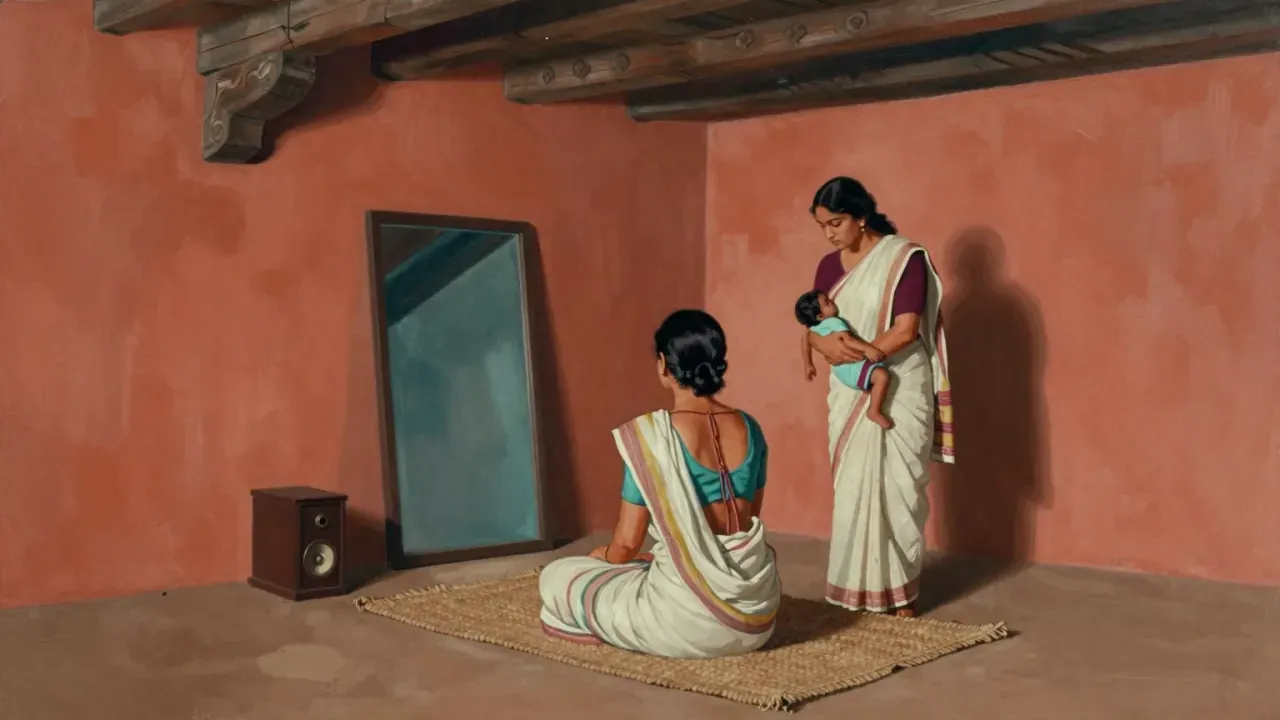
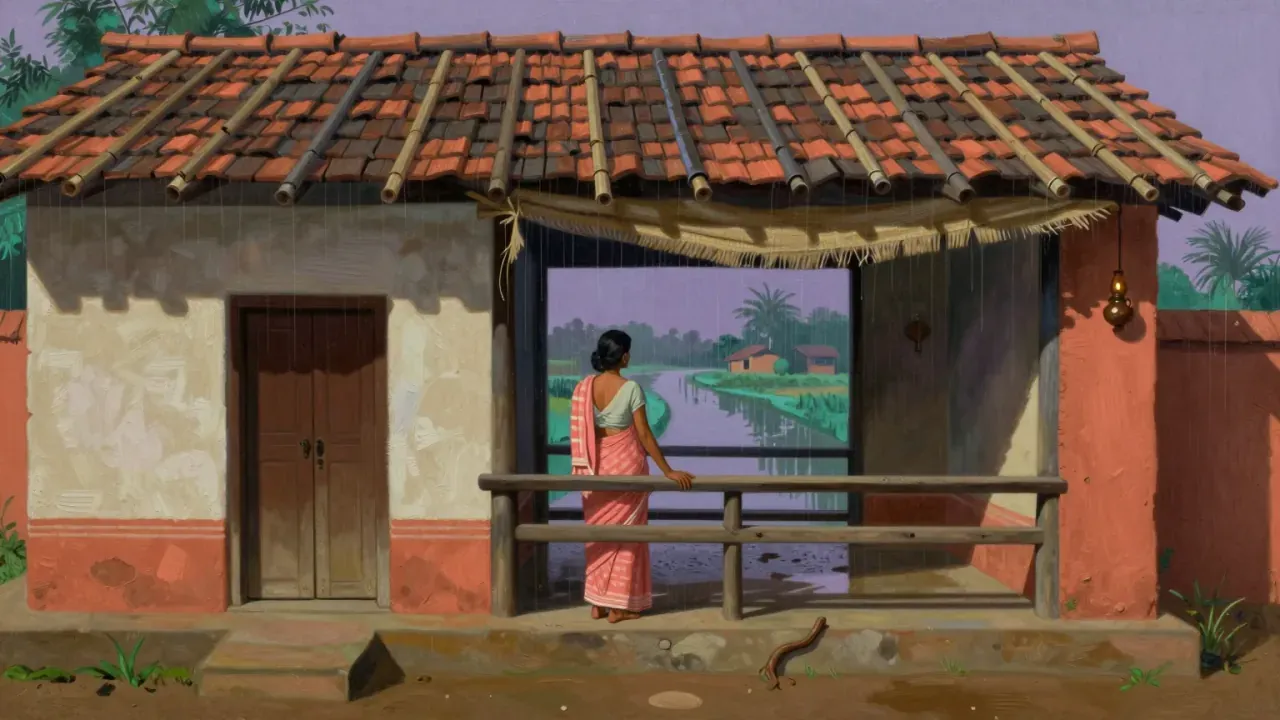
What lands is the cumulative weight of Devdas’s passivity. His inability to speak plainly to his parents, to Paro, or even to himself becomes legible not as weakness but as symptom — of a social order that trains men to defer, then punishes them for doing so. The scene where Paro stands at her window after receiving Devdas’s letter, watching rain blur the path to his house, lands with unbearable clarity: no music swells, no close-up tightens — just her profile, the glass fogging, time passing. Vyjayanthimala’s Chandramukhi lands because she is never reduced to foil or fantasy; her care for Devdas is pragmatic, her resignation quiet, her final glance at his body wordless and unsentimental. The film’s pacing — 159 minutes without a single cutaway to exposition — lands as discipline, not indulgence. Even the drinking scenes avoid revelry: Devdas’s intoxication is slow, sour, physically taxing. The recurring motif of thresholds — doorways, verandas, train platforms — lands as structural metaphor: every character stands on one, unable or unwilling to cross. The funeral procession at the end lands not as spectacle but as collective silence — villagers moving in step, no wailing, no music, just the sound of bare feet on wet earth. These choices accumulate into something heavier than plot: a portrait of constraint made visible. (156 words)
Where it slips
What does not land is the framing of Chandramukhi’s world as inherently redemptive. Though Vyjayanthimala performs with nuance, the script grants her no interiority beyond devotion to Devdas; her tawaif identity remains atmospheric rather than interrogated. Her songs, while musically rich, function as mood-setting rather than character revelation. The film also struggles with spatial logic: Calcutta feels like a narrative device, not a place — its streets, houses, and social codes remain vague, making Devdas’s urban drift less consequential than it should be. Some supporting performances falter under the weight of exposition: Murad’s Zamindar Narayan is stern but schematic, Iftekhar’s Dwijdas lacks dimension beyond familial authority. The flashback to Devdas and Paro’s childhood, though tender, relies on visual shorthand — flower garlands, shared sweets — without developing their bond beyond archetype. The film’s refusal to explain caste or zamindari structures means viewers unfamiliar with early-twentieth-century Bengali society must infer hierarchy from tone and posture alone — a risk that pays off in subtlety but occasionally obscures motive. Finally, the ending’s starkness — Devdas dying at Paro’s door — risks abstraction: without clearer staging of her purdah-bound immobility, the final image reads as poetic rather than political. (157 words)
What it is really about
The themes that matter are not love versus duty, but the erosion of volition under inherited structure. Class is not backdrop but grammar: it dictates who may propose, who may refuse, who may grieve openly, and who must nurse another’s despair in silence. Gender operates not as binary contrast but as differential containment — Paro’s honour policed by walls and veils, Chandramukhi’s autonomy bounded by patronage and performance, Devdas’s masculinity measured by his capacity to command, which he never develops. Addiction here is not clinical but ritualised: Devdas’s drinking is less substance abuse than performative surrender — a way to externalise what he cannot name inwardly. Mortality is treated as social fact, not existential crisis: Devdas dies not from illness but from the exhaustion of perpetual deferral. The film treats time not as linear progression but as recursive pressure — seasons change, letters arrive late, promises expire before they are spoken. There is no redemption arc, no late wisdom, no corrective action: the tragedy lies in the absence of turning points. Even memory is unreliable — Devdas recalls Paro and Chandramukhi in fragments, never whole, never resolved. The film’s deepest theme is the violence of non-decision: how refusal to act becomes the most decisive act of all. (155 words)
Who it is for
This film is for viewers who value sustained psychological realism over narrative propulsion, who find tension in stillness and meaning in omission. It rewards attention to gesture, vocal timbre, and compositional balance — those accustomed to contemporary pacing may find its deliberation alienating. It is not for viewers seeking resolution, moral clarity, or character growth: Devdas does not evolve, Paro does not rebel, Chandramukhi does not transcend her role. Those expecting Bollywood spectacle — dance numbers as release, music as uplift — will be disappointed: the songs deepen melancholy, not dispel it. Viewers unfamiliar with Indian social history may miss the quiet force of Paro’s grandmother’s proposal being rebuffed, or why Devdas’s letter constitutes irreversible betrayal. A viewer who values thematic coherence over plot mechanics, or who finds dignity in restraint, will connect deeply. Someone who requires active protagonists, clear antagonists, or narrative payoff would reject it outright — and rightly so. Nothing in the film invites compromise on its terms; its rigour is its condition of entry. (158 words)
Whether it is worth your time
Yes, it is worth your evening — if you approach it as a study in constraint, not a romance. Its 159 minutes unfold with the gravity of a recited vow: every frame, line, and pause serves the central question — what happens when love is structurally impossible? It repays rewatching not for hidden clues but for deeper calibration: how Dilip Kumar’s shoulders drop a fraction lower each time he fails to speak, how Suchitra Sen’s hands tighten around a sari pallu before she releases it. Those who find value in craft that subordinates itself to theme — Bose’s lighting, Burman’s scoring, Ghosh’s adaptation — will leave with a precise sense of how cinema can hold grief without exploiting it. It is not ‘enjoyable’ in the conventional sense, but it is exact, unflinching, and formally complete. Anyone expecting diversion, uplift, or catharsis will feel short-changed — and the film makes no apology for that. Its worth lies in its refusal to soften its vision, even for an hour. (157 words)