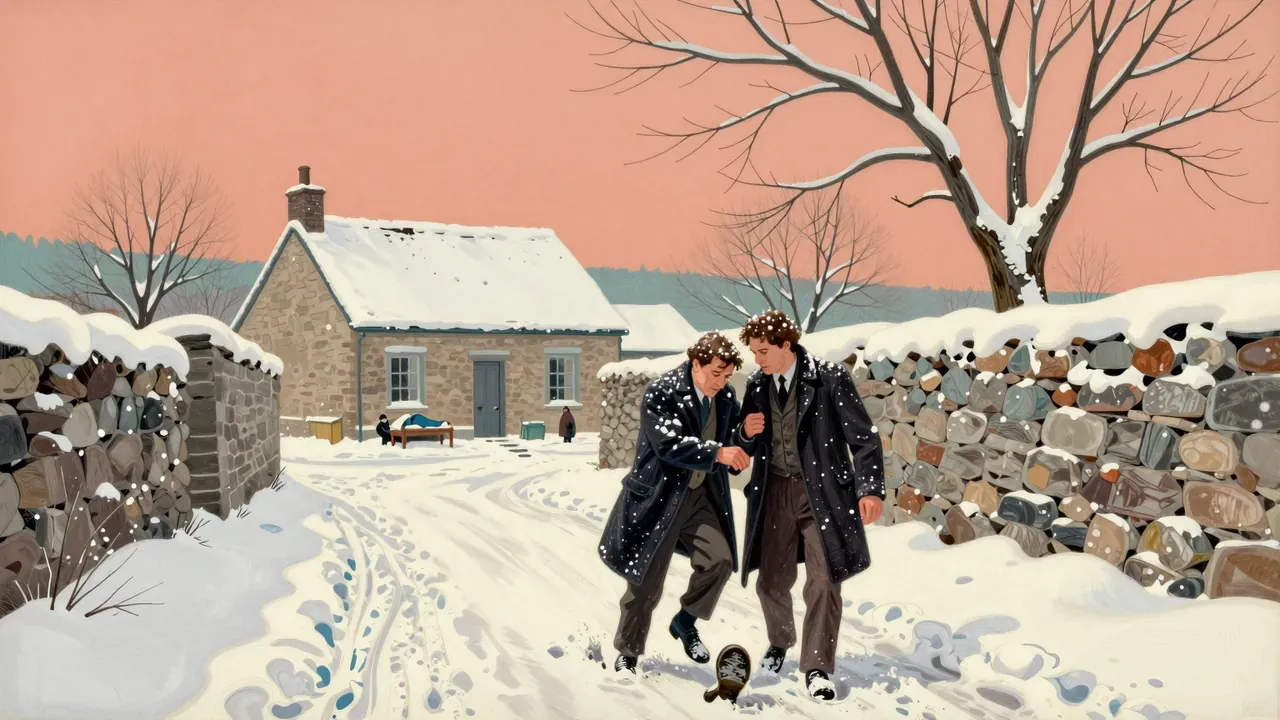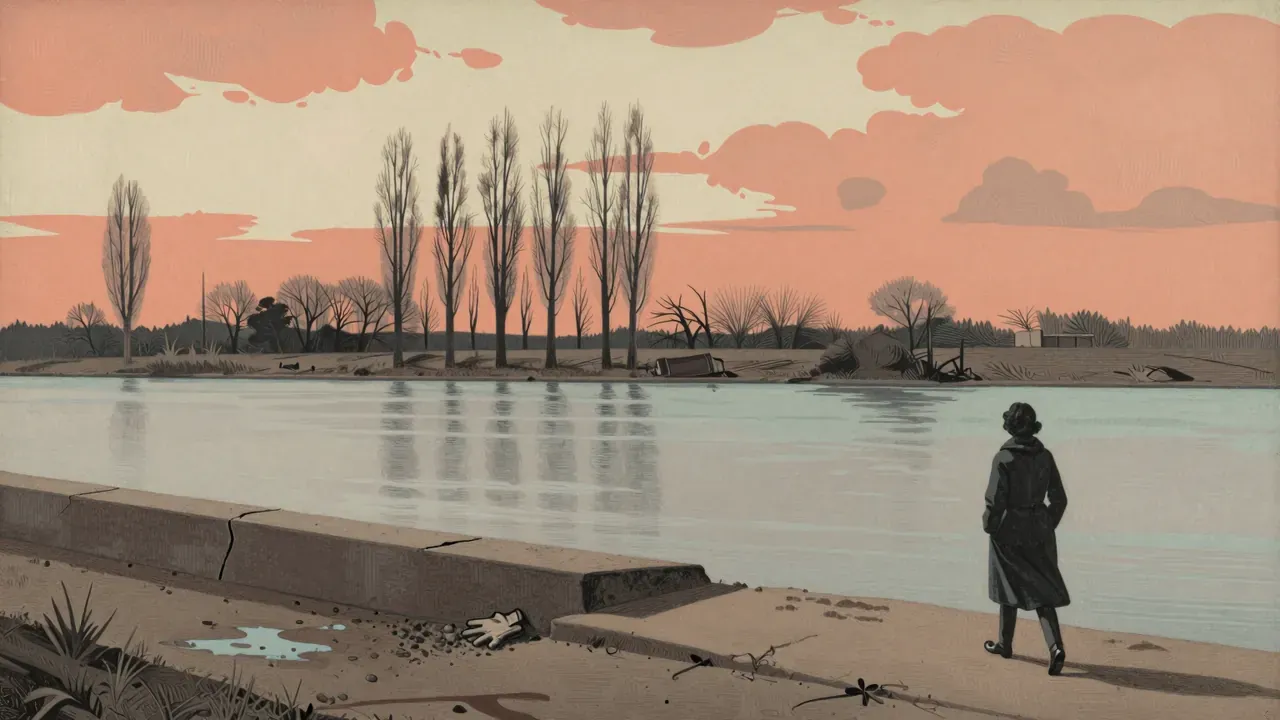
The look of it
Le Amiche is a 1955 Italian drama adapting Cesare Pavese’s novella Tra donne sole, transposing its psychological focus from a single woman’s interiority to a calibrated ensemble of five Turin women navigating class, desire, and emotional vacancy. Antonioni, with Suso Cecchi d’Amico and Alba de Céspedes, restructures the source not as fidelity but as calibration: shifting perspective from Clelia alone to a mosaic of glances, silences, and withheld gestures; recasting Rosetta’s suicide motive from lesbian longing and existential drift to unrequited infatuation with Lorenzo; anchoring the narrative in the physical texture of post-war Turin — its unfinished buildings, riverbanks, and salon showrooms. The film does not seek catharsis or moral resolution. It observes how social form — the dinner party, the beach outing, the boutique opening — masks inner disarray, and how even acts of kindness (Clelia offering Rosetta work) become gestures that fail to bridge the gulf between intention and effect. Its ambition is structural and tonal: to make emptiness legible through duration, composition, and restraint. (158 words)
The pace of it
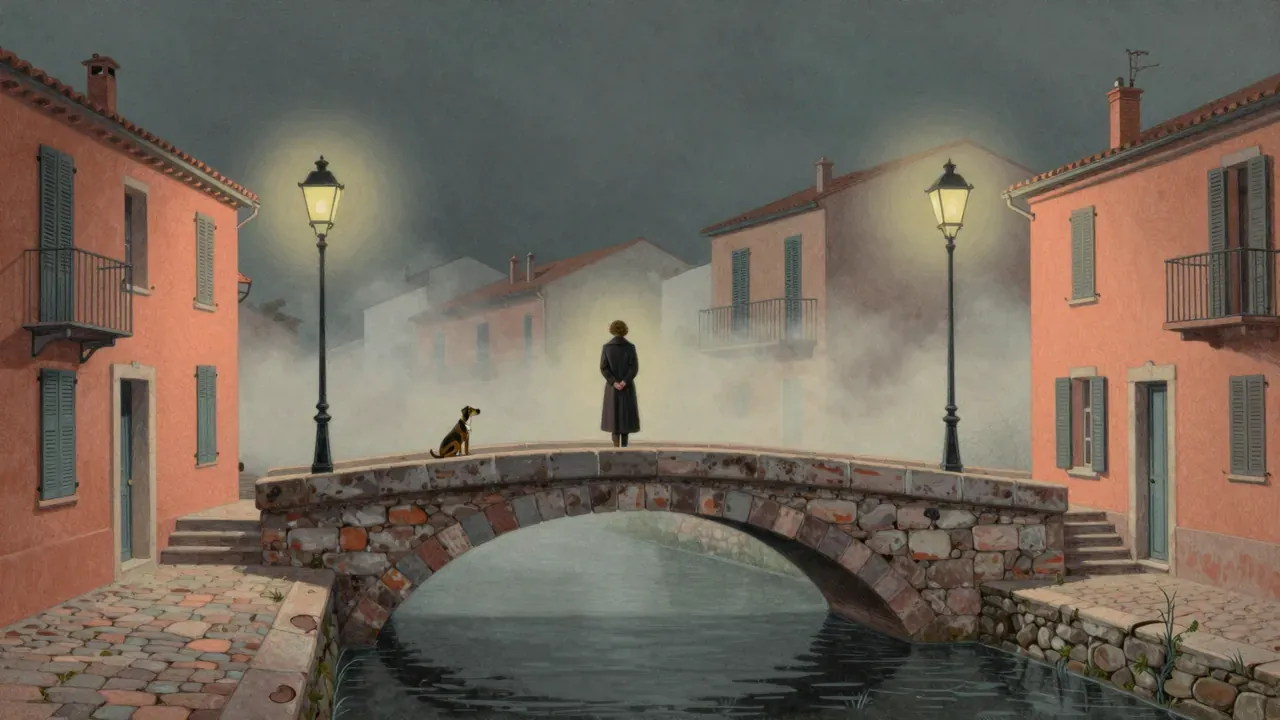
The story unfolds across twelve days, paced by deadlines — the salon opening, Rosetta’s convalescence, the New York exhibition offer — all of which arrive without transformative consequence. Gianni Di Venanzo’s cinematography fixes on surfaces: polished marble, rain-slicked pavements, the flat light of Turin’s overcast skies. He holds frames long after dialogue ends, letting silence accumulate weight. Eleonora Rossi Drago plays Clelia with minimal inflection, her face often turned away or half-obscured; Madeleine Fischer’s Rosetta is brittle but never hysterical, her despair registered in stillness more than speech. Valentina Cortese’s Nene moves with controlled precision, her ceramics studio lit like a chapel, her voice low and deliberate. Gabriele Ferzetti’s Lorenzo carries no charisma — only fatigue and indecision. Eraldo Da Roma’s editing avoids emphasis: cuts land where breath would pause, not where emotion peaks. Giovanni Fusco’s score is sparse, mostly piano motifs that trail off mid-phrase. There are no close-ups of tears, no swelling strings at moments of crisis — only the Po river flowing, indifferent, under a grey sky. (159 words)
The weight of it
What lands is the cumulative pressure of unspoken things. The scene where Rosetta walks into the salon during its opening, already knowing Lorenzo has chosen Nene, lands because nothing is said: she stands near the mirrors, watches Clelia adjust a mannequin, then leaves without touching anything. The beach trip lands not for its dialogue but for its choreography — how the women sit in pairs while the men stand apart, how Rosetta’s hand hovers near Lorenzo’s sleeve but never makes contact. The restaurant brawl lands because it is brief, clumsy, and emotionally inconsequential: two men shove each other, Lorenzo storms out, and the women resume their conversation about fabric swatches. Even Clelia’s final confrontation with Momina lands not as moral triumph but as social rupture — her voice cracks not with rage but exhaustion, and the customers do not gasp; they simply stop browsing. These moments succeed because they refuse interpretation. They present behaviour without explanation, trusting the viewer to feel the weight of what remains unsaid, unacted upon, unresolved. (157 words)
The gap in it
What does not land is the attempt to dramatise class tension through Carlo. His working-class background is stated, not embodied: he wears the same tailored shirts as Cesare, speaks the same measured Italian, and occupies the same architectural offices. His difference from Clelia is asserted in conversation but never made visible in gesture, rhythm, or environment. The film’s spatial logic undermines its social thesis — Clelia’s childhood in Turin’s poor quarters is mentioned once and never revisited in setting, costume, or memory. Similarly, the Sorelle Fontana wardrobe design, though noted in production records, registers only as generic elegance; no garment signals hierarchy, aspiration, or contradiction. The film also struggles with Rosetta’s motivation. Her suicide attempt is framed as impulsive, yet her later refusal of Clelia’s job offer — the one concrete path toward autonomy — feels psychologically unmoored. The shift from Pavese’s lesbian subtext to heterosexual longing flattens her interiority: her ‘emptiness’ becomes a plot device rather than a condition rendered with specificity. These gaps do not break the film, but they leave certain relationships feeling schematic rather than lived. (159 words)
The shape of it
The themes that matter are not love or betrayal in the conventional sense, but the architecture of avoidance: how people build routines, professions, and friendships to keep feeling at bay. Class here is less about money than about habit — the way Clelia corrects a mannequin’s posture before correcting her own stance, or how Nene signs contracts without reading them, trusting form to substitute for agency. Loneliness is not presented as isolation but as co-presence without reciprocity: five women sharing a flat, a meal, a riverbank, yet never sharing a thought that alters their course. The film treats time not as progression but as repetition — the same tram lines, the same café terrace, the same riverbank where Rosetta disappears. Even the Po is not a symbol but a fact: wide, slow, cold, indifferent. Antonioni’s later preoccupations — alienation, surface, the failure of language — are all present, but without the formal radicalism of L’avventura; here, they are contained within classical framing and linear chronology, making them feel less like discoveries than quiet confirmations. (156 words)
The demand of it
This film is for viewers who value sustained attention to mood over momentum, who find meaning in the space between lines rather than in the lines themselves, and who accept that some characters will remain opaque not because the film fails them but because opacity is their condition. It rewards patience with texture: the grain of Di Venanzo’s film stock, the cadence of Cortese’s delivery, the way light falls across a ceramic vase. It is not for those who require narrative payoff, psychological clarity, or moral orientation — viewers who expect Rosetta’s death to catalyse change, or Clelia’s choice to resolve into self-actualisation, will find the ending withholding. Some critics at the time, including Alberto Moravia, called Antonioni’s approach ‘restrained’; others today call it ‘foreshadowing’. Neither label changes the fact that the film asks you to sit with discomfort without offering relief. If you need closure, if ambiguity reads as evasion, if silence feels like absence rather than density, this will not hold you. (159 words)
The end of it
Yes, it is worth your evening — but only if you watch it as a study in equilibrium, not as a story with stakes. Its 104 minutes pass without hurry because nothing arrives early or late; every shot fulfils its duration, no more, no less. You will not leave moved in the conventional sense, but you may leave recalibrated — noticing how often you fill silence with noise, how easily you mistake proximity for connection, how much of daily life is performed rather than felt. Those who found L’avventura impenetrable may find Le Amiche more accessible precisely because its formal discipline is less radical, its surfaces more legible. But accessibility here is not simplification: it is precision. A viewer expecting plot or catharsis will feel short-changed. A viewer willing to register the weight of a glance held half a second too long, or the significance of a train platform empty except for one departing figure, will find it quietly resonant. It earns its place not as entertainment but as calibration. (158 words)