The frame of it
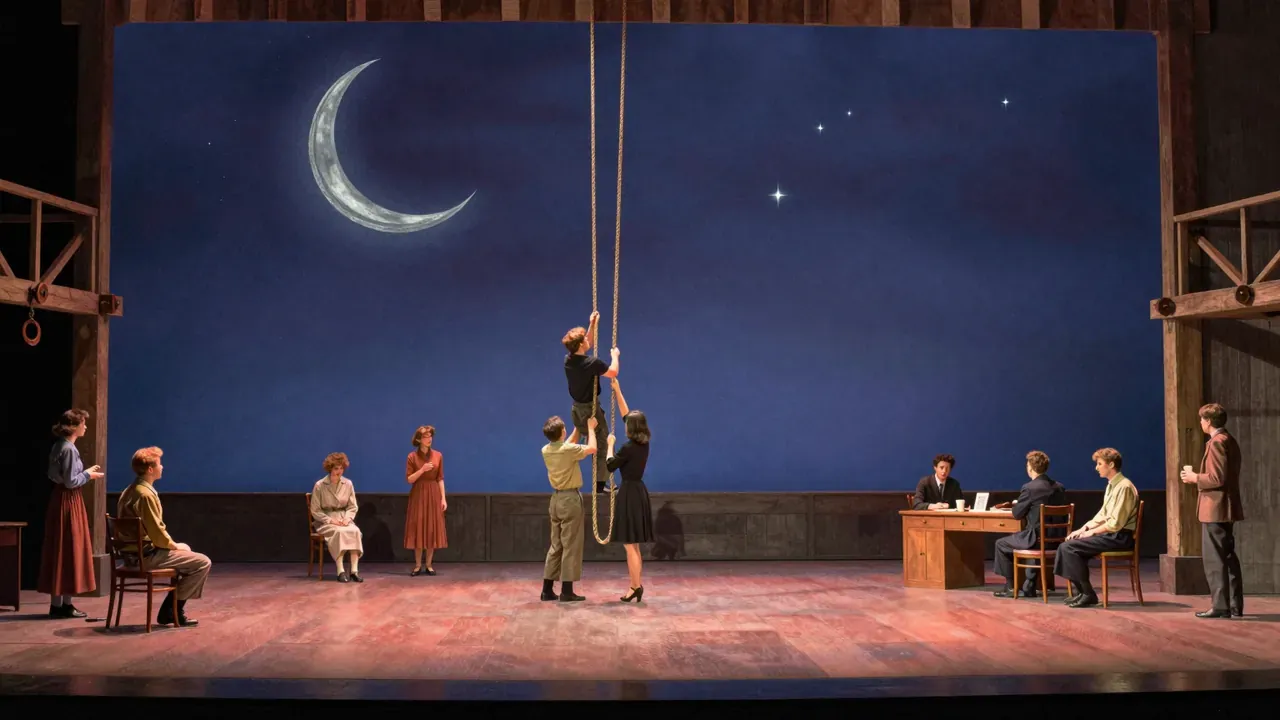
The Magic Flute is Ingmar Bergman’s 1975 filmed staging of Mozart’s opera, made for Swedish television but released theatrically. It is not an adaptation into cinematic language, nor a documentary of performance: it is a deliberate re-creation of an eighteenth-century theatrical event — specifically the kind that would have hosted the opera’s 1791 premiere — using the tools and constraints of 1970s broadcast production. Bergman built a replica of the Drottningholm Palace Theatre inside Stockholm’s Filmhuset studios because the original was too fragile for filming. He shot in 16 mm, used stereo sound — rare for TV at the time — and preserved the 4:3 aspect ratio. His aim was fidelity not to realism but to theatrical illusion: visible stage machinery, painted backdrops, wing space, audience faces, intermission glimpses backstage. The film treats the opera as a living ritual, not a story to be translated, but a shared agreement between performers and viewers about what representation can do. It assumes the viewer knows the opera or is willing to meet it on its own terms — as spectacle, symbol, and sung drama — rather than as psychological narrative. (158 words)
The voices in it
The story follows Schikaneder’s libretto with selective cuts and reordering: Sarastro is Pamina’s father, Papageno sings ‘Ein Mädchen oder Weibchen’ just before meeting Papagena, and the Three Slaves are silent children. Performances are sung to pre-recorded tracks — the Swedish Radio Symphony Orchestra and Choir, conducted by Eric Ericson — then mimed on set over three months in 1974. Josef Köstlinger’s Tamino is earnest and physically present; Håkan Hagegård’s Papageno avoids buffoonery, grounding his warmth in quiet sincerity. Sven Nykvist’s cinematography stays close, favouring medium shots and shallow focus that keep the frame within the proscenium’s logic. Lighting is even, un-dramatic, avoiding chiaroscuro except where the stage design itself creates it. Costumes by Henny Noremark and Karin Erskine blend period suggestion with practicality — Papageno wears plain wool, not feathers. The camera moves only when the stage does: wings shift, backdrops roll, ropes creak. There is no cut to a ‘real’ forest or temple; all locations are declared by paint and pulley. (159 words)
The pact in it
What lands is the integrity of the conceit: that this is theatre being watched, not life being observed. The recurring face of the young girl in the audience — first in the overture, then intermittently — works as both anchor and mirror: her stillness and absorption confirm the spell without explaining it. The mechanical transitions — night falling as cloths slide, winter melting into spring as Papageno and Papagena shed coats — feel neither quaint nor ironic, but purposeful: they make visible the contract between maker and witness. Bergman’s decision to cast young singers with warm, intimate voices pays off in emotional directness — Irma Urrila’s Pamina carries sorrow without grandeur, Birgit Nordin’s Queen of the Night delivers fury with clipped precision, not vocal acrobatics. The intermission sequence, showing priests adjusting wigs and Papageno eating bread behind the wings, avoids condescension. These are not ‘real people behind the roles’, but performers sustaining a collective fiction. The film’s greatest success is how little it asks the viewer to believe in magic — and how thoroughly it makes them believe in the act of believing. (157 words)
The weight of it
What does not land is the pacing across the full 135 minutes. The static frame, refusal of cinematic emphasis, and insistence on theatrical simultaneity accumulate weight without variation. A viewer unfamiliar with the opera may struggle to parse plot turns — the Speaker’s exposition, the trials’ logic, the Queen’s motives — because Bergman declines to clarify through editing or emphasis. The absence of close-ups on mouths during singing means lip-synch is occasionally misaligned, breaking immersion for some. Papageno’s earthiness sits uneasily beside Tamino and Pamina’s more stylised reserve, and the decision to cast children as the Three Slaves, while conceptually neat, leaves their silence unmoored from dramatic function. The stereo soundtrack, though pioneering, lacks the spatial richness of later recordings; strings sometimes blur in the mix. And while the Drottningholm replica is faithful, its wooden acoustics — captured flatly on 16 mm — flatten the orchestra’s attack and the choir’s texture. These are not flaws in ambition, but limits of method: the film honours the stage’s economy at the cost of cinematic elasticity. (158 words)
The trials in it
The themes that matter are covenant, apprenticeship, and the labour of illusion. This is not an opera about enlightenment as doctrine, but about initiation as practice — Tamino learning to listen, Papageno learning to wait, Pamina learning to speak her will. The repeated framing of audience members — old and young, Black and white, working-class and formal — insists that the rite belongs to no single generation or class. Bergman treats Masonic symbolism not as esoteric code but as scaffold: the trials are physical, communal, reversible. Silence matters as much as song — the pauses between choruses, the held breath before a cadence, the quiet as the curtain falls on intermission. The film also explores transmission: how a twelve-year-old boy’s awe at Drottningholm becomes a lifetime’s work, how a libretto written for Vienna in 1791 finds new breath in Stockholm in 1974 via Alf Henrikson’s Swedish translation. There is no irony in the magic flutes or bells; their power lies in collective assent. What endures is not the myth but the making — the wind machines, the painted sky, the shared hush. (155 words)
The audience for it
This film is for viewers who value craft over convenience, who find pleasure in watching skilled people do difficult things with visible means. It rewards patience with texture: the grain of 16 mm, the creak of stage rope, the slight lag between voice and gesture. It suits those familiar with the opera, or willing to listen to it separately first. It is not for viewers who require narrative propulsion, psychological exposition, or visual variety — those who expect cinema to explain, not invite. Some opera lovers dislike its restraint; others find its fidelity to theatrical conditions revelatory. A viewer who values immersive world-building over character psychology may find it remote. Its worth depends on whether you accept that a film can be a vessel for ritual rather than a window onto reality. Change the format — shoot in widescreen, add voiceover, cut the intermission — and it ceases to be Bergman’s project. Its audience is narrow but deep: students of stagecraft, devotees of Mozart, and anyone who has ever sat in a darkened room and chosen, for two hours, to believe. (159 words)
The time in it
Yes, it is worth your evening — if you give it your attention undivided and without precondition. It is not entertainment in the habitual sense, but an act of shared attention staged with exacting care. You will not leave humming tunes alone, but with a clearer sense of how music, movement, and mechanics cohere into meaning. It repays rewatching: the second time, you notice how Nykvist holds on a priest’s hands adjusting a robe, how the light shifts when the moon backdrop rises. Those who find it slow are not wrong — it is slow — but the slowness is structural, not incidental. It asks for the same commitment the performers gave: to sing live to tape, to mime precisely, to trust the audience to follow. Skip it if you need exposition, momentum, or emotional shorthand. But if you’ve ever felt wonder in a theatre — not at the story, but at the fact of its happening — this film is a document of that feeling, made tangible. Its value lies in its refusal to compromise. (159 words)