The shape of obsession
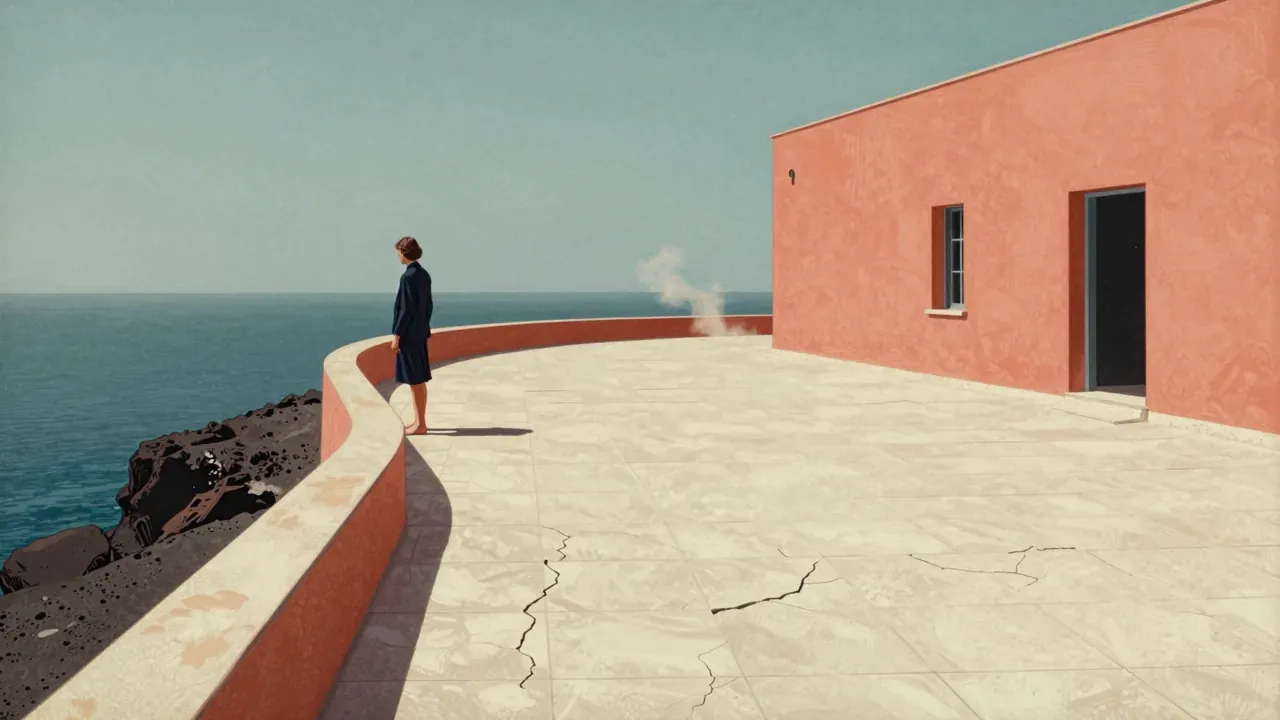
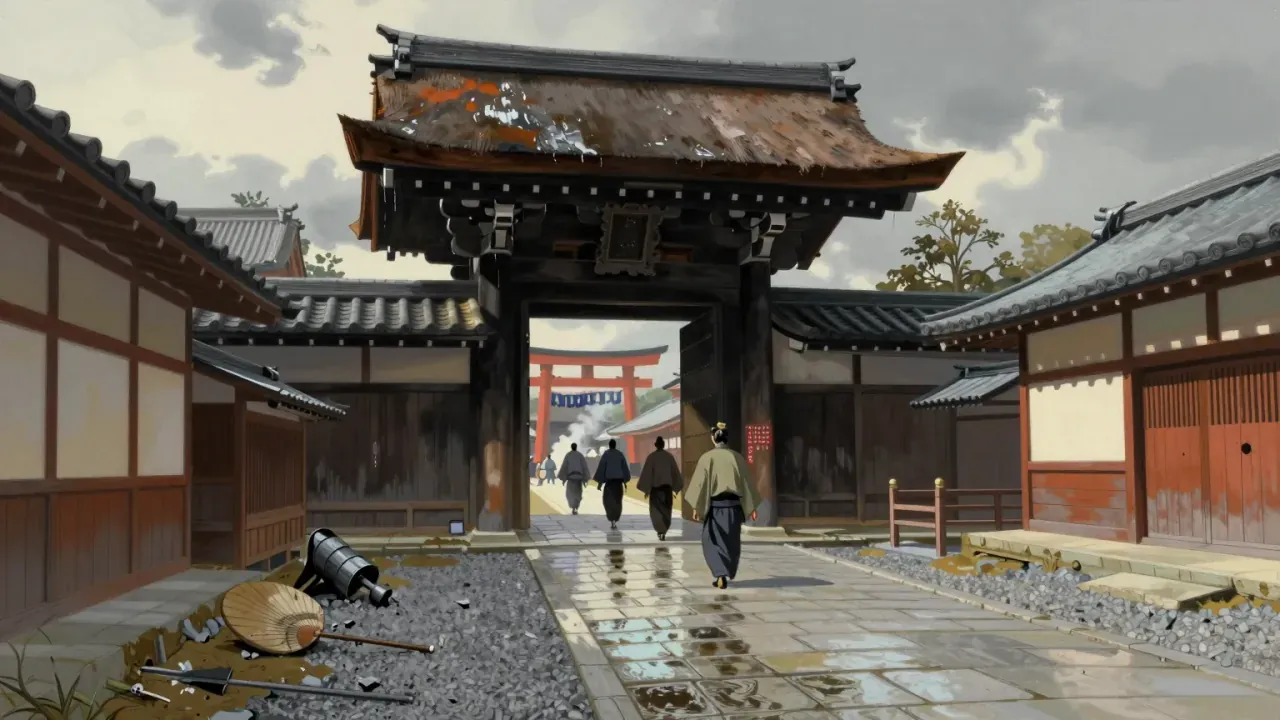
Gate of Hell is a 1953 Japanese jidaigeki — a period drama set in the Heiji Rebellion of 1159 — that uses classical restraint to dramatise obsessive desire and moral collapse. It is not a war film, though it opens amid rebellion; nor a romance, though love drives its plot. It is a formal study in violation: of duty, marriage, self-discipline and ultimately the body itself. Teinosuke Kinugasa, who wrote and directed, treats the story as a vessel for controlled intensities — emotion held under pressure, then released in precise, irreversible acts. The film’s ambition lies in its calibration: to make austerity feel urgent, silence threatening, and colour — Eastmancolor, used here for the first time by Daiei Film — not decorative but diagnostic. Every hue, every pause, every bow is part of a system meant to expose how rigid codes of honour can fracture under unmediated want. It does not seek to explain Morito’s descent so much as chart its geometry: cause, misdirection, escalation, consequence. Its fidelity is to structure, not psychology. (158 words)
The grammar of restraint
The story follows Endō Morito’s fixation on Kesa after rescuing her during a palace siege, then pursuing her despite her marriage to Wataru. Kazuo Hasegawa plays Morito with minimal inflection — his face tightens, his posture stiffens, his voice rarely rises — while Machiko Kyō gives Kesa a stillness that reads less as passivity than as containment, a surface over deep calculation. Jun Tazaki’s Wataru is all quiet competence, never theatricalised. Yoshinobu Nishioka’s art direction sustains a world of lacquer, silk and shadow: interiors are shallow, corridors long and narrow, screens placed to bisect frames. Yasushi Akutagawa’s score avoids melody in favour of timbral weight — low strings, koto plucks held like breaths. Kinugasa’s editing refuses cross-cutting or reaction shots during key confrontations; he holds on faces until discomfort becomes physical. The camera moves only when movement serves ritual: processions, bows, sword draws. There is no music cue for revelation, no close-up for epiphany — meaning accrues through repetition, omission, and the slow erosion of spatial harmony. (159 words)
The weight of duration
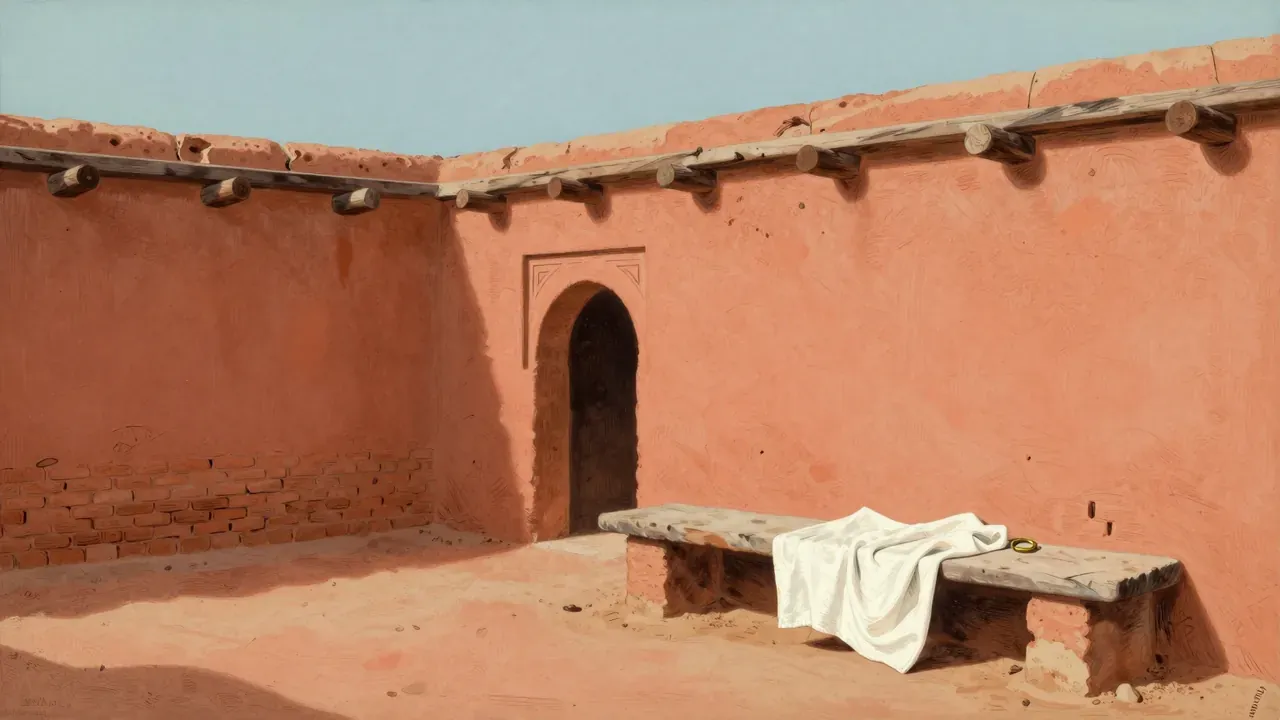
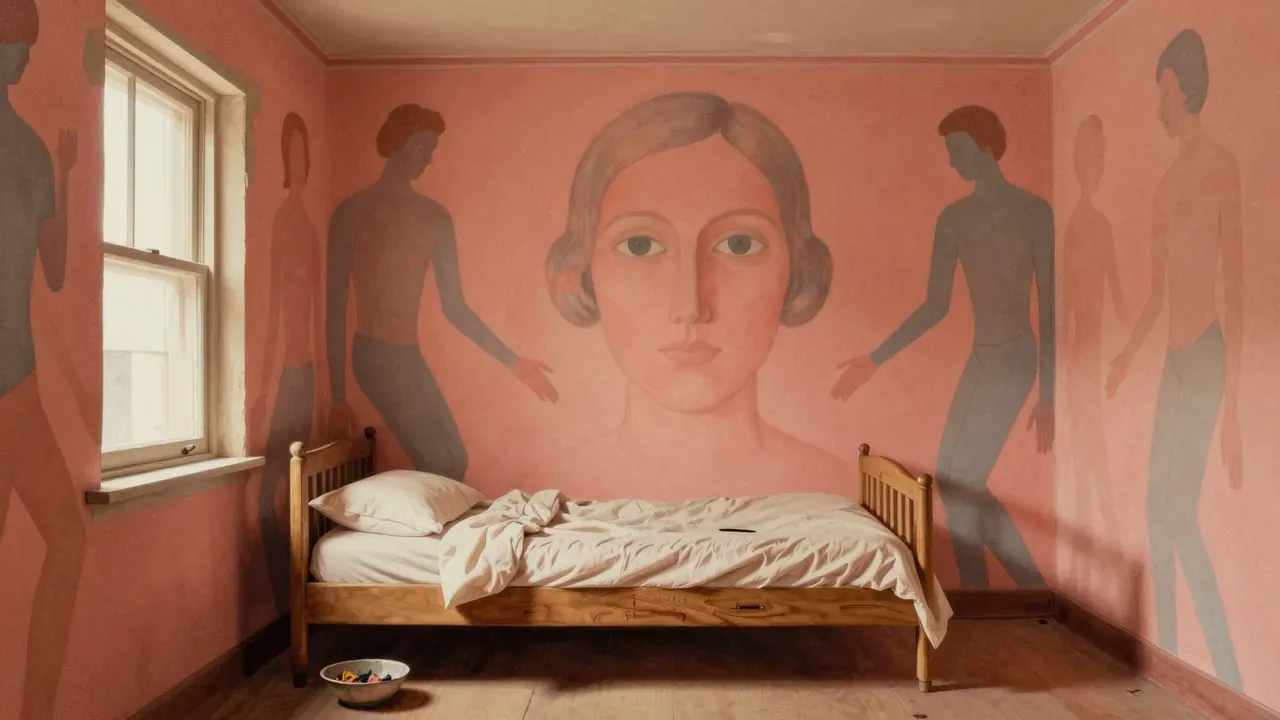
What lands is the film’s cumulative dread — not from shock or violence, but from the narrowing of possibility. Each scene reduces Morito’s options, not through external constraint but through his own escalating refusal of ambiguity. The horse race, the ‘Forget the Race’ dinner, the aunt’s house: each setting is a stage where decorum masks imminent rupture, and the audience feels the strain of maintaining that mask longer than the characters do. The colour palette — deep crimsons, muted golds, ash-grey silks — does not ornament but isolates: Kesa’s robes glow against neutral walls, making her both sacred and targetable. The final bedroom sequence works because nothing is rushed: Morito’s entry, his hesitation, the sword’s arc, the lift of the blanket — all are given their full duration, without editorial interference. That restraint makes the horror procedural, not sensational. The film’s power is architectural: it builds tension not by raising volume but by tightening joints. Even the costume design — which won an Academy Award — functions narratively: Kesa’s layered garments become literal barriers, then symbolic shrouds. Nothing feels added; everything feels necessary. (157 words)
The limits of form
What does not land is the framing of Kesa’s sacrifice as inevitable rather than interrogated. The script gives her no interiority beyond resolve; her decision to die rather than submit is presented as noble, not tragic or ambiguous. This flattens the ethical weight of the ending — Morito’s penance reads as earned, but Kesa’s erasure reads as foregone. The film assumes the audience shares its cultural grammar: that wifely fidelity, samurai honour and aesthetic discipline are non-negotiable values, not contested ones. Without that shared assumption, some motivations appear opaque, even arbitrary — particularly Morito’s sudden shift from loyalty to obsession, which lacks psychological scaffolding. The film also resists clarifying its historical context: the Heiji Rebellion is named but not explained, its stakes left implicit. For viewers unfamiliar with jidaigeki conventions, the political backdrop remains decorative, not functional. The pacing, too, demands patience: long static shots and repeated ceremonial gestures may read as stasis rather than suspension if the viewer is not attuned to the rhythm of withheld action. These are not flaws in themselves, but limits — the film presumes a certain literacy, and offers no glossary. (159 words)
The cost of purity
The themes that matter are the violence of form, the cost of purity, and the instability of intention. Morito believes he acts from devotion, but his actions dismantle every structure he claims to uphold: loyalty to Lord Kiyomori, respect for Wataru, reverence for Kesa. The film treats ritual not as empty tradition but as social infrastructure — once breached, chaos is not explosive but slow, structural, inevitable. Colour is thematic, not ornamental: the red of Kesa’s sash reappears in blood, in banners, in the gate itself — a visual motif linking desire, authority and damnation. The ‘gate of hell’ is not metaphorical; it is the threshold Morito crosses each time he chooses personal will over collective code. Equally central is the idea of performance as survival: Kesa performs obedience, Wataru performs calm, Morito performs control — until performance collapses into act. There is no redemption arc, only exposure: the film insists that character is revealed not in crisis but in the small, repeated choices made before it arrives. The tragedy is not that Morito fails, but that he succeeds — kills, claims, fulfils — only to discover the victory was hollow, the prize already gone. (156 words)
Who it is for
This film is for viewers who value precision over exposition, who find tension in stillness and meaning in restraint. It rewards attention to composition, costume, and cadence — those who watch films for how they hold space, not just what they say. It suits viewers familiar with Japanese aesthetics or willing to learn them, and those who accept that moral complexity need not be verbalised to be felt. It is not for those who require psychological backstory, narrative momentum, or emotional signposting. Some may find the pacing glacial, the motivations opaque, the ending unsatisfyingly austere. A viewer who expects character development through dialogue or internal monologue will leave frustrated. The film would change its appeal if it offered more context — historical, linguistic, or psychological — but that would violate its method. Its rigour is its condition, not its flaw. To ask for explanation is to misunderstand its terms. It is not withholding; it is assuming competence. (159 words)
Is it worth your evening
Yes, it is worth your evening — but only if you give it your full, unhurried attention. It is not background viewing; it demands presence, not consumption. Its eighty-eight minutes unfold at the pace of a drawn breath, and its rewards accumulate slowly: a shift in light, a pause before a bow, the way a sleeve falls across a hand. Those who treat film as spectacle or narrative delivery may find it inert. But for those who watch to feel the weight of form — how colour governs mood, how silence amplifies consequence, how costume articulates power — it is singular. It is not ‘entertaining’ in the conventional sense, but it is deeply stirring: a demonstration of how much can be said without saying anything aloud. Its endurance lies in its economy — every frame has purpose, every cut consequence. To dismiss it as ‘slow’ is to mistake deliberation for delay. It is worth your evening if you believe cinema can be architecture, not just storytelling. (159 words)