The memory of it
Arabian Nights is the third and final part of Pier Paolo Pasolini’s ‘Trilogy of Life’, an attempt to film pre-modern storytelling not as historical reconstruction but as embodied memory — specifically, his own remembered sense of the One Thousand and One Nights as a boy. It does not seek fidelity to the frame narrative or to scholarly editions; it omits Scheherazade, Shahriyar and Dunyazad entirely, and instead selects, rearranges and intercuts fragments from across the collection — chiefly Ali Shar and Zumurrud, but also tales of Aziz and Aziza, Yunan, Prince Shahzaman and Sium — treating them as autonomous, sensuous units. Pasolini’s stated aim was to recover a world before ideology, before the Freudian or Marxist unconscious, where desire, poetry and bodily pleasure circulate without shame or sublimation. The film is less adaptation than invocation: a series of tableaux vivants staged in real locations across Yemen, Iran, Ethiopia and Nepal, using non-professional and semi-professional actors, many discovered on site. Its method is anti-psychological, anti-linear, anti-interpretive — it wants the stories to breathe, not explain.
The shape of it
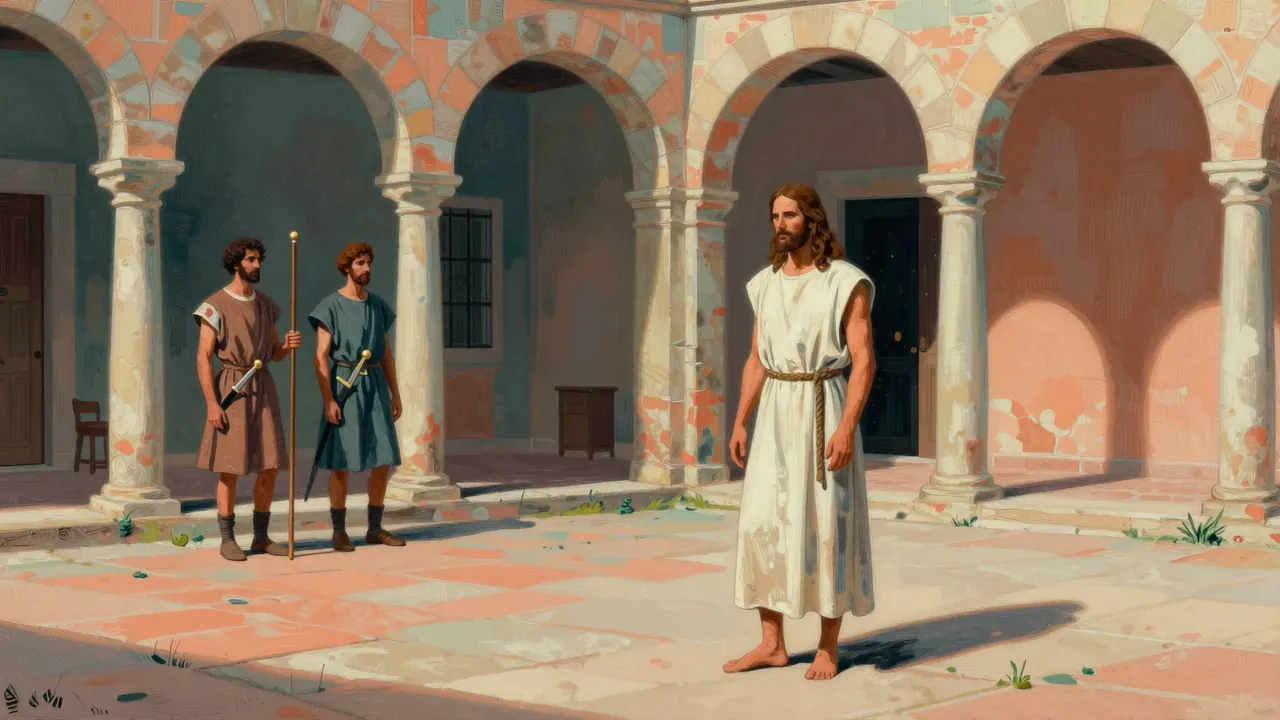
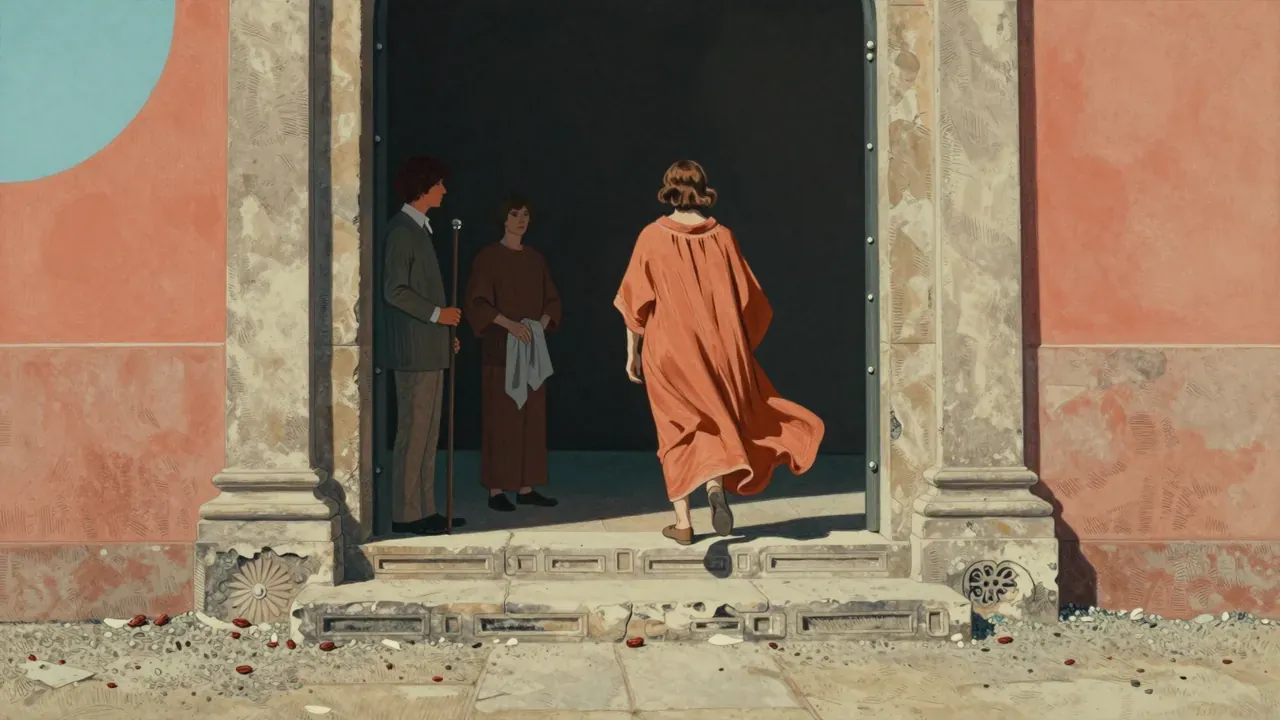
The film works through accumulation rather than progression: sixteen discrete scenes, loosely threaded by Nur-ed-Din’s search for Zumurrud, but each holding its own weight, rhythm and tone. Ninetto Davoli, Franco Citti and Franco Merli recur in shifting roles, their physical presence anchoring the episodic structure. Giuseppe Ruzzolini’s cinematography avoids dramatic lighting or movement; he frames bodies in landscape — sun-baked courtyards, desert horizons, temple courtyards — with patient symmetry. Ennio Morricone’s score uses sparse percussion, reed instruments and vocal chants, never underscoring emotion but marking transitions like a storyteller clearing his throat. Nino Baragli’s editing sustains duration: long takes of walking, eating, undressing, reciting poetry. There is no voiceover, no exposition. Dialogue is minimal, often poetic or ritualistic. The performances are uninflected, even blank — not amateurish, but deliberately unpsychologised. This is not realism but stylised mimesis: gestures repeated until they become mythic, bodies treated as sites of pleasure, labour and transformation rather than vehicles for character arcs.
The feel of it
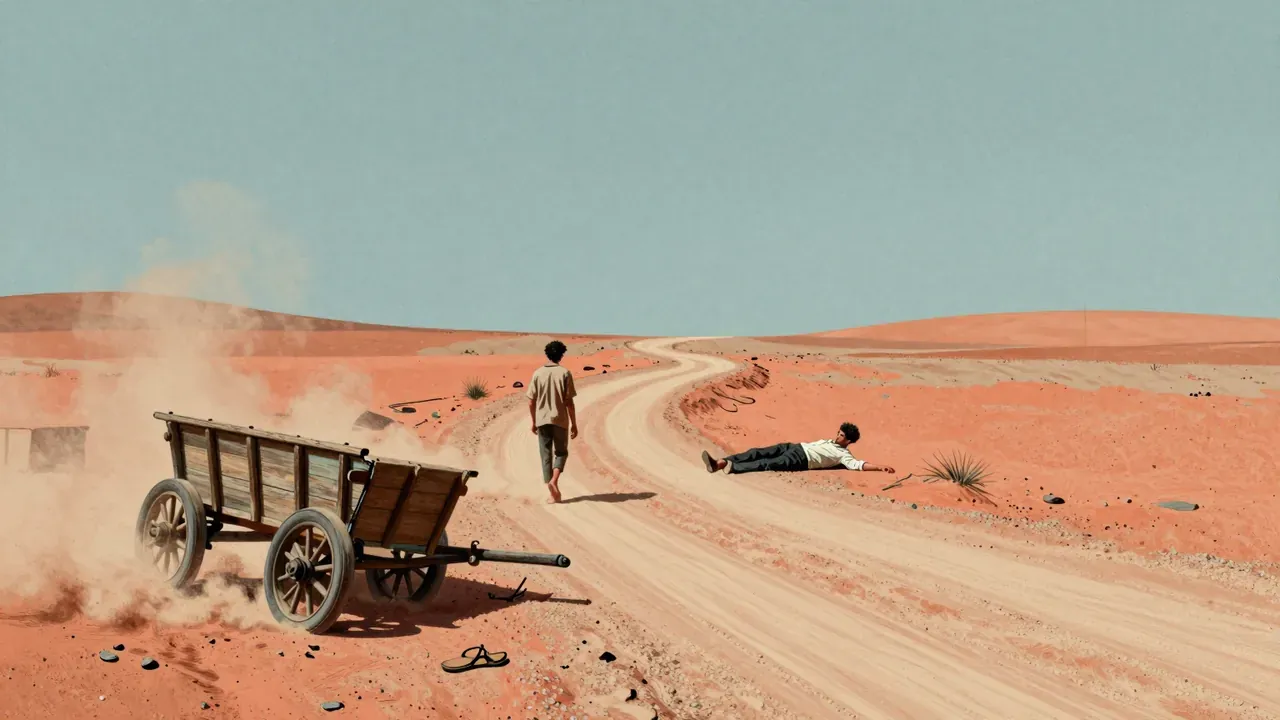
What lands is the film’s tactile sincerity: the heat of the Yemeni market at Taiz, the grain of stone in Esfahan’s Shah Mosque, the weight of a tapestry being woven, the sound of bare feet on packed earth. The eroticism feels unperformed — not voyeuristic, not titillating, but matter-of-fact, integrated into daily life like cooking or prayer. The poetry of Abu Nuwas, rendered in Italian translation, gains force from repetition and setting: when Sium composes on the spot, the act feels urgent and communal, not literary. The slapstick — a man slipping on a melon rind, a donkey blocking a palace gate — lands because it is rooted in physical cause and effect, not punchlines. The cross-dressing sequence, where Zumurrud becomes king, works not as gender commentary but as narrative logic: her authority is accepted because she moves, speaks and commands like a man, and the film never pauses to underline the irony. The film’s refusal to moralise — about desire, deception or power — gives it a rare kind of calm. It trusts the stories to hold their own meaning without interpretation, and that trust is mostly repaid.
The looseness of it
What does not land is the structural looseness when taken as a single work. Without the frame story, the anthology feels unmoored — not fluid, but diffuse. Some episodes, particularly those involving children (Yunan’s journey, Shahzaman’s rescue of the demon’s prisoner), carry unresolved ethical weight: Barbara Grandi’s uncredited body double in the love scene remains a dissonant fact the film neither acknowledges nor integrates. The tonal shifts — from pastoral comedy to ritual sacrifice to dreamlike abstraction — are deliberate, but they resist synthesis. The film’s rejection of psychology means characters rarely change, which makes Nur-ed-Din’s quest feel cyclical rather than consequential. A viewer expecting narrative payoff will find the ending — reunion, feast, quiet departure — underwhelming. The decision to shoot interiors in Rome’s Cristaldi studios, while practical, creates a slight rupture in texture: the studio light is flatter, the space less resonant than the real locations. And though Pasolini intended beauty as selection criterion, some sequences — particularly the extended drug-induced hallucination in the Ethiopian segment — feel inert rather than ecstatic, their pacing too slack to sustain attention.
The telling of it
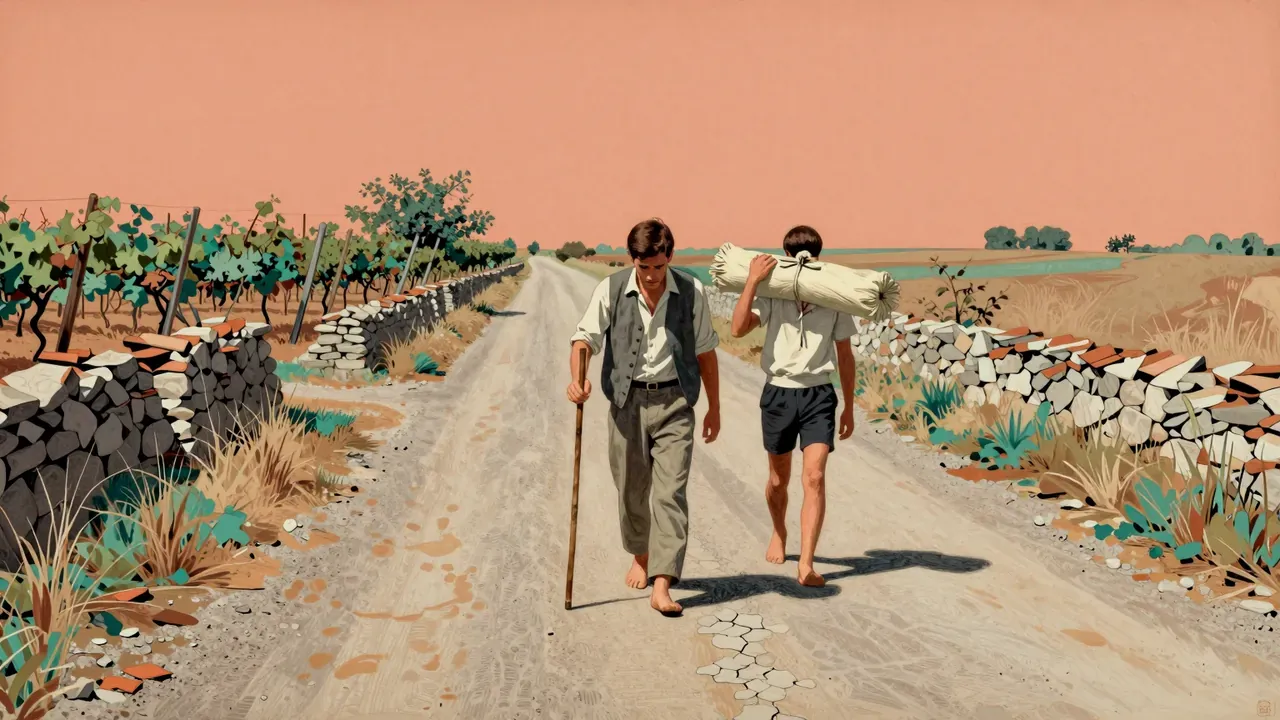
The themes that matter are bodily autonomy, storytelling as survival, and the porous boundary between dream and waking life. Pasolini treats the body not as site of sin or trauma but as instrument of knowledge: touch, sight, breath and rhythm precede language. The recurring motif of disguise — Zumurrud as Wardan, Shahzaman as mendicant, Yunan as sailor — is not about identity politics but about mobility: how stories and people move across borders, genders, classes and kingdoms. Storytelling itself is presented as collective practice: women weave tapestries while telling tales; poets compose on demand; strangers trade stories at crossroads. There is no authorial voice, only circulation. The film also insists on materiality: cloth, food, architecture, music — all are present in detail, not as backdrop but as co-constitutive of meaning. Time is non-linear: past, present and myth coexist in the same shot. This is not nostalgia but archaeology — not longing for a lost world, but excavation of forms of life that persist beneath modern categories of self, nation or genre.
The watching of it
This film is for viewers who value patience over plot, texture over exposition, and collective ritual over individual psychology. It suits those familiar with Pasolini’s earlier work, or with ethnographic cinema, medieval literature or non-Western narrative forms. It rewards attention to gesture, costume, spatial composition and acoustic texture. It is not for viewers who require narrative closure, psychological motivation or consistent tone. Those unsettled by full-frontal nudity, non-simulated sex or child actors in ambiguous contexts should approach with caution — not because the film exploits these elements, but because it refuses to mediate them. Viewers expecting fantasy as spectacle — dragons, magic spells, digital effects — will find little here beyond what sunlight, stone and human bodies can do. Those who associate ‘erotic’ with titillation rather than embodiment may misread its stillness as indifference. The film assumes its audience shares its belief that beauty resides in duration, not climax; in repetition, not resolution.
The staying with it
Yes, it is worth your evening — provided you watch it as a sequence of lived moments rather than a story to be solved. Its 129 minutes unfold like a slow ritual: there are no shortcuts, no summaries, no concessions. You must meet it on its terms — unhurried, unexplained, unapologetic. That said, it is not for everyone: a viewer seeking entertainment, clarity or emotional catharsis will leave frustrated. Those who admire Bresson, Tarkovsky or early Dovzhenko may find kinship here; fans of mainstream fantasy or psychological drama will not. The verdict rests on whether you accept Pasolini’s premise: that pre-modern storytelling is not primitive but precise — that its repetitions, digressions and bodily frankness are not flaws but features. If you do, the film deepens with each viewing. If you don’t, no amount of location grandeur or Morricone’s score will compensate.