The look of it
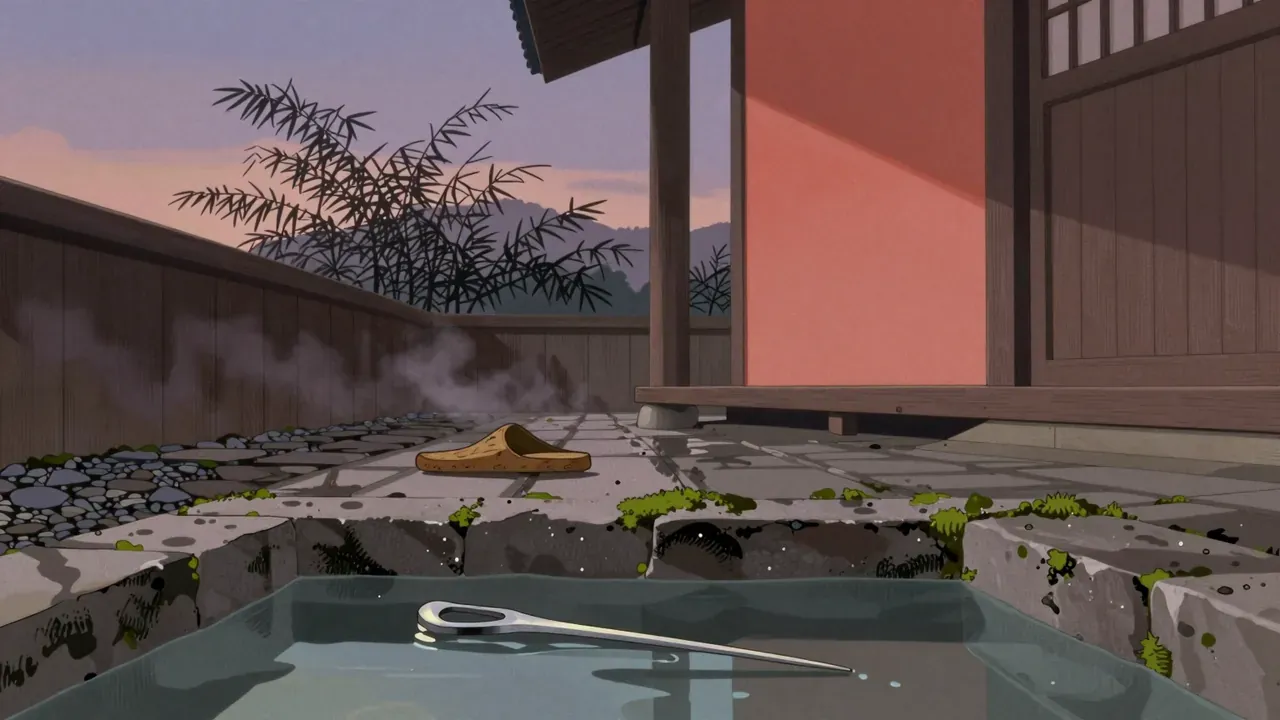
Ornamental Hairpin is a Japanese comedy-drama set entirely at a remote onsen, where the rhythms of communal bathing, idle conversation and minor disruptions structure time more than plot does. Hiroshi Shimizu makes no attempt to dramatise the war then escalating beyond the frame; instead, he holds space for quiet observation — of how people adjust to enforced proximity, how dignity persists in small gestures, how affection forms without declaration. The film adapts Masuji Ibuse’s short story ‘The Four Bathtubs’, retaining its structural reliance on shared water, shared routines, shared silences. It is not a film about resolution but about suspension: characters are paused mid-life, mid-argument, mid-recovery, mid-escape. Shimizu treats this suspension as morally neutral, neither tragic nor idyllic, but materially precise — the steam, the tatami, the clink of a hairpin in wet stone all carry equal weight. Its aim is not to persuade or provoke but to register: to show what remains visible when national narrative recedes. (158 words)
The rhythm of it
The story unfolds through accumulation rather than causality: Nanmura steps on the kanzashi; Emi returns; Taro and Jiro assist with calisthenics; Professor Katada scolds; the old man watches. Kinuyo Tanaka’s Emi moves with restrained physicality — her posture shifts subtly between geisha composure and private exhaustion, her glances at Nanmura never lingering long enough to be read as invitation. Chishū Ryū gives Nanmura a gentle, unheroic frailty: his recovery is measured in breaths, not milestones. Shimizu’s camera stays low and steady, favouring medium shots that include doorways, sliding screens, bathhouse edges — framing people as part of architecture, not against it. Editing avoids emphasis: cuts follow breath or movement, not emotion. Lighting is soft but unsentimental; interiors are lit by paper lanterns and daylight diffused through shoji, never by dramatic contrast. Sound design, as far as the record shows, is diegetic and sparse — water, footsteps, distant children — with no score credited. The craft serves duration, not climax. (159 words)
The feel of it
What lands is the film’s refusal to subordinate character to context. Emi’s status as a geisha who has fled her patron is stated, not illustrated; her tension is in how she folds a towel, not in exposition. Nanmura’s military return is acknowledged once, then absorbed into the daily rhythm of stretching and soaking. The grandsons’ mischief — stealing soap, mimicking adults — lands because it is specific, unvarnished, and never moralised. Even Professor Katada’s grumpiness feels like weather: persistent, unexplained, ultimately unchangeable. Shimizu trusts the audience to infer consequence from gesture: Emi’s hesitation before stepping into the bath, Nanmura’s pause before adjusting his sleeve, the way Okiku’s laughter trails off when she sees Emi’s face. These are not ‘moments’ built for reaction but observations allowed to settle. The film’s restraint becomes its authority: it assumes attention, not explanation. Nothing is underlined. A glance lasts three seconds longer than expected, and that is where meaning resides — not in dialogue, not in music, but in the weight of held time. (157 words)
The silence in it
What does not land is any sense of stakes beyond the immediate and tactile. The war is absent not as subtext but as void — and while that absence is deliberate, it risks flattening historical pressure into aesthetic choice. For viewers expecting moral framing — even implicit critique of militarism or patriarchy — the film offers none. Emi’s flight from her patron is mentioned but never contextualised; her future remains vague, not mysterious. Similarly, the spa owner and staff function as background fixtures, their labour invisible beyond serving tea or opening doors. There is no interrogation of class, no reckoning with geisha agency beyond personal dignity. Some may find the pacing indolent rather than unhurried — scenes linger not because they accrue significance but because Shimizu declines to assign it. The film’s neutrality can read as evasion, particularly given its 1941 release date and Akira Shimizu’s contemporary criticism calling it ‘la-di-da’. That charge still echoes: when resources are scarce, is such gentleness a luxury or a necessity? The film does not answer. (159 words)
The time in it
The themes that matter are transience, quiet resistance, and the ethics of attention. Transience appears in the kanzashi itself — a single lost object that halts a soldier’s departure, then vanishes again; in Emi’s temporary return; in the grandsons’ fleeting presence before they leave with their grandfather. Quiet resistance is in Emi’s continued presence despite social risk, in Nanmura’s refusal to perform vigour, in the old man’s silence amid Katada’s lectures. But the central theme is attention: how the film attends to hands washing rice, to steam rising off skin, to the sound of wooden clogs on wet stone — not as symbols but as facts. This attention is political in its refusal to prioritise the monumental over the minute. It insists that care, however brief, is legible in action — helping with exercises, sharing a towel, remembering a name. The film does not argue that such care changes history, only that it constitutes a life, however provisionally. Its moral universe is one of small continuities, not grand ruptures. (156 words)
The demand of it
This film is for viewers who value sustained observation over narrative propulsion, who find emotional resonance in gesture rather than confession, and who accept that some endings are exits, not conclusions. It suits those familiar with pre-war Japanese cinema’s tonal range, or those willing to adjust their expectations of ‘drama’ away from conflict towards coexistence. It is not for viewers who require clear character arcs, thematic resolution, or historical commentary made explicit. Those who expect satire in the comedy label, or catharsis in the drama, will find it withholding. Anyone needing context — about geisha systems, wartime conscription, or onsen etiquette — will have to supply it themselves; the film assumes no prior knowledge but offers no exposition. A viewer who values efficiency in storytelling may consider its 75 minutes indulgent. Yet that indulgence is structural: the film’s worth lies precisely in its refusal to compress time. To reject it on grounds of pace is to misunderstand its terms. (158 words)
The leaving of it
Yes, it is worth your evening — if you approach it as a study in duration rather than a story to be followed. Its 75 minutes pass without hurry but not without consequence: by the end, the bathhouse feels inhabited, its residents known not through biography but through habit. It rewards patience not with payoff but with clarity — of light, of movement, of unspoken understanding. Those who dislike it tend to do so on principle: critics like Akira Shimizu called it frivolous in 1941; modern viewers may call it inert. What would change that verdict? A different cultural framework — one that values maintenance over change, presence over progress. Or a different viewing context: projected in a quiet room, without distraction, the film’s attentiveness becomes contagious. It does not ask for belief, only for time. And in return, it offers something rare: a world where nothing urgent happens, and everything matters. (159 words)