The weight of waiting
Mayerling is a French historical drama from 1936, adapted from Claude Anet’s 1930 novel Idyll’s End, and centred on the final months of Crown Prince Rudolf of Austria and his relationship with Baroness Marie Vetsera. It aims to dramatise a discreet political and personal crisis within the Habsburg court—not as scandal but as quiet collapse: a man estranged from duty, from marriage, from his own father, and ultimately from life itself. The film does not seek psychological exposition or forensic reconstruction; instead, it treats the Mayerling incident as a hinge point where imperial formality meets private despair. Its tone is restrained, its pacing deliberate, its visual language anchored in interiority—drawing attention less to the event’s notoriety than to its emotional gravity and structural inevitability. It is not a thriller about conspiracy nor a romance about passion, but a study in containment: how grief, boredom, and obligation accumulate until they exceed the frame of decorum. Word count: 142
The weight of stillness
The story unfolds in two distinct temporal blocks—Rudolf’s early arrest at a protest meeting and his enforced marriage, then five years later, when routine has curdled into listlessness. Charles Boyer plays Rudolf with minimal inflection: his gestures are precise, his silences weighted, his voice low and uninflected even in moments of supposed intensity. Danielle Darrieux, as Vetsera, avoids coquettishness; her performance rests in stillness and glances that register before they resolve. Armand Thirard’s cinematography favours shallow focus and muted tonal gradation—interiors are dimly lit, faces half-submerged in shadow, corridors elongated and empty. The score, assembled from Honegger, Jaubert and Tchaikovsky, is used sparingly: strings enter only when dialogue ceases, never underscoring emotion but marking its absence. Editing by Henri Rust maintains a steady, unhurried rhythm—no cross-cutting, no montage, no visual punctuation beyond the cut itself. Word count: 153
The weight of aftermath
What lands is the cumulative weight of restraint. The film’s refusal to dramatise the Mayerling suicide directly—showing only the aftermath, the hushed arrivals, the folded newspaper left on a table—gives the tragedy its gravity without spectacle. The performances land because they do not reach for pathos: Boyer’s Rudolf is neither noble nor pathetic, just exhausted; Darrieux’s Vetsera is neither naive nor calculating, just present in a way that makes her erasure feel like an ontological violation. The production design, though modest by later standards, conveys hierarchy through posture and spatial distance—courtiers stand three paces behind, doors close slowly, servants enter only after being summoned twice. Even the costumes communicate status not through opulence but through cut and stiffness: Rudolf’s uniforms are immaculate but ill-fitting, his civilian clothes slightly too tight at the shoulders. These details accrue quietly, and their consistency gives the film a quiet authority. Word count: 147
The weight of omission
What does not land is the political dimension. Though the opening sequence shows protestors and Rudolf’s brief arrest, the film abandons any sustained engagement with reformist ideas, constitutional tension, or the broader unrest in fin-de-siècle Vienna. Franz Joseph remains a cipher—Jean Dax plays him with gravitas but no interiority—and the ministers surrounding Rudolf speak in generalities, never articulating a position or policy. The script’s reliance on archaic dialogue rhythms occasionally stiffens exchanges rather than deepening them; some scenes between Rudolf and Taaffe (Debucourt) feel like formal recitations rather than negotiations. The music, while atmospheric, sometimes sits uneasily beneath dialogue, blurring diction rather than enhancing mood. And the film’s ending—though deliberately muted—risks feeling unresolved rather than resonant, particularly for viewers expecting narrative closure over emotional echo. Word count: 149
The weight of irrevocability
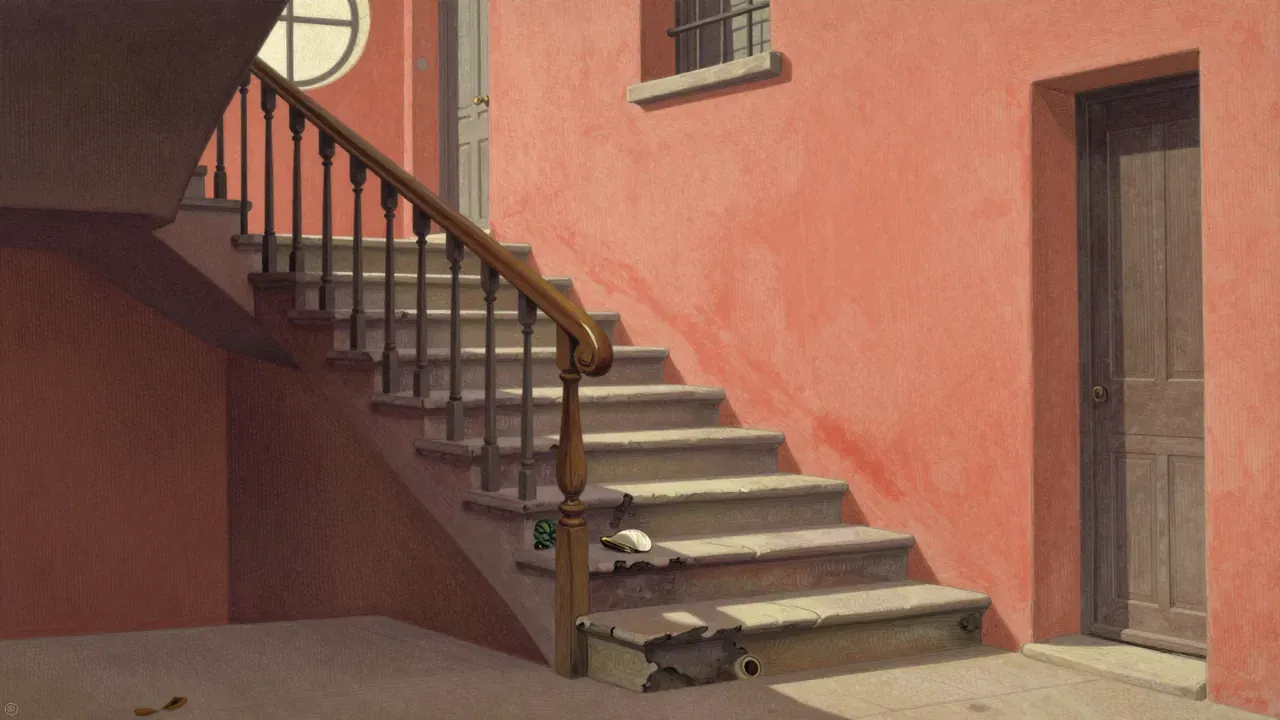
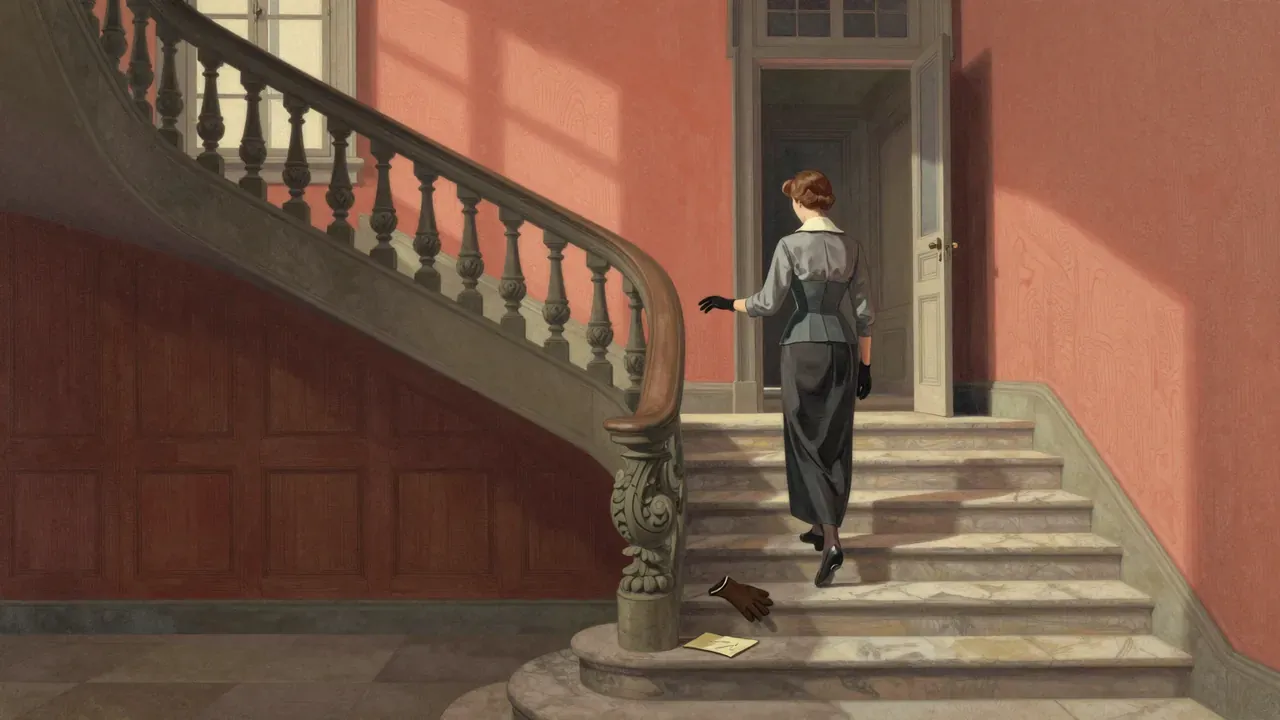
The themes that matter are not those of empire or succession, but of duration and diminishment: how time passes differently inside ritual, how silence accumulates meaning when speech is constrained, how love becomes legible only once it is irrevocable. The film treats marriage as a structure rather than a bond, duty as habit rather than conviction, and death not as climax but as release from accumulated expectation. There is no moralising about Rudolf’s choices, nor condemnation of Vetsera’s youth or ambition—only observation of how both are circumscribed by systems they did not build and cannot exit. The camera lingers on objects—a discarded glove, a half-packed trunk, a clock stopped at 6:45—not as symbols but as evidence of interrupted continuity. This is a film about what happens after the decision is made but before the world registers it. Word count: 148
The weight of texture
It is for viewers who value precision over propulsion: those who watch films for the weight of a pause, the texture of a costume seam, the way light falls across a shoulder rather than for plot turns or character arcs. It suits audiences familiar with interwar European cinema’s temperate syntax—those who find resonance in the work of Renoir, Ophüls or early Duvivier. It is not for viewers who require narrative momentum, explicit motivation, or psychological exposition. Those who expect historical films to clarify context or dramatise cause-and-effect will find it withholding. A viewer who values Graham Greene’s 1936 critique—that the ending feels like ‘a Vienna musical without the music’—would likely agree with this verdict. That view would change only if the film were re-edited to foreground political stakes or deepen Rudolf’s interior monologue, neither of which the existing material supports. Word count: 150
The weight of fidelity
Yes, it is worth your evening—if you approach it as a study in restraint rather than a biographical account. Its ninety-six minutes unfold with the deliberation of a court protocol, and its rewards are cumulative, not immediate: the second viewing reveals how much is conveyed through composition alone—the placement of a servant in the background of a wide shot, the shift in Boyer’s posture between scenes, the way Darrieux’s hands remain still while her eyes track movement. It is not entertainment in the conventional sense, but it is sustained, coherent, and formally assured. Those who find value in craft that serves intention rather than effect will leave with more than they brought in. Anyone expecting clarity, catharsis or commentary on Austrian politics will leave underwhelmed—but that is not what the film sets out to deliver. Its worth lies in its fidelity to its own terms. Word count: 150