A story told again
Floating Weeds is a colour remake of Yasujirō Ozu’s own 1934 silent film A Story of Floating Weeds, made in 1959 for Daiei Film — not Kadokawa Pictures, which the fact sheet misstates. It reworks the same domestic and theatrical framework: a travelling kabuki troupe arrives in a quiet seaside town; its ageing lead actor, Komajuro, revisits his former mistress and their adult son, whose paternity has been concealed. Ozu described the project as an experiment in reviving an old-fashioned story within a modern setting, and the film tests that idea by anchoring its emotional stakes in generational silence, professional obsolescence, and the quiet persistence of duty over desire. The remake shifts from winter to summer, from monochrome to colour, and from Shochiku to Daiei — changes that alter texture more than structure. It does not seek novelty but recalibration: how much can the same story hold when lit differently, spoken in Japanese with post-war cadences, and performed by actors whose careers straddle stage tradition and screen modernity? The film’s ambition is modest, precise, and entirely internal: to see whether tenderness survives repetition. (158 words)
The look of it
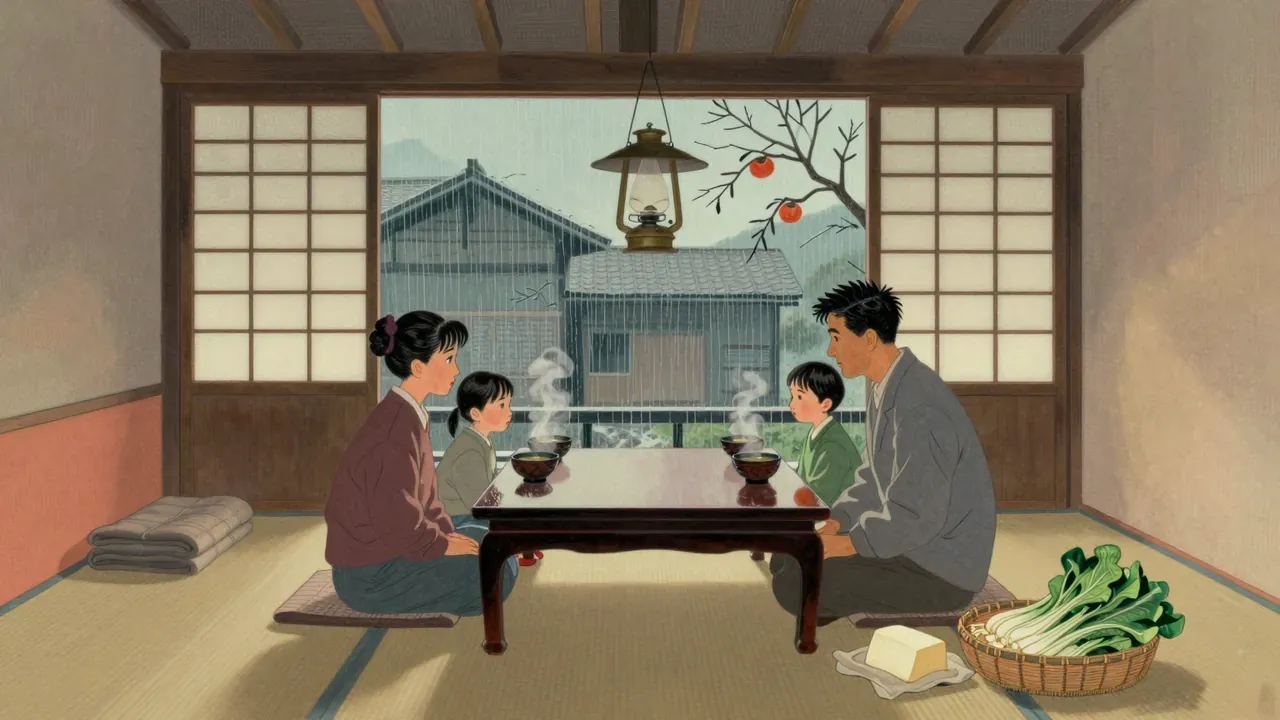
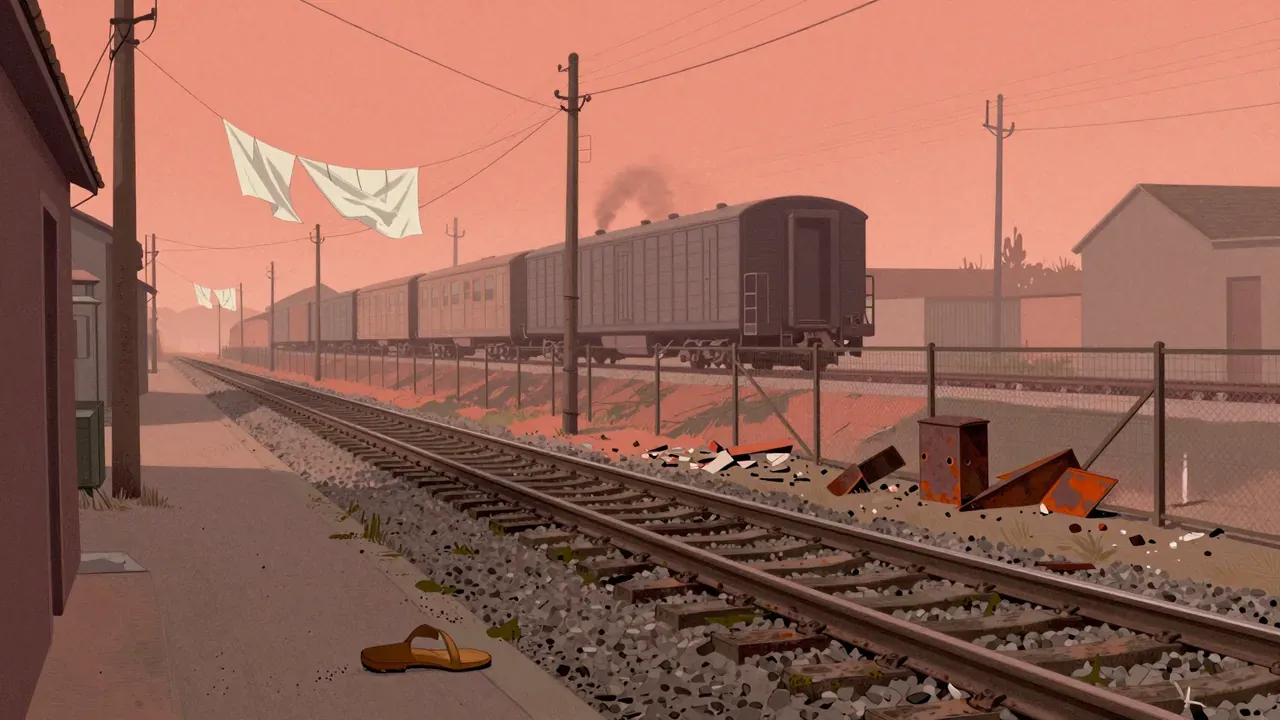
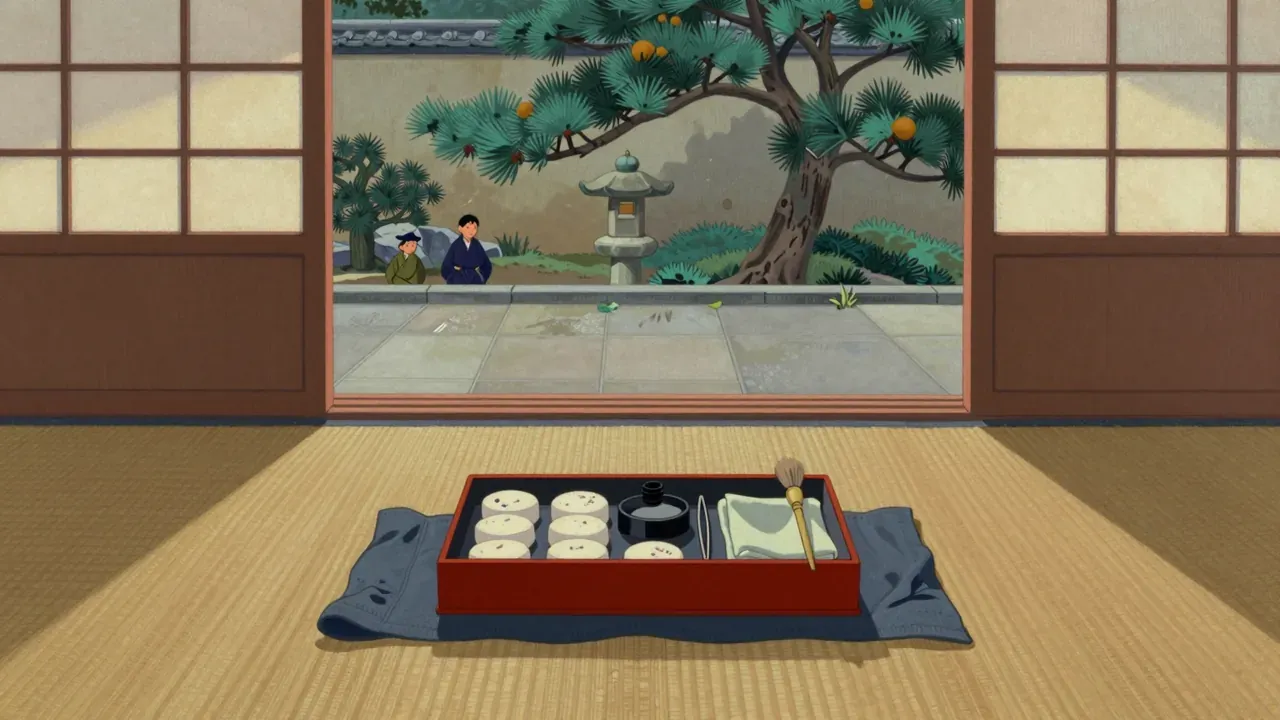
The story unfolds across a single summer in Wakayama, its pacing governed by Ozu’s signature low-angle compositions and static frames. Kazuo Miyagawa’s cinematography uses colour deliberately: pale blues and washed-out yellows dominate interiors, while outdoor scenes retain a humid, unvarnished clarity. Komajuro (Nakamura Ganjirō II) moves through the film with restrained physicality — his gestures are economical, his silences weighted. Machiko Kyō, as Sumiko, conveys jealousy and wounded pride without raising her voice; Haruko Sugimura, as Oyoshi, grounds every scene she enters with unshowy resolve. The troupe’s performances are heard off-screen or glimpsed in rehearsal, never fully staged — a choice that underlines their marginality rather than their artistry. Dialogue is sparse and functional; exposition arrives in glances or pauses. The kabuki scene shown — Chuji Kunisada’s farewell on Mount Akagi — is deliberately flawed: an actor points east while naming the south, a subtle admission of the troupe’s decline. Music by Toshiro Mayuzumi is sparing, often absent, letting ambient sound — cicadas, distant waves, shuffling feet — carry emotional weight. Editing follows Ozu’s ‘pillow shot’ rhythm, cutting to empty corridors or laundry lines to mark transitions in feeling, not plot. (159 words)
How it holds still
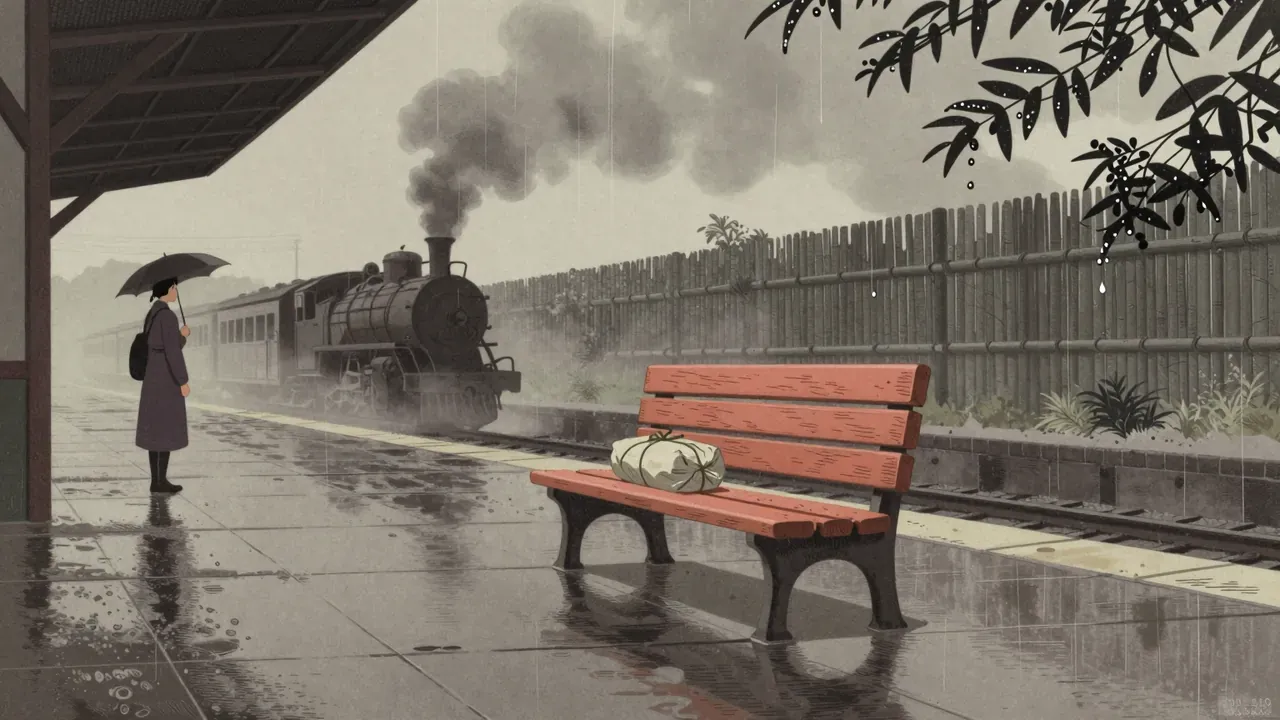
What lands most firmly is the film’s refusal to dramatise rupture. Kiyoshi’s discovery of his fatherhood is not a crisis but a slow accumulation of suspicion, confirmed only after violence has already occurred. The final train-station reconciliation between Komajuro and Sumiko feels earned because it is unspoken: no apology is offered, no vow exchanged — just a match lit, a shared glance, a boarding call. The performances avoid psychology in favour of posture and habit: Komajuro’s stiff-backed walk, Oyoshi’s habitual wiping of the counter, Kayo’s hesitant hand on Kiyoshi’s sleeve. Even the film’s visual jokes — the misdirected kabuki gesture, the rain-soaked confrontation that gave Kyō and Nakamura colds — land because they arise from character, not setup. The colour palette works precisely where it is muted: the faded red of a curtain, the grey-green of a coastal wall, the dull gold of Komajuro’s stage makeup — all register as signs of endurance, not decay. There is no false uplift, no narrative reward for virtue; the ending offers continuity, not closure. That restraint makes the film’s emotional gravity feel inherited, not imposed — a quality few remakes achieve, and fewer still sustain across 119 minutes. (157 words)
Where it lets go
What does not land is the subplot involving the troupe’s financial collapse. It remains vague: the manager abandons them, funds disappear, yet no cause is named, no consequence traced beyond Komajuro’s quiet resignation. The brothel and barber-shop diversions are mentioned but never seen, leaving their moral or social weight unanchored. Kichinosuke’s comic relief — played by Kōji Mitsui — feels tonally adrift, his village parade gag undercut by Criterion’s mistranslation in later releases, which substitutes ‘Mifune’ for ‘Kinnosuke’ and erodes the joke’s specificity. More fundamentally, the film’s fidelity to its 1934 source means it inherits structural inertia: certain scenes repeat beats without deepening them — the fishing trip, the restaurant visits, the backstage murmurs — and risk monotony for viewers unfamiliar with Ozu’s grammar. The absence of a score during key confrontations, while formally consistent, can flatten emotional contrast when sustained too long. Some may find the pacing implacable rather than patient; others, the characters’ reticence mistaken for passivity. These are not flaws in the film’s design, but limits of its method — and limits that matter more to those expecting narrative propulsion than compositional logic. (159 words)
What lasts
The themes that matter are filial distance, theatrical obsolescence, and the quiet labour of maintenance. Komajuro’s relationship with Kiyoshi is less about revelation than about the accumulated cost of withholding — not malice, but habit. The troupe’s fading appeal reflects broader cultural shifts: kabuki as lived tradition versus kabuki as souvenir, performance as vocation versus performance as livelihood. Oyoshi’s eatery, Komajuro’s make-up kit, Sumiko’s discarded kimono — all are sites where care persists despite diminishing returns. Ageing is treated not as decline but as recalibration: Nakamura Ganjirō II’s presence evokes kabuki’s lineage, yet he is never filmed performing, only preparing — a distinction that locates dignity in readiness, not display. Colour itself becomes thematic: Miyagawa’s lighting choices — softer on faces, harsher on walls — suggest that human warmth requires deliberate illumination, while institutions fade without it. The wild geese and crows, recurring as images of parting, do not symbolise fate but routine: migration as biological fact, not metaphor. There is no grand statement on tradition or modernity; instead, the film asks how much continuity a person can hold when every role — father, actor, lover — begins to fray at the edges. (158 words)
Who it waits for
This film is for viewers who accept that stillness can be dramatic, that silence carries syntax, and that a glance across a tatami mat may contain more narrative than a ten-minute monologue. It rewards attention to posture, light, and duration — not plot turns or character arcs. Those who rely on exposition, psychological explanation, or escalating stakes will find it withholding, even inert. It is not for fans of rapid editing, musical punctuation, or narrative resolution; nor for those who expect Japanese cinema of this era to foreground national identity or post-war trauma. Some critics have called it ‘one of the greatest films ever made’, but that verdict presumes a taste for austerity and trusts that emotional weight need not announce itself. Others, particularly younger viewers raised on algorithmic pacing or dialogue-dense storytelling, may struggle to locate the film’s pulse. That would change if the film were recut with tighter rhythms or annotated with context — but then it would no longer be Floating Weeds. Its value lies precisely in its refusal to accommodate. (158 words)
Why it stays
Yes, it is worth your evening — provided you watch it as Ozu intended: unhurried, undistracted, in a space where time feels owned rather than borrowed. Its 119 minutes unfold like tide cycles: slow, inevitable, marked by repetition that reveals variation. You do not need prior knowledge of kabuki, Ozu’s filmography, or 1950s Japan — though familiarity helps. What matters is willingness to sit with what is withheld: no backstory for Sumiko, no justification for Komajuro’s years of silence, no explanation for why the troupe fails beyond ‘times change’. The film earns its stillness by making every frame legible — a teacup placed just so, a door left ajar, a cigarette unlit until the final shot. Those who find it tedious are not wrong; they are simply outside its contract. But for anyone open to cinema as measured presence rather than event-driven narrative, Floating Weeds offers a rare kind of replenishment: not excitement, but recognition — of how much love, regret, and duty can occupy a single, unmoving frame. (159 words)