The look of it
My Brilliant Career is a 1979 Australian coming-of-age film adapted from Miles Franklin’s 1901 novel, set in rural New South Wales in 1897. It follows Sybylla Melvyn, a bookish, restless teenager whose literary ambition and refusal to conform to domestic expectation place her at odds with her family, her class, and the limited futures available to women of her time. Gillian Armstrong’s intention, as stated during production, was to present a heroine who could develop her talents and pursue a career without needing to choose between love and self-realisation — a direct challenge to prevailing narrative tropes about women’s fulfilment. The film does not frame Sybylla’s resistance as rebellion for its own sake, nor does it soften her sharpness into charm; it treats her intellect, impatience, and moral rigour as coherent and legitimate. It is not a nostalgic period piece but a deliberate, grounded assertion: that a woman’s vocation need not be deferred, bargained away, or abandoned at the altar. This is its central proposition — quiet in tone, firm in structure, unapologetic in conclusion. (159 words)
How it holds its shape
The story unfolds in measured, unsentimental episodes: Sybylla’s displacement from her struggling farm to her grandmother’s polished household, her uneasy navigation of courtship, her grim interlude as a governess in squalor, and her return to write her manuscript. Judy Davis carries the film with physical specificity — her posture, gaze, and vocal cadence register Sybylla’s alertness and fatigue in equal measure. Sam Neill’s Harry Beecham avoids romantic idealisation; his warmth is tempered by privilege, his proposals edged with assumption. Donald McAlpine’s cinematography uses natural light and shallow depth to keep interiors close and landscapes vast but unromanticised. Nathan Waks’ score draws on Schumann, but the music serves as texture, not commentary — piano passages are diegetic, played by Davis herself. Eleanor Witcombe’s script preserves the novel’s irony and syntactic precision without over-explaining motive. Editing by Ted Ogden maintains rhythm through restraint: no flashbacks, no voiceover exposition, no symbolic flourishes. Every choice supports the film’s insistence on Sybylla’s interiority as sufficient ground for drama. (158 words)
Where it lands
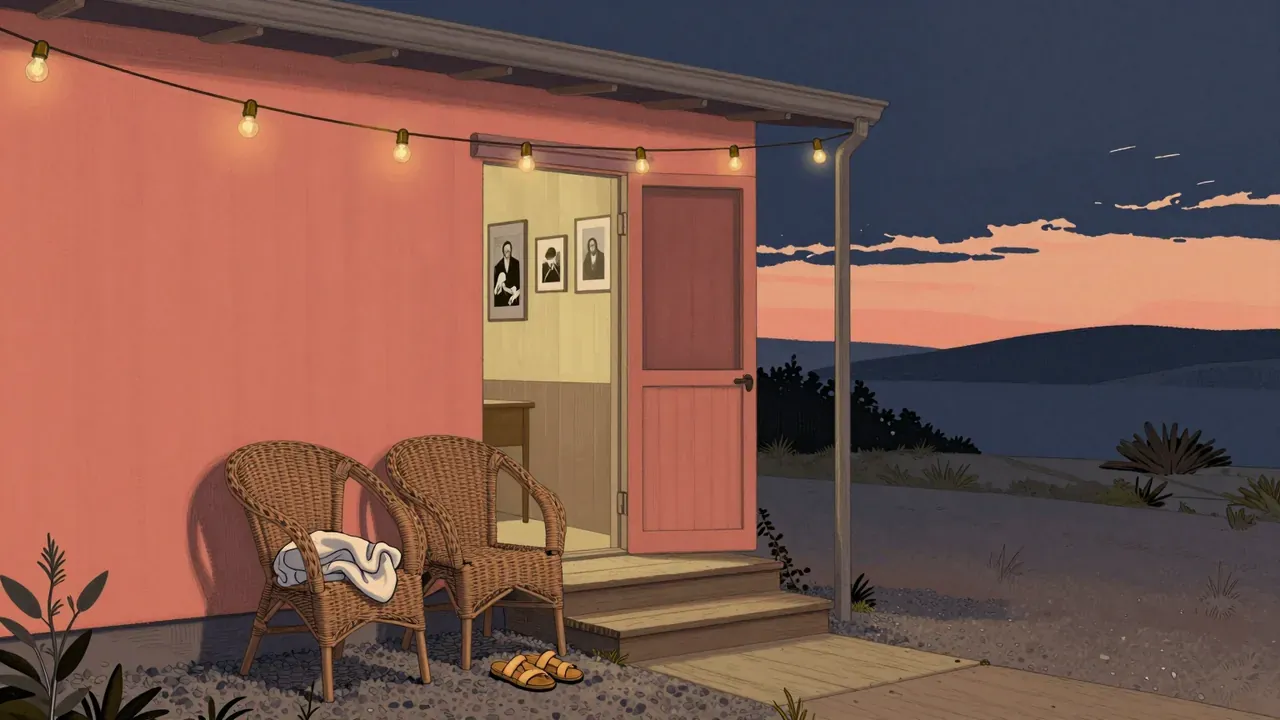
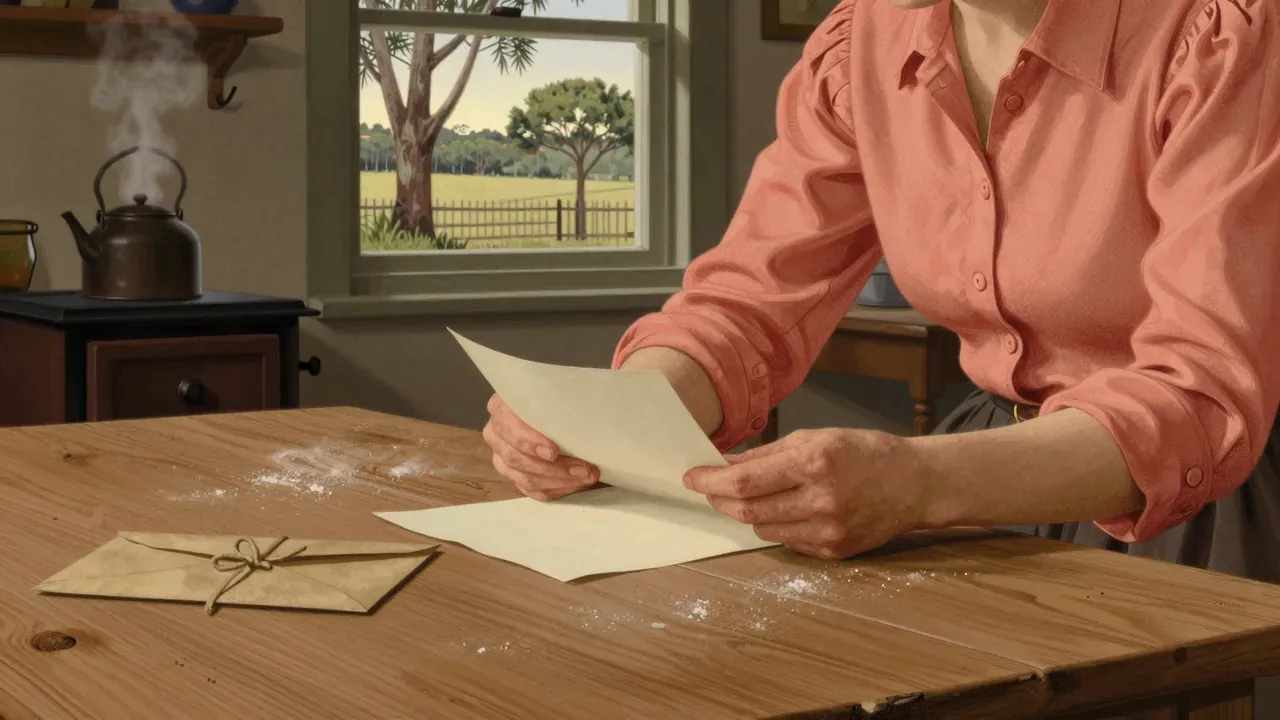
What lands most firmly is Sybylla’s final refusal — not as rejection of love, but as affirmation of authorship. The scene where she tells Harry she will not marry him because it would ‘break both our hearts’ lands with quiet force, unaccompanied by swelling strings or lingering close-ups. Her decision is neither triumphant nor tragic; it is simply hers, made after reflection, not impulse. The Monaro region’s flat, wind-scoured terrain becomes a character in its own right: austere, unyielding, indifferent to romance — a visual correlative to Sybylla’s clarity. Wendy Hughes’ Aunt Helen delivers one of the film’s few overt thematic lines — advising marriage for friendship rather than love — but it lands not as wisdom, but as a contrast to Sybylla’s starker calculus. Even the costume design, which won an AACTA, works without flourish: bodices are tight, skirts heavy, fabrics coarse — clothing as labour, not ornament. The film trusts its audience to register significance in a held glance, a pause before speaking, the weight of a manuscript placed in an envelope. Nothing is underlined. Nothing needs to be. (157 words)
Where it thins
What does not land is the framing of Frank Hawdon. His role as a destabilising presence feels schematic: he spreads rumours, engineers awkwardness, and exits without consequence or development. He functions less as a person than as a plot device to test Sybylla’s resolve, and his thinness undermines the film’s otherwise rigorous attention to social nuance. Similarly, the Beecham estate — ‘Five Bob Downs’ — remains visually sumptuous but emotionally opaque; its wealth is shown, never interrogated in relation to Sybylla’s poverty beyond surface contrast. The film avoids melodrama, but in doing so, it occasionally flattens stakes: Sybylla’s father’s debt, the family’s precarious status, the real material cost of her education — these remain backgrounded, not dramatised. Some viewers may find the pacing too deliberate, particularly in the governess sequence, where the squalor is rendered with such fidelity that its duration begins to feel procedural rather than cumulative. The film assumes patience; those expecting psychological escalation or narrative payoff within conventional arcs may leave unsatisfied. Its restraint is its strength — and its limit. (156 words)
What it’s really about
The themes that matter are ambition unmediated by apology, the gendered distribution of time and labour, and the quiet violence of respectability politics. Sybylla’s desire to write is never treated as eccentric, but as ordinary — and therefore threatening — in a world that assigns women to maintenance, not creation. The film locates constraint not only in law or doctrine, but in the daily choreography of tea service, dress fittings, and ballroom etiquette: small rituals that rehearse submission. Class operates not as backdrop but as grammar — Sybylla’s grandmother corrects her diction; her aunt warns against marrying above or below station; even the wallpaper in the indigent home is made of discarded newspapers and book pages, a literal layering of literacy over poverty. Colonialism is implicit but unspoken: the land is named, farmed, owned — never questioned as territory. Feminism here is not theoretical but tactile: it lives in Sybylla’s refusal to play piano for guests, in her insistence on using her own name on her manuscript, in the fact that her final act is solitary, unobserved, and complete. (159 words)
Who it’s for
This film is for viewers who value precision over propulsion, who find tension in silence and agency in stillness. It suits those familiar with the rhythms of Australian New Wave cinema — its avoidance of exposition, its trust in landscape as narrative agent, its preference for implication over declaration. It is not for those who require clear antagonists, escalating conflict, or emotional catharsis tied to relationship resolution. Anyone expecting a romance with a reconciliatory third act will misread its ending as defeat rather than definition. Those impatient with period detail as substance — not decoration — may find its pace inert. Its feminist argument is structural, not rhetorical; it does not argue for Sybylla, it simply places her at the centre and refuses to displace her. A viewer who believes character must ‘grow’ by compromising will reject its logic. Change the ending to a wedding, or add a voiceover explaining Sybylla’s thoughts, and the film collapses. Its integrity depends on holding the line. (159 words)
Is it worth your evening
Yes, it is worth your evening — provided you watch it as it asks to be watched: without demand for reward, without expectation of uplift. Its ninety-six minutes unfold with the weight and pace of lived time, not edited time. It repays attention to gesture, to fabric, to the way light falls across a sun-bleached verandah. It is not ‘entertaining’ in the transactional sense, but it is deeply sustaining: a reminder that artistic ambition need not be outsourced to male protagonists, that historical fiction can resist nostalgia, and that a woman’s ‘no’ can be the most resonant note in a score. Those who dislike it tend to do so on grounds of pacing or perceived austerity — fair, but secondary to its purpose. It is not trying to please. It is trying to persist. And it does. Its restoration and Criterion release confirm its endurance not as relic, but as reference: a benchmark for how to film a mind at work, unaccompanied, unapproved, and utterly certain. (159 words)