What it is trying to do
The Unbearable Lightness of Being is a 165-minute American adaptation of Milan Kundera’s 1984 novel, set against the Prague Spring and Soviet invasion of Czechoslovakia. It attempts to transpose Kundera’s philosophical inquiry—into lightness versus weight, freedom versus fidelity, eroticism versus sentiment—into cinematic form. The film treats politics not as backdrop but as pressure: it shapes who can leave, who must stay, who gets blacklisted, who disappears. Its ambition is structural as much as thematic: to hold in balance the intimate choreography of three lives with the historical rupture of August 1968. It does so through a script co-written by Kundera himself (who later disavowed the result), using his direct input on dialogue and tone, including a poem written for the film. The production, though American-financed and English-language, avoids Hollywood geography: it was shot entirely in France, relying on archival footage, studio sets near Paris, and locations in Lyon and Luxeuil-les-Bains to stand in for Prague and rural Bohemia. Word count: 142
How it works
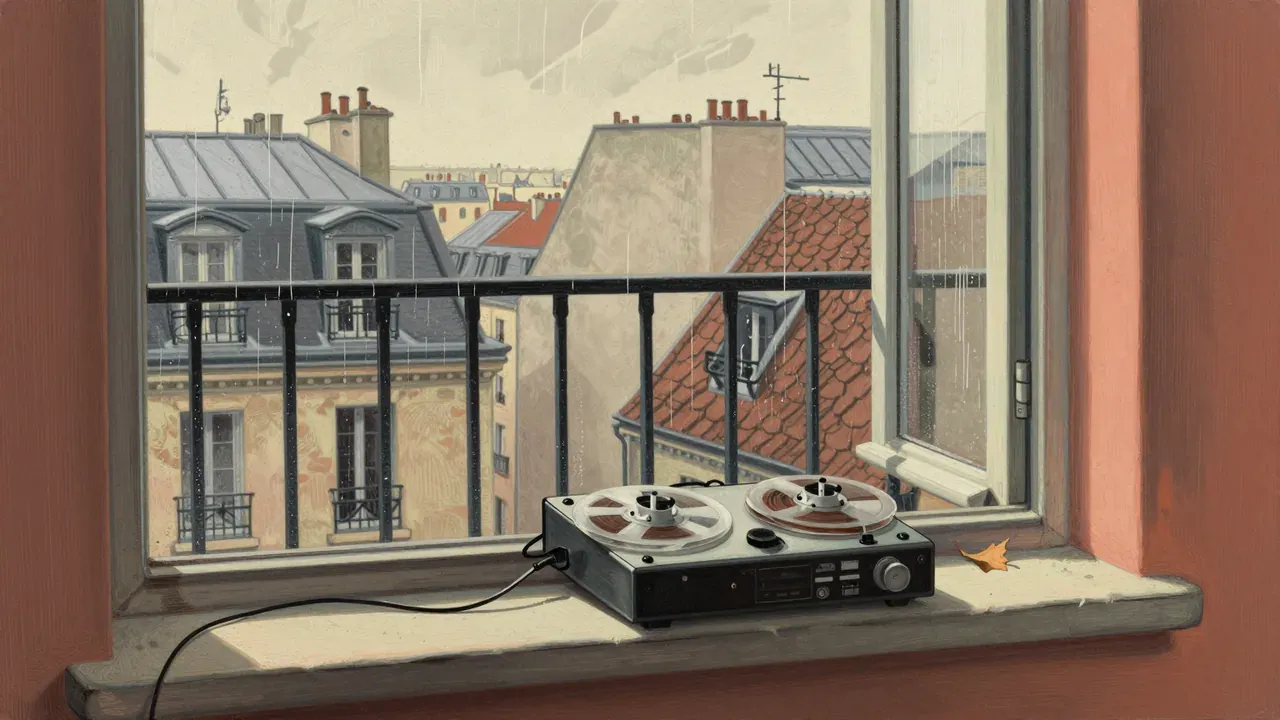
The story follows Tomas, a Prague neurosurgeon whose sexual freedom anchors him until Tereza arrives; her vulnerability unsettles his equilibrium, while Sabina’s irony offers a third pole. Daniel Day-Lewis plays Tomas with restrained physicality—his hands steady in surgery, restless in bed—while Juliette Binoche gives Tereza a quiet, watchful gravity, her face registering shifts in political and emotional temperature before her body does. Lena Olin’s Sabina moves with deliberate ease, her detachment never quite masking weariness. Sven Nykvist’s cinematography keeps interiors dim and tactile: candlelight on skin, rain on glass, the grain of wood in village kitchens. Walter Murch’s editing sustains long takes without indulgence, letting scenes breathe but never drift. The score draws heavily on Janáček’s piano pieces—‘On an Overgrown Path’ recurs like a motif of memory—and folds in Czech folk song and Marta Kubišová’s ‘Hey Jude’, sung in Czech, to root the film in place without exposition. Word count: 153
What lands
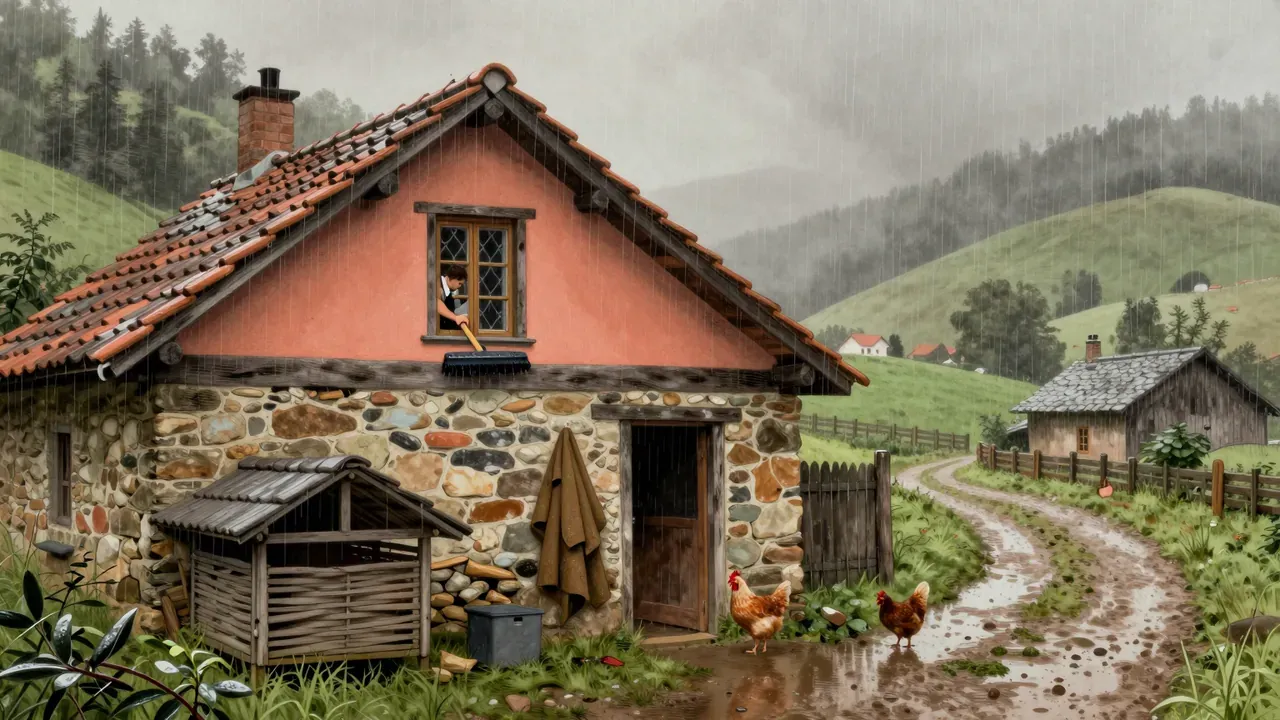
What lands is the film’s refusal to moralise its characters. Tomas’s infidelities are neither excused nor punished outright; they’re shown as habits worn thin by repetition, then tested by consequence. Tereza’s return to Prague feels inevitable—not as weakness but as a reassertion of selfhood within constraint. The Swiss interlude works because its sterility is palpable: clean rooms, muted voices, the absence of shared history. The countryside finale lands hardest—not as escape, but as recalibration: Tomas washing windows, Tereza tending chickens, both unobserved by state or lover. The accident at the end is not foreshadowed melodramatically but implied by the film’s own rhythm: the rain, the narrow road, the quiet contentment just before impact. Nykvist’s lighting in those final shots—soft, diffused, almost sacramental—gives the scene weight without sentimentality. The film earns its melancholy not through tragedy but through the accumulation of small, irreversible choices. Word count: 150
What does not
What does not land is the attempt to compress Kundera’s essayistic voice into dialogue. Characters occasionally deliver lines that read like paraphrased philosophy rather than speech—Tomas explaining lightness to Sabina, or Tereza articulating her jealousy in terms too precise for lived feeling. The Geneva section feels structurally necessary but emotionally thin: Franz’s arc is truncated, his abandonment by Sabina undermotivated. The film also struggles with scale: the Warsaw Pact invasion is rendered through montage and sound design, but lacks the visceral immediacy of the personal betrayals. Some performances suffer from the script’s conceptual weight—Derek de Lint’s Franz is competent but indistinct, Erland Josephson’s elderly patient more symbolic than embodied. And while the use of archival footage is resourceful, it creates a jarring register shift between staged intimacy and historical documentary. Word count: 147
The themes that matter
The themes that matter are not abstract but bodily: the weight of a hand on a shoulder, the lightness of a glance across a room, the exhaustion in a sigh after sex. The film treats eroticism as a mode of attention—Sabina sees Tomas clearly, Tereza sees him tenderly, and both forms of looking shape identity. Politics enters not through speeches but through consequences: confiscated passports, blacklisted names, the sudden silence after a photograph is taken. Freedom here is never absolute—it is always conditional on geography, gender, class, or timing. The film’s central tension—between lightness as liberation and lightness as evasion—is dramatised most acutely in Tomas’s window-washing: he is literally elevated, physically unmoored, yet still bound to the city’s walls. Even exile is double-edged: Sabina gains autonomy in America but loses resonance; Tereza regains rootedness in the village but forfeits intellectual community. Word count: 149
Who should watch it
This film is for viewers who tolerate slow pacing, value psychological texture over plot propulsion, and accept that a love triangle can function as a triptych of existential positions. It suits those familiar with Central European history or willing to absorb context from implication rather than exposition. It is not for viewers who require narrative closure, clear moral alignment, or sustained momentum—its second act lingers, its ending arrives without fanfare or explanation. Those who expect eroticism to be either titillating or transgressive may find its treatment too clinical or too diffuse. A viewer who values visual restraint over stylistic flourish will respond more readily than one drawn to kinetic editing or saturated colour. Word count: 143
Is it worth your evening
Yes, it is worth your evening—if you grant it time and attention. At 165 minutes, it demands patience, but repays it with cumulative precision: the way Binoche holds a camera, the way Nykvist frames a doorway, the way Janáček’s music returns like a half-remembered dream. It is not entertainment in the conventional sense, nor is it didactic. Its value lies in its refusal to simplify: Tomas is neither hero nor cad, Tereza neither martyr nor victim, Sabina neither liberated nor lost. Those who reject it often do so on grounds of pacing or perceived coldness—but that coolness is deliberate, part of its ethical stance. Change the runtime to under two hours, or add explanatory voiceover, and the film would lose its essential ambiguity. Word count: 142