The shape of the journey
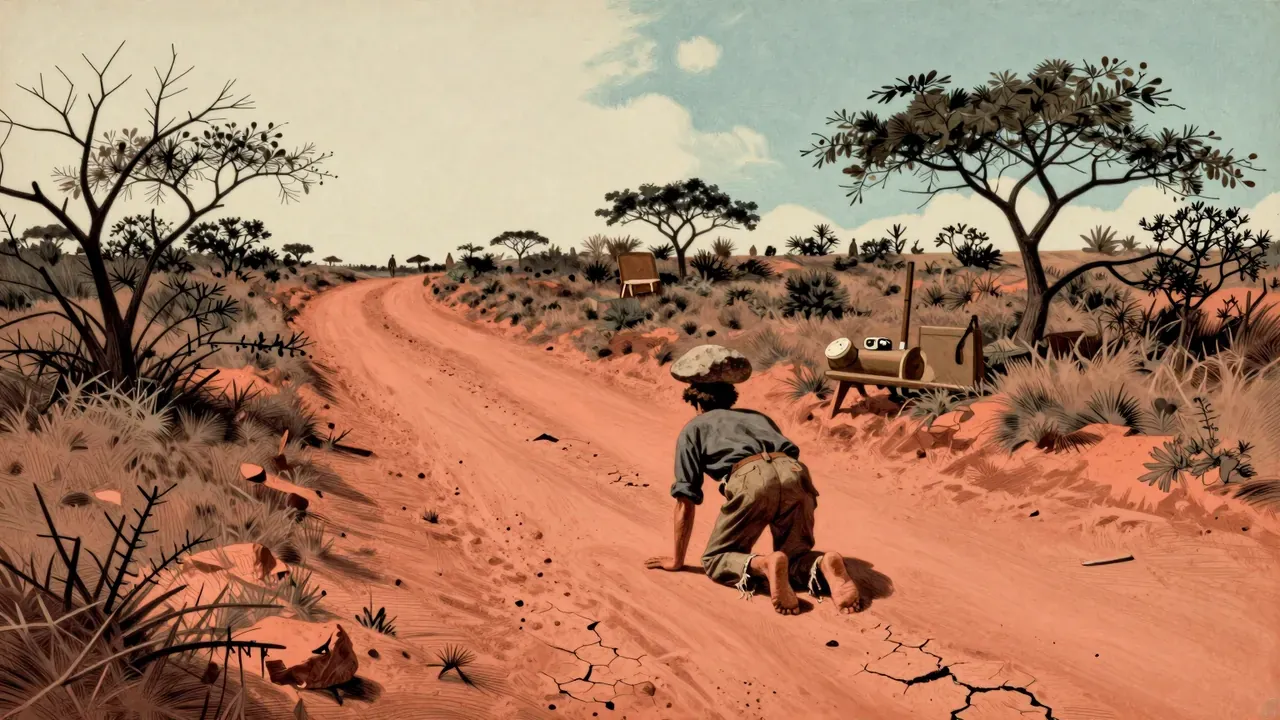
Stagecoach is a 1939 Western that adapts Ernest Haycox’s short story ‘The Stage to Lordsburg’ into a tightly structured ensemble journey across contested Apache territory. It aims to elevate the genre by concentrating narrative weight not on frontier myth or lone heroics, but on social stratification, moral ambiguity, and redemption under pressure. John Ford frames the stagecoach as a mobile microcosm: its passengers — a prostitute, a banker, a drunken doctor, a Confederate gambler, a pregnant cavalry wife — are forced into proximity and mutual dependence. The film does not seek historical fidelity in its depiction of Indigenous people, nor does it attempt psychological realism in its character arcs; rather, it uses archetypes deliberately, testing how prejudice, shame, and duty hold up when stripped of civilised scaffolding. Its ambition lies in compression: 97 minutes for setup, crisis, transformation, and resolution — all anchored in geography, weather, and the physical strain of travel. It treats the Western not as escapism but as a vessel for examining who gets to belong, and under what conditions.
The look of it
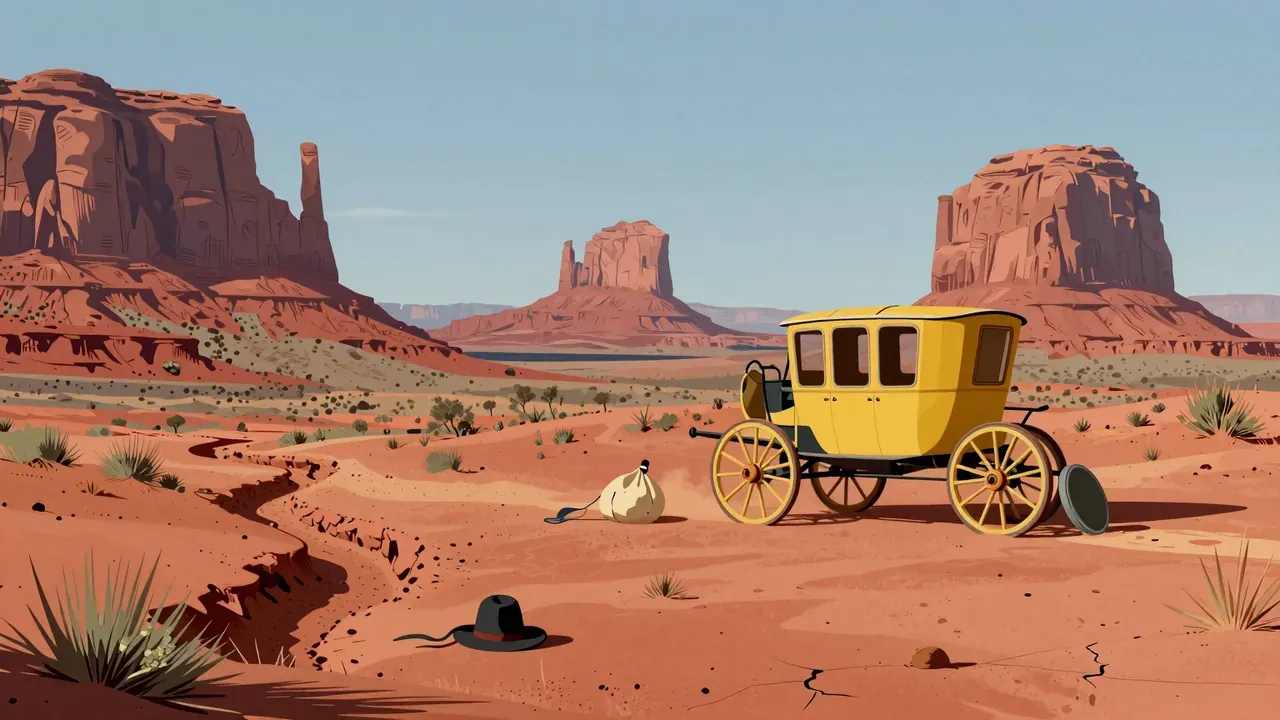
The story moves with calibrated efficiency: each stop reveals another layer of character and conflict, from Dry Fork’s false security to Apache Wells’ emergency childbirth, culminating in the ferry crossing and the dry-lake chase. Bert Glennon’s cinematography favours deep focus and low horizons, anchoring figures against Monument Valley’s mesas while keeping interiors dim and intimate. John Wayne’s Ringo Kid avoids swagger; his stillness and economy of gesture contrast with Thomas Mitchell’s volatile, tender Dr. Boone and Claire Trevor’s weary, watchful Dallas. Dudley Nichols’ script — sharpened by uncredited contributions from Ben Hecht — gives each passenger distinct speech rhythms and moral contradictions. Editing by Otho Lovering and Dorothy Spencer sustains tension without overcutting: the Apache attack unfolds in long takes punctuated by precise reaction shots. Richard Hageman’s score weaves folk motifs and martial brass, underscoring irony more than action. The craft serves cohesion: no shot feels decorative, no line extraneous, no performance indulgent.
What sticks
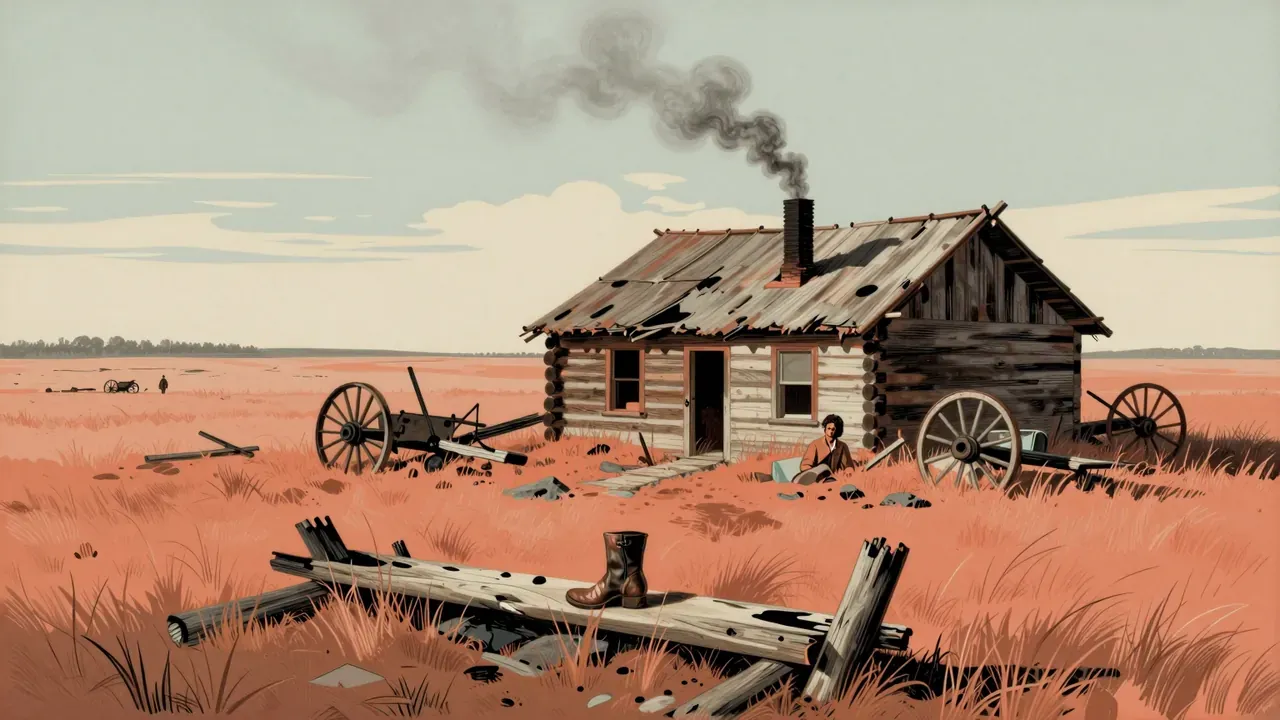
What lands most firmly is the group’s slow recalibration of worth. Dallas earns quiet respect not through virtue but through competence and compassion — delivering Lucy’s baby, tending Peacock’s wound, holding space for Ringo’s vulnerability. The moment Hatfield dies confessing his lineage, and Lucy recognises his name, carries the weight of inherited honour collapsing into lived decency. The final buckboard stampede works because it follows three acts of withheld judgement: Curley refusing to re-arrest Ringo after the shootout, Boone offering Dallas his coat before she departs, and Lucy handing over her shawl — small gestures that accumulate into structural mercy. The landscape itself lands: Monument Valley’s scale dwarfs human drama without diminishing it, making moral choices feel both urgent and humble. Even the stunts — Yakima Canutt’s horse falls, the stagecoach lashed to logs — serve narrative logic, not spectacle. Nothing here feels imposed; everything emerges from circumstance, character, and consequence.
What slips
What does not land is the film’s treatment of Apache people. They appear only as off-screen threats or silhouetted riders firing arrows — functionally anonymous, motiveless, and dehumanised. Their presence serves plot mechanics and colonial anxiety, not cultural representation. This is not incidental background but structural erasure: the entire journey hinges on their ‘savagery’, yet they have no voice, no history, no interiority. Similarly, the film’s class politics remain surface-level — Gatewood’s banking fraud is punished, but the system enabling it is untouched; Lucy’s aristocratic privilege is softened by motherhood, not interrogated. The resolution offers personal grace but no systemic critique. Some performances falter under the script’s rigidity: Berton Churchill’s banker lacks nuance beyond bluster, and Tim Holt’s young cavalry officer feels like placeholder sincerity. These are not failures of acting so much as limits of conception — characters drawn to serve thematic shorthand rather than full dimension.
What it’s about
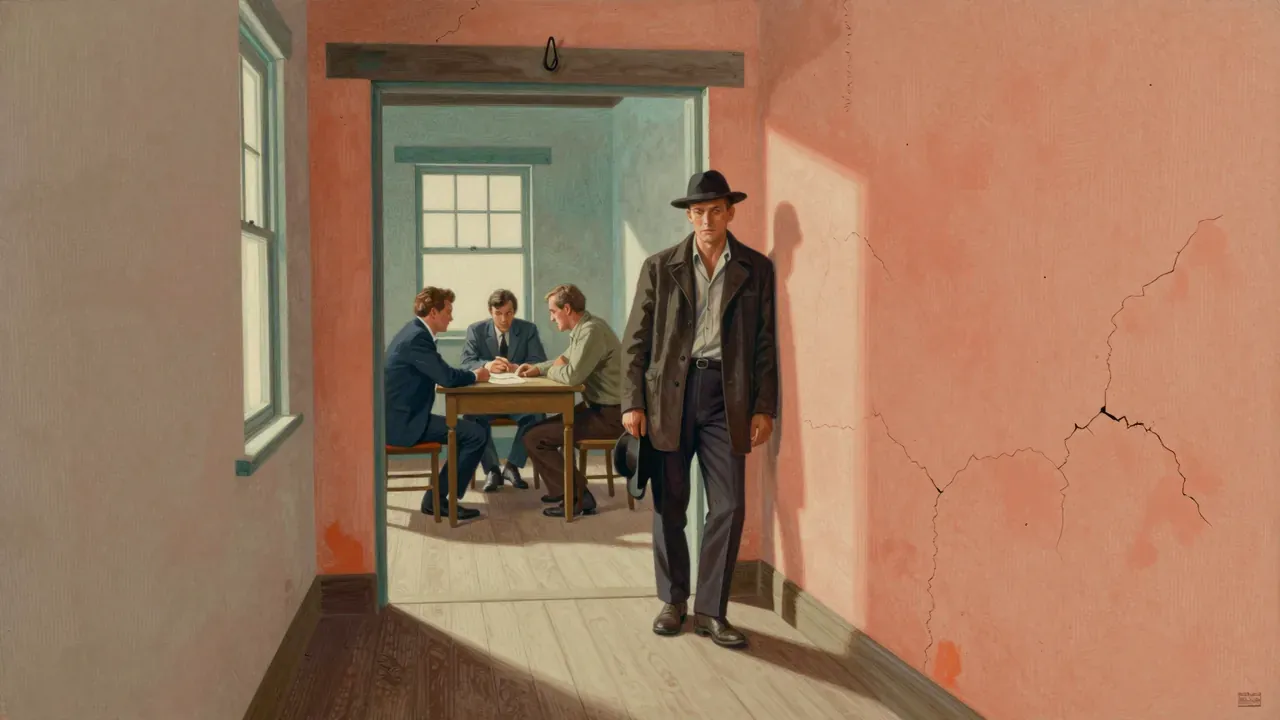
The themes that matter are dignity under scrutiny, the contingency of reputation, and the porous boundary between law and justice. Dallas is expelled from Tonto not for crime but for existing outside sanctioned femininity; Ringo is hunted not for proven guilt but for perceived threat. Both are judged by proxies — the Law and Order League, the court, the town — then vindicated through action witnessed firsthand. The film insists that moral authority resides not in institutions but in witnessed conduct: Boone sobers up to deliver a child, Ringo chooses to stay and fight despite freedom within reach, Curley abandons procedure for loyalty. It also explores exile as both punishment and possibility: Dallas and Ringo leave Lordsburg not as outcasts but as people who have earned the right to define themselves elsewhere — across the border, outside jurisdiction, beyond labels. The desert is not just setting but condition: a place where old names lose purchase and new ones must be earned.
Who it’s for
This film is for viewers who value narrative discipline, spatial storytelling, and performances that trust silence over exposition. It rewards attention to composition, editing rhythm, and how dialogue functions as social negotiation rather than revelation. It is not for those who require psychological realism, historical nuance in Indigenous representation, or moral ambiguity that extends beyond individual redemption. Anyone expecting critique of settler-colonial structures will find the film’s framework insufficient — its power lies in human-scale reconciliation, not structural analysis. Those put off by studio-era formality or unvarnished period attitudes toward gender and race may find its virtues outweighed by its blind spots. A viewer who values formal mastery but rejects its ideological premises would reasonably dismiss it as elegant complicity — and that disagreement is valid, not a failure of reception.
Why it lasts
Yes, it is worth your evening — not as a flawless artefact, but as a decisive turning point in American cinema whose influence remains visible in every ensemble-driven genre film since. Its 97 minutes move with the inevitability of a well-tuned mechanism: no scene overstays, no motif repeats without variation, no character shifts without cause. You will notice how Ford blocks movement across the frame to signal alliance or distance, how Glennon holds light at the threshold of visibility, how Mitchell’s slurred diction gradually clarifies as responsibility sharpens. It demands no prior knowledge of Westerns, only willingness to follow cause and effect across terrain both physical and ethical. To skip it is to miss the blueprint for how genre can carry moral weight without sermonising — and how restraint, not embellishment, makes a story endure. Its age shows, but never weakens its grip.