A continuation, not a sequel
Manon des Sources is the second part of a two-film adaptation of Marcel Pagnol’s novel The Water of the Hills, completing a narrative begun in Jean de Florette. It is not a sequel in the conventional sense but a structural and moral counterweight: where the first film charts the slow, suffocating mechanics of greed and exclusion, this one traces the delayed, precise logic of retribution. Directed by Claude Berri and co-written with Gérard Brach and Pagnol’s own text, it seeks to resolve the moral arithmetic of the earlier story—not through catharsis or forgiveness, but through exposure, consequence, and quiet, irreversible reckoning. The film assumes familiarity with the first part; its plot hinges on knowledge the audience shares with Manon, not with the villagers. It treats rural Provence not as picturesque backdrop but as a closed system governed by land, water, silence, and inherited guilt. Its ambition is classical: to show how injustice compounds across time, how complicity spreads like drought, and how vengeance, when it arrives, wears the face of natural law. It does not ask whether justice is served, only whether it can be measured. (158 words)
The weight of consequence
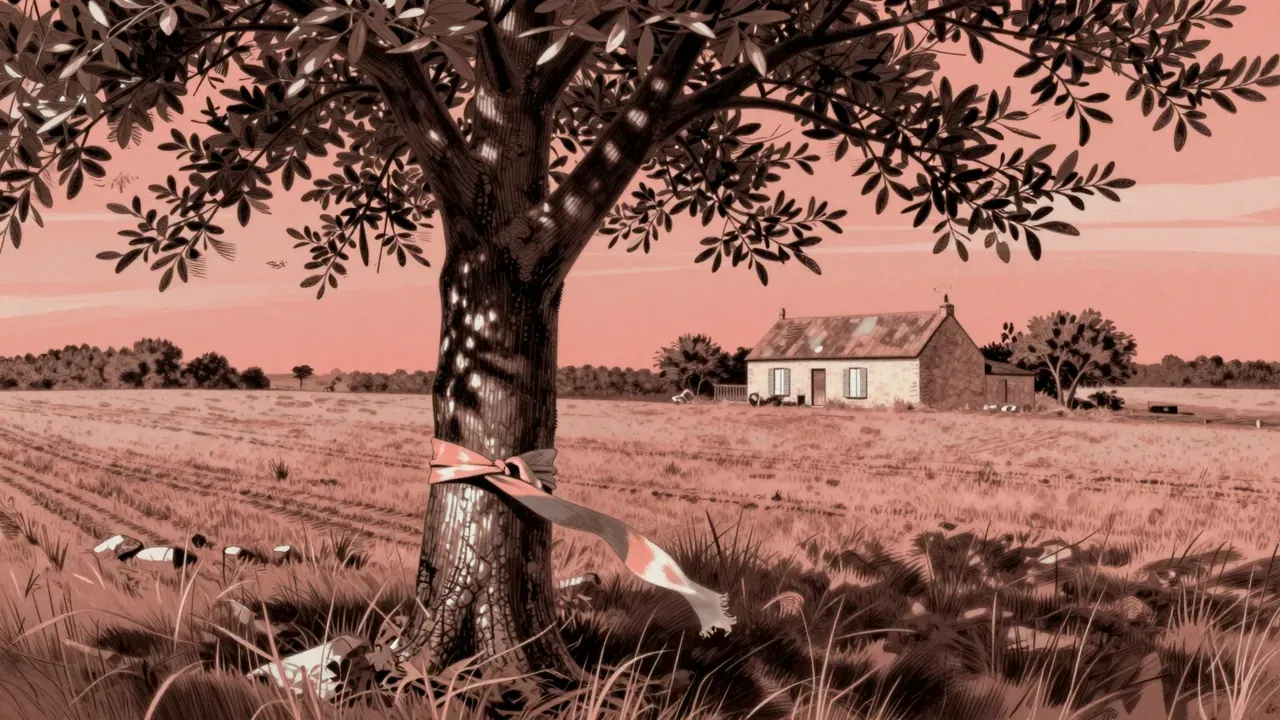
The story unfolds with deliberate, unhurried pacing: ten years pass between films, and the film itself moves in seasons rather than scenes. Bruno Nuytten’s cinematography fixes on textures—the chalky soil, the iron-oxide clay, the damp stone of the spring’s mouth—giving weight to geography as moral agent. Yves Montand’s César carries decades in his posture; Daniel Auteuil’s Ugolin is all nervous, thwarted energy, his obsession with Manon made visible in small, physical details: the ribbon pinned to his chest, the way he watches her from behind a tree. Emmanuelle Béart’s performance is restrained but exacting: Manon speaks little, listens much, and acts decisively only when the evidence is irrefutable. Hervé de Luze’s editing avoids emphasis—no close-ups linger for effect, no music swells to cue emotion. Jean-Claude Petit’s score is sparse, mostly strings and wind, used only to mark transitions, never to interpret them. The craft serves the structure: every shot, cut, and silence reinforces the idea that cause and effect are inseparable, and that time, in this world, is not linear but accumulative. (159 words)
Water as justice
What lands is the film’s unblinking fidelity to consequence. Manon’s revenge is neither theatrical nor emotional—it is hydrological. She stops the water, and the village wilts. That simplicity gives the film its force: the punishment fits the crime because it mirrors it. The villagers’ public confession feels earned, not coerced, because it follows weeks of thirst and whispered doubt. Ugolin’s suicide is not melodramatic but inevitable—a man whose identity rests entirely on possession finds himself dispossessed of everything, including dignity. Even Papet’s final realisation—that Jean was his son—is delivered without flourish, just a slow, silent collapse. The film trusts its audience to follow the logic: if you block a spring to ruin a man, then unblocking it cannot undo what was done. What lands, too, is the texture of rural life—the goat-herding, the foraging, the way light falls on limestone at dusk—not as nostalgia but as lived necessity. These details do not ornament the story; they anchor it. The film’s moral gravity comes not from speeches but from the weight of soil, stone, and silence. (157 words)
The limits of economy
What does not land is the schoolteacher Bernard. Hippolyte Girardot plays him with earnestness, but the character functions less as a person than as a narrative convenience: the educated outsider who helps Manon unblock the spring and provides a socially acceptable exit from vengeance into marriage. His presence softens the ending without clarifying it. The film never establishes why Manon chooses him over solitude—or even over the land itself. Similarly, the subplot involving Delphine’s revelation about Florette and Jean’s parentage arrives late and underdeveloped; it adds pathos but not coherence, feeling more like an inherited obligation to Pagnol’s novel than a necessary beat. The film’s refusal to dramatise interiority works against these moments: we see Papet’s grief, but not his decades of regret; we see Manon’s resolve, but not the cost of holding it. Some viewers may find the pacing too austere, the silences too long, the moral framework too absolute—there is no ambiguity in Ugolin’s guilt, no room for mitigation. That rigour is the film’s strength, but also its limit: it leaves no space for contradiction, and therefore none for surprise. (156 words)
What is passed down
The themes that matter are inheritance—not of land or money, but of silence, omission, and unspoken knowledge. The film treats memory as infrastructure: what is not said becomes as solid as stone, shaping who lives, who dies, and who inherits. Water is both literal and structural: it flows underground, unseen, until someone notices the absence. So too with guilt—buried, assumed dormant, then suddenly undeniable when the well runs dry. Class is present but not argued: the Soubeyrans are not rich, but they are local; Jean is not poor, but he is foreign and disabled—and that difference is enough to make his failure acceptable to the village. The film refuses to moralise poverty or praise labour; instead, it shows how systems of belonging operate beneath language, enforced by shared glances, withheld help, and the decision not to speak. Time is another theme: not as progression but as sedimentation. Ten years pass, but nothing changes until Manon remembers what she saw as a child. Justice here is geological, not judicial—it requires pressure, time, and the right kind of fracture. (152 words)
The terms of engagement
This film is for viewers who trust narrative economy, who find tension in stillness, and who accept that some stories resolve not with reconciliation but with alignment—between action and consequence, between land and law, between what was hidden and what surfaces. It suits those familiar with French rural literature or mid-century European cinema, but it does not require either. It is not for viewers who need psychological exposition, rapid pacing, or moral ambiguity: the film offers no redemption arcs, no mitigating context for Ugolin, no irony to soften Papet’s despair. Someone who values character-driven drama over plot mechanics will find it rich; someone who expects motivation to be verbalised or emotion to be signalled will find it withholding. A viewer who dislikes long takes, minimal music, or landscapes that do not serve dialogue may grow impatient. The film assumes patience as a condition of understanding—not as a virtue, but as a prerequisite. (150 words)
The measure of justice
Yes, it is worth your evening—if you are willing to meet it on its terms: slow, unsentimental, and morally unyielding. It repays attention not with spectacle but with accumulation: each scene adds weight to the next, so that the final image—Papet watching Manon walk home, pregnant and apart—lands with the quiet force of inevitability. It is not entertaining in the usual sense, but it is deeply satisfying as a work of structural integrity. Those who dislike period dramas, French-language films, or stories without clear protagonists may find it alienating. A viewer expecting uplift or closure will be disappointed; the film ends not with healing but with continuity—Manon inherits the land, the name, and the silence. Its value lies in its refusal to simplify. Anyone who believes cinema should clarify human behaviour, rather than reflect its stubborn, layered complexity, will likely reject it. But for those who do not, it remains uncommonly precise. (150 words)