The shape of the legend
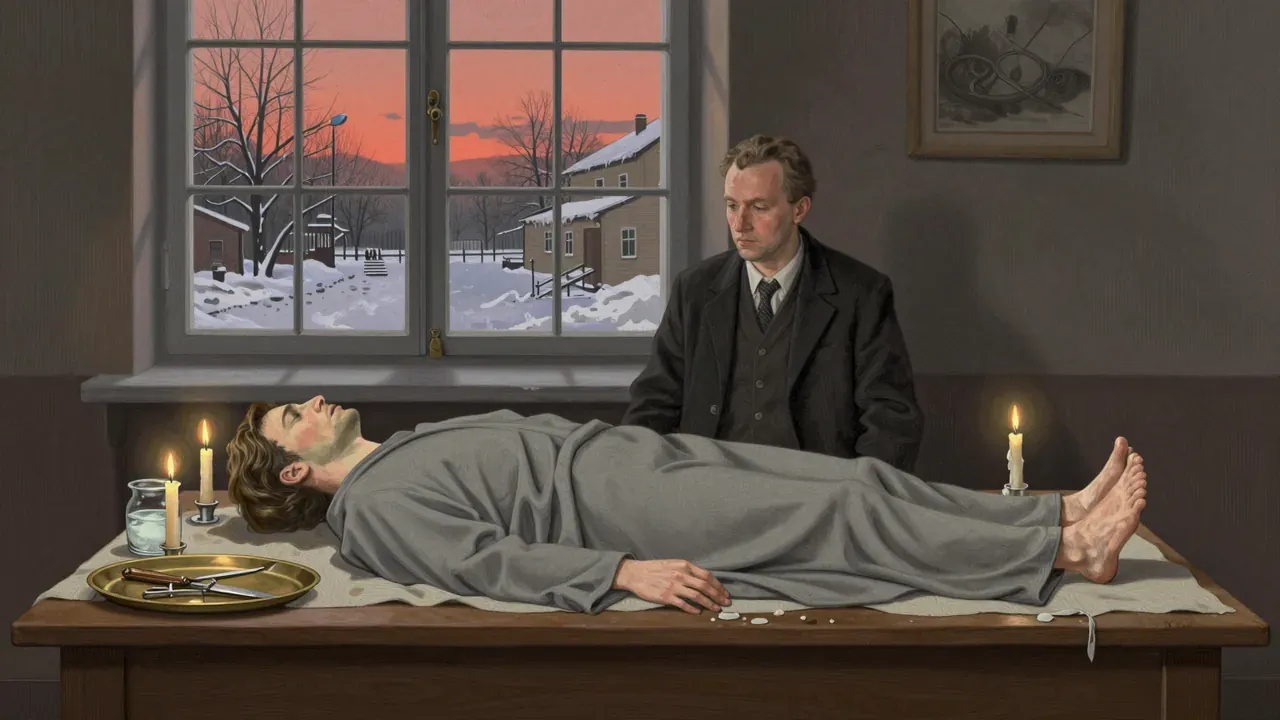
Faust is Alexander Sokurov’s fourth and final film in a cycle examining power through biographical portraiture — here pivoting from historical figures to myth, adapting Goethe and Mann not as source but as scaffold. It sets itself the task of rendering metaphysical inquiry as physical sensation: Faust’s hunger for knowledge is shown in autopsy, dissection, trembling hands over cadavers; his bargain is not with a devil who tempts, but with a moneylender whose grotesque pragmatism exposes the hollowness of Enlightenment certainty. The film refuses allegory as illustration. Instead, it treats the legend as a pressure chamber for questions about cognition, embodiment, and moral agency — all anchored in a deliberately anachronistic 19th-century Europe, shot across Czech castles, German towns, and Icelandic geysers. Its ambition is not fidelity but reconstitution: to make the soul feel like something you might weigh on a scale or see condense on cold glass. It does not argue philosophy; it stages its vertigo. (158 words)
The look of it
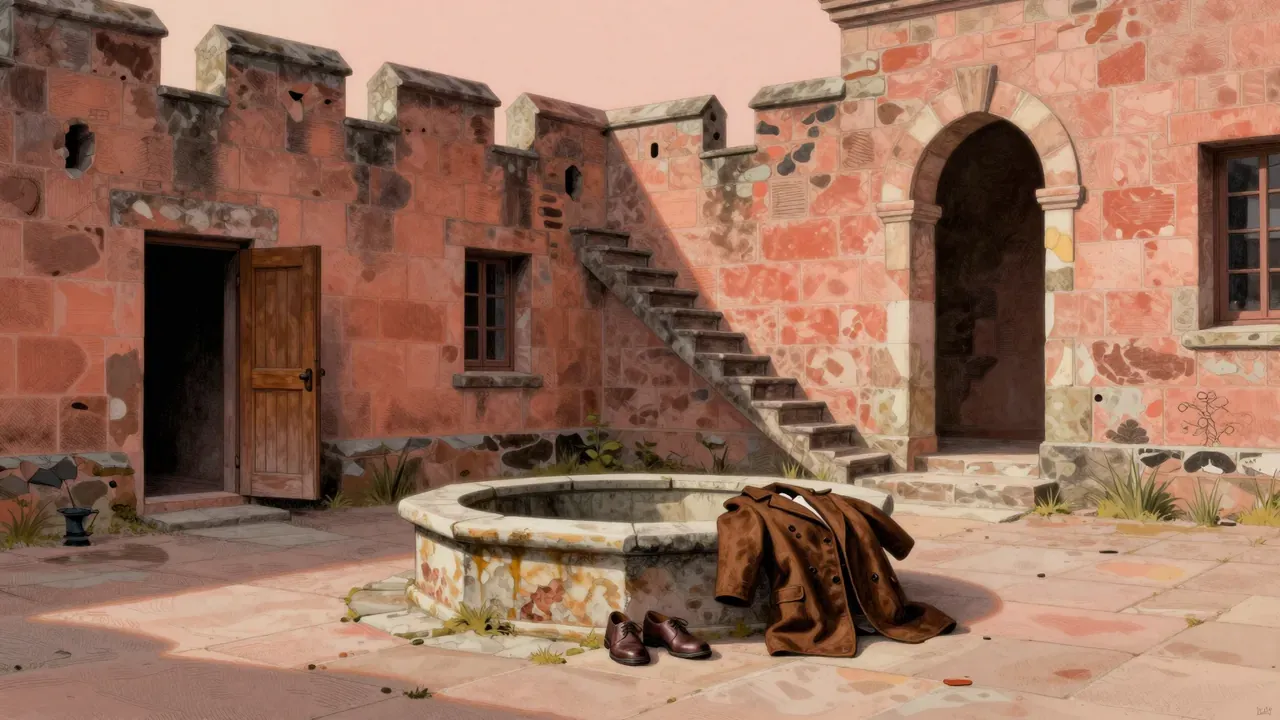
The story follows Faust’s descent not into hell but into consequence — a slow, viscous slide from clinical curiosity to erotic obsession, then to penitence and rupture. Johannes Zeiler plays Faust as tightly coiled tension, rarely raising his voice yet radiating unease in every still frame. Anton Adasinsky’s Mauricius is less Mephistopheles than a walking contradiction: deformed yet self-assured, cynical yet oddly tender, speaking German with a guttural, almost musical precision. Bruno Delbonnel’s cinematography abandons Sokurov’s earlier chiaroscuro stillness for a muted, Flemish palette — thick greys, bruised ochres, candlelit interiors where light seems absorbed rather than reflected. Jörg Hauschild’s editing sustains long takes without indulgence; pauses land because they are earned by gesture, not imposed by rhythm. Andrey Sigle’s score avoids leitmotif, favouring sparse cello phrases and sudden silences that amplify the weight of unspoken thought. Every craft choice serves immersion, not ornament. (159 words)
What sticks to the skin
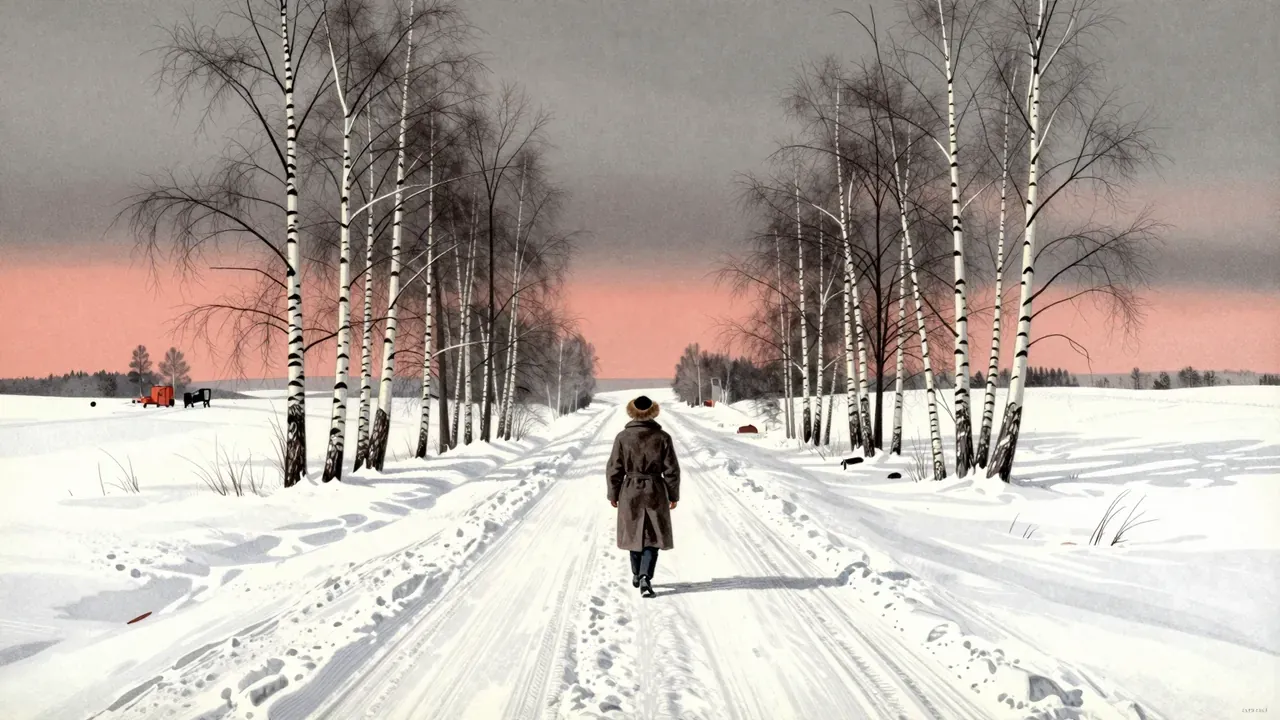
What lands most firmly is the film’s tactile conviction: the chill of stone corridors, the damp wool of coats, the sticky residue of blood on a scalpel, the way candlelight pools in a basin of water before spilling over. These details do not illustrate theme — they constitute it. The bathhouse sequence, where Faust first sees Margarete, works not as seduction but as sensory overload: steam, shifting light, submerged limbs, the muffled sound of breathing — all rendered with such physical specificity that desire feels less like emotion than physiology. Similarly, the geyser interlude — brief, wordless, filmed in Iceland — lands not as spectacle but as elemental counterpoint: heat erupting from earth, indifferent to human contract or consequence. Even the dialogue, delivered in precise, uninflected German, gains weight from its restraint. There is no rhetorical flourish, only statements that settle like stones in still water. The film’s power resides in this refusal to explain itself — it trusts the viewer to feel meaning before naming it. (157 words)
Where the ground gives way
What does not land is the film’s structural patience when it tips into opacity without sufficient anchor. The pub brawl that kills Valentin arrives without narrative build, its violence abrupt and under-contextualised — less tragic inevitability than arbitrary rupture. Some transitions between locations feel unmoored: the shift from Czech castle to German street to Icelandic wasteland carries no diegetic logic, relying instead on mood alone, which risks alienating viewers who need causal or spatial continuity. Hanna Schygulla’s role as the moneylender’s ‘wife’ remains cryptic — her presence evokes ritual more than character, and her function in the moral architecture of the film is never clarified. Likewise, the ending — Faust burying Mauricius beneath rocks, then wandering alone — offers no resolution, psychological or symbolic. For some, this is austerity; for others, it is evasion. The film assumes familiarity with Sokurov’s prior work and with German Romanticism’s grammar of silence and weight — assumptions that leave gaps no amount of visual beauty can fully bridge. (159 words)
The weight of the deed
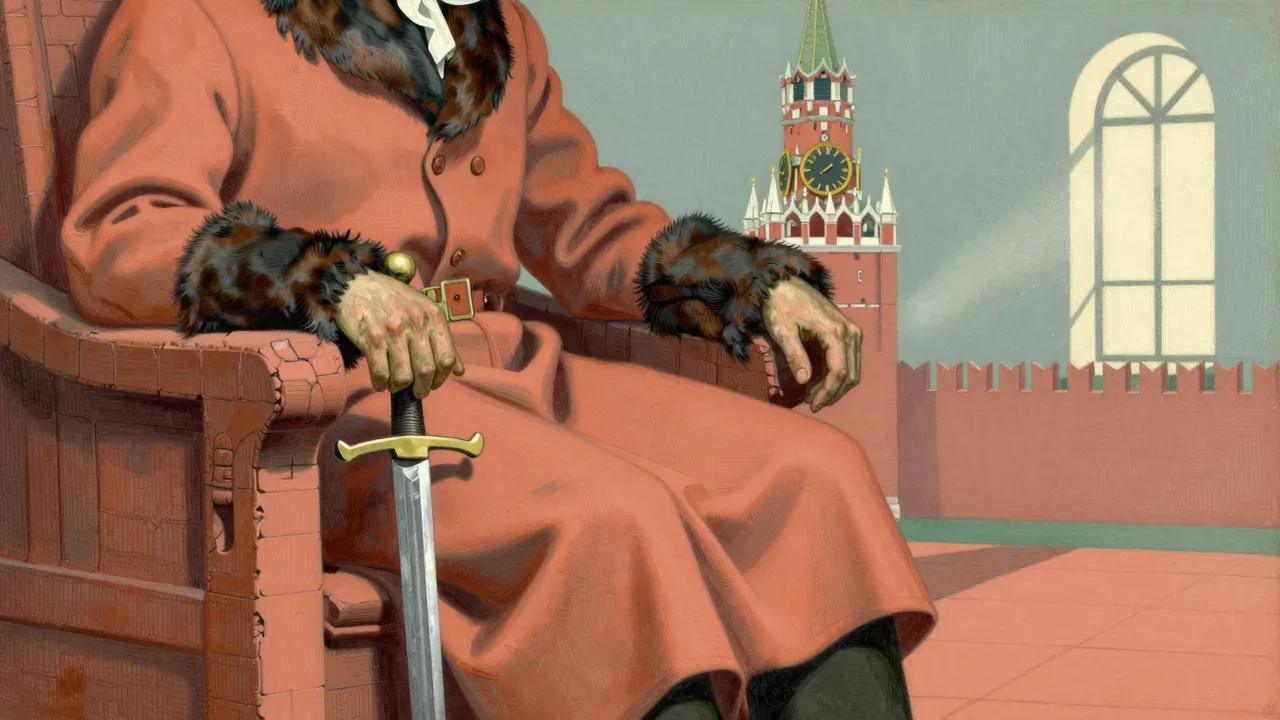
The themes that matter are not those of damnation or redemption, but of epistemic limit and embodied consequence. Faust’s dissection is not hubris but desperation — a scientist grasping at the boundary between life and death, knowing he cannot locate the soul because it has no anatomical seat. Mauricius embodies the nihilism of pure instrumentality: if there is no soul, then value is assigned, not discovered. Their conflict is not good versus evil, but cognition versus deed — a tension made literal in the repeated line ‘In the beginning was the word’ versus ‘In the beginning was the deed’. The film also interrogates masculinity as performance: Faust’s rigidity, Valentin’s bravado, Mauricius’s grotesque confidence — all are postures worn against existential dread. Crucially, the film treats power not as political office but as the quiet authority of the man who controls access to truth, whether through money, medicine, or memory. This is Sokurov’s consistent concern, now stripped of biography and placed inside myth. (158 words)
Who walks beside it
This film is for viewers who treat cinema as contemplative space — those accustomed to Sokurov’s pacing, receptive to ambiguity as texture rather than flaw, and willing to sit with unresolved tension for its own sake. It rewards attention to surface, to timbre, to the weight of a glance held half a second too long. It is not for viewers who require narrative propulsion, psychological exposition, or moral clarity. Those who expect adaptation to clarify or modernise the source will find it withholding; those who rely on music or editing to cue emotional response will feel adrift. A viewer who values thematic coherence over atmospheric density may leave frustrated. The film’s endurance test is not length but its refusal to yield meaning on demand — and that refusal is deliberate, not accidental. Change the editing rhythm or add explanatory dialogue, and the film collapses into illustration. Its integrity depends on its resistance. (159 words)
The measure of its hours
Yes, it is worth your evening — but only if you approach it as one would a late Bruegel painting: slowly, from varying distances, returning to particular details over time. It repays attention not with revelation but with deepening resonance: a gesture gains weight on second viewing; a colour scheme reveals its logic only after the credits. Its 134 minutes do not pass quickly, nor are they meant to — this is duration as ethical condition, not obstacle. Those who dislike it tend to cite its pace or opacity, but those objections misunderstand its aim: it is not withholding meaning, but insisting that meaning must be felt before it is named. To call it ‘impenetrable’, as one critic did, is to mistake slowness for obscurity. The film earns its stillness. If you have sat with Tarkovsky or Dreyer, you will recognise this language. If you expect cinema to move you forward, Faust asks you to stand still — and discover what moves within you instead. (159 words)