The look of it
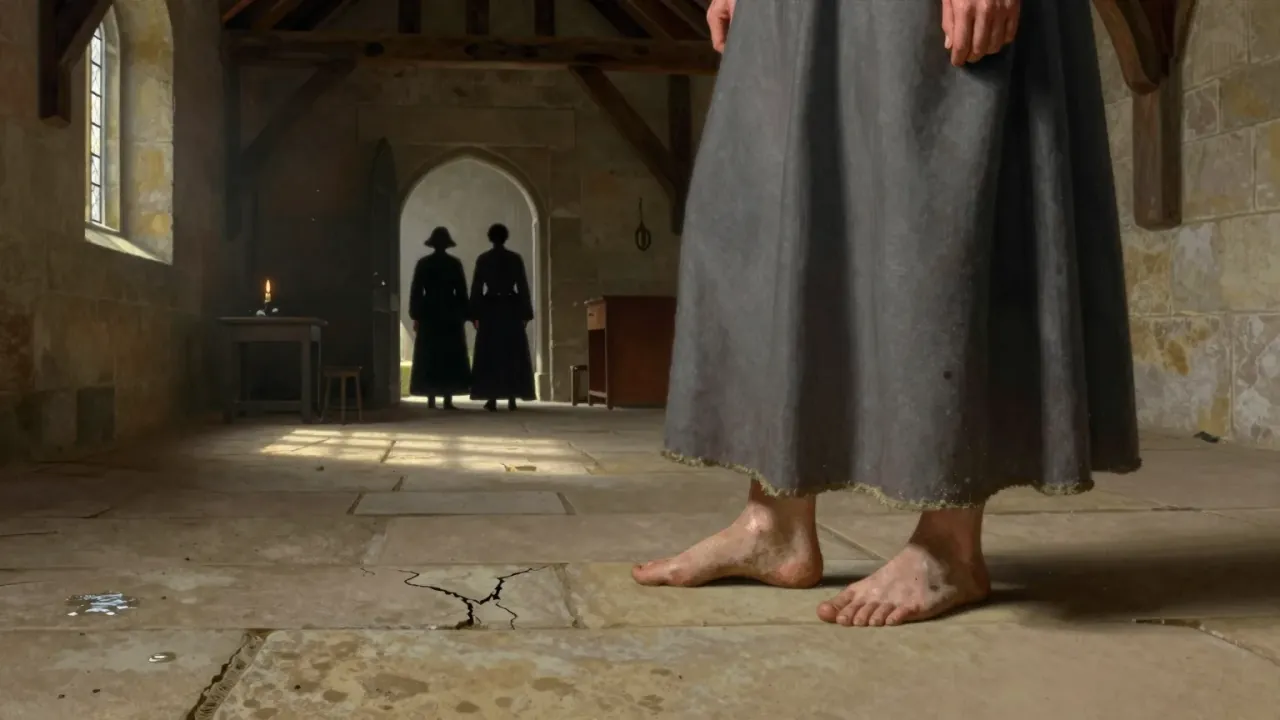
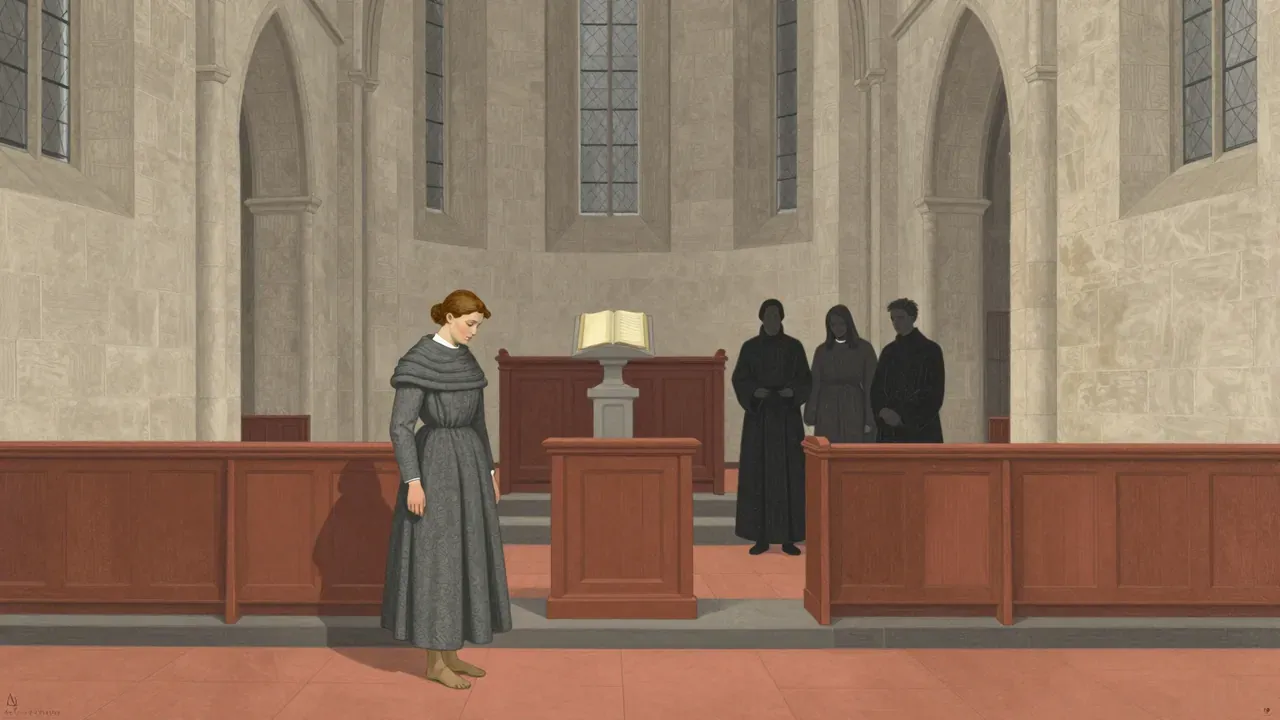
Day of Wrath is a Danish drama set in 1623, adapted from Hans Wiers-Jenssen’s 1909 play Anne Pedersdotter, itself drawn from a real Norwegian witch trial. Carl Theodor Dreyer made it during the Nazi occupation of Denmark, his first film in eleven years, and it operates as a tightly wound moral and theological chamber piece. It does not aim to reconstruct history or dramatise persecution as allegory, though it inevitably resonates with contemporary oppression. Instead, it seeks to trace how belief, law and inherited authority converge to corrode intimacy, erode self-knowledge and compel confession—not through violence alone, but through the slow pressure of expectation, silence and shared guilt. Its project is structural: to show how a system that names certain truths as absolute also makes doubt indistinguishable from heresy, and desire indistinguishable from damnation. It treats theology not as doctrine but as atmosphere—thick, unyielding, lit by candlelight and shadow. Dreyer’s intent is not polemic but exposure: to hold still long enough that the weight of each glance, each withheld word, becomes legible as complicity.
The sound of it
The story unfolds in deliberate, unbroken sequences, with Karl Andersson’s cinematography keeping faces half-submerged in darkness and interiors drained of warmth. Lisbeth Movin plays Anne without affectation or flourish; her performance rests in micro-shifts of breath and gaze, never in gesture. Preben Lerdorff Rye’s Martin is physically restrained, emotionally volatile only in stillness. Olaf Ussing as Absalon carries the film’s moral gravity not through rhetoric but through posture—his shoulders stooped, his voice low, his authority worn like a habit he no longer believes in. Edith Schlüssel and Anne Marie Petersen’s editing avoids cuts that relieve tension; scenes linger past comfort, holding on faces until expression blurs into exhaustion. Poul Schierbeck’s score is sparse, mostly absent—when music appears, it feels like intrusion, not accompaniment. Dreyer’s direction insists on slowness not as delay but as duration: time measured not in plot turns but in the seconds between decision and consequence, between thought and utterance, between love and accusation.
The pace of it
What lands is the suffocating coherence of its world: every object, every pause, every line of dialogue serves the same logic of constraint. The house where Absalon, Anne and Meret live is not a setting but a character—its corridors narrow, its windows high and small, its furniture heavy and immovable. The burning of Herlof’s Marte is not shown for spectacle but for aftermath: the lingering heat on Svierkier’s skin, the smell implied by sweat and silence. The moment Anne laughs—once, unexpectedly, with Martin—is more destabilising than any scream, because laughter has no sanctioned place in this order. The film’s power lies in how thoroughly it denies release: no catharsis, no redemption, no clarifying revelation. Even the final confession is ambiguous—not an admission of guilt but a surrender to narrative inevitability. That ambiguity lands precisely because the film refuses to name what is real and what is projected, leaving the viewer to sit with the same uncertainty that paralyses its characters.
The space of it
What does not land is the assumption that slowness always deepens meaning. Some sequences—particularly Absalon’s extended walk home during the storm—risk monotony not as strategy but as stasis, where duration ceases to generate tension and begins to erode attention. The film’s refusal of psychological exposition means some motivations remain opaque not by design but by omission: Meret’s cruelty lacks grounding beyond archetype, and Martin’s collapse after his father’s death feels abrupt rather than earned. The austerity of the performances, while consistent, occasionally flattens emotional contrast—Anne’s shift from resignation to defiance reads less as transformation than as intensification of the same quiet despair. A viewer unfamiliar with Dreyer’s grammar may mistake restraint for vacancy, or discipline for indifference. The film assumes a patience for interiority that not all viewers bring, and offers no bridge when that patience runs thin.
The logic of it
The themes that matter are not witchcraft or religion in the abstract, but the mechanics of accusation: how language narrows under pressure, how memory becomes weaponised, how love is made illegible by hierarchy. It treats marriage as institution before intimacy, motherhood as surveillance before nurture, faith as orthodoxy before inquiry. The film’s central tension is between two kinds of truth—one declared by law and scripture, the other whispered in private moments and then retracted under duress. It asks how belief sustains itself not through evidence but through repetition, and how doubt becomes dangerous not when it contradicts doctrine, but when it interrupts consensus. There is no external villain: the system works because everyone inside it believes, however uneasily, that they are upholding order. That ordinariness—the banality of Meret’s suspicion, Absalon’s bureaucratic piety, the villagers’ passive witness—is what gives the film its enduring chill.
The demand of it
This film is for viewers who treat cinema as sustained attention, not consumption—who value precision of framing over momentum, who find resonance in silence and weight in stillness. It rewards those familiar with Dreyer’s work or with early modern European drama, and those willing to sit with moral ambiguity without demanding resolution. It is not for viewers who rely on narrative propulsion, character arcs or tonal variation to stay engaged. Those who expect historical context to be explained, or theology to be debated rather than embodied, will find it withholding. Those who read slowness as emptiness—not as accumulation—will disengage early. A viewer who values clarity over complexity, or catharsis over contemplation, should not begin here. But someone who finds power in restraint, who trusts that a single held glance can carry the force of a monologue, will find it exacting and unforgettable.
The end of it
Yes, it is worth your evening—if you approach it as an act of listening, not watching. Its ninety-seven minutes do not pass quickly, but they do accumulate: each scene adds another layer of implication, each pause another degree of unease. It repays attention not with reward but with recalibration—after it, other films may feel rushed, other dramas superficially urgent. It is not entertainment, but it is not arduous either: its rigour is architectural, not punitive. Those who reject it often do so on grounds of pace, but pace here is inseparable from purpose. To call it ‘slow’ is accurate; to call it ‘tedious’ is to misread its contract. It asks for time, and gives back density. Anyone prepared to meet it on those terms will leave unsettled, clarified, and quietly altered—less by what happens on screen than by how long and how closely it makes you look at what does.