What it is
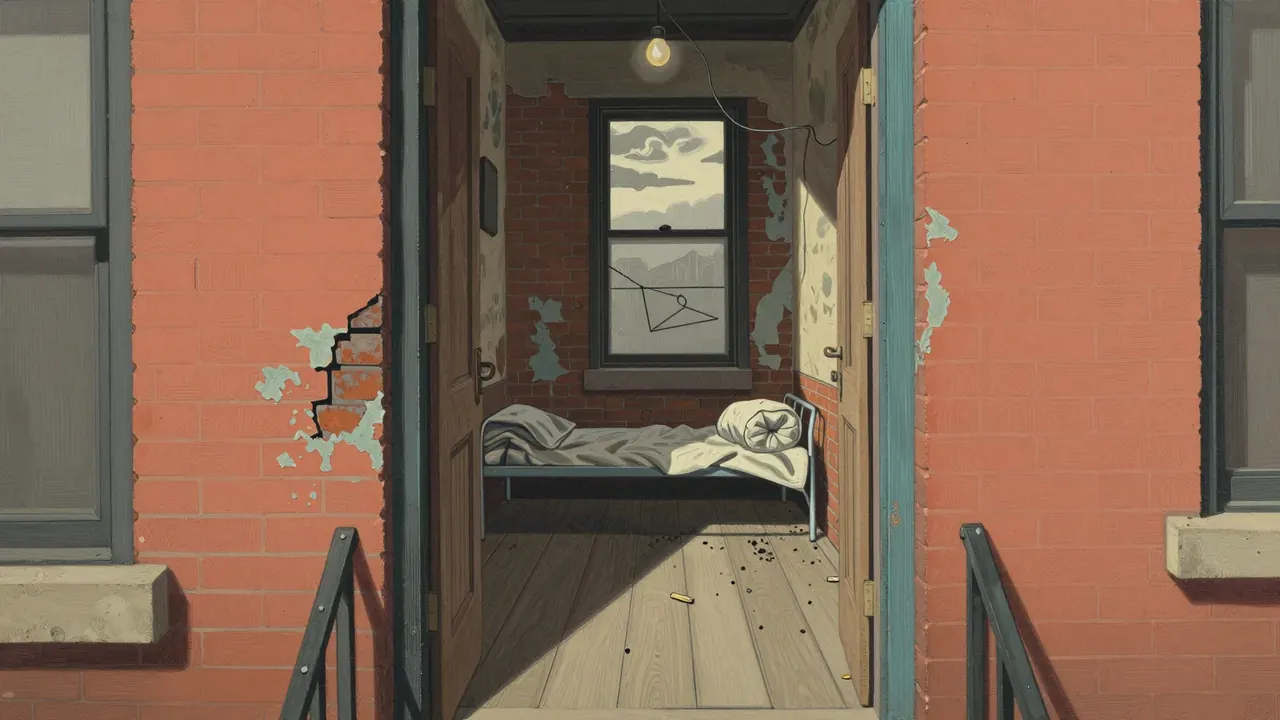
Fear and Loathing in Las Vegas is a literal, period-anchored adaptation of Hunter S. Thompson’s 1971 gonzo journalism novel — not a reinterpretation, not a metaphor, not a cautionary tale. It aims to render the book’s hallucinatory logic with fidelity: the 1971 Las Vegas trip as a collapsing frontier of American myth, where journalistic assignment dissolves into chemical derangement and moral vertigo. Terry Gilliam refuses to modernise or soften the material; he keeps the Vietnam War backdrop, the Nixon-era dread, the polyester textures and cigarette smoke thick enough to chew. The film treats Thompson’s prose not as source material but as architectural blueprint — every absurd image, every paranoid non-sequitur, every grotesque character is drawn from the text, not invented for cinematic convenience. Its ambition is documentary-like in its commitment to the book’s internal consistency, even when that consistency is feverish, contradictory or repellent. It does not ask the audience to empathise with Raoul Duke or Dr. Gonzo so much as to inhabit their perceptual rupture as historical fact — a symptom, not a spectacle. That stance demands patience, tolerance for disorientation, and willingness to sit inside discomfort without resolution. (158 words)
How it works
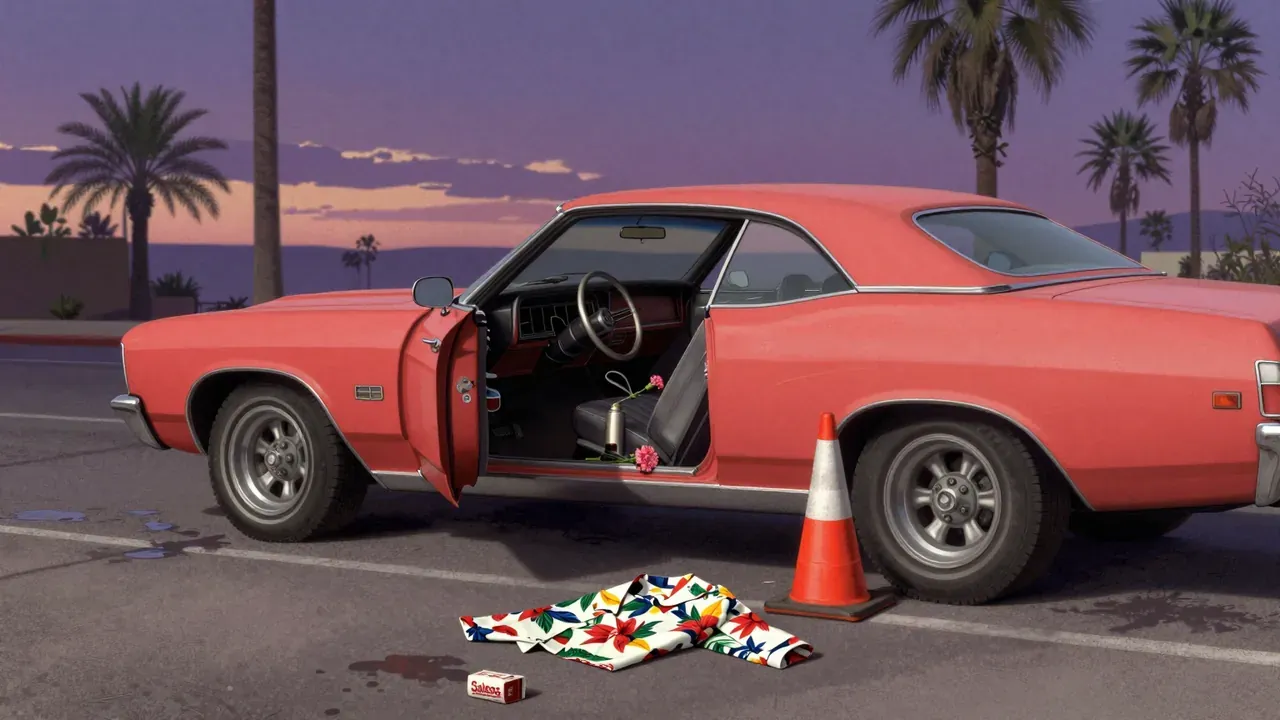
The story follows two men on a drug-saturated assignment to cover a motorcycle race, then a district attorney convention, then nothing at all — narrative propulsion gives way to episodic collapse. Johnny Depp and Benicio del Toro anchor this descent with performances built on physical transformation and behavioural precision: Depp’s Duke is coiled tension wrapped in Hawaiian shirts and nicotine-stained fingers; del Toro’s Gonzo is a sweating, roaring id in a Samoan lawyer’s suit. Nicola Pecorini’s cinematography avoids stylised distortion — instead, he uses shallow focus, handheld drift, and deliberate overexposure to mimic the instability of perception under prolonged intoxication. Ray Cooper’s score is sparse, percussive, often absent — silence and diegetic noise dominate. Lesley Walker’s editing sustains rhythm through repetition and abrupt cuts, not montage logic. There are no establishing shots that reassure; no cutaways that soothe. The craft serves immersion, not clarity. Even the production design — the Great Red Shark, the North Star Coffee Lounge, the Circus-Circus casino — is sourced from Thompson’s notes and photographs, not generic ‘70s pastiche. This is not surrealism for effect, but realism calibrated to an altered nervous system. (159 words)
What lands
What lands is the film’s unblinking commitment to its own logic. The scene at the North Star Coffee Lounge — where Duke and Gonzo’s paranoia curdles into cruelty toward a waitress — lands with brutal, uncomfortable weight because Gilliam refuses to aestheticise it or offer redemption. The visual grammar holds steady: no slow motion, no swelling strings, just tight framing and unbroken takes that force attention onto behaviour, not consequence. Del Toro’s physicality — the weight gain, the guttural voice, the sudden violence of gesture — reads as lived rather than performed. Depp’s stillness between outbursts carries the exhaustion of sustained vigilance against reality. The film’s colour palette — sickly yellows, bruised purples, garish neons — never winks at the audience; it simply is the light of that world. Even minor roles land with specificity: Gary Busey’s volatile attorney, Harry Dean Stanton’s weary cop, Katherine Helmond’s brittle society matron — each occupies their frame like a found object, not a caricature. The film earns its disorientation by grounding every absurd detail in tactile, researched authenticity. It does not ask to be liked, only believed. (157 words)
What does not
What does not land is the film’s structural inertia after the midpoint. Once the journalistic pretext vanishes, the narrative lacks forward pressure — not by design, but by omission. There is no counterpoint to the descent: no memory, no conscience, no external threat beyond the next dose. The film’s refusal to judge or interpret leaves some sequences feeling like endurance tests rather than revelations — particularly the extended casino sequences, which rely on repetition without escalation. The supporting cast, though well-chosen, remains functionally flat: Christina Ricci’s Lucy is underwritten and visually stranded; Cameron Diaz’s Lanny appears and vanishes without resonance. The script’s fidelity to the book means it retains Thompson’s digressions and dead ends — admirable as scholarship, less effective as sustained cinema. Some viewers will find the pacing unhurried to the point of stasis; others may read that slowness as integrity. The film offers no handrail, and that absence becomes exhausting for those who expect narrative scaffolding, even in chaos. It mistakes consistency for momentum, and repetition for rhythm. (156 words)
The themes that matter
The themes that matter are not drug use or counterculture per se, but the erosion of shared reality in a nation losing its moral compass. The film locates Duke and Gonzo not as rebels but as latecomers — men arriving at the end of the 1960s’ promise, armed with chemicals instead of ideas, searching for meaning in a landscape already hollowed out by war, consumerism and institutional rot. Las Vegas is not backdrop but antagonist: a city built on illusion, profit and erasure — a mirror to the American dream’s terminal phase. The film’s preoccupation with documentation — Duke’s notebook, the tape recorder, the constant self-observation — points to a deeper anxiety about truth in a media-saturated age. Fear and Loathing is less about getting high than about what happens when the tools for discerning reality fail. Its political dimension is quiet but insistent: the barbed references to Nixon, the draft, the Manson murders, the fading Black Power movement — all appear not as context but as ambient toxicity. The film treats paranoia not as pathology but as rational response to observable conditions. (159 words)
Who should watch it
This film is for viewers who value textual fidelity over narrative efficiency, who tolerate ambiguity as atmosphere rather than flaw, and who approach cinema as archaeology rather than entertainment. It suits those familiar with Thompson’s work, or with 1970s American cultural fracture, or with Gilliam’s earlier films — people who recognise disorientation as a mode of inquiry. It is not for those who require clear motivation, emotional payoff, or tonal consistency. Viewers expecting satire will find it too committed; those seeking psychedelic spectacle may find it too grounded. Anyone put off by prolonged discomfort, moral ambiguity or unrelenting male perspective should pass. Those who dislike films where the protagonist’s worldview remains unchallenged — where there is no corrective voice, no counter-narrative — will likely reject it outright. A viewer who values psychological realism over plot mechanics, or who finds meaning in failure as form, may find it essential. But if you need catharsis, closure or even basic likability, this is not your film. (158 words)
Is it worth your evening
Yes, it is worth your evening — but only if you accept its terms. It repays attention not through revelation but through accumulation: small details accrue into a coherent, unsettling whole. Its power lies in duration, not climax — in watching Duke’s hands shake for three minutes, in hearing the same slot machine chime twelve times, in noticing how the light changes as the drugs wear off and return. It is not ‘enjoyable’ in any conventional sense, but it is rare: a major studio release that refuses compromise on tone, period, or authorial intent. Those who dismiss it as chaotic or self-indulgent have a point — but they mistake rigour for randomness. The film would change its verdict if it offered even one moment of genuine reflection, one line that stepped outside Duke’s monologue. As it stands, its worth depends entirely on whether you believe fidelity to a damaged consciousness is itself an ethical act. For some, it is. For others, it is merely exhausting. (159 words)