The silence before the letter
Letter from an Unknown Woman is a tightly wound chamber drama in the form of a dying woman’s final letter, adapted from Stefan Zweig’s 1922 novella and transposed from early-twentieth-century Vienna to a stylised, candlelit version of itself. It aims to render unreciprocated love not as sentiment but as structural fact — a life shaped entirely by one man’s casual attention and habitual forgetting. Max Ophüls does not ask the viewer to sympathise with Lisa’s devotion so much as to register its physical and temporal weight: ten years of waiting, one child born and lost, a marriage sustained only as cover, all folded into eighty-six minutes. The film treats memory not as recall but as erosion — what remains when everything else has been worn down by repetition, silence, and withheld recognition. Its ambition is formal and emotional at once: to make duration visible, and longing legible through composition, pacing, and restraint. It is not about romance as mutual exchange, but about asymmetry as condition — of gender, of class, of narrative voice. The letter is both device and destiny: the only form in which Lisa’s life becomes legible, even to herself.
The look of it
The story unfolds in strict chronological order within Lisa’s narration, bookended by Stefan’s silent reading and departure for a duel he no longer wishes to avoid. Joan Fontaine carries the film with a performance that avoids pleading or grandeur; her Lisa is watchful, precise, physically still until emotion breaches her composure — as when she waits outside Stefan’s door in the rain, or turns away from him at the opera. Louis Jourdan plays Stefan with charm unburdened by self-awareness, his ease a kind of moral gravity well. Franz Planer’s cinematography keeps interiors dim and layered, using deep focus and slow tracking shots to hold Lisa and Stefan in the same frame while keeping them emotionally unmoored. Daniele Amfitheatrof’s score is discreet, rarely underlining feeling but sustaining mood like ambient light. Howard Koch’s script tightens Zweig’s elliptical prose into declarative scenes, while Ophüls’ direction insists on the materiality of time: clocks tick, carriages arrive late, letters age in drawers. The editing by Ted J. Kent gives each encounter its own rhythm — the first meeting tentative and breathless, the second languid and deceptive, the third hollowed out by silence.
The weight of waiting
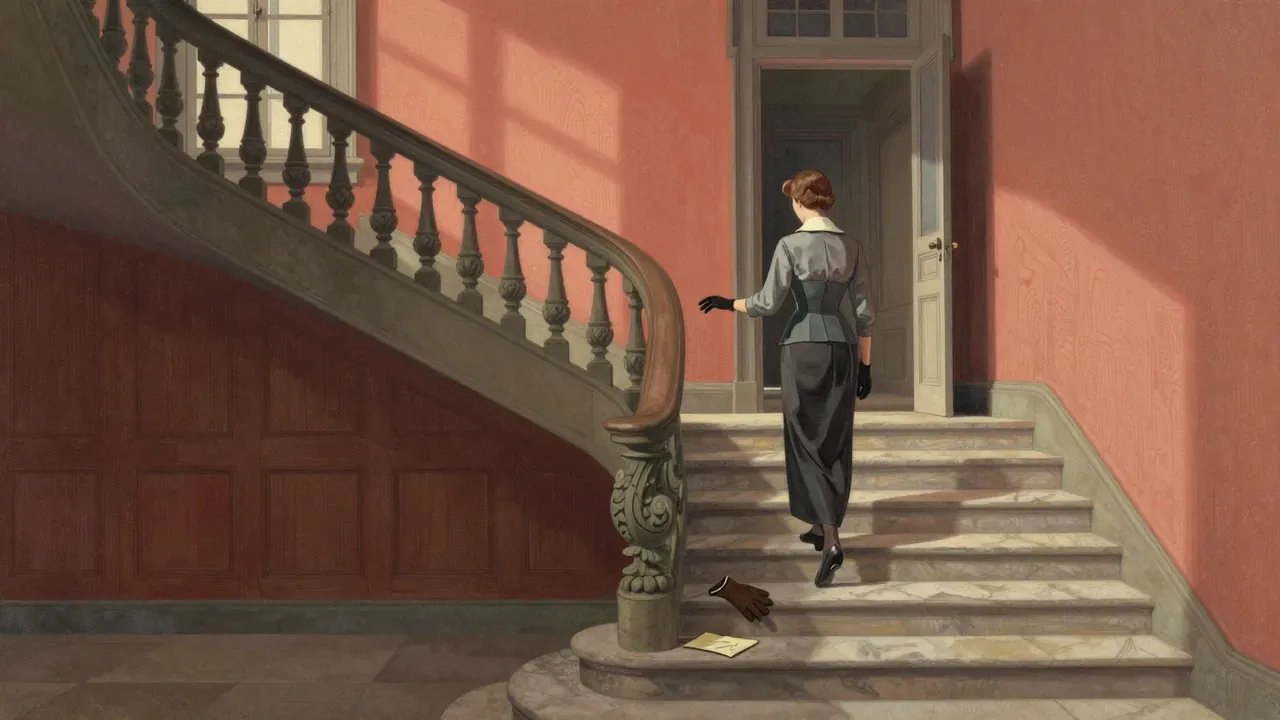
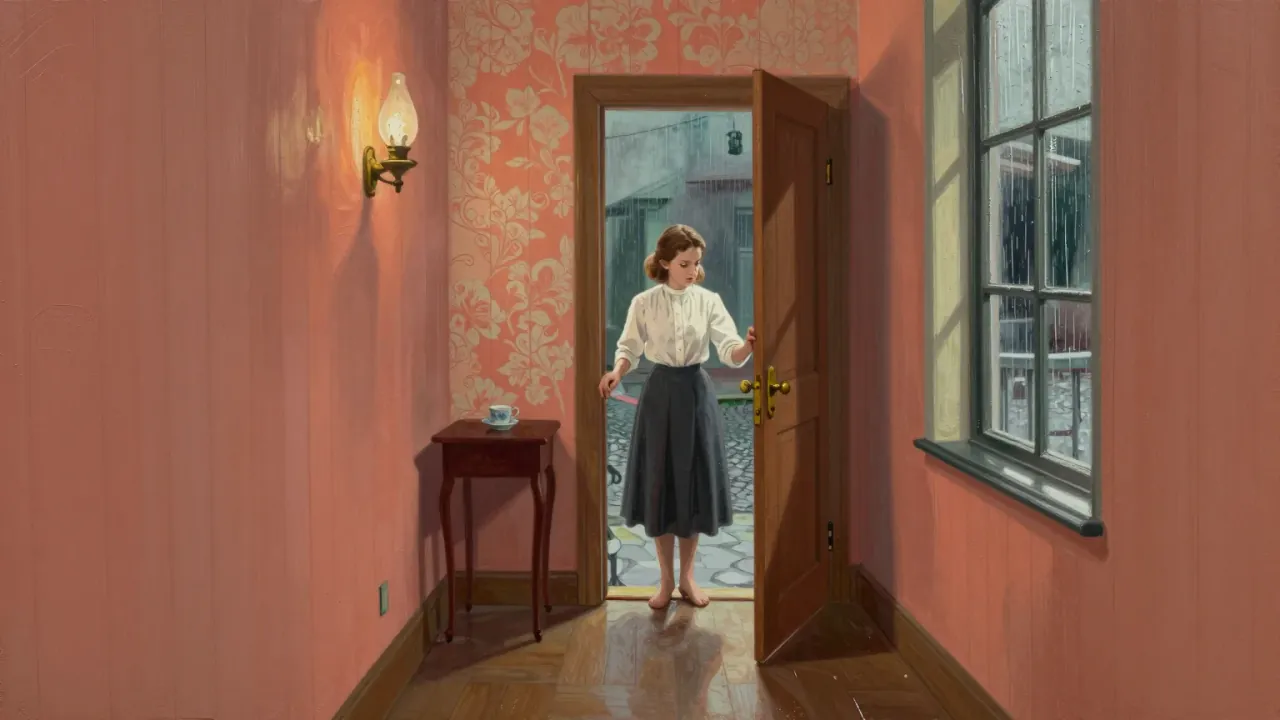
What lands is the cumulative pressure of Lisa’s invisibility — not as metaphor but as daily practice. Her decision not to name herself to Stefan, not to claim motherhood, not to demand anything beyond presence, gains force because it is never explained away as naivety or pathology. The film refuses to pathologise her devotion; instead, it locates its logic in social constraint, in the limited forms of agency available to a woman of her class and era. The visual grammar supports this: Lisa is often framed behind glass, through doorways, or at the edge of mirrors — seen but not centred. The final sequence, where Stefan walks toward the duel after reading the letter, lands not as redemption but as delayed, incomplete reckoning — he remembers her name, but not her life. That ambiguity is earned. The mute butler’s nod carries more weight than any monologue; his silence confirms what the film has insisted all along: Lisa was seen, just never by the person whose gaze mattered. The ghostly image of teenage Lisa opening the door is not fantasy but memory made visible — the only moment Stefan ever truly saw her, and the one he forgot.
The shape of forgetting
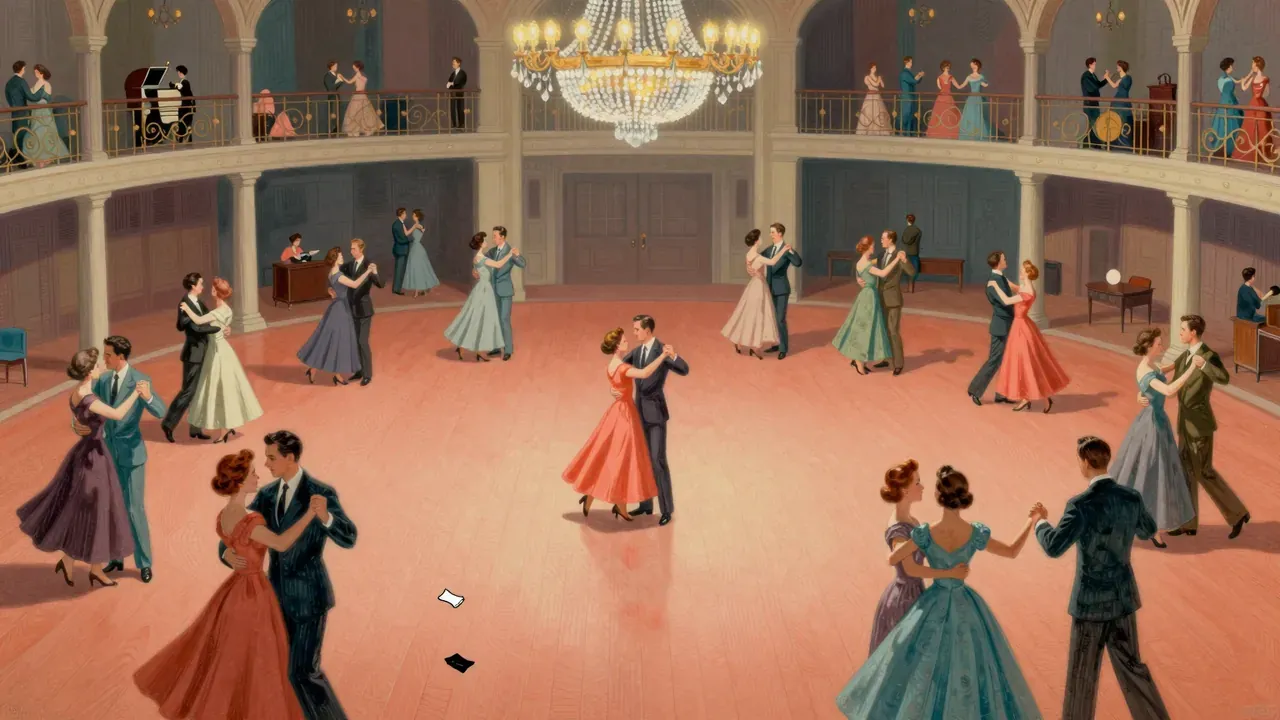
What does not land is the duel’s framing as moral climax. Johann arrives too late in the film to function as anything other than plot mechanism; his grievance feels tacked on rather than inevitable. The shift from Zweig’s interior, almost claustrophobic novella — where Lisa’s solitude is absolute — to a film with husbands, duels, and operatic confrontations dilutes the original’s quiet horror: that love can be total and yet leave no trace. The film’s period setting, while lush, occasionally slips into decorative excess — the ballroom sequence, for instance, stretches credulity without deepening character. Some performances feel underwritten by comparison: Mady Christians as Lisa’s mother registers warmth but little complexity, and Erskine Sanford’s general Johann lacks the menace or wounded pride needed to make his challenge feel earned. The adaptation’s decision to name Lisa and Stefan — and to tie the son’s name to Zweig — adds biographical texture but risks turning personal tragedy into literary homage. The film works best when it stays close to Lisa’s perspective; whenever it pulls back to explain Stefan’s choices or justify his forgetfulness, it weakens her authority as narrator.
The cost of naming
The themes that matter are memory as failure, love as labour, and narrative as last resort. Lisa’s letter is not confession but reclamation — the only medium in which her experience achieves coherence and consequence. The film treats time not as linear progression but as sediment: each encounter with Stefan layers over the last, until only the outline remains. Class operates not as backdrop but as architecture: Lisa’s movement from apartment tenant to dress model to general’s wife charts a path defined less by aspiration than by containment. Gender is rendered through omission — what Lisa does not say, does not ask, does not insist upon. Her silence is neither passive nor strategic; it is the only language available to her. The film also interrogates authorship: Stefan is a musician, but his art is consumed, not understood; Lisa writes the letter, but it reaches him only after she is gone. There is no reciprocity in creation, only transmission across absence. These are not abstract concerns but lived conditions — the weight of expectation, the exhaustion of hope deferred, the quiet violence of being known only as a footnote in someone else’s story.
The grammar of absence
This film is for viewers who attend to rhythm over revelation, who find emotional resonance in restraint, and who accept that some stories end not with resolution but with the quiet settling of dust. It rewards patience with texture: the way light falls on Fontaine’s collarbone, the pause before a line is delivered, the sound of a carriage wheel on cobblestone. It is not for those who require narrative payoff, moral clarity, or psychological exposition — the film offers none of these. Anyone expecting catharsis from Stefan’s final walk will be disappointed; anyone seeking feminist polemic will find subtlety instead of argument. Critics who value overt thematic signalling or character arcs with clear turning points may find the film withholding. A viewer who prefers dialogue-driven conflict or external stakes over internal accumulation will likely disengage. What would change the verdict? A tighter edit removing the duel’s framing device, or a more ambiguous ending that resists even the gesture of Stefan’s remembrance — but that would also deny the film its one fragile gesture toward consequence.
The door that opens once
Yes, it is worth your evening — not as entertainment but as immersion in a singular aesthetic and ethical proposition. Its eighty-six minutes move with the deliberation of a held breath, and its emotional economy asks for attention, not empathy. You do not need to believe in Lisa’s love to feel its weight; you need only watch how she holds herself in doorways, how she counts the days between Stefan’s promises, how she names her son after a writer she admires but never meets. The film earns its reputation not through spectacle but through precision: every glance, every cut, every note of music calibrated to sustain a single, unwavering tone. Those who dismiss it as ‘melodrama’ mistake control for indulgence. Those who call it ‘dated’ overlook how precisely it maps the mechanics of erasure still operative today. It is not a film to be liked, but one to be inhabited — briefly, intensely, and with full attention to what it chooses not to say. To skip it is to miss one of the clearest statements ever made about what it costs to love without reciprocity.