The shape of the story
The Killers is a 1946 American crime film that uses Ernest Hemingway’s spare, fatalistic 1927 short story as a structural spine—not as source material to be honoured, but as a trigger for expansion. It sets out to build a full noir world around Hemingway’s two killers and their passive victim, transforming a ten-minute literary vignette into a layered investigation of betrayal, memory, and moral collapse. The film does not aim for psychological realism or social commentary; its ambition is tonal and architectural: to sustain a mood of inescapable consequence through repetition, shadow, and withheld information. It treats the past not as recoverable history but as a series of locked rooms, each opened only when the present forces the key into the lock. This is not a whodunit but a why-did-it-happen-inevitably—and the answer lies less in motive than in posture, glance, silence, and the weight of a single choice made under dim light. Its method is forensic restraint: no exposition is volunteered, no emotion unearned, no character allowed to remain neutral for more than a line.
The look of it
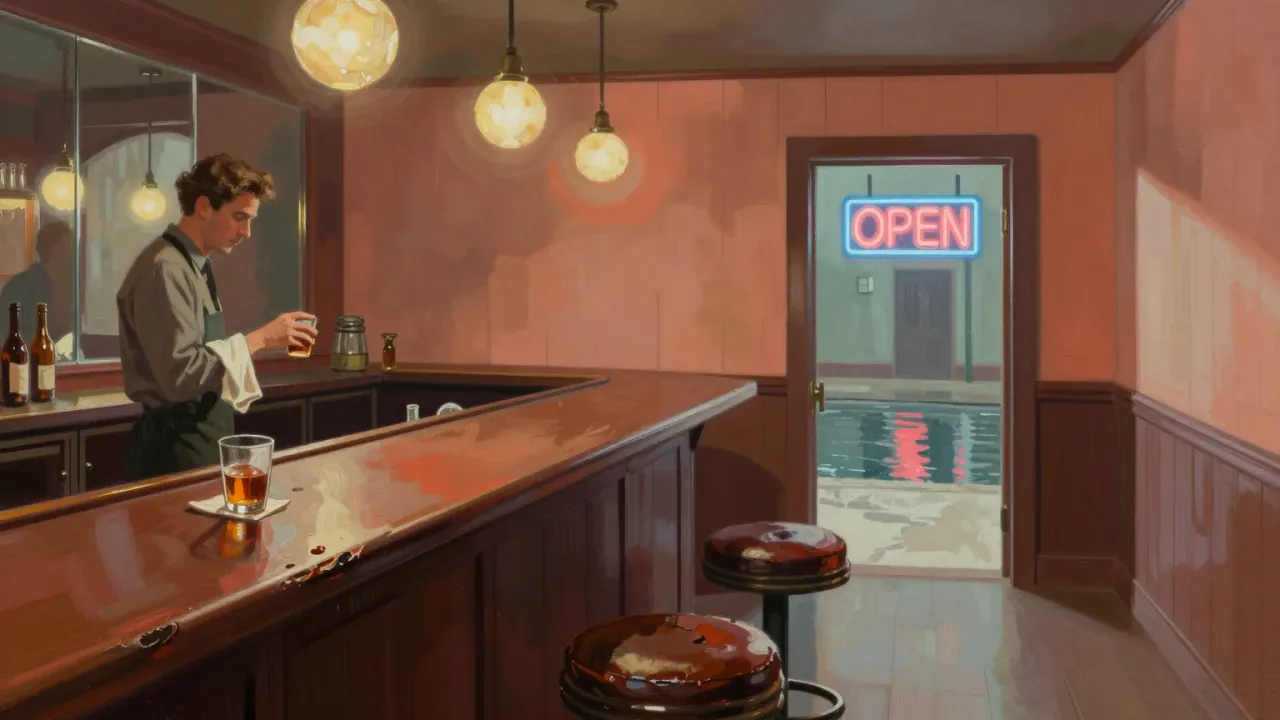
It works through disciplined subtraction. Elwood Bredell’s cinematography avoids high contrast for its own sake; instead, he builds density—walls recede into murk, faces half-drown in pool-light, doorways frame figures like prison bars. Miklós Rózsa’s score does not underscore action but thickens atmosphere, using low strings and muted brass to suggest pressure building behind walls. Robert Siodmak directs with a reporter’s eye: every gesture is legible, every pause calibrated, every cut placed to deny relief. Burt Lancaster, in his debut, plays Ole Anderson not as a man undone by weakness but by quiet complicity—his stillness reads as consent. Ava Gardner’s Kitty Collins moves with deliberate slowness, her voice low, her eyes never quite meeting others’ until she must. Edmond O’Brien’s insurance investigator Jim Riordan is the film’s only steady point, his calm persistence anchoring the flashbacks. Anthony Veiller’s screenplay parcels revelation across three distinct timelines—diner, murder, investigation—with each layer peeling back not just plot but moral hierarchy. The editing by Arthur Hilton sustains this rhythm: no scene overstays, no flashback lingers beyond its functional necessity.
What sticks
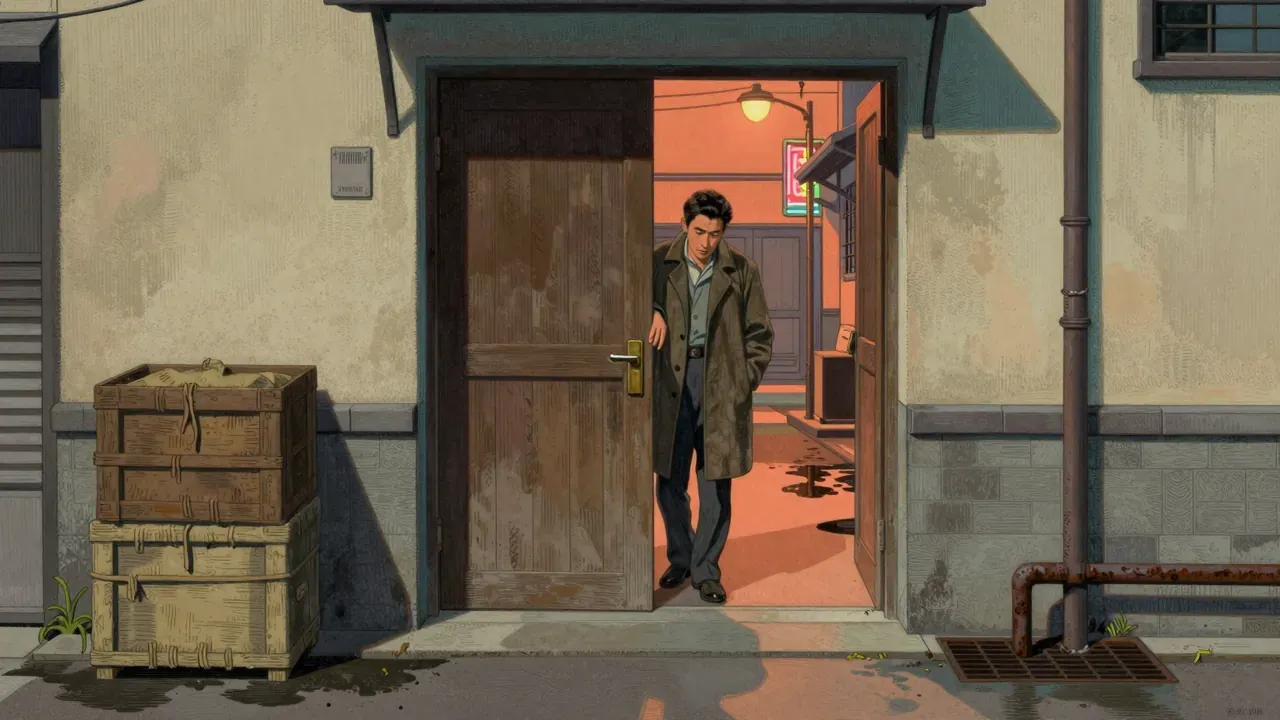
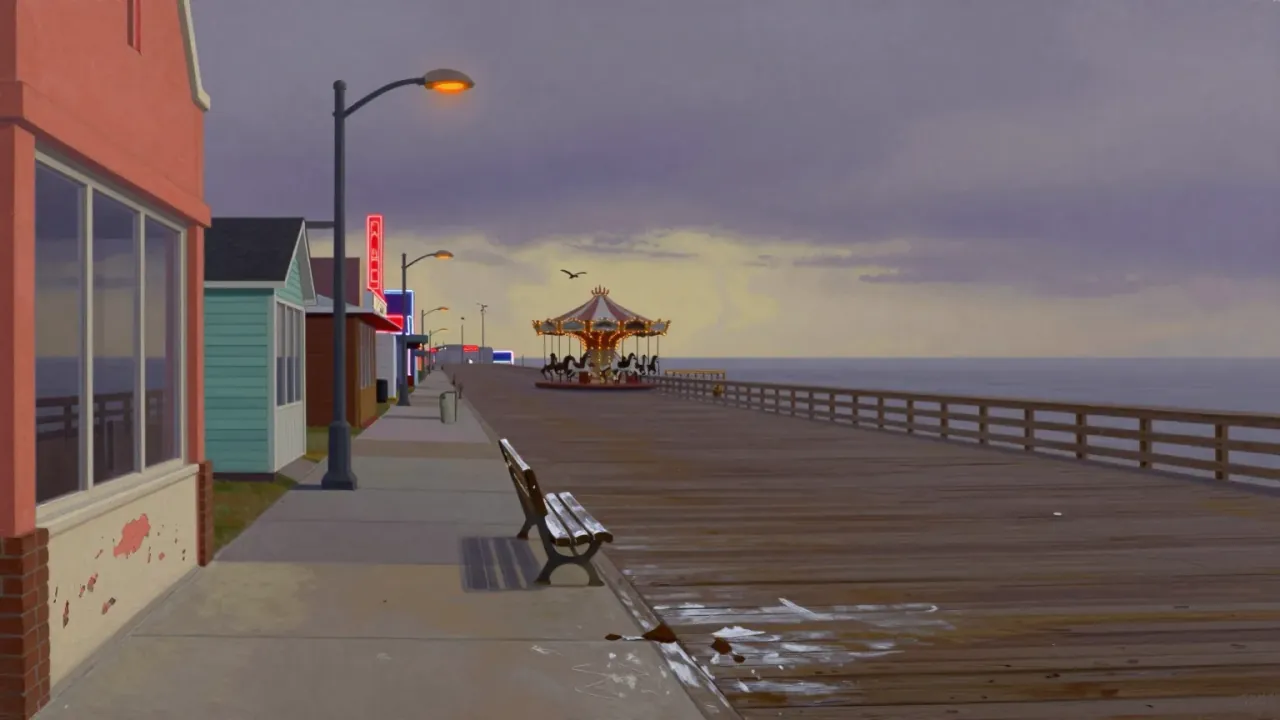
What lands is the film’s cumulative sense of doom. The opening twelve minutes—Al and Max arriving in Brentwood, their banter sharp and hollow, their violence casual and absolute—remains one of cinema’s most efficient compressions of menace. That sequence functions not as prologue but as thesis: the world operates on contracts, not conscience, and resistance is optional only until it isn’t. The repeated reframing of the Swede’s passivity—first in the diner, then in his room, then in memory—builds a portrait of fatalism that feels earned, not imposed. Sam Levene’s Lieutenant Lubinsky carries the film’s moral centre without sermonising; his weariness is tactile, his loyalty unspoken but absolute. The Atlantic City sequence, though brief, lands with particular force: the empty boardwalk, the distant casino lights, the Swede’s face as Kitty walks away—no music, no close-up, just a slow pan across his shoulders as he realises he has been narrated out of his own life. These moments do not shout. They settle, like dust in a sunbeam, and stay.
Where it slips
What does not land is the screenplay’s structural strain between Hemingway’s economy and Veiller’s elaboration. The middle section—Riordan’s interviews—relies too heavily on exposition delivered in static two-shots, and several characters exist solely to hand over plot points: Dum-Dum Clarke, Blinky Franklin, even Big Jim Colfax feel less like people than narrative signposts. The film’s insistence on tying every loose thread—the safe house fire timing, the exact division of loot, the whereabouts of Kitty’s stolen jewels—undermines its own fatalism: noir thrives on ambiguity, not accountancy. Some performances falter under the weight of exposition: Albert Dekker’s Colfax lacks menace, leaning instead on theatrical bluster; Virginia Christine’s Lilly Harmon is underwritten to the point of invisibility. The final confrontation between Riordan and Kitty at the nightclub strains credibility—not because it is implausible, but because it abandons the film’s earlier discipline in favour of melodramatic symmetry. The script’s need to explain everything leaves little room for the viewer to sit with uncertainty, which is where noir breathes.
What it’s really about
The themes that matter are not love, greed, or revenge—but time, posture, and the illusion of agency. The film treats time not as linear progression but as sediment: each flashback layers over the last, compressing cause and effect until they become indistinguishable. Posture is central: how characters hold themselves tells more than dialogue ever could—the Swede’s slumped shoulders in the diner, Kitty’s chin lifted just enough to avoid being read, Lubinsky’s hands clasped behind his back like a schoolmaster who has seen too much. Agency is exposed as myth: no one chooses their way out. Even Riordan, the investigator, follows a path laid down before he entered the frame—by the insurance company, by protocol, by the dead man’s silence. The film’s moral architecture rests on this idea: crime is not committed in moments of passion but in long stretches of acquiescence. Loyalty is shown not as virtue but as habit—Lubinsky’s devotion to the Swede persists not because it is rational but because it is older than reason. There is no redemption here, only reckoning—and reckoning arrives not as justice but as arithmetic: debt, interest, final balance.
Who it’s for
This film is for viewers who value precision of tone over speed of plot, who find suspense in what is withheld rather than what is revealed, and who accept that some questions—why the Swede did not run, why Kitty chose betrayal over survival—are not meant to be answered but inhabited. It rewards patience, attention to framing and sound design, and tolerance for scenes that serve mood over momentum. It is not for those who require clear moral binaries, rapid pacing, or characters whose motivations are verbally articulated within three lines. Anyone expecting the kinetic energy of later noir thrillers—like Touch of Evil or Out of the Past—will find The Killers too still, too deliberate. Those who dislike films where the protagonist dies in the first reel and remains dead for the rest will also resist its structure. A viewer who prefers exposition to implication, or who needs villains to sneer and heroes to quip, will find little purchase here. Its pleasures are austere, its rewards delayed, its satisfaction cumulative rather than immediate.
Is it worth your evening?
Yes, it is worth your evening—if you approach it as a study in controlled erosion rather than a puzzle to solve. Its 103 minutes unfold with the gravity of a clock winding down, not the urgency of a fuse burning. It repays rewatching not for hidden clues but for shifts in emphasis: how Bredell lights Lancaster’s jawline in the second flashback versus the third, how Rózsa’s theme changes register when played over Kitty’s entrance versus her exit, how Siodmak holds a shot just long enough to make discomfort habitual. Those who dismiss it as slow miss that its slowness is its argument: fate does not arrive with fanfare. It arrives in footsteps down a corridor, in the pause before a lie, in the space between a question and an answer that never comes. Anyone who believes a film must earn attention minute-by-minute will leave restless. But those willing to let its rhythm settle into their pulse will find it quietly, relentlessly persuasive.