The place of it
The Idiot is Akira Kurosawa’s 1951 adaptation of Dostoevsky’s 1869 novel, transposed to post-war Hokkaido and shot in black-and-white at 1.37:1. It attempts to render the novel’s central paradox — that moral purity appears as folly in a compromised world — through the figure of Kameda, a man whose wartime trauma has left him with epilepsy and a disarming, unguarded honesty. Kurosawa co-wrote the script with Eijirō Hisaita and edited the film himself; Fumio Hayasaka composed the score. The film was conceived as a two-part, 265-minute work, but Shochiku cut it severely after an early screening, leaving only a 166-minute version — the sole surviving cut. This abridgement shapes the film’s rhythm and emphasis: where Dostoevsky’s novel dwells in psychological recursion, Kurosawa’s version compresses motive and omits interior monologue, relying instead on gesture, framing, and contrast between characters’ physical bearing and verbal restraint. Its ambition is not fidelity but translation — of Russian spiritual extremity into Japanese social constraint, of 19th-century metaphysical crisis into mid-century material ruin.
The look of it
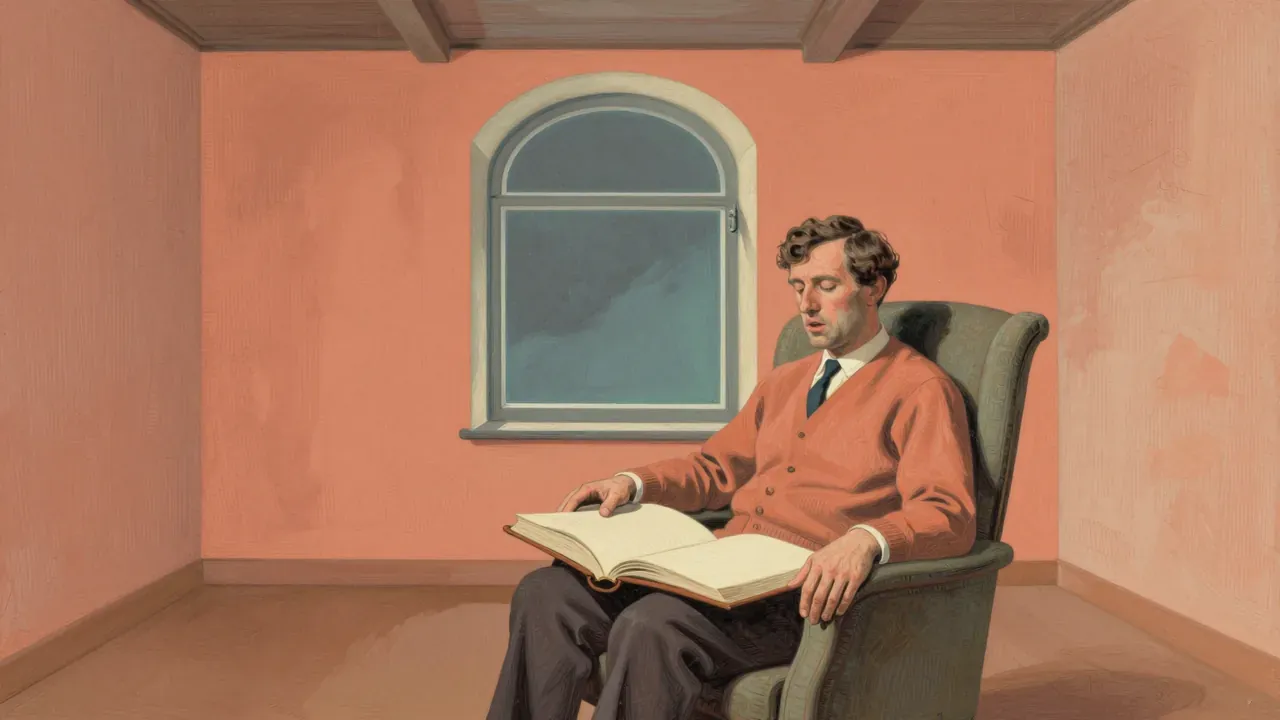
The story follows Kameda’s return to Sapporo, his encounters with Taeko — a woman estranged from her patron Tohata and courted by Kayama for money — and Akama, a volatile heir drawn to both women. Setsuko Hara’s Taeko moves with contained tremor: her hands rarely still, her gaze often lowered or abruptly lifted. Toshirō Mifune’s Kameda avoids theatricality; his stillness reads as vacancy until a line or glance reveals its depth. Masayuki Mori’s Akama simmers in tight close-ups, his face half-shadowed by Takashi Shimura’s Ono in shared frames — a visual shorthand for inherited authority and resentment. Hayasaka’s score uses sparse piano and low strings, never swelling, always holding back. Kurosawa’s editing favours medium shots over cuts, letting scenes breathe longer than narrative urgency requires. The Sapporo Snow Festival sequences are documentary-like: real crowds, unvarnished snow sculptures, no music — a rare moment where setting functions as witness rather than backdrop. The film’s craft is deliberate, unhurried, anchored in bodies and weather more than exposition.
The weight of it
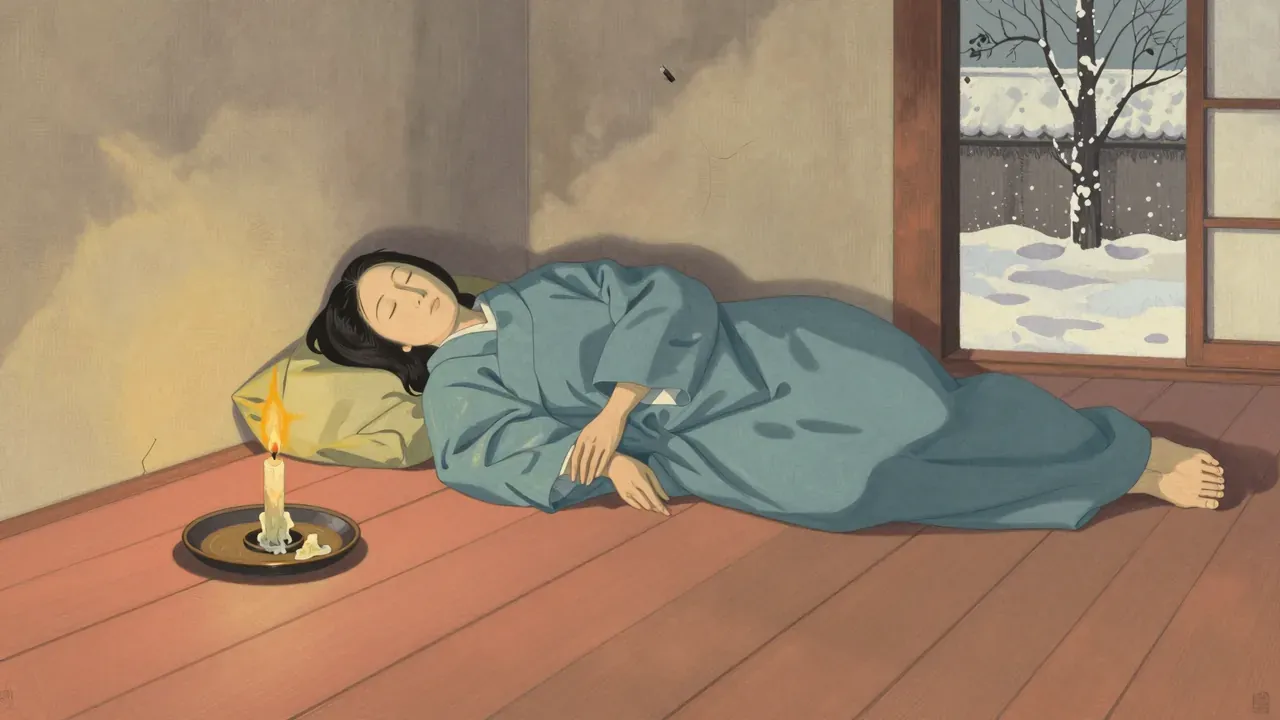
What lands is the weight of unspoken consequence. When Taeko faints after Kameda leaves Akama’s house, the camera holds on her collapsed form for twelve seconds without movement or sound — long enough for the viewer to register not drama but exhaustion. The final scene, with Kameda and Akama huddled over candles beside Taeko’s body, gains its force from what is withheld: no weeping, no speeches, no fire to warm them — just cold light, shallow breath, and the slow dimming of wax. Hara’s performance sustains this economy: her smile at Kameda early on is barely a lift of the lips, yet it carries the full measure of relief she hasn’t felt in years. The film’s moral gravity does not reside in declarations of goodness but in the cumulative effect of small, unrewarded choices — Kameda refusing Ayako’s dowry, Taeko burning her letters before fleeing, Akama’s hesitation before striking. These moments land because they are shown, not named; because they occur in silence or near-silence, against the grain of conventional dramatic escalation.
The shape of it
What does not land is the structural disjunction between the film’s two parts. The first section — Kameda’s arrival, his meeting with Taeko, the shifting alliances around her — unfolds with psychological clarity and spatial coherence. The second part fractures: Ayako’s vacillation feels abrupt rather than inevitable, her final line about being ‘the idiot’ arriving without sufficient groundwork in her earlier actions or dialogue. The compression of Dostoevsky’s inner debates into external confrontations leaves some motivations under-anchored — particularly Kayama’s pivot from scheming suitor to passive bystander, and Tohata’s complete disappearance after his initial offer. The studio-imposed cuts also blunt the contrast between Kameda’s moral consistency and the society that punishes it: we see his kindness, but less of the systemic pressure that makes it unsustainable. Without the lost 265-minute version, the film’s argument about innocence and corruption remains compelling but incomplete — suggestive rather than conclusive.
The air of it
The themes that matter are the cost of integrity in a transactional world, the violence of enforced normalcy, and the way trauma reshapes perception without erasing conscience. Kameda’s ‘idiocy’ is not cognitive deficiency but refusal to perform cynicism — a trait that isolates him not because he is broken, but because others have learned to bend. Taeko’s suffering stems not from weakness but from having been treated as property since childhood; her attraction to Kameda is less romantic than existential — he sees her, not her function. The film treats class not as backdrop but as architecture: Ono’s house, Kayama’s rented room, Tohata’s office — each space enforces different rules of speech and movement. Even the snow festival, newly filmed for cinema, becomes thematic: monumental, temporary, publicly admired but privately hollow — like the marriages and inheritances that structure the plot. There is no redemption arc, no societal reckoning; only the quiet, irreversible consequence of choosing honesty when no one else does.
The silence of it
This film is for viewers who value sustained mood over plot propulsion, who attend to how actors hold silence or shift weight, and who accept that moral clarity may arrive without catharsis. It suits those familiar with Kurosawa’s pacing in films like Ikiru or Late Spring, or with Dostoevsky’s method of testing ideas through extremity. It is not for viewers who require clear motivation for every action, who expect narrative symmetry, or who rely on musical cues or editing rhythms to signal emotional turning points. Those who find Scandal (1950) too diffuse may find The Idiot even more resistant — its austerity is structural, not stylistic. A viewer expecting the formal rigour of Rashomon will be unsettled by its looser, more atmospheric construction. The film rewards patience, but not passivity: it asks you to track subtext across glances, to infer history from posture, to sit with ambiguity long after the frame cuts to black.
The end of it
Yes, it is worth your evening — provided you approach it as a study in restraint, not a puzzle to solve. Its 166 minutes unfold with the gravity of weather changing: gradual, inevitable, indifferent to expectation. You will not leave energised, but you may leave recalibrated — aware of how much moral weight can reside in a pause, how much cruelty hides in polite negotiation, how little protection kindness offers in a world that mistakes vulnerability for vacancy. Those who dislike it tend to cite its length and lack of resolution; they would prefer the tighter architecture of Seven Samurai or the sharper irony of Drunken Angel. But its value lies precisely in what it refuses: explanation, vindication, closure. If you watch it expecting a conventional tragedy, you’ll find it thin. Watch it as a portrait of ethical endurance — and it deepens with every re-viewing.