The shape of silence
The Heiress is a psychological drama adapted from Henry James’s Washington Square, filtered first through a 1947 Broadway play and then into William Wyler’s tightly controlled 1949 film. It aims to trace the slow, irreversible hardening of Catherine Sloper — a woman denied love, affirmation, and agency by her father — not as tragedy but as quiet, self-willed consequence. The film does not seek to indict Morris Townsend as villain or hero, nor to romanticise Catherine’s suffering; instead, it holds steady on the mechanics of emotional deprivation: how a child internalises contempt, how inheritance becomes both weapon and cage, and how dignity can calcify into isolation. Its ambition is structural and behavioural rather than rhetorical — to show, not tell, the decades-long sedimentation of a personality shaped by withheld warmth. It treats period detail not as ornament but as pressure: the gaslit parlours, the stiff collars, the unspoken rules of New York’s 1840s gentry all function as extensions of Dr. Sloper’s authority. The film’s restraint is deliberate, its austerity functional. It asks the viewer to attend to what is withheld — in dialogue, in framing, in performance — as closely as what is spoken or shown. (158 words)
The look of it
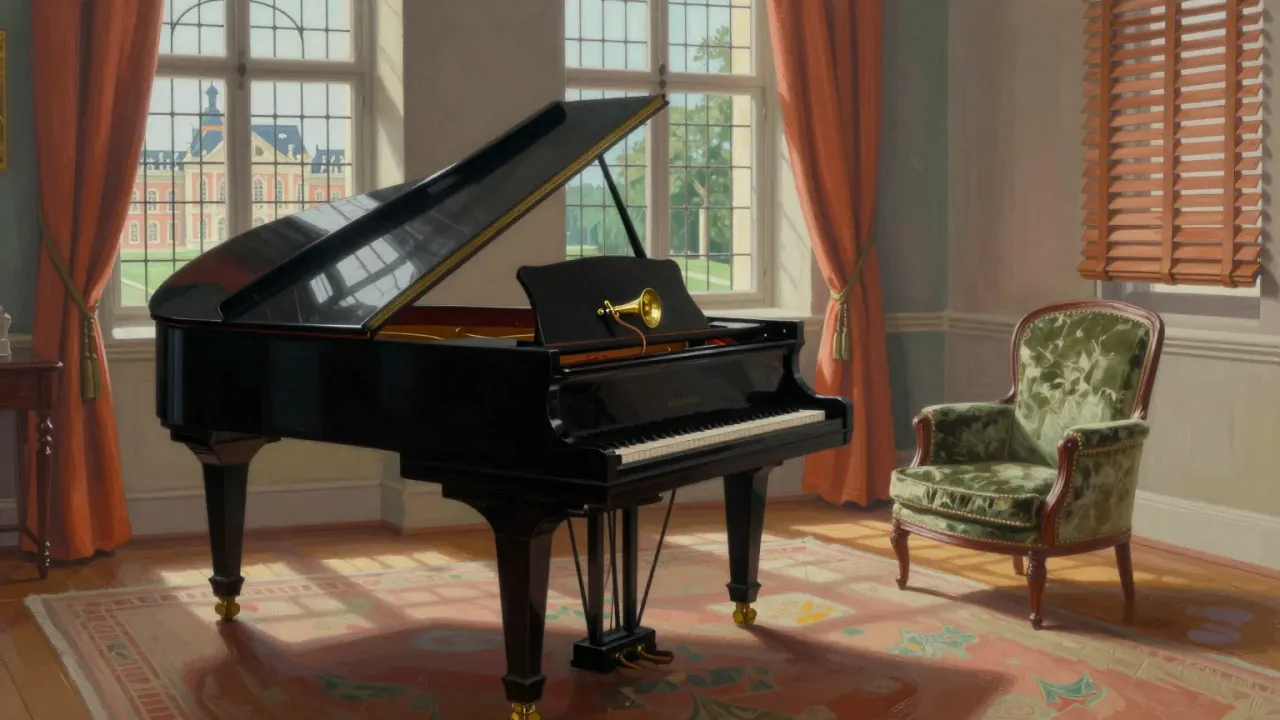
The story unfolds in three acts: Catherine’s childhood subjugation, her brief, illusory hope with Morris, and her final, unassailable autonomy. Olivia de Havilland’s performance anchors the film with calibrated precision — her Catherine does not erupt but compresses, her voice dropping, her posture straightening, her gaze narrowing over time. Montgomery Clift plays Morris with studied ambiguity: charm without warmth, regret without remorse. Ralph Richardson’s Dr. Sloper is less a monster than a man whose intellect has atrophied his empathy; he speaks in clipped, diagnostic sentences, never raising his voice. Leo Tover’s cinematography keeps interiors dim and shallow, favouring medium shots that trap characters in doorways or behind furniture. Aaron Copland’s score avoids melody in favour of sparse, dissonant piano figures that underscore emotional vacancy. William Hornbeck’s editing sustains tension through duration — long pauses, held glances, delayed reactions — refusing catharsis even at moments that beg for it. The production design, awarded an Oscar, renders Washington Square as a gilded cage: high ceilings echo, fireplaces emit little heat, mirrors reflect no one clearly. Every craft choice serves the central question: what remains when love is systematically erased? (159 words)
The weight of waiting
What lands is the cumulative weight of Catherine’s transformation — not as triumph but as irrevocable settlement. Her final scene, turning off the lights while Morris pounds uselessly on the door, lands with absolute finality because it is earned through decades of silence, stillness, and suppressed breath. The film’s refusal to moralise makes its judgment more potent: Morris is neither punished nor redeemed, only exposed as irrelevant to Catherine’s inner life. De Havilland’s physical restraint — the way she folds her hands, the slight tilt of her chin when dismissing her father’s deathbed plea — communicates volumes without exposition. The production design lands too: the house feels lived-in yet uninhabitable, full of inherited objects but no intimacy. Copland’s score lands not as accompaniment but as psychological weather — cold, precise, unyielding. Even minor performances land with economy: Miriam Hopkins’ Aunt Penniman is fussy but never foolish, her meddling rooted in genuine, if misplaced, affection. The film’s power resides in its consistency: every frame, line, and pause reinforces the same thesis — that character is formed not in crisis but in the long, daily refusal of tenderness. Nothing here feels imposed; everything feels inevitable. (156 words)
The man at the door
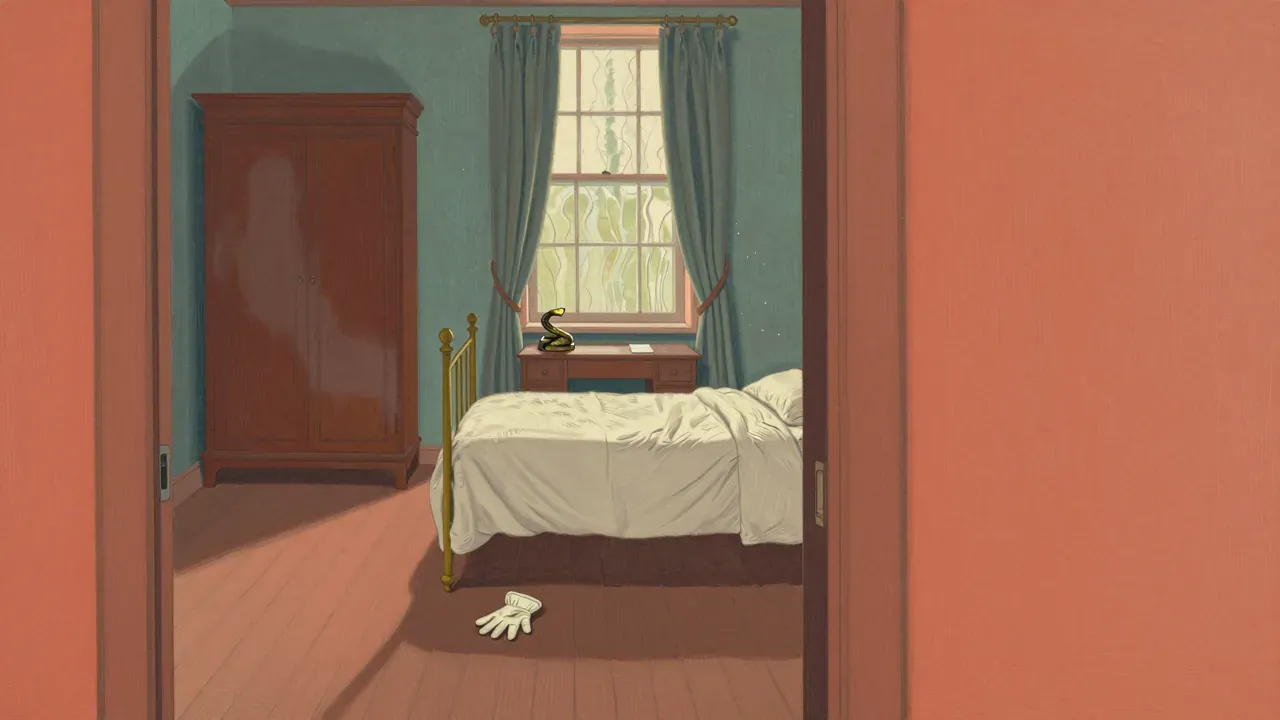
What does not land is the attempt to soften Morris Townsend’s moral ambiguity for Clift’s star persona. The script asks him to be charming enough to convince Catherine, yet hollow enough to abandon her — but the performance never quite bridges that gap. His motivations remain opaque, not enigmatic, and the film offers no interior counterpoint to Catherine’s clarity. This leaves the second act feeling structurally necessary but emotionally inert: we watch Catherine fall, but do not feel Morris’s pull. The European interlude, though visually austere, drags without narrative or psychological pivot — it functions as punishment, not revelation. Some supporting characters blur: Mona Freeman’s Lavinia and Vanessa Brown’s Maria are sketched in broad strokes, their social roles clearer than their personalities. The film’s rigour occasionally tips into rigidity: a scene where Catherine unpacks after Morris’s absence could have used a single gesture — a tear, a tremor — to fracture her composure, but the script denies it, and the performance obeys. That discipline serves the whole, but at the cost of momentary human warmth. A viewer seeking emotional release will find none here — not because it is withheld artfully, but because it is structurally excluded. (157 words)
What gets passed down
The themes that matter are inheritance, emotional inheritance most of all — how contempt is passed down like silverware, how silence becomes a language, how money functions not as freedom but as a measure of worth assigned by others. Class operates not as backdrop but as grammar: Catherine’s lack of social ease is pathologised by her father not because it threatens status, but because it confirms his belief in her inferiority. The film treats time as a corrosive agent: not decay, but accretion — each year adds another layer of self-protection until Catherine’s identity is indistinguishable from her defences. Gender is rendered not as ideology but as architecture: the house, the dress codes, the rules of courtship, the legal incapacity of women to control their own fortunes — all are physical constraints shaping behaviour. Love is presented not as emotion but as transactional possibility, always conditional on approval, always mediated by men. And grief — Catherine’s lifelong mourning for the mother she never knew, and for the father who refused to see her — is the film’s silent pulse. These are not themes argued but embodied: in Catherine’s posture, in the spacing between characters in a frame, in the way light falls on a closed door. (155 words)
Who watches it
This film is for viewers who value precision over propulsion, who find tension in stillness and revelation in restraint. It suits those accustomed to classical Hollywood storytelling but impatient with sentimentality — people who read novels for voice, not plot, and who watch films for how characters hold themselves in silence. It is not for viewers who require narrative momentum, moral clarity, or emotional catharsis. Those expecting a romance or a revenge drama will misread its tempo and tone. Anyone needing explicit motivation, psychological exposition, or redemptive arcs will find it withholding — not ambiguously, but deliberately. A younger audience raised on accelerated pacing may struggle with its unhurried accumulation of detail. But it is also not exclusively for cinephiles: its power lies in accessibility of emotion, not obscurity of form. A patient reader of faces, a listener to pauses, someone who understands that a slammed door is less telling than a bolt turned slowly — that person will find it deeply resonant. Its demands are formal, not intellectual. (159 words)
What it costs
Yes, it is worth your evening — provided you accept its terms. It asks ninety minutes of undivided attention, not for spectacle or surprise, but for the slow unfolding of a single, devastating logic. Its rewards are cumulative and quiet: the satisfaction of watching a performance tighten like a screw, of seeing a set become a character, of hearing Copland’s piano notes land like footsteps on marble. It is not ‘entertaining’ in the conventional sense, but it is rigorously absorbing — a film that deepens with stillness rather than undermines it. Those who dislike it tend to cite its coldness, its lack of warmth, its refusal to offer solace — and they are right, but that is its point. Change the verdict? Only if you believe emotional realism requires comfort. If you value craftsmanship that serves psychology over plot, if you trust actors who speak with their shoulders and directors who trust silence, then this is not just worth your evening — it is among the clearest statements cinema has made about how people become who they are. (158 words)