The shape of the story
The American Friend is a German neo-noir adaptation of Patricia Highsmith’s Ripley’s Game, transposed from its English and French settings to Hamburg, Paris, and the German railway network. It does not aim for procedural fidelity or moral clarity, but instead sustains a low-frequency tension between surface calm and underlying rupture — a man dying of leukaemia drawn into murder not by greed or ideology, but by time, dignity, and misdirection. Wenders treats the thriller form as a vessel for existential portraiture: the plot serves less as engine than as scaffold for sustained observation of how two men — one American, one German; one unmoored, one rooted — negotiate agency, complicity, and mutual dependence. The film’s ambition lies in its refusal to resolve ambiguity: it holds space for silence, hesitation, and the weight of unspoken decisions. Its visual and linguistic structure — German spoken at home, English with Ripley, French in Paris — is not stylistic flourish but structural logic, mapping identity onto language choice. This is not a story about crime solved, but about a friendship forged in deception, then tested by truth.
The look of it
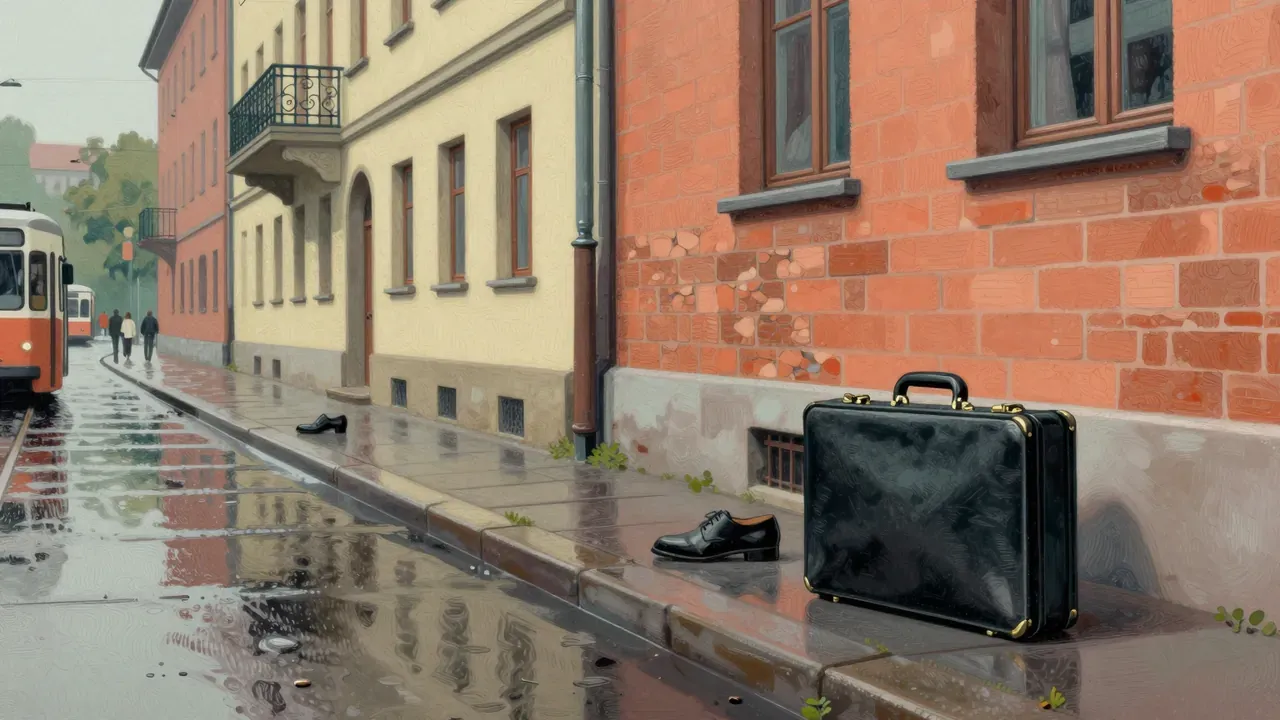
The story unfolds with deliberate asymmetry: key motivations are withheld, causal links left frayed, and exposition rationed like medicine. Bruno Ganz grounds Jonathan Zimmermann in physical specificity — the tremor in his hands, the way he leans on doorframes, the quiet exhaustion behind his eyes — while Dennis Hopper’s Tom Ripley operates in flatter, more elliptical rhythms, all sideways glances and abrupt shifts in register. Robby Müller’s cinematography avoids noir’s high-contrast shadows in favour of muted natural light: rain-slicked Hamburg streets glow with sodium-vapour pallor, train compartments feel airless and real, and interiors are lit with the dim, even wash of lived-in rooms. Jürgen Knieper’s score is sparse and tonal, often absent for minutes at a time. Peter Przygodda’s editing privileges duration over pace: a shot holds until discomfort sets in, then holds longer. The casting of directors — Fuller, Ray, Eustache — as gangsters adds texture without explanation; their presence feels earned, not gimmicky. There is no showboating, no virtuosic set-piece for its own sake. Every craft decision serves the film’s central question: what does it cost to be seen, and by whom?
The sound of it
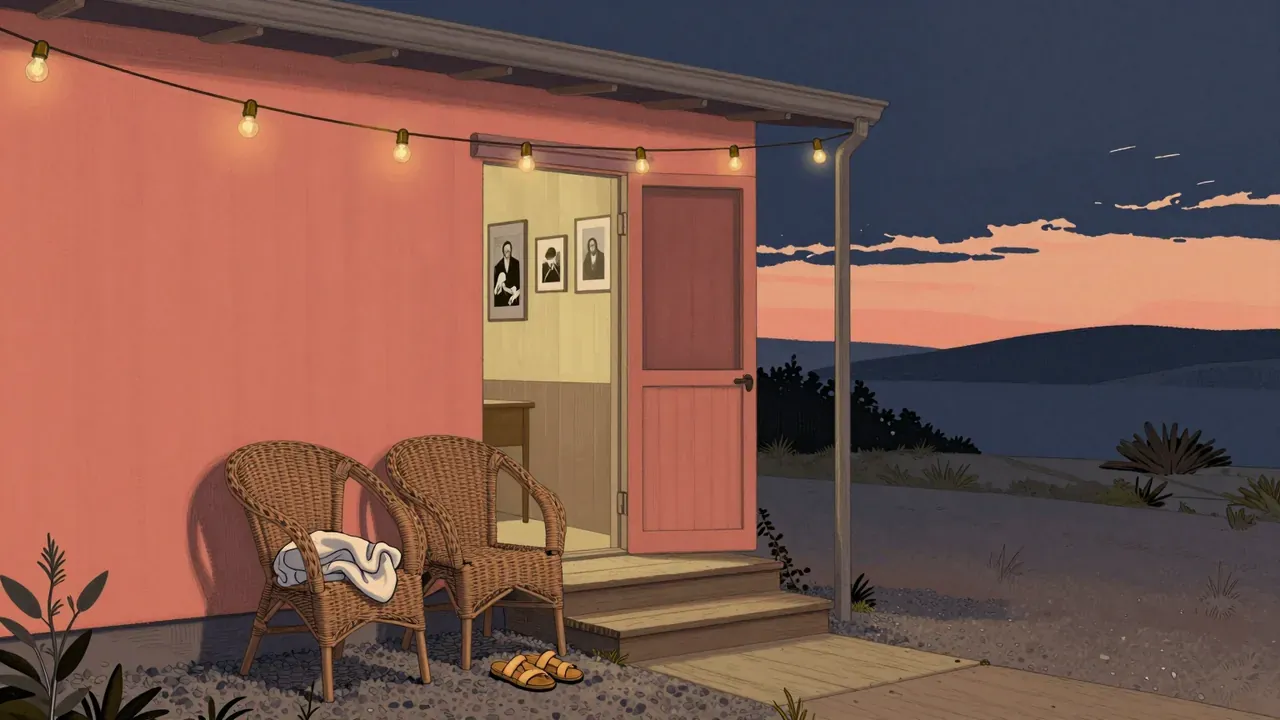
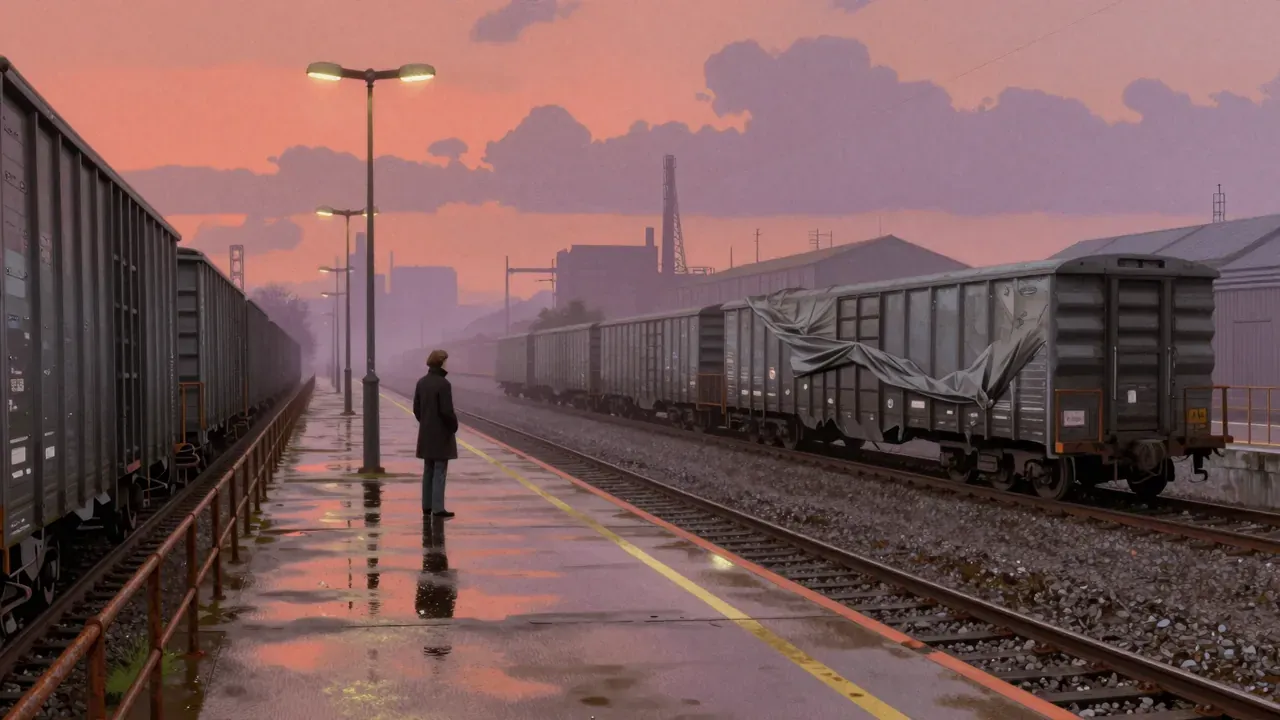
What lands most firmly is the uneasy intimacy between Ganz and Hopper — not romantic, not paternal, but something closer to shared calibration: two men adjusting their moral compasses in real time. The train sequence, where Zimmermann falters mid-assault and Ripley steps out of darkness to complete the act, works because it refuses catharsis; the violence is clumsy, urgent, and morally unmoored. The film’s geography also lands: Hamburg feels damp and insistent, Paris functional and indifferent, the railway a liminal artery connecting them. Müller’s camera lingers on textures — the grain of wood in Zimmermann’s workshop, the peeling paint on a station wall, the condensation on a train window — making place feel like character. The bilingual framework functions without exposition: we understand Zimmermann’s German as private, his English as transactional, and the switch carries emotional weight without being named. Even minor performances — Lisa Kreuzer as Marianne, measured and watchful; Rudolf Schündler as the doctor, weary but precise — avoid caricature. These are people who inhabit their roles, not perform them.
The weight of silence
What does not land is the final stretch after the beach fire — the abrupt cut from Ripley’s solitary line to black, leaving Zimmermann’s death unresolved in the frame. It risks feeling like evasion rather than restraint. The flatness of some supporting dialogue, particularly in English-language exchanges involving non-native speakers, occasionally blurs narrative intent without adding verisimilitude. The second assassination plot — the garrotte on the express train — introduces logistical friction that the film neither clarifies nor leans into; its mechanics remain opaque, and the stakes feel abstracted just when emotional investment should peak. Some viewers may find the pacing uneven: long stretches of stillness punctuated by bursts of action that lack conventional build-up or aftermath. The film assumes familiarity with Highsmith’s moral architecture — it does not re-explain Ripley’s amorality, nor does it soften his manipulations. Those expecting a tightly wound thriller will find the structure loose; those seeking psychological realism may find the ending too elliptical to satisfy. It asks for patience, then tests it at the last turn.
The rhythm of time
The themes that matter are mortality as negotiation, not inevitability; trust as something extended before it is earned; and identity as performance shaped by audience. Zimmermann’s illness is never medicalised — it is a condition he manages, hides, leverages, and finally abandons as a reason to act. His relationship with Ripley is built on mutual misrepresentation: each believes the other sees him differently than he is. Forgery — of art, of medical reports, of motive — runs through the film as both literal trade and structural principle. The train, the auction house, the framing workshop: each is a site where value is assigned, obscured, or fabricated. Language itself becomes a medium of concealment and revelation: Zimmermann speaks German when he is vulnerable, English when he is performing competence. The film treats loyalty not as fidelity but as alignment of need — Ripley protects Zimmermann not out of affection alone, but because his survival validates Ripley’s own capacity for connection. There is no redemption arc, only recalibration. What endures is not resolution, but the residue of choice made under pressure.
The language of trust
This film is for viewers who value atmosphere as narrative, who find tension in silence and meaning in gesture, and who accept that some questions — why Ripley intervenes, whether Zimmermann ever truly knows — are more valuable unanswered. It suits those familiar with European arthouse pacing and comfortable with subtitled dialogue delivered in thick accents. It is not for viewers who require clear cause-and-effect, moral signposting, or narrative closure. Those who dislike films where characters withhold information from the audience — not for suspense, but because people do — may find it frustrating. A viewer who values tight plotting over psychological texture, or who expects genre conventions to be honoured rather than interrogated, will likely disengage. The film rewards attention to detail — the way a hand moves, the shift in lighting between scenes — but offers little in return for passive viewing. It assumes you are watching closely, and it repays that attention with accumulation, not exposition.
The shape of the ending
Yes, it is worth your evening — provided you approach it as a sustained mood piece rather than a puzzle to solve. Its 127 minutes unfold with unhurried precision, and its power lies in the cumulative weight of small decisions, not in plot twists. You will not leave with answers, but with a clearer sense of how two men hold each other in view across a gulf of language, illness, and deception. Those who found David Nusair’s criticism of the final half-hour persuasive may disagree; for them, the film’s value diminishes sharply after the train sequence. A tighter edit — trimming ten minutes from the middle without losing texture — might sharpen its impact, but would also compromise its deliberate, almost tactile slowness. This is not a film that demands your time; it occupies it, steadily, like weather moving in. If you let it, it stays with you — not as memory of events, but as echo of tone.