The shape of an ending
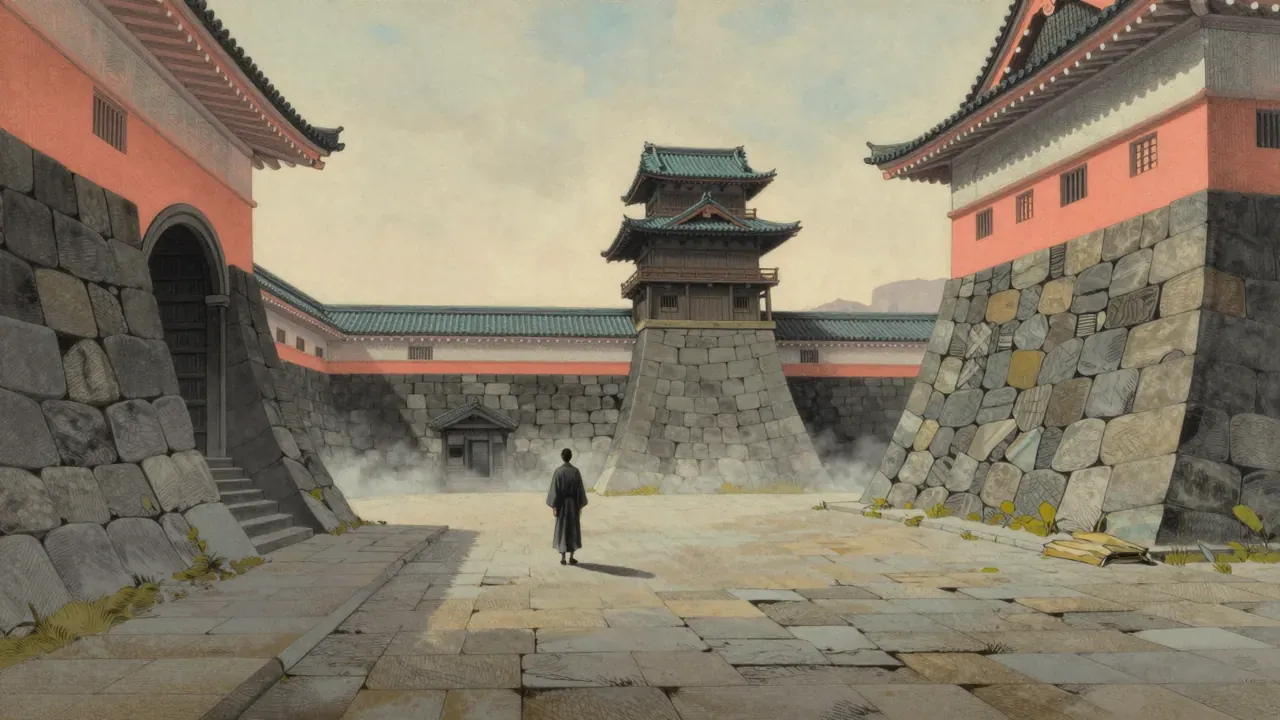
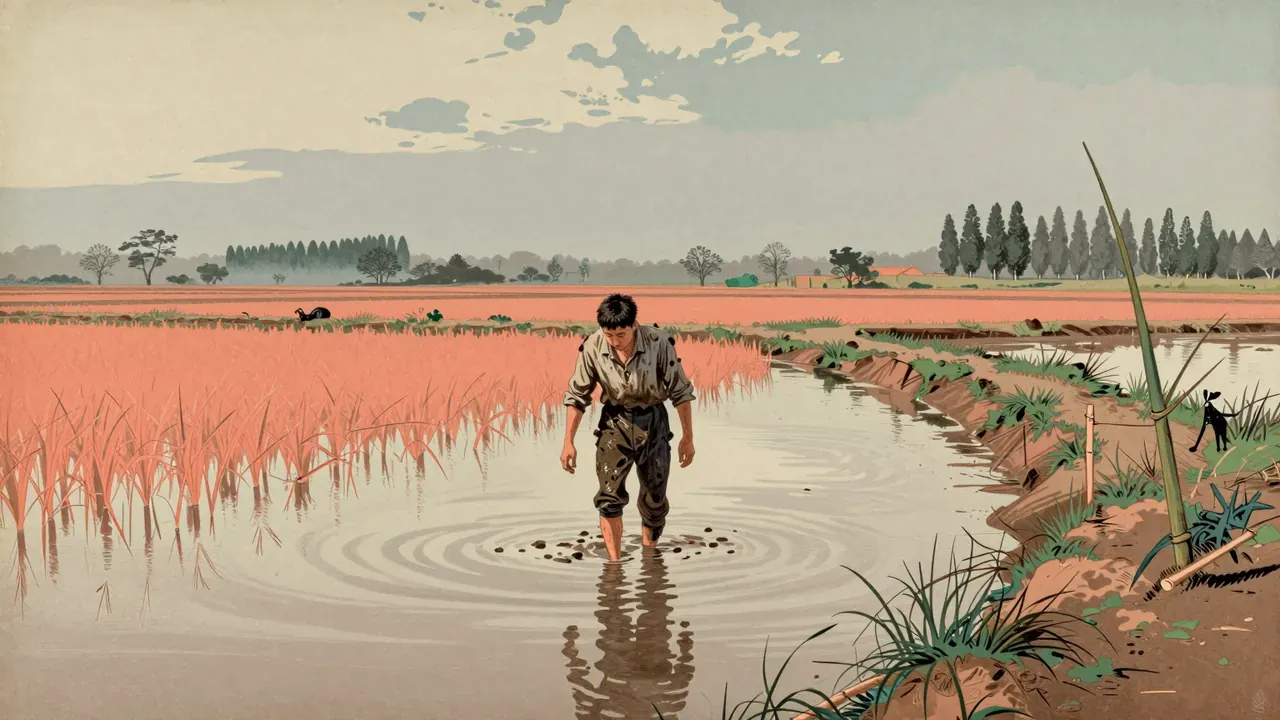
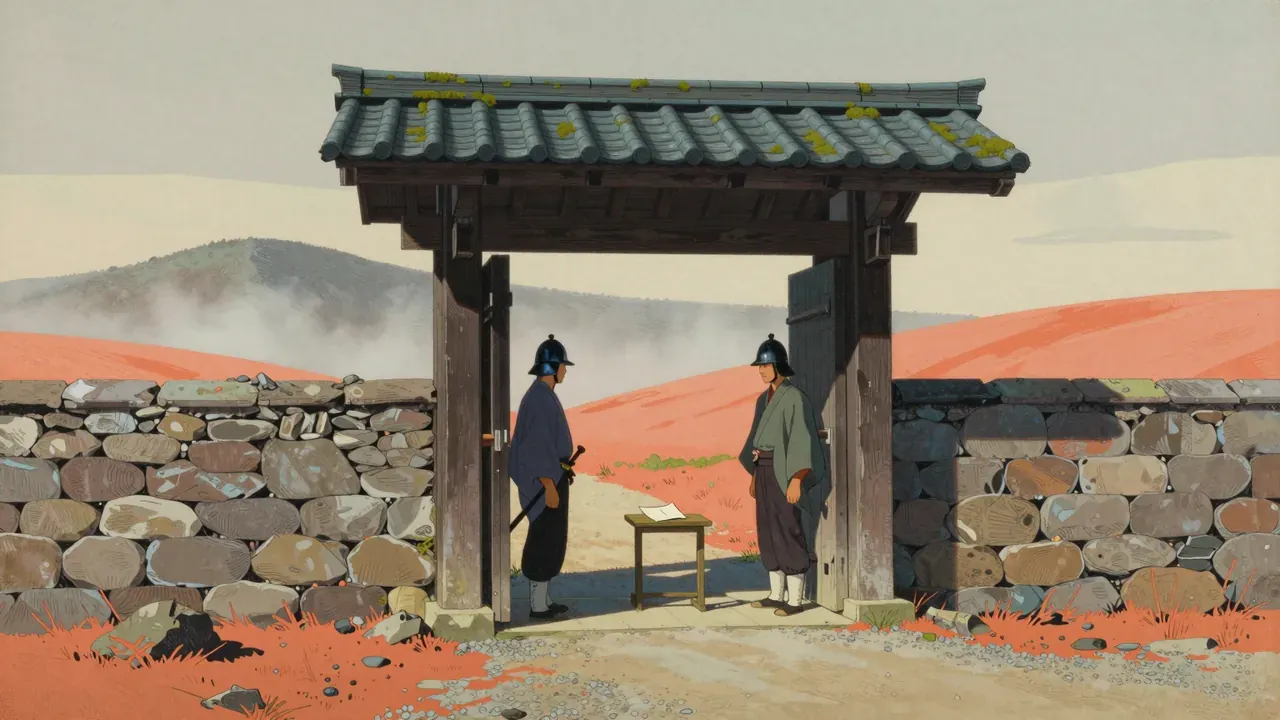
Samurai III: Duel at Ganryu Island is the concluding chapter of Hiroshi Inagaki’s Samurai Trilogy, adapted from Eiji Yoshikawa’s serialised novel Musashi and centred on the historical duel between Miyamoto Musashi and Sasaki Kojirō on 13 April 1612. It is not a standalone action film but a deliberate culmination — a study in restraint, timing, and moral resolution rather than escalation. The film seeks to close Musashi’s arc not with triumphalism but with quiet gravitas: his victory is framed as an end to striving, not a peak of mastery. It assumes familiarity with the prior two films, particularly the evolution of Musashi from impetuous brawler to disciplined seeker. Its formal ambition lies in structure — the year-long delay before the duel becomes the narrative’s spine, turning anticipation into meditation. Shot in Eastmancolor by Kazuo Yamada, it uses colour not for spectacle but tonal calibration: muted greens and greys dominate the Shimosa farmland, while Kokura’s urban bustle carries a sharper, more brittle palette. This is a film that treats genre conventions as scaffolding, then quietly removes them one by one.
The weight of stillness
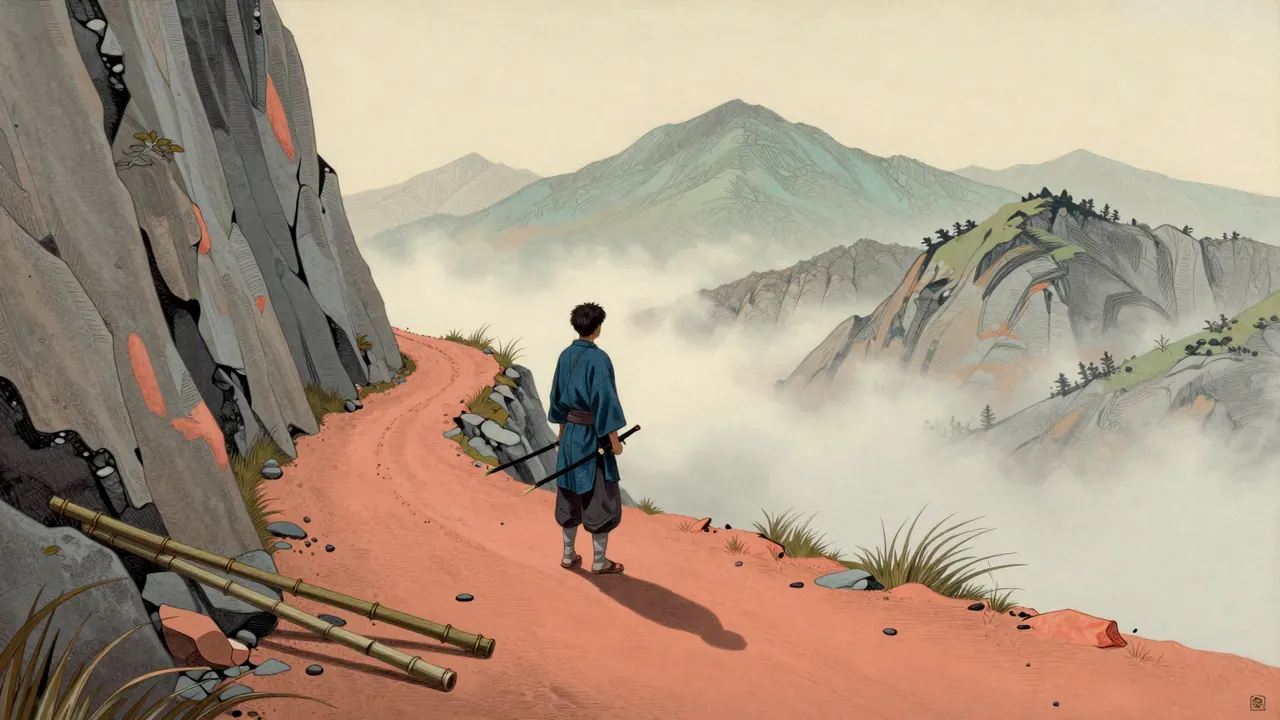
The story moves with unhurried inevitability: Musashi’s refusal of the Shogun’s patronage, his retreat to farming, the parallel trajectories of his quiet discipline and Sasaki’s social ascent. Toshirō Mifune’s performance is pared back — less volcanic than in the earlier films, more weathered, his stillness carrying the weight of accumulated choice. Kōji Tsuruta’s Sasaki is coiled elegance, all precision and unspoken insecurity beneath the confidence. Kazuo Yamada’s cinematography avoids flourish: compositions are balanced, often symmetrical, favouring medium shots that hold both character and landscape in equal measure. Ikuma Dan’s score is sparse, using koto and shakuhachi not for drama but punctuation — a single phrase marking a decision, a silence marking loss. Kōichi Iwashita’s editing sustains rhythm without urgency; cuts land where breath would pause. There are no flashbacks, no voiceover, no exposition beyond what dialogue and gesture supply. The craft serves continuity of tone, not emphasis — every department works to sustain the film’s central paradox: that the most decisive moment arrives only after a year of deliberate waiting.
What lands
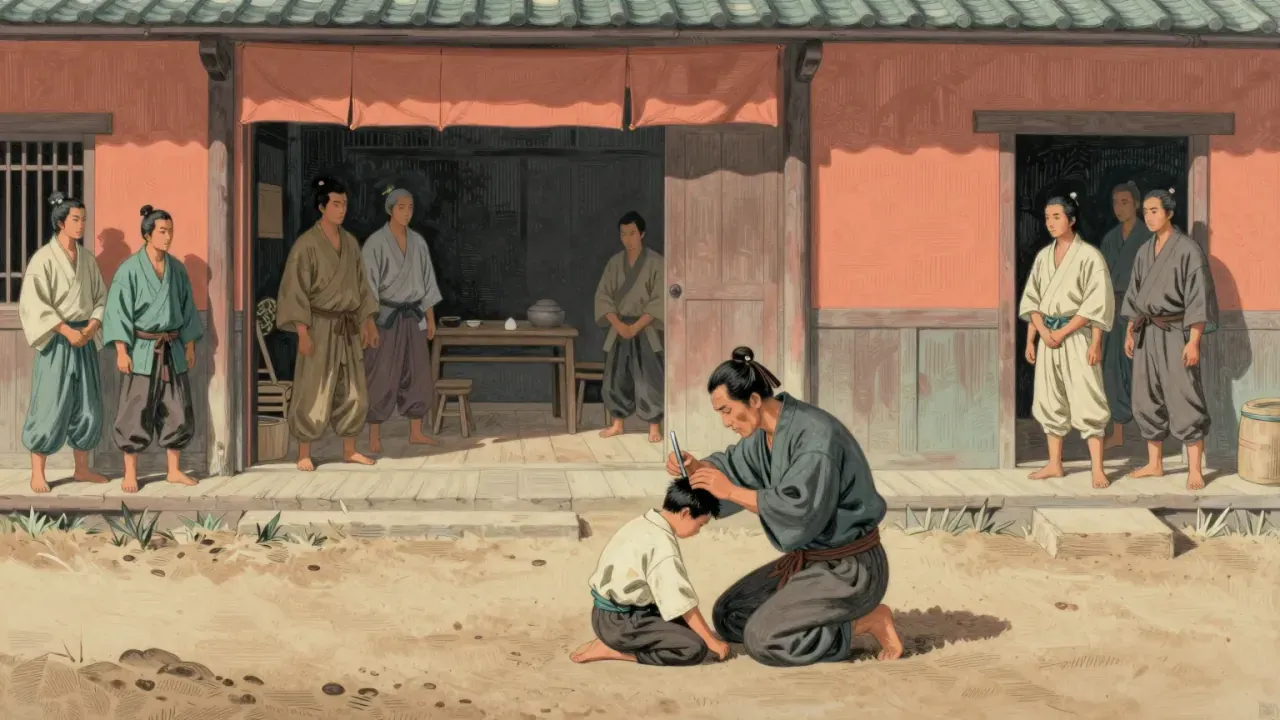
What lands is the emotional logic of Musashi’s final choice — not to win, but to witness. His mourning of Sasaki is neither sentimental nor performative; it reads as the first full acknowledgment of another’s humanity he has allowed himself since adolescence. The dawn duel itself lands because it refuses choreography: the sun rising behind Musashi is not a trick but a fact of geography and time, and his use of it feels less like cunning than alignment with natural order. Kaoru Yachigusa’s Otsu gains quiet authority in her final scenes — not as a love interest resolved, but as the sole person who sees Musashi’s solitude clearly and offers no remedy, only presence. The boatman Sasuke (Minoru Chiaki) functions as a grounded counterpoint to myth-making, his matter-of-fact ferrying underscoring how legend grows around events ordinary men simply endure. Even the minor roles — Takashi Shimura’s court official, Haruo Tanaka’s horse dealer — occupy their moments with unforced specificity, anchoring the epic in provincial texture. Nothing here strains for effect; its power accrues through accumulation of small, truthful gestures.
What stays silent
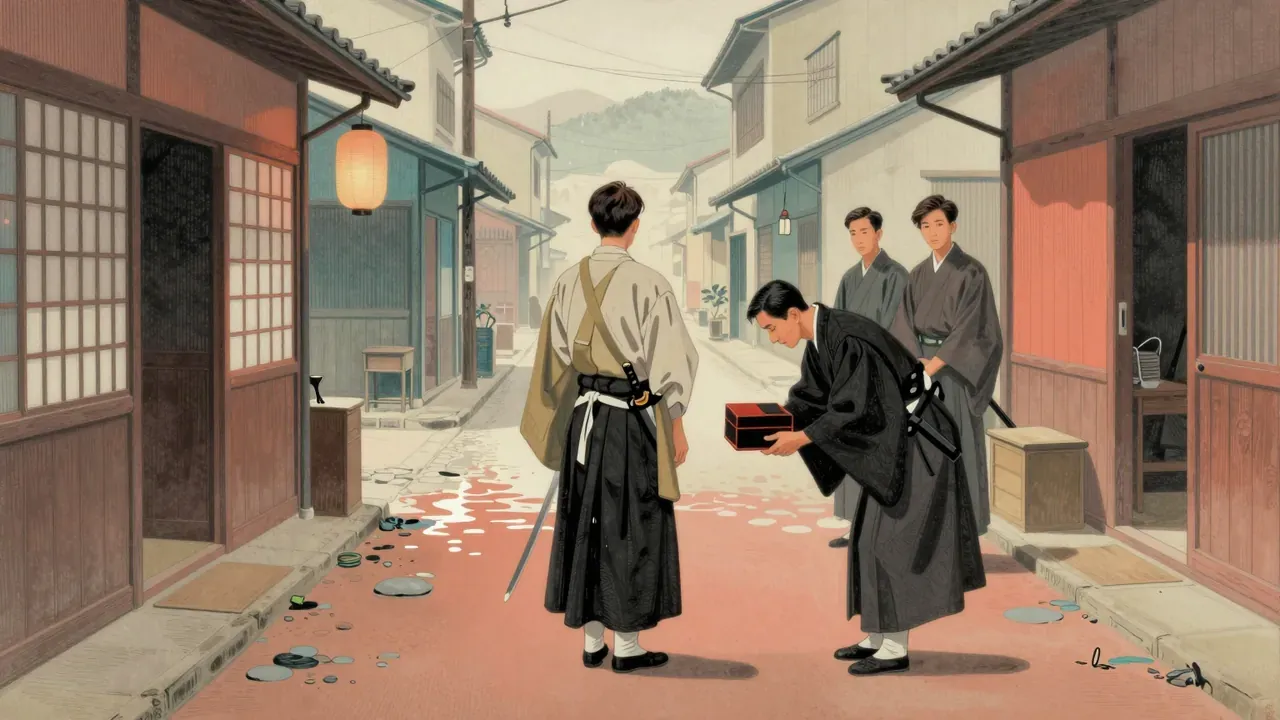
What does not land is the framing of Akemi’s arc, which remains unresolved and undermotivated. Mariko Okada’s performance is committed, but the script gives her little beyond symbolic function — a reminder of past failure, a foil to Otsu’s steadiness — without granting her interiority or agency in the present. The political dimension is also underdeveloped: the Shogun’s offer arrives with no sense of its stakes beyond prestige, and the absence of any real consequence for refusing it dilutes the weight of Musashi’s choice. Some transitions feel abrupt — the shift from Kokura’s street violence to Shimosa’s fields lacks connective tissue, relying on audience memory of prior films rather than internal coherence. The film’s reverence for Musashi occasionally tips into hagiography, smoothing over contradictions in the historical figure — his documented ruthlessness, his later years as a reclusive philosopher-artist — in favour of a singular, almost monastic purity. These omissions do not break the film, but they leave certain edges unexamined, inviting comparison with more psychologically restless samurai films of the same era.
The cost of the cut
The themes that matter are time, discipline as self-erasure, and the cost of mastery. Musashi’s year of farming is not preparation but purification — a stripping away of identity until only the essential remains. The duel is not about skill but about readiness: his body knows the stroke before his mind consents. The film treats legacy not as reputation but as residue — what lingers after the sword is sheathed, the sun rises, the boat departs. It questions whether transcendence requires isolation, and whether compassion can coexist with lethal competence. There is also a quiet critique of status: Sasaki’s climb into the upper class is shown as hollow performance, while Musashi’s anonymity among villagers carries moral weight. Zen influence is structural rather than doctrinal — the film’s pacing, its emphasis on breath and interval, its resistance to catharsis, all reflect a worldview where meaning resides in attention to the immediate, not in outcome. This is not a film about victory, but about the silence that follows the last cut.
Who walks with it
This film is for viewers who value narrative patience, who find tension in withheld action and resonance in understated performances. It rewards attention to composition, to shifts in light, to the weight of a pause. It is not for those who expect escalation, exposition, or psychological exposition — the film assumes you know Musashi’s history and trusts you to read his choices without commentary. Anyone seeking kinetic swordplay or clear moral binaries will find it withholding. Those familiar with jidaigeki may note its departure from genre norms: no revenge plot, no corrupt magistrate, no last-minute betrayal. A viewer expecting the intensity of Seven Samurai or the irony of Yojimbo will misread its tempo. Its appeal narrows with familiarity — the more you know of Inagaki’s trilogy, the richer the resolution; the less you know, the more opaque its silences become. It asks for surrender to its rhythm, not engagement with its mechanics.
The hour it keeps
Yes, it is worth your evening — provided you watch it without expectation of momentum and with willingness to sit inside its stillness. Its 105 minutes unfold like a scroll being slowly unrolled: each frame earns its duration. It repays slow viewing, repeated attention to Yamada’s lighting, to Mifune’s micro-expressions, to the way Dan’s music enters only when silence has grown heavy. Those who dislike contemplative pacing or find historical distance alienating may feel detached — but that detachment is not a flaw in the film, it is a condition of its design. A viewer who values craft over plot, restraint over revelation, and thematic cohesion over incident will find it deeply satisfying. Its value lies not in what happens, but in how deliberately, how precisely, how respectfully it allows that happening to arrive — and then pass. It is a film that earns its ending by refusing to rush toward it.