What it tries to do
Women in Love is a 1969 British adaptation of D. H. Lawrence’s 1920 novel, directed by Ken Russell and scripted by Larry Kramer. It sets out to translate Lawrence’s dense psychological and philosophical inquiry into love, intimacy, and selfhood into cinematic form—not as literary illustration but as embodied experience. The film follows two sisters, Ursula and Gudrun Brangwen, and their respective partners, Rupert Birkin and Gerald Crich, against the backdrop of post-First World War England and the Swiss Alps. Its ambition is structural as well as thematic: to hold in tension the rational and the visceral, the spoken and the physical, the social and the elemental. Kramer’s script draws directly from the novel’s dialogue and imagery, supplementing it with material from Lawrence’s letters and essays, while Russell insists on visual and kinetic equivalents for interior states—most notably in the nude wrestling scene, which functions not as spectacle but as dramaturgical necessity. The film treats romantic and intellectual commitment as inseparable, and its fidelity is to Lawrence’s emotional logic, not his plot alone. (158 words)
How it holds together
The story unfolds episodically, anchored by key encounters—tea at the Crich home, a school inspection, a trip to the Alps—each calibrated to expose fissures in relationships and ideologies. Alan Bates and Oliver Reed ground the film in physical presence: Bates’s Birkin is coiled intensity, Reed’s Gerald a volatile mass of repressed will. Glenda Jackson’s Gudrun moves with sharp, unapologetic precision; Jennie Linden’s Ursula is quieter, more porous, her evolution less declamatory but no less consequential. Billy Williams’s cinematography avoids stylisation: interiors are lit with naturalistic restraint, exteriors—Derbyshire moors, Alpine lakes—are rendered without romantic softening. Georges Delerue’s score underscores mood without dictating it, favouring sparse piano and strings that recede when dialogue or silence takes precedence. Editing is unhurried but precise, allowing pauses to accumulate weight. Kramer and Russell jointly revised the script during production, tightening thematic through-lines and restoring scenes from the novel that clarify character motivation, such as Gerald’s paternal inheritance and Birkin’s disillusionment with industrial modernity. (159 words)
Where it lands
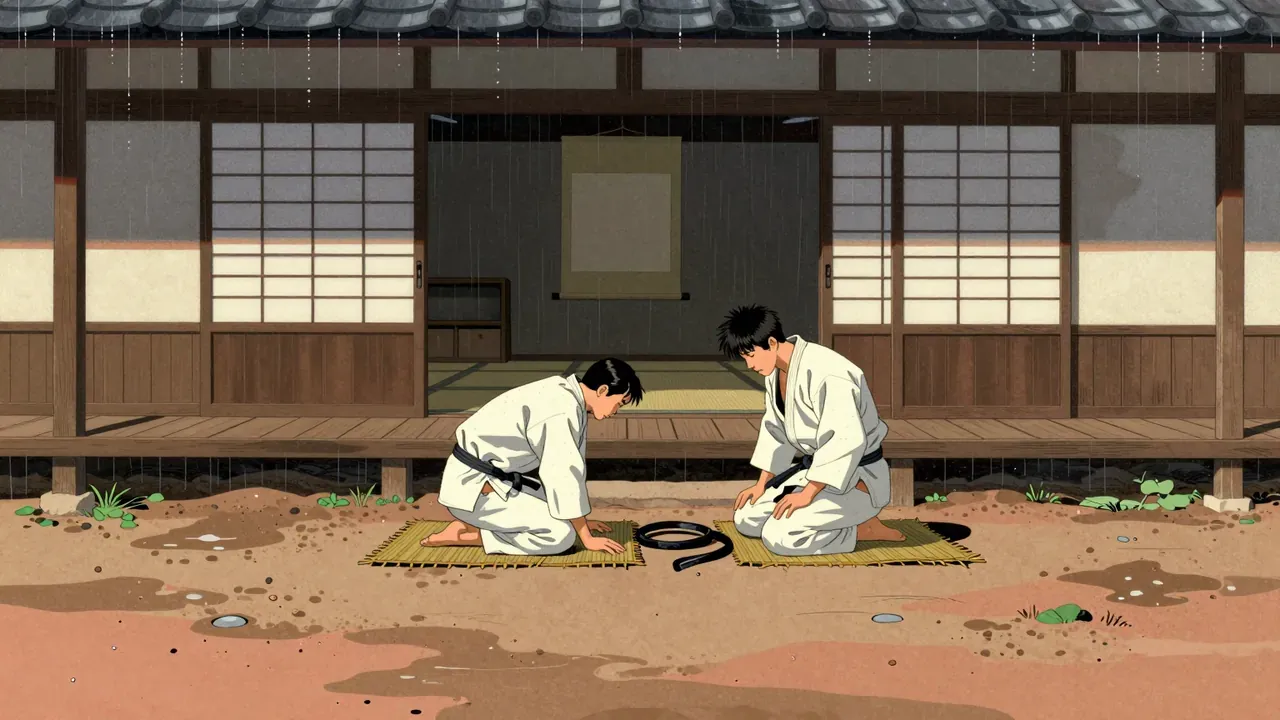
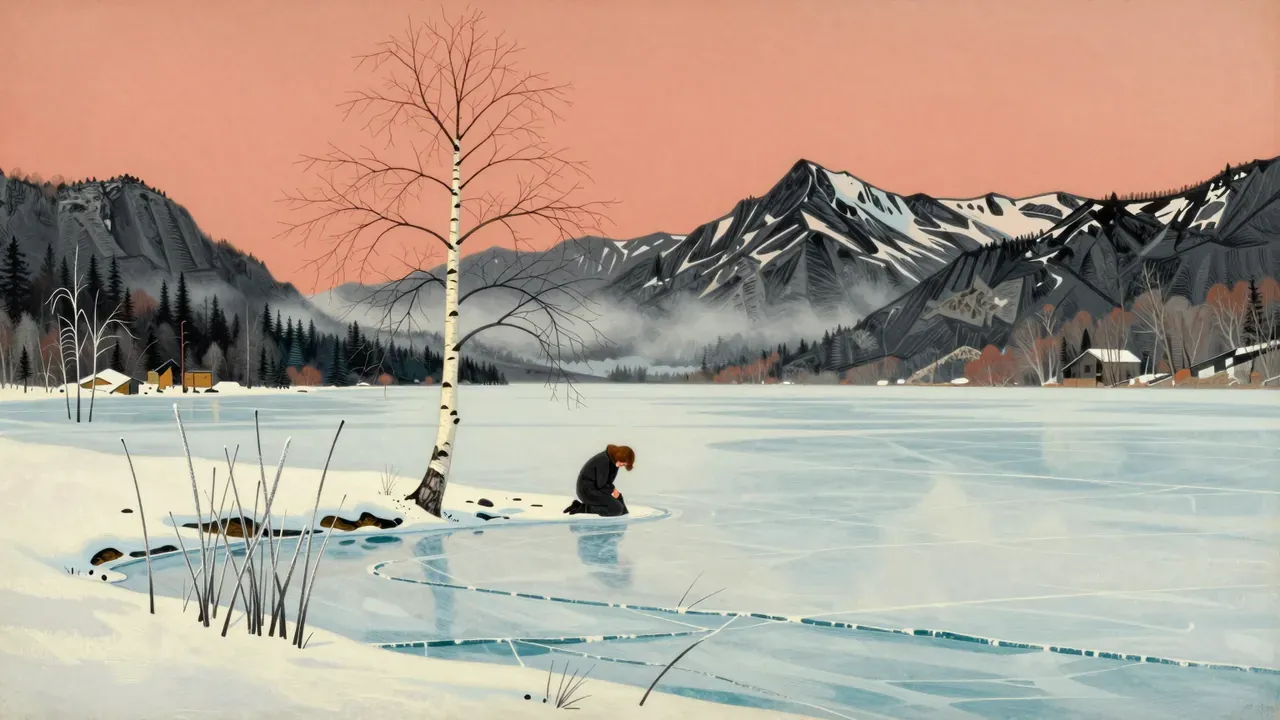
What lands most decisively is the film’s refusal to separate thought from sensation. The wrestling scene works not because it shocks but because it crystallises the novel’s central proposition: that intimacy requires vulnerability not just emotionally but physically, and that male friendship can contain erotic charge without resolving into conventionally sexual terms. Jackson’s performance lands with cumulative force—her final breakdown in the snow is neither histrionic nor symbolic, but a physiological release of accumulated pressure. The film’s pacing, often criticised as slow, in fact serves its purpose: it gives time for ideas to settle, for glances to accrue meaning, for silences to become charged. The Alpine sequences avoid scenic cliché; the cold light and brittle air feel like extensions of the characters’ inner climates. Even minor roles—Eleanor Bron’s Hermione, Alan Webb’s Mr. Crich—register with economy and specificity. The film’s success lies in its consistency of tone and register: every frame assumes that ideas matter, that bodies matter, and that the friction between them is where truth resides. (157 words)
Where it falters
What does not land is the structural imbalance between the two sister-couple arcs. Ursula and Rupert’s relationship resolves into marriage and quiet affirmation, but the film devotes less narrative and visual attention to their development, making their conclusion feel earned only by contrast rather than by accumulation. Gerald’s descent lacks the same psychological scaffolding: his motivations remain tied to inherited authority and physical dominance, but the film offers little insight into how those impulses curdle into self-annihilation beyond what the novel provides. Some supporting performances—particularly Christopher Gable’s Loerke—feel underwritten and gestural, functioning more as ideological foils than fully realised characters. The Swiss section, though visually striking, introduces a degree of abstraction that dilutes the earlier social texture of the Derbyshire scenes. Kramer’s decision to omit the London bohemian interlude weakens the sisters’ intellectual formation, leaving Gudrun’s radicalism somewhat unmoored. The film also struggles with class: while mining and industrial labour appear in background detail, the protagonists move through those worlds as observers, never participants—a limitation the novel acknowledges but the film sidesteps. (159 words)
What it’s really about
The themes that matter are not love versus lust, or tradition versus modernity, but the conditions under which selfhood can survive intimacy. The film interrogates whether commitment demands surrender or sharpening of the self—and whether love can exist without rivalry, without difference, without risk of dissolution. It treats the body not as metaphor but as site: skin, breath, muscle, sweat are all carriers of meaning, not decoration. Gender is approached not as identity but as relational force—how men relate to women, how women relate to each other, how both relate to power, work, and language. The post-war setting is not backdrop but condition: the war has hollowed out old certainties, and the characters grope for new forms of connection without shared grammar. Lawrence’s critique of industrial rationality echoes in the film’s visual grammar—the clean lines of Crich’s factory versus the organic chaos of the moors; the geometric austerity of Loerke’s studio versus the warmth of the Brangwen kitchen. The film’s enduring relevance lies in its insistence that emotional honesty requires intellectual rigour, and vice versa. (158 words)
Who it’s for
This film is for viewers who accept that ideas can be dramatised without being reduced to slogans, and who tolerate long takes, sparse scoring, and dialogue that resists summarisation. It rewards attention to gesture, framing, and rhythm over plot propulsion. It is not for those who require clear moral positions, narrative closure, or character arcs that follow cause-and-effect logic. Some critics have found its pacing inert, its debates archaic; others argue its sensuality feels dated rather than timeless. That disagreement hinges on whether one values fidelity to Lawrence’s moral urgency or prefers contemporary shorthand for psychological conflict. A viewer who finds the wrestling scene gratuitous rather than essential will likely reject the film’s entire premise. But if you believe cinema can hold contradiction—intellect and instinct, tenderness and violence, stillness and rupture—then this remains a benchmark. Its demands are formal and ethical, not merely stylistic. (159 words)
Whether it’s worth your time
Yes, it is worth your evening—provided you set aside expectations of conventional narrative momentum and allow its rhythms to settle. It is not a film to watch while distracted, nor one that yields much on first viewing without some familiarity with Lawrence’s concerns. Those who find its pacing indulgent may prefer the tighter structure of Russell’s later biopics, or Kramer’s own later work on AIDS activism, where urgency compresses time. But for anyone interested in how cinema can articulate the unsayable dimensions of human connection—how touch conveys argument, how silence carries history, how landscape reflects interior weather—it remains indispensable. Its value lies not in historical curiosity but in its sustained, uncompromising attempt to make feeling visible. To dismiss it as ‘of its time’ is to mistake its method for its subject. (158 words)