What it tries to be
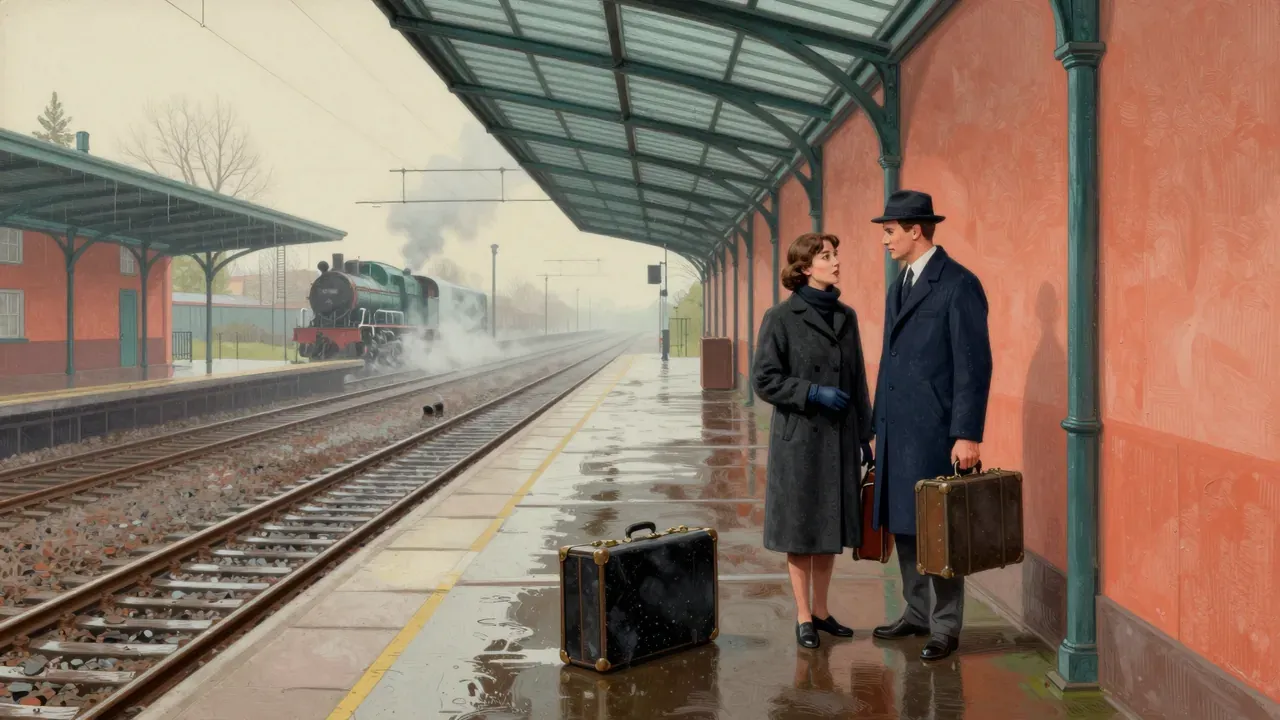
Franco Zeffirelli’s 1968 Romeo and Juliet is a literalist, period-anchored adaptation of Shakespeare’s play, aiming to ground the tragedy in physical authenticity and emotional immediacy. It seeks not reinterpretation but embodiment: teenage actors cast close to the characters’ ages, filmed on location in Tuscania, Pienza, Gubbio and Artena, with costumes and architecture drawn from pre-Renaissance Italy. The film treats the text as sacred but malleable — trimming long speeches, omitting Act 5 Scene 3, and reordering moments for visual rhythm rather than textual fidelity. Its ambition is twofold: to restore the visceral reality of adolescent love and feud, and to make Shakespeare legible to a generation unversed in verse — particularly teenagers in 1968, for whom the film became both cultural event and classroom staple. It does not attempt psychological excavation or political reframing; it offers the story as lived-in, sunlit, bodily fact — a world where balcony scenes happen on real stone, sword fights echo off medieval walls, and grief arrives not as rhetoric but as breathless silence. Word count: 142
How it holds together
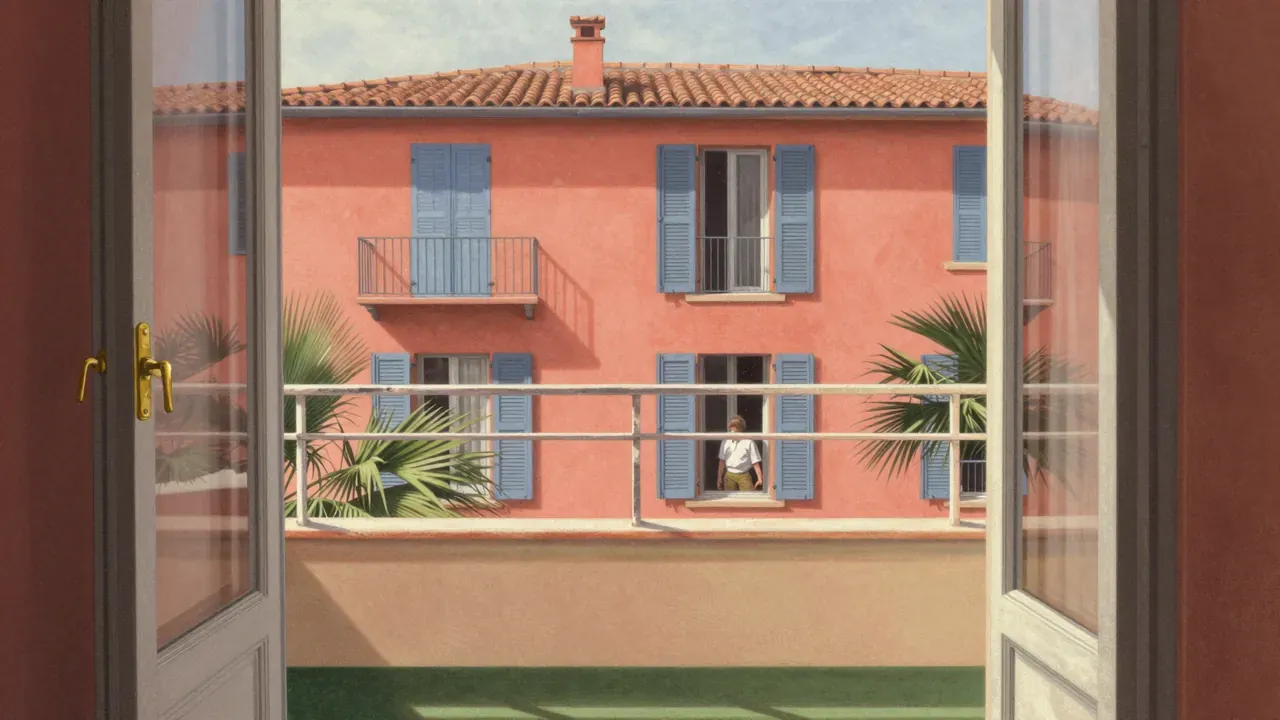
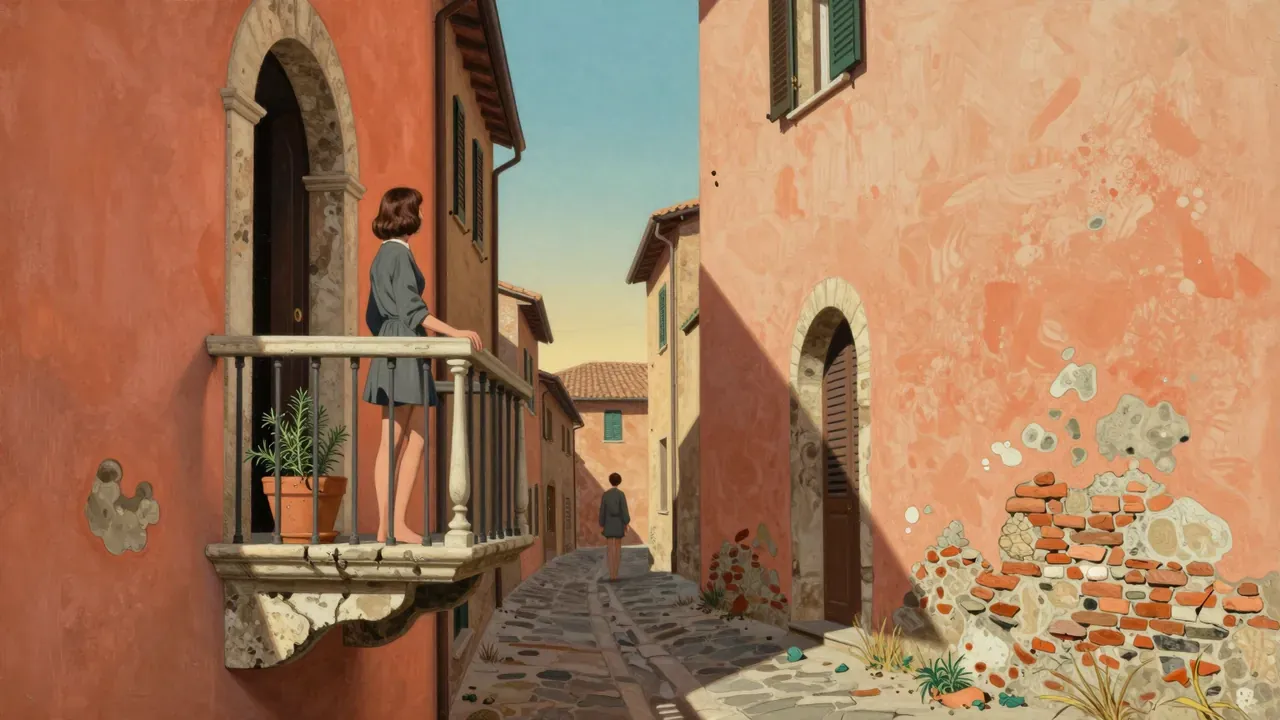
The film works through alignment: casting, setting and craft all serve the same register — tactile, unvarnished, youthfully earnest. Leonard Whiting and Olivia Hussey, fifteen and sixteen at filming, deliver performances that rely less on rhetorical command than on reactive truth: glances held too long, hands trembling before touch, voices cracking under pressure. Pasqualino De Santis’ cinematography favours shallow focus and natural light, keeping faces soft at the edges while letting textures — rough stone, linen, candle smoke — hold weight. Reginald Mills’ editing sustains momentum by cutting on gesture rather than line, and Nino Rota’s score avoids grandeur in favour of lute-led intimacy and sudden, percussive violence. Even Laurence Olivier’s prologue and epilogue — spoken over black — function as punctuation, not commentary. The production design, which won an Academy Award, treats Verona as archaeology: no studio backlot illusion, only actual Romanesque churches, 15th-century palazzi and Umbrian alleyways. This coherence makes the film feel less like a translation than a relocation — Shakespeare moved, intact, into a world that breathes. Word count: 154
Where it touches down
What lands most securely is the physicality of first love — the hesitation, the heat, the sheer novelty of being seen and wanting to be known. The balcony scene, shot at Palazzo Borghese in Artena, gains gravity from its real stone, its narrow ledge, the way Juliet’s bare feet grip cold marble. The wedding night sequence, though brief and veiled, carries weight because it follows hours of whispered preparation, nervous laughter, and Friar Laurence’s quiet, unflinching presence. The street brawls in Gubbio land not as choreography but as chaos — stumbling, grunting, abruptly ended. Even the costuming lands: Juliet’s shift is thin, slightly damp with sweat; Romeo’s doublet strains across his shoulders. These details accumulate into conviction. The film also lands as a document of its moment: the casting gamble succeeded, and the result feels neither dated nor archaic, but anchored — a version of the play that trusts its own senses more than its scholarship. That trust extends to the audience: it assumes no prior knowledge, yet never condescends. Word count: 150
Where it slips
What does not land is the structural weight of Shakespeare’s plotting once trimmed and smoothed. Key transitions — Romeo’s shift from melancholy to fury, Juliet’s passage from obedience to defiance — lose their textual scaffolding and become gestures rather than developments. Tybalt’s menace reads as petulance without the full force of his lines; Mercutio’s wit evaporates in shortened exchanges. The omission of Paris’s death outside the tomb flattens Romeo’s moral ambiguity, turning him from a man undone by grief into one simply racing toward fate. Some supporting performances falter under the demands of verse delivery: Robert Stephens’ Prince is stately but distant; Michael York’s Tybalt lacks venom. The film’s commitment to realism also creates friction with the play’s theatrical logic — the chorus’s prologue feels oddly detached when everything else insists on immersion. And while the locations are authentic, they occasionally overwhelm: wide shots of Pienza’s piazza dwarf the actors, making intimacy a struggle against scale. Word count: 152
What it’s really about
The themes that matter are not those of Renaissance humanism or dynastic politics, but of adolescence itself: the collision of inherited loyalty and self-chosen love, the speed at which certainty hardens into fatal resolve, the way bodies outpace understanding. The feud is less a historical condition than a psychological barrier — something the young lovers must cross not with diplomacy but with naked vulnerability. Time is another theme: not clock time, but the subjective dilation of a single summer day, where morning’s brawl gives way to midnight vows and dawn’s farewell — all compressed into a rhythm that feels hormonal, not chronological. The film also treats secrecy as both necessity and poison: every whispered plan, every hidden meeting, tightens the knot. There is no grand philosophical inquiry here — no ‘to be or not to be’ — only the urgent, embodied question of how to be with someone when the world forbids it. That narrowing of scope is deliberate, and it gives the film its persistent resonance. Word count: 149
Who it’s for
It is for viewers who value atmosphere over exposition, who respond to physical presence more than verbal dexterity, and who accept Shakespeare not as literature to be parsed but as life to be inhabited. It suits teenagers encountering the play for the first time, students studying performance choices, and anyone drawn to mid-century European craftsmanship in costume, set and lensing. It is not for those who require textual completeness, psychological complexity or stylistic rupture — scholars seeking radical interpretation, or cinephiles expecting formal innovation, will find it dutiful rather than daring. Those put off by 1960s pacing or uninflected delivery may also resist its unhurried sincerity. A viewer who values linguistic precision over emotional texture will likely leave unmoved. Word count: 147
Whether it’s worth your time
Yes, it is worth your evening — not as definitive, but as indispensable. Its power lies in its singularity: no other Shakespeare film so fully commits to the idea that these characters were real teenagers, breathing air we can almost smell. The 138-minute runtime moves with the weight of summer light, not narrative urgency, and that slowness is part of its honesty. It rewards attention to detail — the way a hand brushes a sleeve, how candlelight pools in a stone basin — rather than plot mechanics. Those who expect irony, distance or critique will find it naive; those open to reverence, tactility and quiet conviction will find it enduring. Its flaws are structural, not moral — omissions, not betrayals. And its craft remains unassailable: De Santis’ photography, Rota’s music, the costume and production design all operate at peak competence. Word count: 148