The shape of the room
Les Enfants Terribles is Jean-Pierre Melville’s 1950 adaptation of Jean Cocteau’s 1929 novel, a tightly wound domestic tragedy about sibling entanglement, arrested adolescence, and the slow collapse of a self-contained world. It is not an attempt at psychological realism but a stylised chamber piece — deliberate, ritualistic, and morally unflinching — in which emotional logic overrides narrative plausibility. The film seeks to translate Cocteau’s literary interiority into cinematic form: not through exposition or motivation, but through repetition, framing, and the weight of silence between characters. Its ambition lies in sustaining a mood of suspended time — where childhood games harden into fatal compulsions, and love becomes indistinguishable from possession. Melville, directing his second feature, treats the material with austere fidelity, avoiding sentiment or explanation. The film does not ask for empathy; it constructs a closed system and observes its inevitable entropy. Its method is architectural: every room, glance, and musical cue serves the central paradox — that absolute intimacy breeds absolute isolation. (148 words)
The look of it
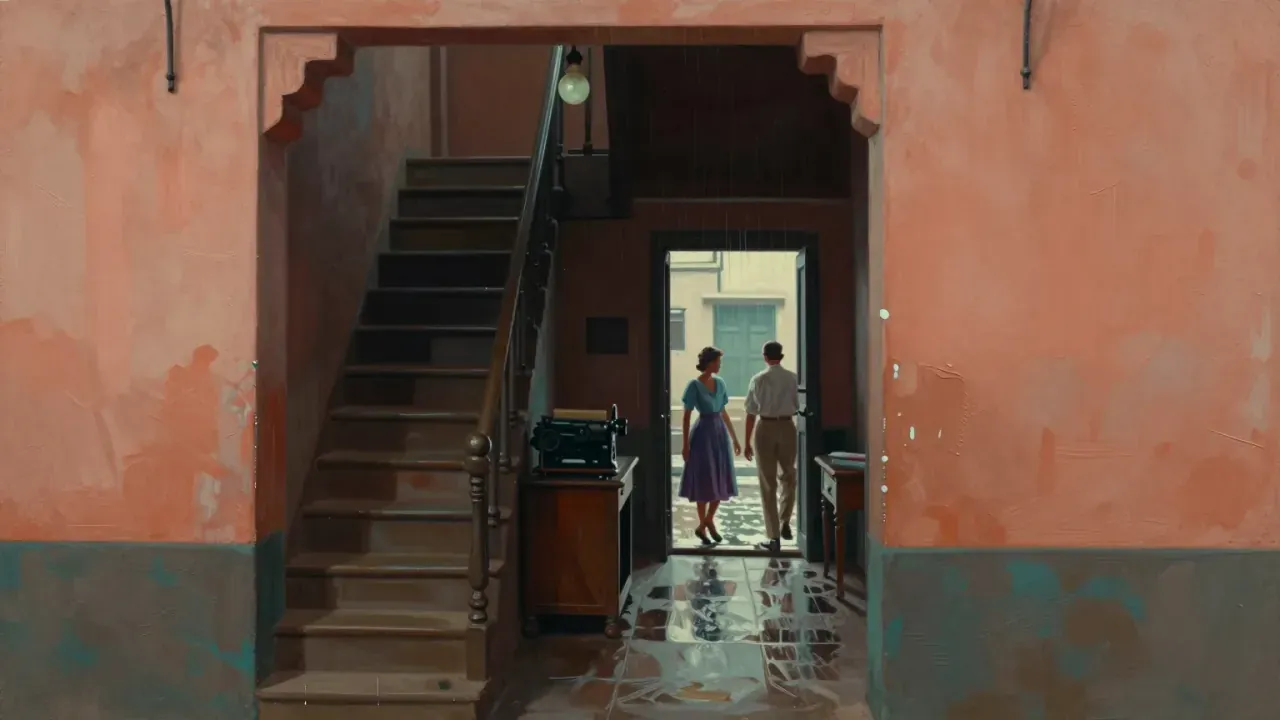
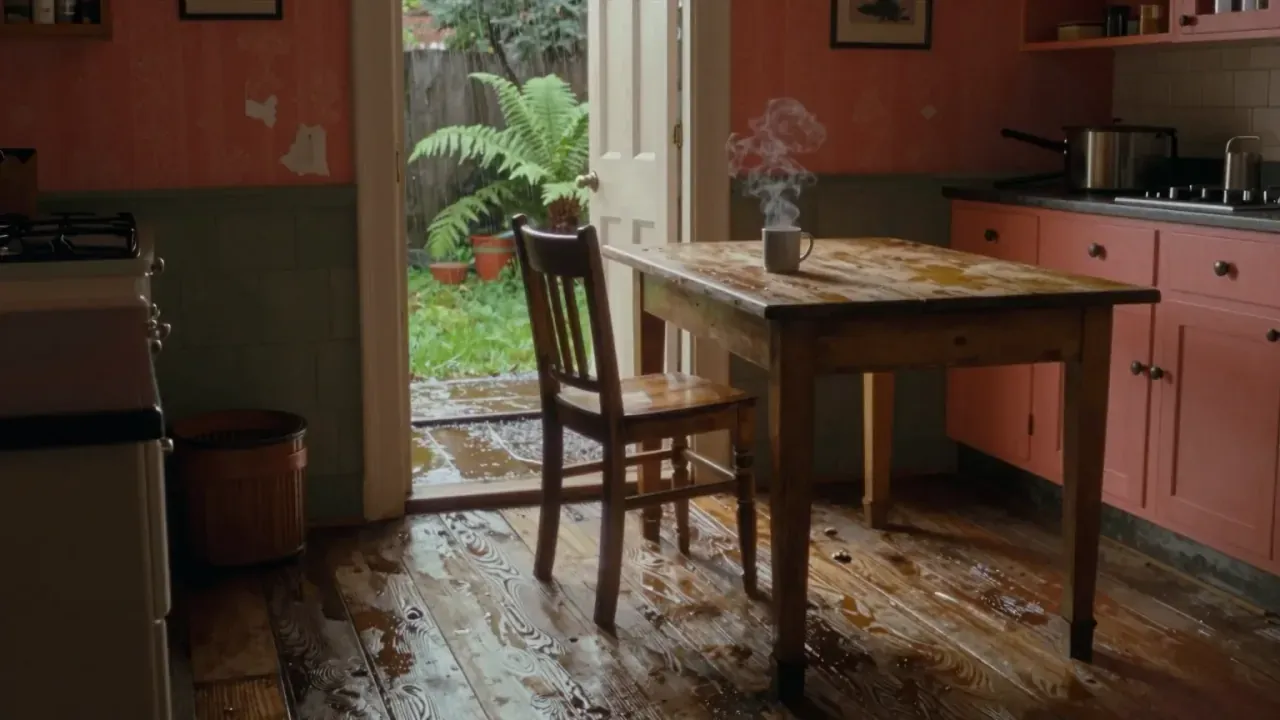
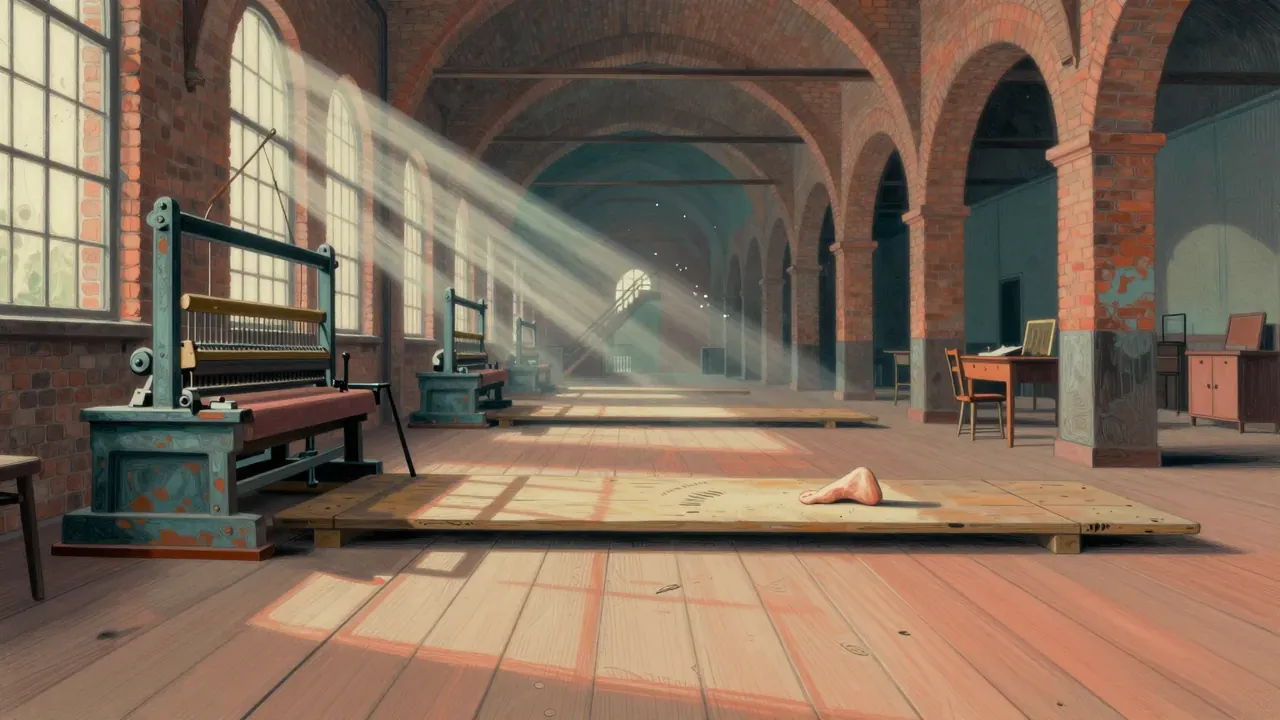
The story unfolds in three distinct domestic spaces — the siblings’ Paris apartment, the couturier’s atelier, and the inherited mansion — each marking a stage in their withdrawal from the outside world. Nicole Stéphane’s Elisabeth moves with controlled rigidity; Hélène Rémy’s Paul is all nervous stillness and sudden outbursts. Their performances are underplayed but never inert — they register emotion through posture, hesitation, and the refusal to look away. Henri Decaë’s cinematography avoids expressionist distortion; instead, he uses shallow focus and static compositions to compress space, making rooms feel like cages even when empty. Cocteau’s voice-over narration is detached, almost forensic, refusing to interpret motive. The Vivaldi-heavy score — drawn from concertos for violin, harpsichord, and strings — is deployed with surgical precision: music swells not to underscore feeling but to mark structural turning points, as if the drama were governed by baroque counterpoint. Editing is rhythmic rather than reactive, cutting on gesture or silence, not reaction. (152 words)
What holds
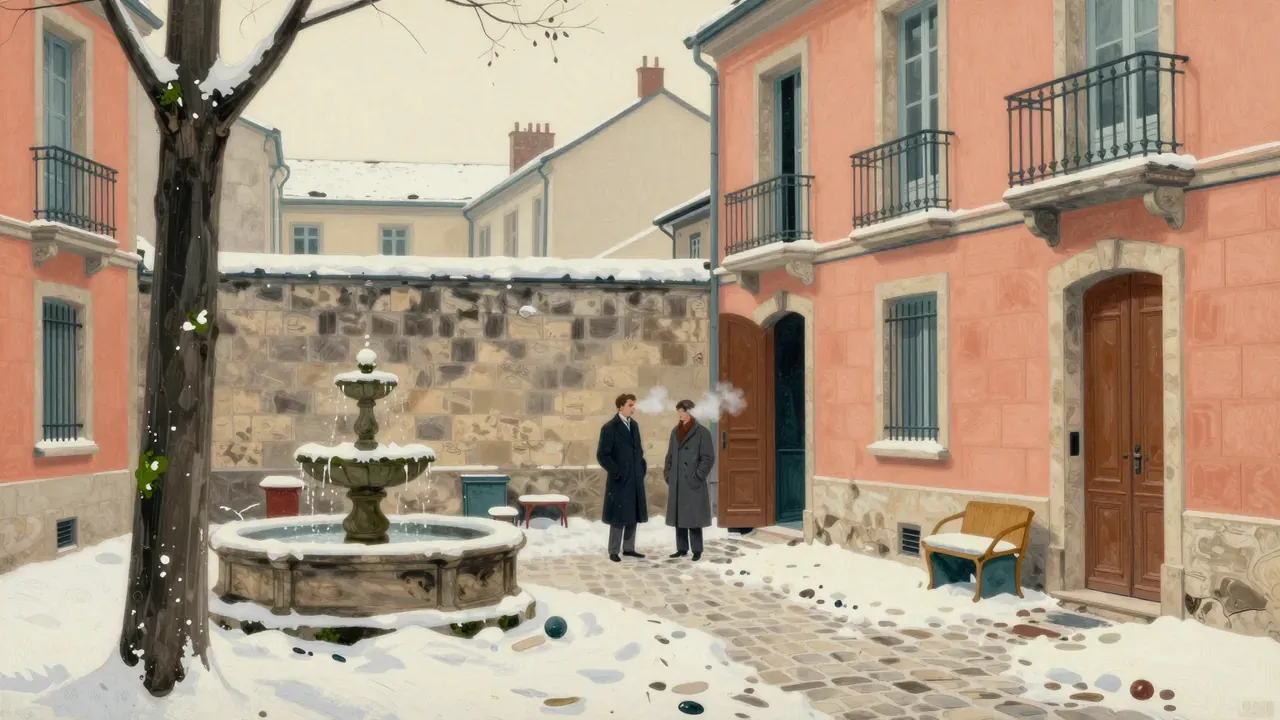
What lands is the suffocating coherence of its world. Every element — the muted palette of grey wool and pale wallpaper, the way characters occupy doorways without entering, the recurrence of snowball fights and poison talk — accumulates meaning without explanation. The film’s power resides in its refusal to moralise: Elisabeth’s cruelty feels neither monstrous nor excusable, only inevitable within the rules she and Paul have jointly authored. The final sequence — Paul’s deathbed realisation, Elisabeth’s confession, the gunshot — carries force because it arrives without crescendo, as the logical end of a system already exhausted. The use of pre-existing classical music works precisely because it remains alien: Vivaldi’s urgency and Bach’s architecture do not soften the characters’ actions but frame them as part of a larger, indifferent order. Even minor roles — Annabel Buffet’s Agathe, Jacques Bernard’s Gérard — function like recurring motifs, their gestures echoing earlier scenes. Nothing feels incidental; everything is calibrated to sustain the film’s central tension between stasis and collapse. (147 words)
What slips
What does not land is the film’s reliance on narrative ellipsis to the point of opacity. Key motivations — why Elisabeth destroys Paul’s letter, why she invites Agathe home, why Michael’s death triggers her inheritance — are implied but never anchored in behaviour or dialogue. This is not ambiguity by design but omission by assumption: the script presumes familiarity with Cocteau’s novel and its psychosexual subtext, leaving viewers without the novel’s internal monologue adrift in gesture alone. Some performances suffer from this thinness: Edouard Dermit’s Gérard remains a cipher, his devotion to Elisabeth unmoored from anything we see him do. The seaside shoplifting scene, directed by Cocteau while Melville was ill, stands apart tonally — more theatrical, less integrated — and briefly fractures the film’s claustrophobic consistency. Likewise, the abrupt shift from Paris apartment to mansion dilutes the spatial logic that gave the first act its pressure. Without the novel’s scaffolding, certain turns — particularly Elisabeth’s final act of self-annihilation — read less as tragic inevitability and more as narrative fiat. (149 words)
What stays with you
The themes that matter are those of enclosure and substitution: the house as both sanctuary and prison, sibling love as the first and last model for all relationships, and identity as something forged only in opposition to another. Adolescence here is not a phase but a permanent condition — one sustained by shared myth-making, ritualised conflict, and the exclusion of adult logic. The film treats family not as a biological unit but as a linguistic system: Elisabeth and Paul invent names, games, and hierarchies that replace social reality. Their resistance to change — to Agathe, to marriage, to grief — is not immaturity but fidelity to a grammar they created together. Class appears obliquely: the couturier’s atelier, Michael’s American wealth, the inherited mansion — all serve as backdrops against which the siblings’ emotional economy remains stubbornly pre-capitalist, operating on debt, secrecy, and symbolic exchange. The poison subplot, borrowed from schoolboy fascination, underscores how fantasy and danger are inseparable in their worldview. What matters most is not what happens, but how thoroughly the film refuses to let its characters — or the viewer — leave the room. (150 words)
Who it’s for
This film is for viewers who value formal discipline over exposition, who find tension in withheld information, and who accept that some stories are built like sonatas — repeating, varying, resolving — rather than like arguments. It rewards patience with pattern recognition, not plot payoff. Those who rely on character motivation as an entry point will struggle: Elisabeth’s actions make sense only within the film’s own internal syntax, not psychological realism. Anyone expecting Cocteau’s poetic flamboyance or Melville’s later genre austerity will be disoriented — this is neither surrealist spectacle nor noir efficiency, but something colder and more exacting. Viewers who need emotional signposting, clear cause-and-effect, or closure beyond structural inevitability should look elsewhere. A critic who values narrative transparency — say, someone attuned to contemporary French realist drama — would likely find its ellipses frustrating rather than evocative. Change the screenplay’s reliance on novelistic inference, and the film’s entire architecture would shift. (149 words)
Is it worth your evening?
Yes, it is worth your evening — but only if you approach it as a study in constraint, not a story to be followed. Its 109 minutes unfold with the deliberation of a clockwork mechanism: every shot, pause, and musical phrase contributes to a single, sustained effect. It repays attention not with revelation but with recalibration — after watching, ordinary domestic spaces feel charged with unspoken contracts, and sibling dynamics seem newly legible as systems of mutual dependency. Those who watch for immersion may find it remote; those who watch for architecture will find it rigorous and revealing. It is not a film to love, but one to reckon with — and its endurance lies precisely in that refusal to accommodate. To dismiss it as cold is to miss its point: warmth would break the spell. A viewer who prefers emotional accessibility over formal precision would fairly judge it withholding, but that is the condition of its success. Alter its pacing or clarify its motives, and it ceases to be Les Enfants Terribles. (150 words)