The look of it
Querelle is Rainer Werner Fassbinder’s final film, an English-language adaptation of Jean Genet’s 1947 novel, made as a West German–French co-production and released two months after his death. It attempts neither fidelity to Genet’s plot nor psychological realism, but a stylised, symbolic condensation of desire, guilt, and moral inversion — using Genet’s sailor-killer as a cipher rather than a character. Fassbinder discarded the linear narrative early, treating the story as ‘a third-rate police story’ unworthy of cinematic attention without radical formal intervention. His aim was not exposition but embodiment: to render Genet’s prose — artificial, ritualistic, morally unmoored — in colour, light, posture, and architecture. The film works as a sustained visual and tonal provocation, where motivation is subordinate to gesture, and consequence is deferred or erased. It is less a dramatisation of Querelle’s crimes than a staging of their psychic and erotic logic — one that refuses catharsis, explanation, or even coherence as conventionally understood. Word count: 128.
How it moves
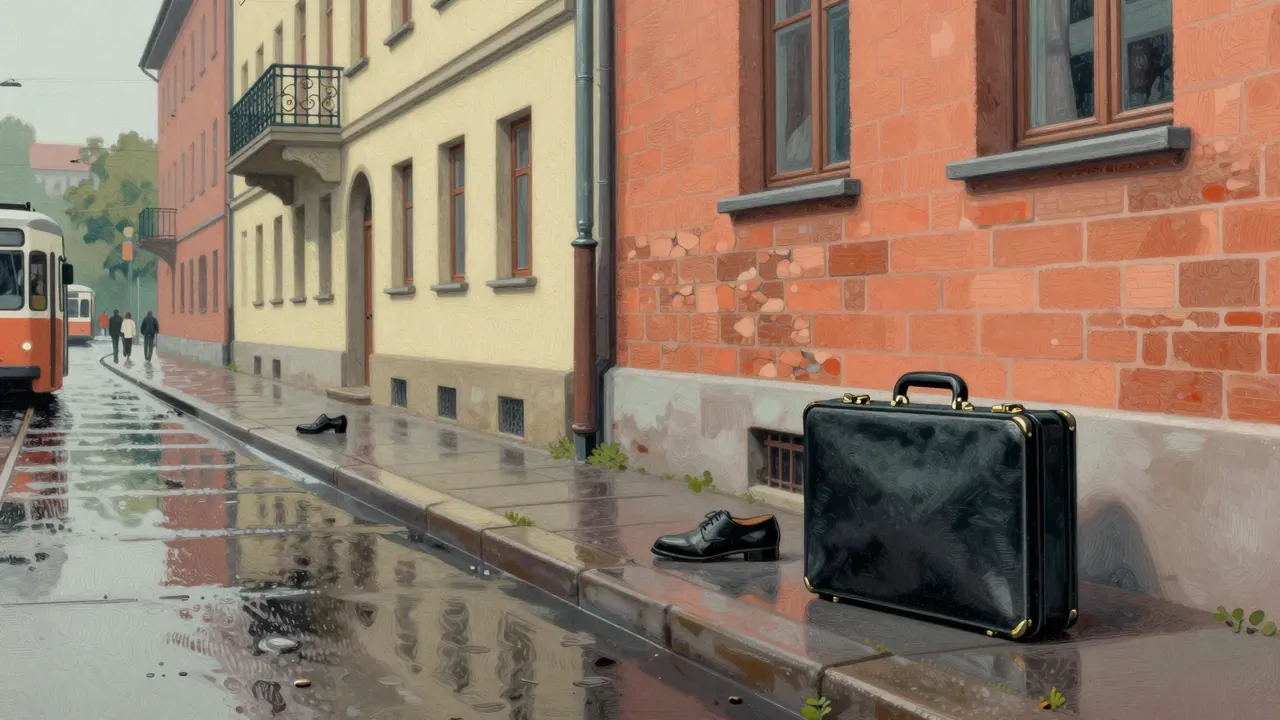
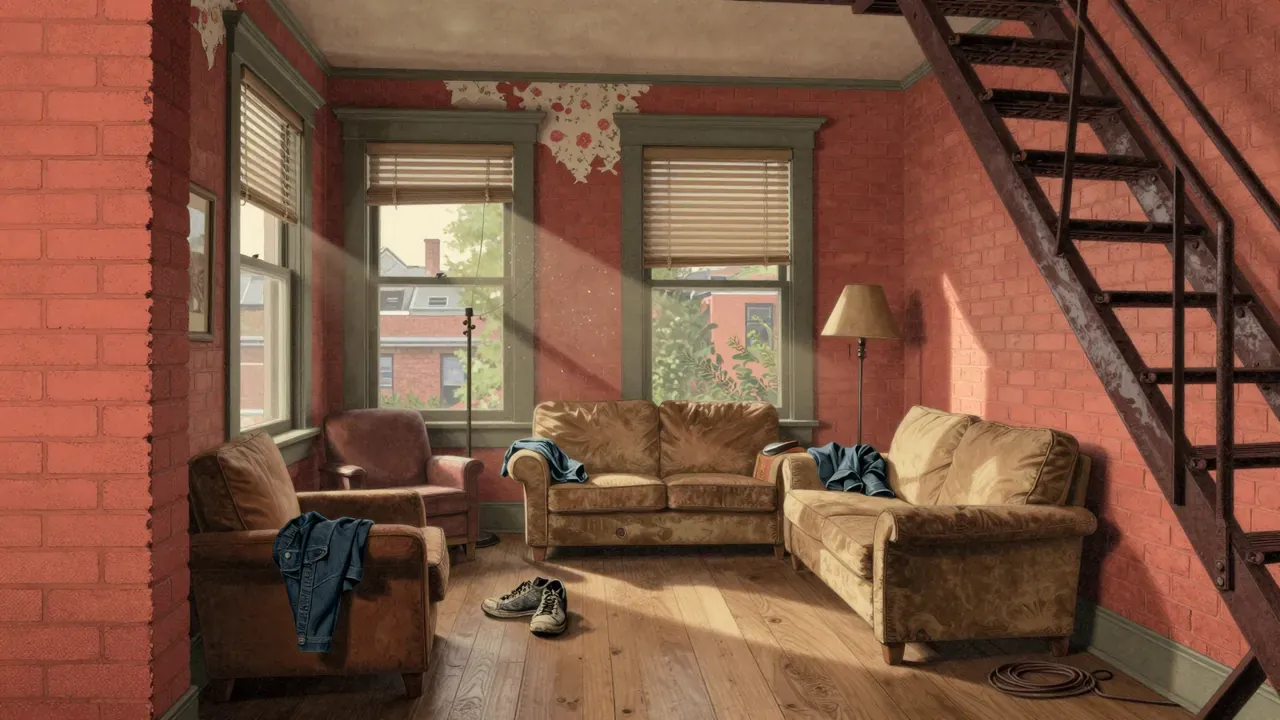
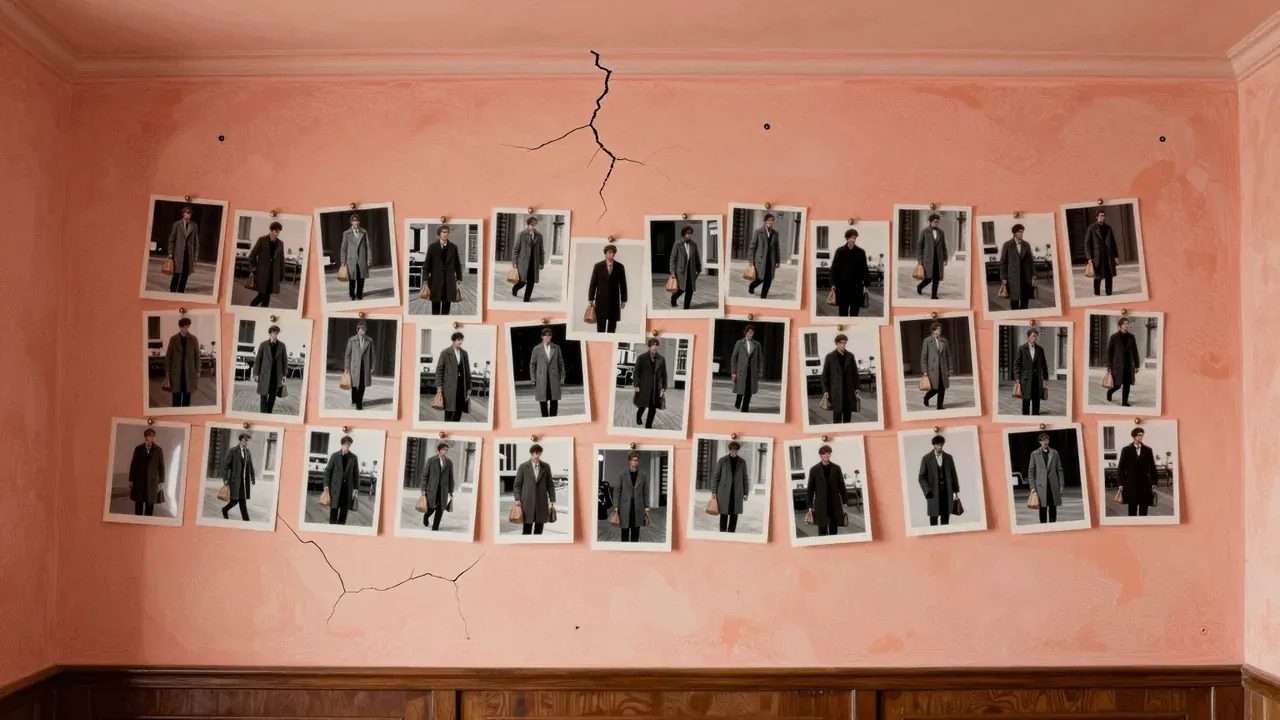
The film unfolds on studio-built sets at CCC-Spandau, designed by Rolf Zehetbauer and lit by Xaver Schwarzenberger in saturated, theatrical colour — blues and reds dominate, shadows are sharp and unmotivated, depth is flattened. Brad Davis plays Querelle with minimal inflection, his physicality foregrounded: shoulders squared, jaw set, gaze distant. Franco Nero, Jeanne Moreau, and Günther Kaufmann perform within the same stylised register — lines delivered flatly, gestures repeated like incantations. Peer Raben’s score pulses with synthetic brass and choral sighs, underscoring rather than interpreting action. Editing by Juliane Lorenz and Fassbinder fractures chronology: scenes loop, reverse, or recur without narrative justification. Dialogue often feels detached from cause — characters speak while facing away, or mid-embrace, or mid-violence, as if language were another prop in the mise-en-scène. The camera holds on faces for seconds longer than comfort allows, then cuts abruptly. There is no attempt to naturalise the world; every element — costume, hair, silhouette — echoes Tom of Finland’s iconography, not as illustration but as structural grammar. Word count: 152.
What holds
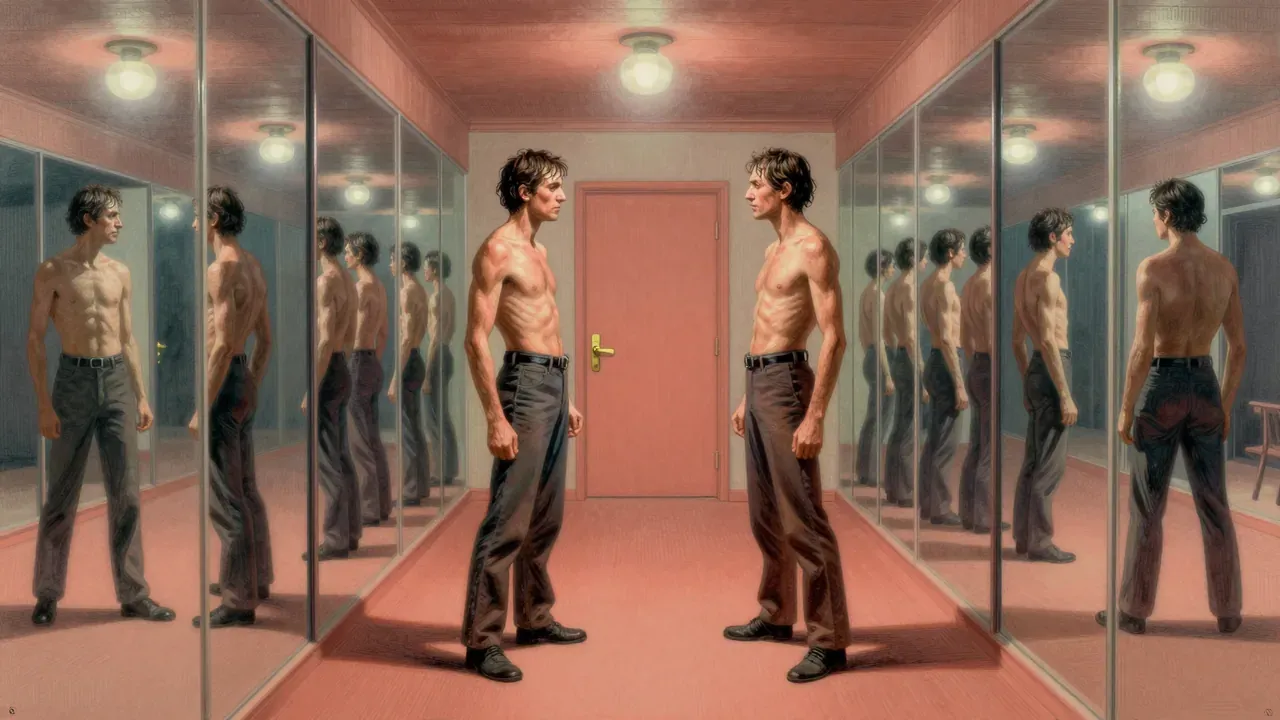
What lands is the film’s unrelenting tone: a suffocating, dreamlike gravity where desire and danger are indistinguishable. The stylisation does not feel arbitrary but necessary — it makes visible the internal logic of Querelle’s world, where power circulates through humiliation, love is inseparable from violence, and identity is performative and unstable. The recurring dice game, the mirrored fights between brothers, the tarot reading at the end: these are not plot devices but ritual repetitions that accumulate weight through recurrence. Jeanne Moreau’s presence anchors the film’s theatricality without softening it; her voice and stillness contrast with the lurid surroundings, making her Lysiane both participant and witness. The final shot — Querelle’s birth record — lands not as revelation but as punctuation: a cold, bureaucratic counterpoint to everything that preceded it. The film’s refusal to explain or judge its characters gives them a strange autonomy. It does not invite empathy, but it sustains attention through sheer formal consistency — a world built from scratch and held together by will alone. Word count: 146.
Where it slips
What does not land is the film’s attempt to sustain dramatic tension across its full runtime. Without psychological causality or narrative momentum, many scenes settle into stasis — not stillness, but inertia. The murder of Vic lacks shock because it is presented without context or consequence; the betrayal of Gil registers as inevitable rather than tragic. Some performances falter under the weight of the style: Laurent Malet’s Robert and Hanno Pöschl’s Seblon occasionally seem stranded between affectation and uncertainty, their line readings failing to find purchase in the film’s heightened register. The soundtrack’s nomination for ‘Worst Musical Score’ is not unjust — Raben’s music often overwhelms rather than supports, its bombast clashing with the film’s deliberate emptiness. The Tarot sequence, meant to be revelatory, reads instead as cryptic without being resonant. And while the Tom of Finland references are unmistakable, they risk flattening queer subjectivity into a series of poses — admiration without interrogation, iconography without interiority. The film’s rigour becomes its limitation: nothing yields, nothing bends, nothing surprises beyond its own rules. Word count: 154.
What it says
The themes that matter are not those of Genet’s novel — crime, redemption, homosexuality — but those Fassbinder imposes upon it: the collapse of moral hierarchy, the erotic charge of submission, the instability of kinship, and the theatricality of self-invention. Querelle’s relationship with his brother is not about blood but about doubling — they share no history, only resemblance and rivalry. Lieutenant Seblon’s devotion is not love but worship of an ideal he cannot embody. Nono’s rule — ‘my wife only sleeps with arseholes’ — is less homophobia than a system of enforced degradation, where power is exercised by assigning roles rather than enforcing laws. The film treats identity as costume, desire as performance, violence as ritual. There is no outside to this system: no society, no law, no time beyond the port’s closed circuit. Even the ship Le Vengeur feels less like a vessel than a stage set waiting to be struck. These are not ideas argued but enacted — through framing, repetition, silence, and the deliberate mismatch between word and gesture. The film’s moral impact, as Fassbinder described it, lies in its refusal to locate virtue or vice anywhere but in the act of looking itself. Word count: 150.
Who it’s for
This film is for viewers who value formal rigour over narrative legibility, who find resonance in repetition, and who approach cinema as a space of sustained mood rather than plotted progression. It rewards patience with texture, not payoff — those drawn to Fassbinder’s earlier work, or to Genet’s writing, or to expressionist theatre, will recognise its lineage. It is not for viewers who require psychological plausibility, emotional arcs, or conventional pacing. Those expecting a crime drama, a gay coming-of-age story, or a faithful literary adaptation will find it alienating — not because it is obscure, but because it declines the very terms on which such genres operate. Critics like Vincent Canby, who called it ‘a mess’, are not wrong in their assessment; they are measuring it against criteria the film rejects. A viewer who values clarity, causality, or catharsis would need the film to abandon its central premise — that meaning resides in surface, not subtext — before it could satisfy them. Word count: 148.
Is it worth your time
It is worth your evening only if you accept that some films are not meant to be consumed but endured — held at arm’s length, observed, resisted, then re-observed. Its 108 minutes do not pass quickly, nor are they meant to: the slowness is structural, part of its argument against narrative efficiency. Those who find value in cinema as a site of aesthetic confrontation — where colour, sound, and composition assert themselves before character or plot — will leave unsettled but engaged. Others will leave bored or baffled, and that reaction is legitimate, not a failure of attention. The film’s power lies in its refusal to accommodate; its weakness is that this refusal eventually exhausts its own resources. It is not a film to love, but one to reckon with — and reckoning takes time, attention, and willingness to sit with discomfort. Word count: 142.