A Study
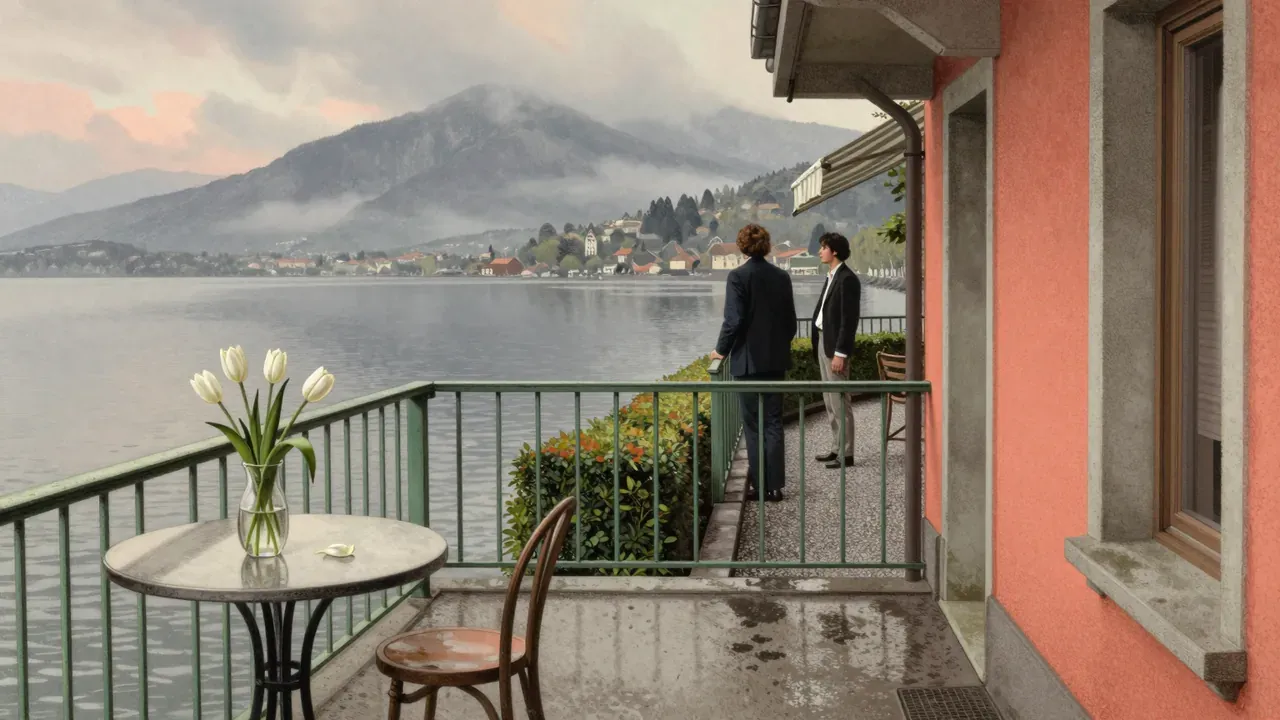
King Lear is not an adaptation of Shakespeare’s tragedy but a disassembled study of its residues: a film about the impossibility of restoration in a world where culture has collapsed after Chernobyl. Godard sets it in Nyon, his childhood town, not to evoke memory but to treat place as palimpsest—where hotel balconies double as commercial backdrops and goblins wear jeans shot for the same brand that financed the film. The screenplay treats money, copyright, and authorship as structural elements, not background. Norman Mailer’s abandoned script, his departure after one day, the legal dispute over Viviane Forrester’s text—all are folded into the film’s logic, not excluded from it. It refuses narrative continuity or psychological coherence; instead, it arranges fragments—Shakespearean lines whispered out of sequence, Bresson on cinematography, Woolf on waves—as competing claims on meaning. Its ambition is not fidelity but forensic attention: what remains when language, image, and authority all fracture? It asks how a work can be made when even the idea of ‘making’ is compromised by commerce, catastrophe, and silence.
The Structure of Absence
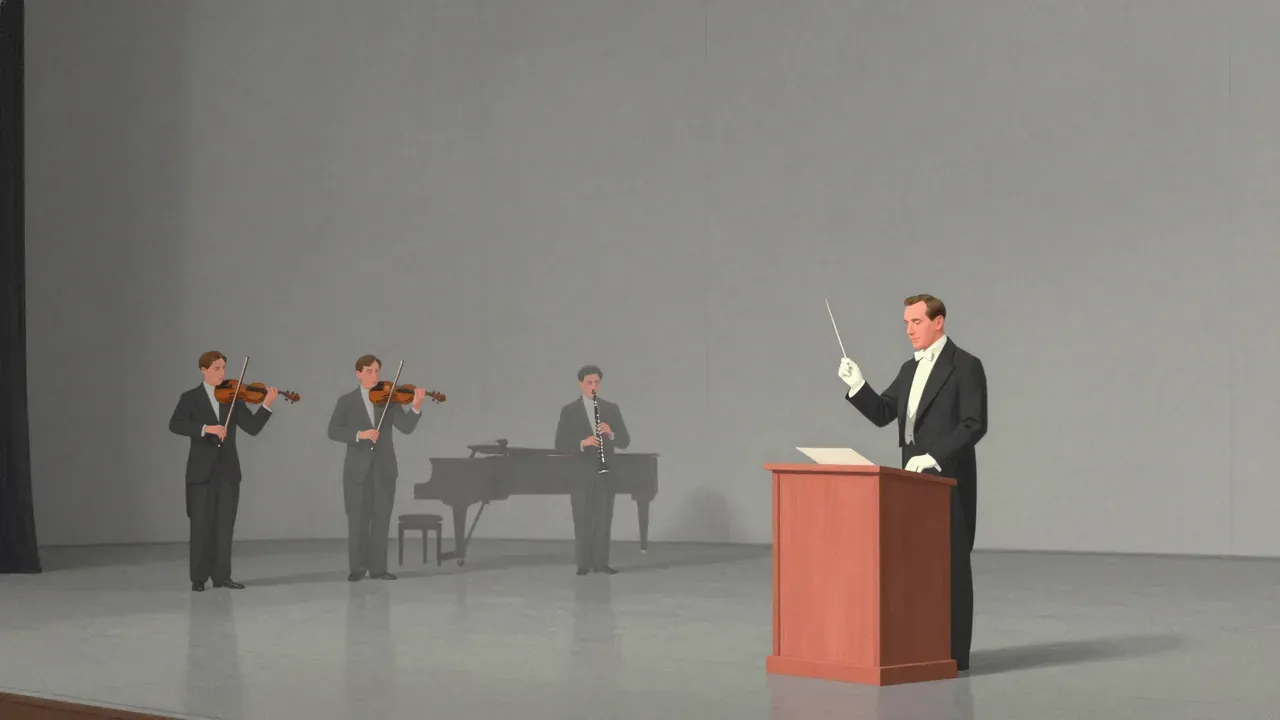
The film works through deliberate discontinuity: intertitles announce it as ‘A study’, ‘An Approach’, then undercut themselves with a three-way phone call about Cannes deadlines. Story is absent in any conventional sense; what passes for plot is William Shakespeare Junior the Fifth sitting alone in a lakeside hotel, questioning why he was chosen—then dissolving into voice-over readings, off-screen arguments, and abrupt cuts to goblins climbing railings reused from a jeans ad. Performances are non-psychological: Burgess Meredith’s Don Learo speaks with detached gravity; Molly Ringwald’s Cordelia appears without exposition; Woody Allen’s ‘Mr. Alien’ is filmed in his editing suite, his presence a citation rather than a character. Sophie Maintigneux’s cinematography avoids dramatic lighting or stable framing—interiors are flat, exteriors washed, focus often soft or shifting. Editing, by Godard himself, favours rupture: repetitions, silences longer than dialogue, abrupt shifts between English, French, and untranslated literary fragments. There is no score beyond diegetic sound and spoken text; music is replaced by the weight of pause.
What Lands
What lands is the film’s sustained refusal of comfort—not just aesthetic but epistemological. Its insistence on fragmentation forces attention onto the materiality of speech, the physicality of type on screen, the grain of film stock in moments of underexposure. The repeated tulips on the hotel table become anchors amid chaos; the reuse of the balcony shot across commercial and feature registers the permeability of value and image. The tension between Mailer’s abandoned script and Godard’s final text is legible not as backstory but as texture—the film’s surface bears the friction of conflicting intentions. When Julie Delpy’s Virginia reads from Genet while looking directly at the lens, it does not clarify but intensifies the question of who speaks for whom. The film’s most persuasive moments are those where form and argument coincide: a line from Weil on images as things you could ‘put in a cell’ gains force because the frame itself feels like confinement; Bresson’s dictum on exhaustion resonates because the film visibly wears down its own syntax. It lands not as drama but as demonstration.
Where It Fails
What does not land is any sustained engagement with Shakespeare’s political or familial architecture. The few characters named after Lear’s world—Lear, Cordelia, Edgar—bear no consistent relationship to their originals, nor to each other. Their names function more like labels in a taxonomy than roles in a story. The film’s rejection of ‘watchability’ becomes indistinguishable from incoherence in stretches where voice-over layers obscure each other or where literary quotations arrive without context or sonic distinction. The Chernobyl premise is stated but never dramatised; its weight is rhetorical, not felt. Attempts at irony—such as the juxtaposition of ‘Don Learo’ with Mafia nomenclature—land without bite because the film offers no ground against which to measure the absurdity. The legal dispute over Forrester’s text, though real, is rendered as another textual fragment rather than a structural critique of authorship. And while the film declares its partiality, its refusal of synthesis risks becoming mere evasion: there is little evidence here of struggle toward understanding, only repetition of the fact that understanding is difficult.
The Themes That Matter
The themes that matter are not drawn from Shakespeare but from Godard’s lifelong preoccupations: the entanglement of capital and creation, the instability of translation across language and medium, the ethics of quotation in a ruined cultural field. Power appears not as kingship but as the producer’s voice on speakerphone demanding delivery; virtue not as moral choice but as the labour of transcription—typing out sonnets, copying lines by hand, re-filming the same balcony twice. Fathers and daughters recur as formal motifs—Mailer and Kate on set, Godard and his own uncredited daughter (though she does not appear), the spectral presence of Shakespeare as ancestor—but never as emotional units. Words and images are pitted not as rivals but as mismatched partners: a line from Hamlet arrives without speaker or scene; a sonnet is heard while a model climbs a railing. Silence is treated as active, not empty—the ‘violent silence of Cordelia’ is less a character trait than a compositional device, a gap into which meaning might fall or vanish. The film’s central theme is the difficulty of inheriting without illusion—of working with what remains, not what was promised.
Who It Is For
This film is for viewers who approach cinema as a site of conceptual labour—not those seeking narrative immersion, emotional catharsis, or even coherent argument. It rewards patience with opacity, familiarity with Bresson and Weil, and tolerance for long stretches where nothing ‘happens’ except the slow erosion of expectation. It is not for anyone who requires clarity of intent, consistency of tone, or resolution of tension. Those who found Godard’s Histoire(s) du cinéma impenetrable may find this more accessible only in its shorter runtime, not its logic. A viewer who values craft as visible process—Maintigneux’s light, Godard’s edits, the physical presence of typed pages—will find more here than one who prioritises performance or story. It is also for those who accept that some films are made to resist use: not to be watched, but to be reckoned with. Anyone expecting Shakespeare, or even a deconstruction of Shakespeare, will leave baffled—not because the film fails, but because it declines the assignment entirely.
Is It Worth Your Evening?
It is worth your evening only if you accept that ninety minutes of unresolved tension, fragmented text, and deliberate alienation constitute a legitimate use of time—and only if you have already decided that Godard’s late work is worth attending to on its own terms. It is not ‘difficult but rewarding’ in the conventional sense; its rewards are narrow, intellectual, and cumulative across his filmography. Someone who admires the rigour of Notes sur le cinématographe but finds Passion opaque may still find this too elliptical. A viewer who values historical context—Chernobyl’s cultural aftermath, Cannon Films’ decline, the 1987 Cannes calendar—will find richer ground than one focused on acting or design. It would not improve with better subtitles, sharper sound, or tighter pacing: its flaws are structural, not technical. To call it ‘worth it’ presumes you already share its premises. Without them, it is not frustrating—it is irrelevant.