The shape of a name
Samurai I: Musashi Miyamoto is the first of Hiroshi Inagaki’s three-film adaptation of Eiji Yoshikawa’s novel Musashi, and it sets out to trace the moral and physical formation of a legendary swordsman not as myth but as process — from feral youth to disciplined warrior. It begins in the immediate aftermath of Sekigahara (1600), a moment when Japan’s feudal order is hardening under Tokugawa rule, and follows Takezo — raw, impulsive, unlettered — as he is stripped of identity, hunted, imprisoned, and slowly remade. The film does not aim for psychological realism in the Western sense, nor does it treat violence as spectacle or catharsis. Instead, it uses the conventions of the adventure film — pursuit, escape, duels, betrayal — to stage a prolonged inquiry into restraint: how it is imposed, resisted, internalised, and finally chosen. Its ambition is structural as much as thematic: to build a character across time and trial, with each episode calibrated to erode one layer of instinct and replace it with something harder-won. It assumes the viewer will follow not just plot but progression — not what happens next, but what changes inside the man who survives it. (158 words)
The look of it
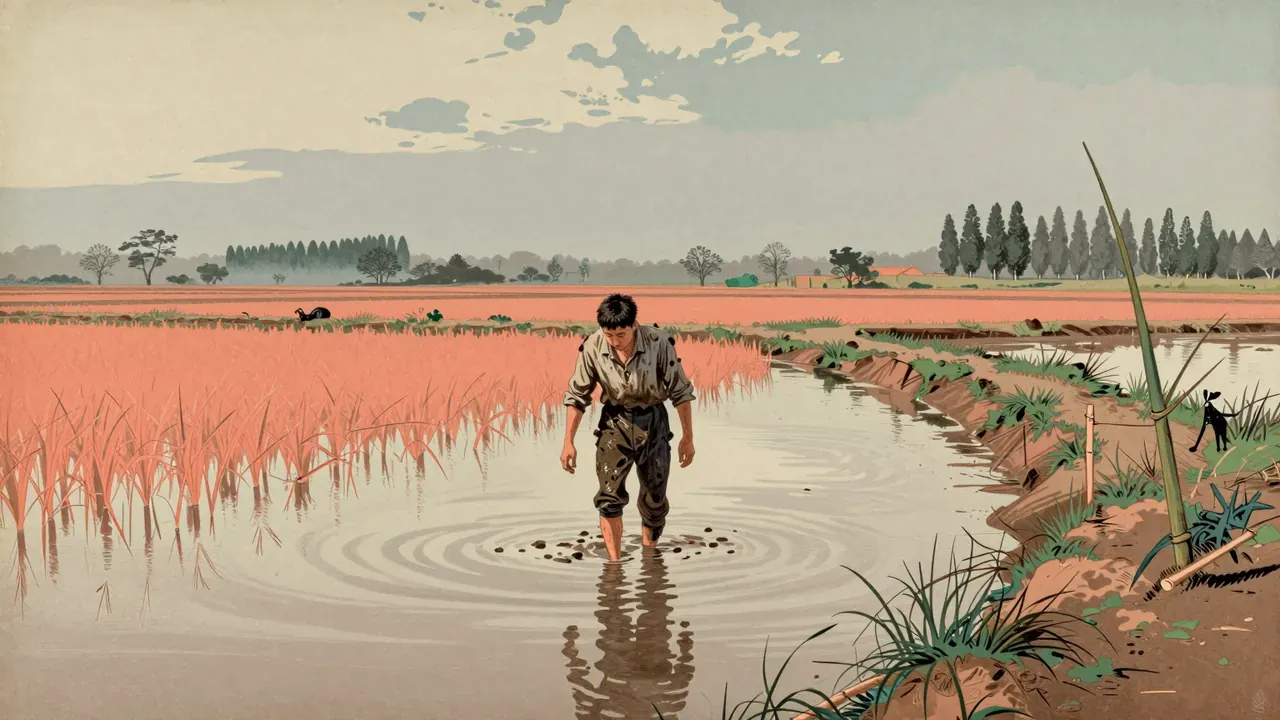
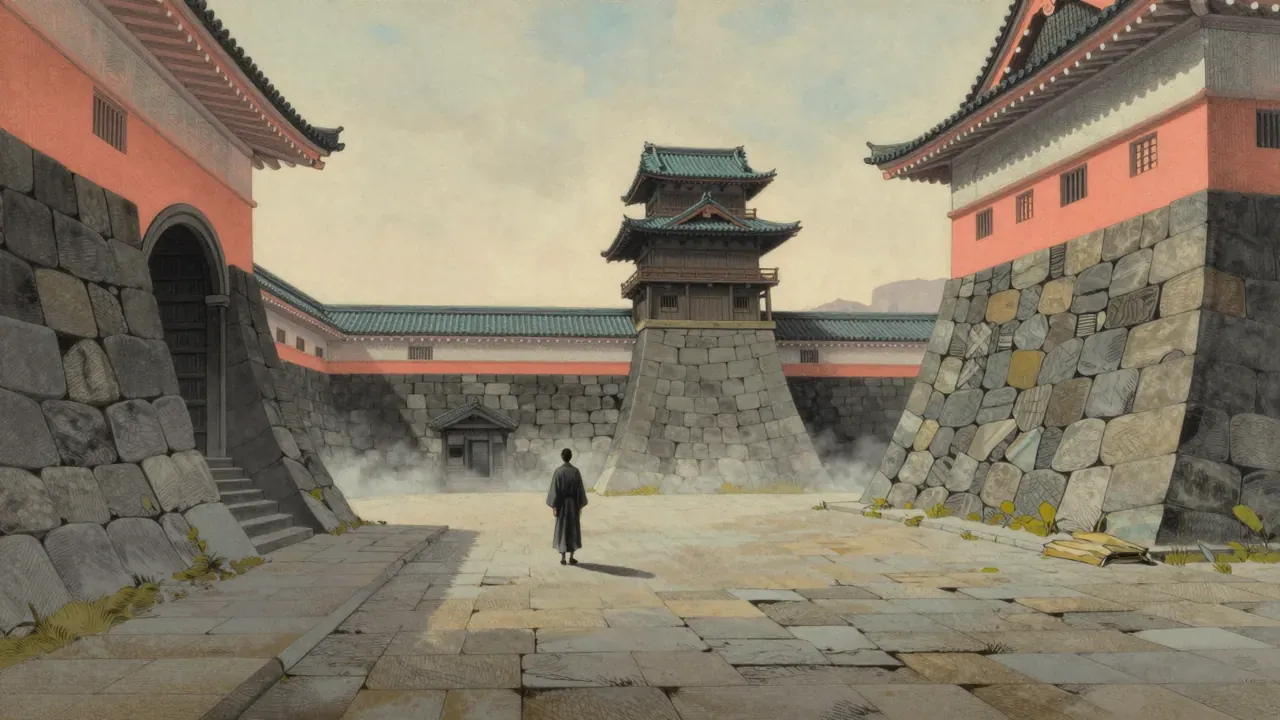
The story moves in deliberate, episodic stages: battlefield defeat, flight, deception by women, village rejection, capture, imprisonment, and release — each a threshold crossed rather than a complication resolved. Toshirō Mifune’s Takezo is all kinetic force at first — shoulders hunched, voice guttural, eyes scanning for threat — then gradually pared back: fewer gestures, longer silences, posture shifting from crouch to stance. Mariko Okada’s Otsu is quieter but no less decisive; her loyalty is active, not passive, and her presence tightens the film’s emotional logic. Hiroshi Inagaki directs with classical control: compositions are balanced but never static, action choreographed for clarity over speed, and Ikuma Dan’s score avoids flourish, using strings and koto to mark shifts in tone without underscoring emotion. The Eastman Color photography is restrained — earth tones dominate, skies muted, interiors lit with soft contrast — avoiding both theatricality and documentary grit. There is no voiceover exposition; motivation is shown in glances, hesitation before drawing, the weight of a sword held too long. The craft serves continuity of character, not spectacle. (159 words)
What stays in the hand
What lands most firmly is the film’s patience with transformation. Takezo’s three-year confinement in Himeji Castle is not dramatised as suffering but as suspension — a pause that makes his emergence as Musashi feel earned, not bestowed. The priest Takuan Sōhō functions not as mentor but as architect of that pause: his methods are ambiguous, his authority unexplained, yet his influence is absolute because the film trusts the audience to read consequence, not motive. The relationship between Takezo and Otsu works because it is built on silence and implication — her letter is never seen, his messages at the end are simple, their meaning carried by Kaoru Yachigusa’s stillness and Mifune’s slight, unsmiling nod. The duel sequences are brief and functional, avoiding stylisation; their power comes from timing and consequence, not choreography. Even the historical framing lands: the opening battle is heard, not shown, and the Tokugawa victory is established through banners, not speeches. This economy — of image, dialogue, exposition — gives the film its quiet authority. (157 words)
Who stands beside him
What does not land is the treatment of secondary characters beyond functional necessity. Matahachi’s betrayal feels abrupt, not inevitable; his shift from comrade to rival lacks the texture given to Takezo’s arc, and Rentarō Mikuni’s performance remains surface-level — more symbol than person. The widow Oko and her daughter serve narrative purpose — temptation, deceit, misdirection — but their motives are opaque, their agency limited to manipulation without interiority. William Holden’s English narration in the US cut, though well-intentioned, flattens tone and imposes interpretation where the original relies on ambiguity; it is an editorial intervention that simplifies rather than clarifies. The film’s adherence to period convention also means some social dynamics — particularly around class and gender — are presented as givens rather than interrogated. Women act, but rarely speak with full autonomy; their choices are circumscribed by men’s actions, and the film does not linger on the cost. These are not flaws in isolation, but they do limit the scope of the film’s human inquiry: it traces one man’s discipline with precision, but leaves the world around him sketched in outline. (159 words)
The weight of the name
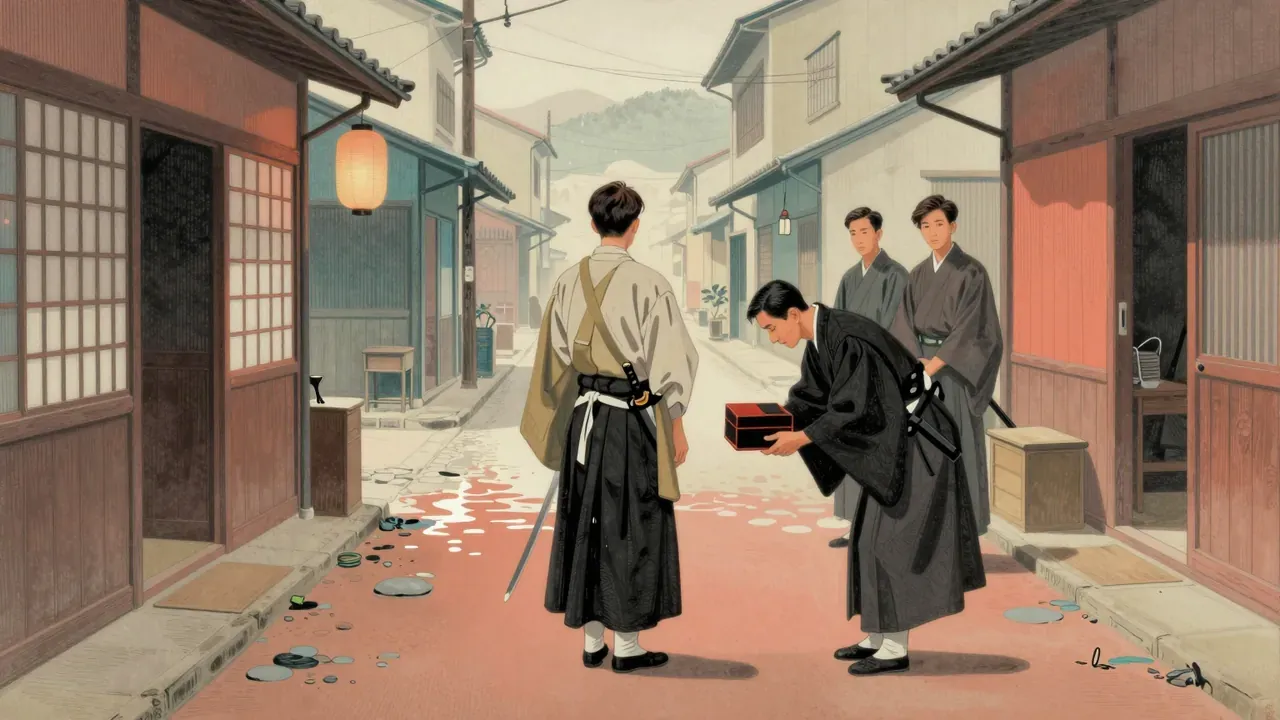
The themes that matter are discipline as self-conquest, reputation as burden, and time as pedagogy. The film treats mastery not as talent revealed but as impulse deferred — every fight avoided, every word withheld, every year spent in silence adds weight to the name ‘Musashi’. Honour is not inherited or declared but accumulated in small refusals: refusing seduction, refusing vengeance, refusing to name Matahachi’s betrayal to his family. The sword is never mystical; it is a tool, heavy and practical, and its use is measured in breaths, not flourishes. The film also treats legacy as something imposed from outside — the name granted at the end is ceremonial, not personal — and suggests enlightenment is not arrival but departure: Musashi walks away from Otsu, from Himeji, from the very identity the film has spent ninety minutes constructing. There is no triumphalism in his release, only resolve. This stoic view of growth — slow, solitary, irreversible — runs counter to modern narratives of self-actualisation. It is not about becoming who you are, but who you must become to hold the weight of what you carry. (156 words)
Who watches with whom
This film is for viewers who value structure over surprise, restraint over revelation, and character as accumulation rather than epiphany. It rewards attention to gesture, silence, and recurrence — the way Takezo’s grip on his sword changes across scenes, or how Otsu’s posture shifts from deference to quiet insistence. It is not for those who require rapid pacing, psychological exposition, or moral clarity: the film refuses to explain why Takuan acts as he does, or whether Oko is villain or victim. Some critics of Japanese cinema’s mid-century period find its formalism emotionally distant; others argue its austerity deepens its impact. A viewer expecting the kinetic energy of Kurosawa’s samurai films may find Inagaki’s pace too measured. What would change the verdict is not better acting or sharper editing, but a different contract with the audience — one that prioritises immediacy over accretion. That contract is deliberate, not deficient. (159 words)
The length of the evening
Yes, it is worth your evening — not as escapism but as calibration. Its ninety-two minutes ask for sustained attention, not passive viewing, and repay it with a rare kind of coherence: every scene serves the central question of how a man becomes a name. It is not urgent, but it is consequential — the kind of film that lingers in the body after the credits, in the way you hold your shoulders or pause before speaking. Those who dislike slow-burn character studies, or who expect foreign-language films to be ‘accessible’ through exposition or translation, may find it withholding. But its refusal to over-explain is not obscurity — it is trust. The Criterion Collection’s restoration confirms its durability: the colour holds, the framing remains precise, the performances deepen on rewatch. It is not a film to consume, but to inhabit — briefly, deliberately, and with care. (158 words)