A story made real
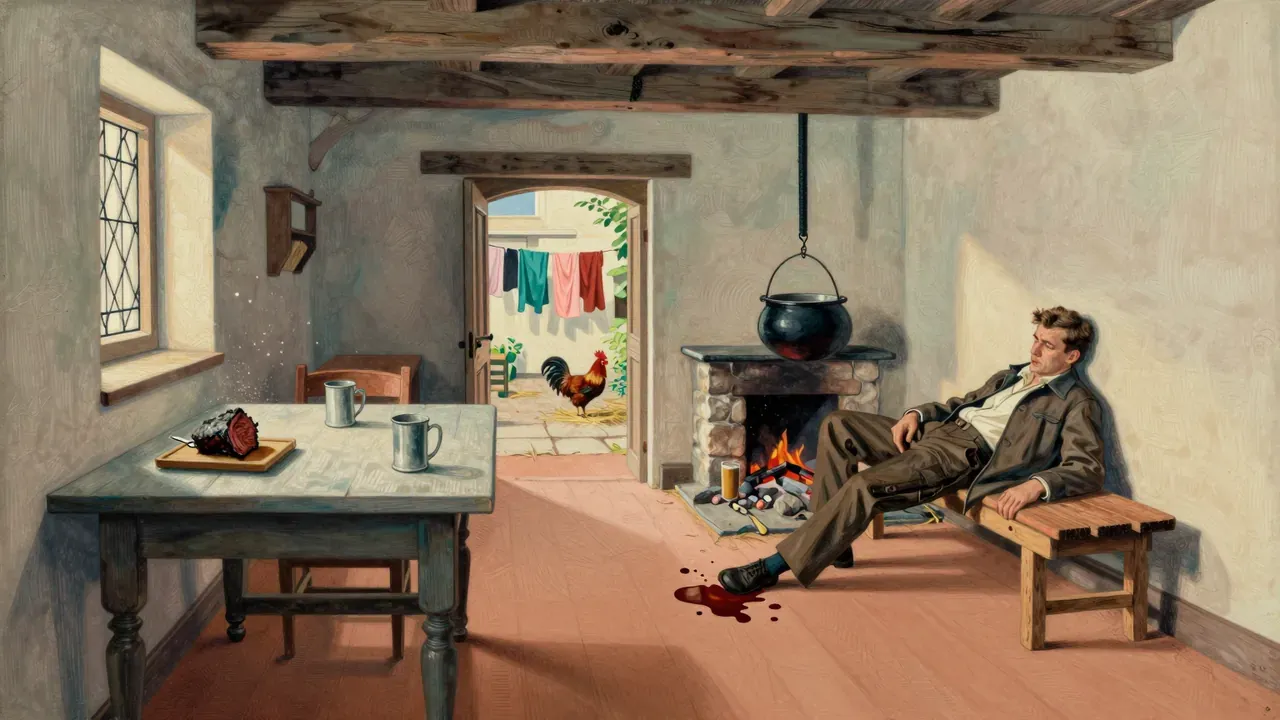
The Immortal Story is a fifty-seven-minute French-language drama, adapted by Orson Welles and Louise Lévêque de Vilmorin from a short story by Karen Blixen. It is not an expansion but a distillation: a single, tightly wound parable set in nineteenth-century Macao, concerning obsession, repetition, and the hollowing-out of meaning through enactment. Welles intended it as the first half of a two-part anthology film, though only this segment was completed; its brevity is structural, not circumstantial. Shot in colour under contractual obligation — a medium Welles distrusted for its effect on performance — it leans into theatricality and stillness rather than momentum. The film does not seek to immerse, persuade or entertain in the conventional sense. Instead, it holds up a cracked mirror to storytelling itself: what happens when a myth is forced into flesh, when ritual is mistaken for resolution, and when belief is replaced by staging. Its ambition is not scale but precision — to test whether a story can survive being made real, and whether reality survives the attempt. (158 words)
The look of it
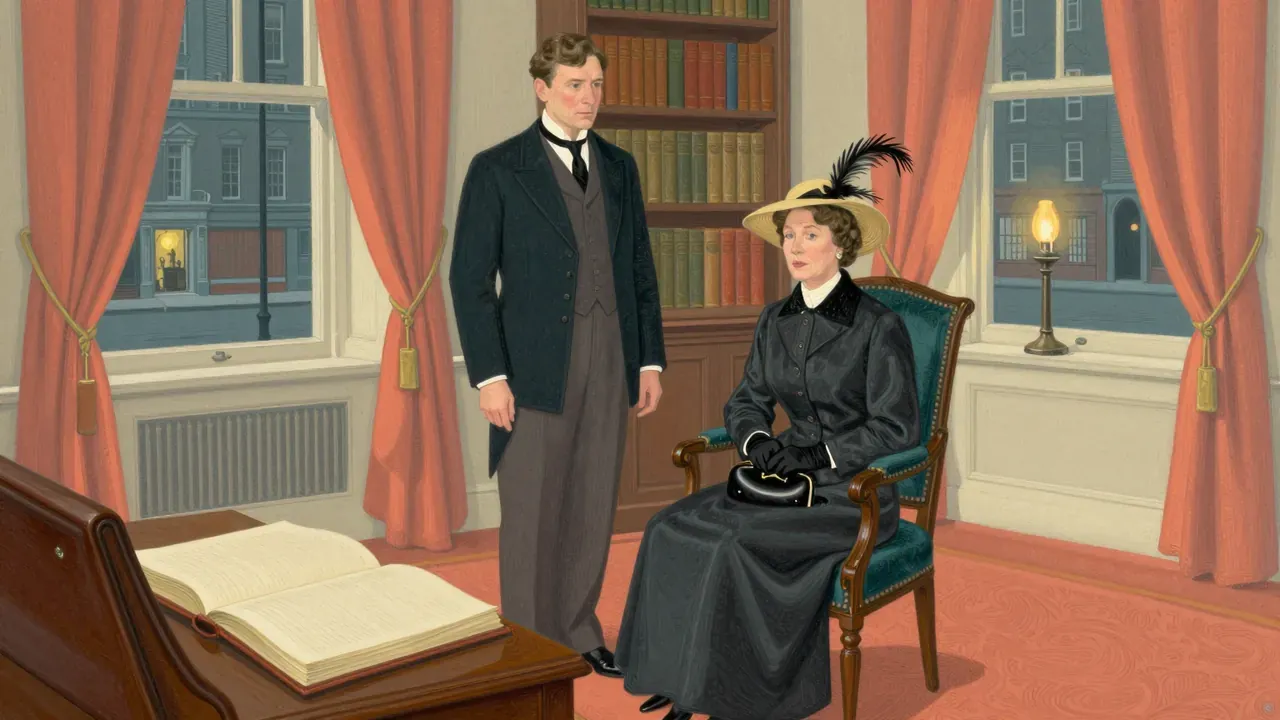
The narrative unfolds with deliberate, almost liturgical pacing: Mr. Clay’s command to enact a sailors’ legend sets off a chain of reluctant, transactional performances. Jeanne Moreau’s Virginie moves with controlled bitterness that softens only in private moments; Norman Eshley’s Paul carries the weight of displacement without melodrama; Roger Coggio’s Levinsky is the film’s quiet pivot — observant, weary, morally unmoored. Welles’ own Clay is less a character than a vessel for decay: his voice dominates, his body recedes. Willy Kurant’s cinematography favours shallow focus and muted tones, keeping faces half-lost in shadow even in daylight; interiors are cramped, exteriors deliberately artificial — Chinchón’s cobbled square stands in for Macao with no pretence at verisimilitude. Erik Satie’s music appears sparingly, mostly as piano fragments that underscore silence more than action. There is no score to guide emotion; instead, pauses are held until they become pressure. The editing is sparse, the framing static — every choice resists embellishment. This is not minimalism as austerity, but as restraint: a refusal to explain what the story already knows. (159 words)
What stays silent
What lands is the film’s central paradox: that the act of making a story literal does not confirm it, but hollows it out. Virginie’s shift from vengeance to quiet release is earned not through dialogue but through gesture — a lowered gaze, a hand resting briefly on Paul’s arm, the way she holds the shell at the end. Paul’s arc is quieter still: his initial refusal, then compliance, then departure, all register as variations on exhaustion rather than transformation. Welles’ direction treats the prophecy not as fate but as furniture — something moved around a room until its shape is forgotten. The final image — Levinsky listening to the shell, then pausing — lands because it refuses closure: the ‘song’ is indistinct, memory unreliable, meaning untransmissible. The film’s economy works in its favour here. At fifty-seven minutes, it has no room for digression or exposition, so every line, glance and cut must carry weight. That discipline pays off in moments where silence does the work of pages: the space between Virginie and Clay at dinner, the way Paul’s boots echo on stone long after he’s left frame, the slow tilt down from Clay’s empty chair to the floor. These are not flourishes; they are the grammar. (157 words)
Where the frame cracks
What does not land is the film’s insistence on its own allegorical weight. Fernando Rey’s Merchant appears in a single scene, delivering exposition with theatrical gravity, yet contributes nothing to the central dynamic — his presence feels like scaffolding left standing after construction ends. The Portuguese-Chinese setting remains stubbornly abstract: despite Welles’ use of Madrid-based Chinese restaurant staff as extras, the cultural texture stays thin, reduced to costume and accent rather than lived context. The colonial backdrop — Macao as a node of trade, debt and erasure — is named but never interrogated; Clay’s wealth arrives off-screen, his power unexamined beyond its effect on others. Some performances suffer from the script’s austerity: Eshley’s Paul is compelling in stillness but underwritten in speech, his Danish origin noted once and never woven into his bearing or diction. The colour photography, while deliberately desaturated, occasionally flattens depth — faces lose definition in mid-shot, and the Chinchón locations, however cleverly repurposed, lack the humid density a port city should convey. Most tellingly, the film’s intellectual rigour sometimes tips into coldness: it asks the viewer to sit with ambiguity, but offers little warmth or tactile detail to anchor that patience. (159 words)
What repeats, what fades
The themes that matter are repetition, mortality, and the instability of narrative authority. Clay does not want to hear the story again — he wants to own it, to reverse-engineer myth into fact. His obsession is less about desire than about control over time: if the tale can be staged, then death, too, might be deferred or directed. Virginie’s participation is framed as revenge, but her release comes not from harming Clay but from stepping outside his logic — from choosing connection over retribution, even fleetingly. Levinsky embodies the servant-intellectual: fluent in languages, literate in scripture, yet powerless to alter outcomes. His final act — listening to the shell — suggests memory is not retrieval but resonance: the same sound heard twice, but never understood the same way. The film treats storytelling not as transmission but as translation — always partial, always altered by the teller and the listener. Colonialism appears as infrastructure rather than subject: the ships, debts and ruined partners are givens, not questions. What matters is how power circulates through stories — who tells them, who enacts them, who remembers them, and who is erased in the retelling. (156 words)
Who sits with it
This film is for viewers who value precision over propulsion, who find tension in stillness and meaning in omission. It rewards attention to cadence, framing and subtext, not plot mechanics or emotional escalation. Those who expect psychological realism, historical immersion or narrative payoff will find it withholding, even alienating. It is not for viewers who need clarity of motive, consistency of tone or resolution of theme — the film’s refusal to explain Levinsky’s final line, or Virginie’s exact shift in feeling, is deliberate, not evasive. Someone who values Satie’s music for its irony, or Blixen’s prose for its moral density, may connect more readily than someone approaching it as cinema-first. A viewer expecting Wellesian spectacle or baroque invention will be disappointed: this is his most austere work, stripped of flourish. Change the runtime to ninety minutes, add a second storyline or deepen the colonial context, and the verdict shifts — but as it stands, its rigour is its rationale. (159 words)
Fifty-seven minutes
Yes, it is worth your evening — provided you watch it as a chamber piece, not a feature. Fifty-seven minutes is enough time to absorb its rhythms, notice how light falls across Moreau’s cheek in the third scene, catch the slight tremor in Welles’ left hand during the reading of Isaiah, register the absence of ambient sound in the villa’s courtyard. It does not ask for investment in outcome but in texture: the grain of wood, the weight of silence, the way a shell held to the ear promises music but delivers only breath. Those who dislike films that resist interpretation or withhold catharsis may feel short-changed — but the film’s brevity means the discomfort is brief too. It is not a film to love, exactly, but one to return to: its questions about story, agency and memory accrue weight with time. Watch it alone, in one sitting, with the lights low. Do not pause it. Do not read about it first. Let the shell speak before you decide what it says. (158 words)