What it is
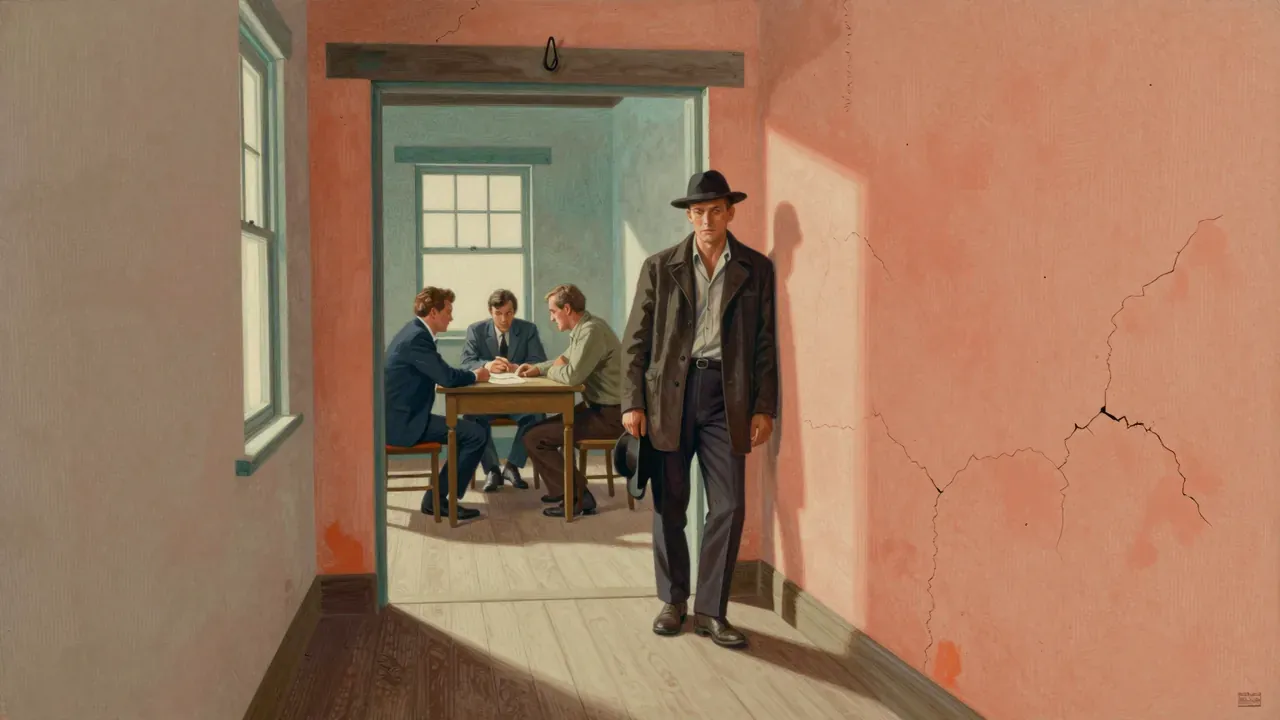
The Tall T is a 1957 Western built on compression: seventy-eight minutes, one confined setting for much of its second half, three outlaws, two hostages, and a moral pivot that hinges not on spectacle but on quiet calculation. It adapts Elmore Leonard’s short story ‘The Captives’ with fidelity to its lean architecture—no exposition beyond what the situation forces, no backstory unless it surfaces in gesture or pause. Budd Boetticher and screenwriter Burt Kennedy treat the genre as a pressure vessel: they strip away frontier mythmaking to focus on how character holds or fractures under duress. The film does not seek to expand the Western’s scope but to tighten its ethics, asking what loyalty, courage, and decency look like when stripped of ceremony and witnessed only by dust and silence. It assumes the viewer knows the iconography—the stagecoach, the saddlebag, the six-shooter—but refuses to let those symbols stand in for meaning. Its aim is structural precision and psychological economy, not grandeur or nostalgia.
How it works
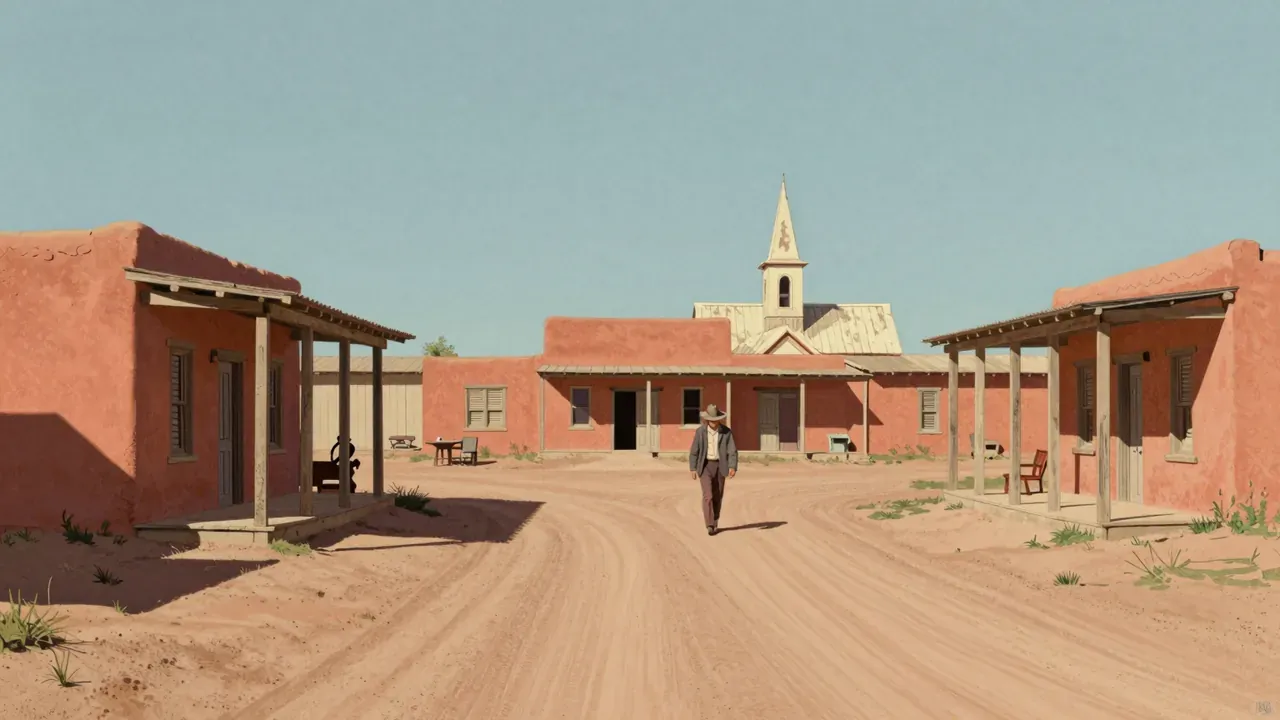
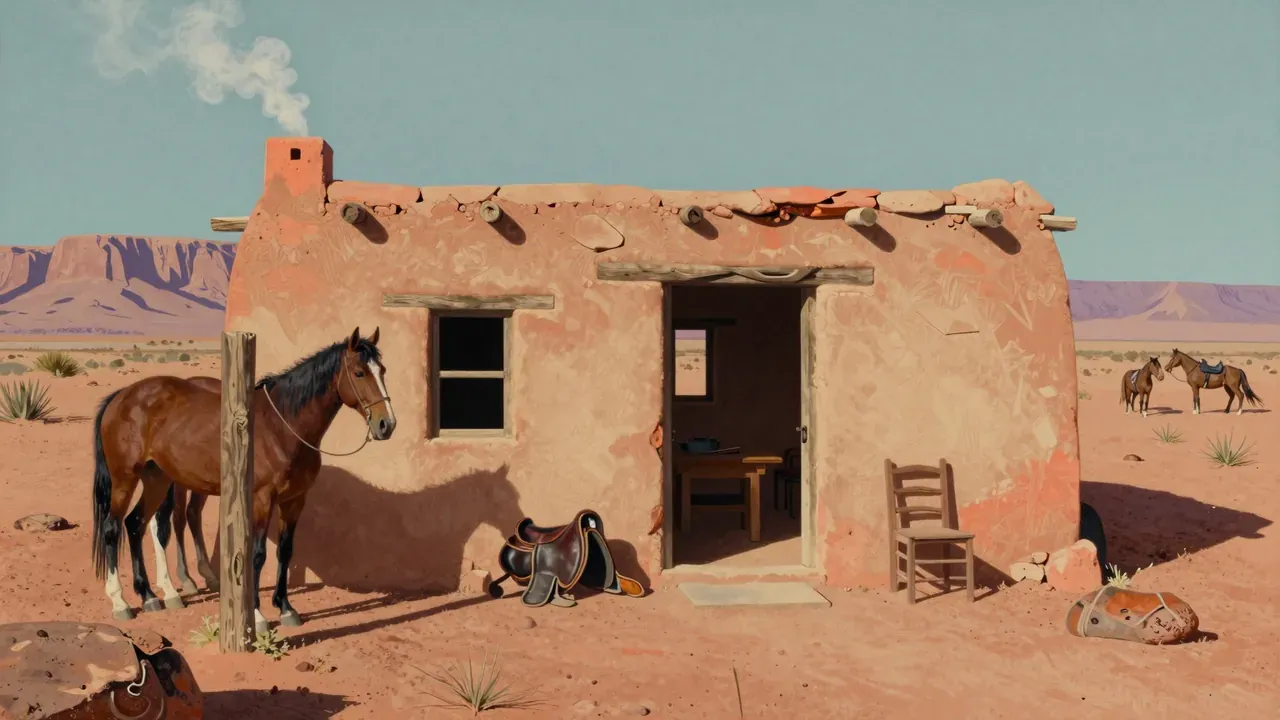
The story moves with the inevitability of a loaded chamber: Pat Brennan’s misfortune begins with a minor miscalculation—accepting a ride, trusting a familiar face—and escalates through a series of choices each man makes under constraint. Randolph Scott plays Brennan with minimal inflection, his stillness calibrated against Richard Boone’s Frank Usher, who radiates weary intelligence and contempt for weakness. Maureen O’Sullivan’s Doretta is neither damsel nor foil; her restraint in early scenes gives way to quiet agency once Brennan names the stakes. Charles Lawton Jr.’s cinematography keeps the desert flat and unromantic, the interiors of the outlaw camp lit with functional harshness. Al Clark’s editing sustains tension without flourish—cuts land where attention must shift, not where music swells. Heinz Eric Roemheld’s score is sparse, often absent, letting silence carry weight. Every craft decision serves the narrowing corridor of possibility: this is a film where a glance, a hesitation, or a hand drifting near a holster carries narrative force.
What lands
What lands is the film’s unwavering commitment to consequence. No character escapes the logic of their decisions: Willard’s cowardice is punished not by plot but by moral erasure; Chink’s impulsiveness gets him killed not in a shootout but because he leaves his post; Frank’s fatal gamble—that Brennan won’t shoot a man walking away—is rooted in his own understanding of honour, which proves both accurate and fatal. The final standoff avoids catharsis; it is procedural, almost bureaucratic, ending not with triumph but with exhausted resolution. Brennan’s embrace of Doretta feels earned not because romance blooms, but because both have survived by choosing clarity over illusion. The film trusts its audience to register subtext in posture: Boone’s slight tilt of the head when sizing up Brennan, O’Sullivan’s slow blink before kissing him, Scott’s deliberate unbuckling of his gun belt before confronting Billy Jack. These are performances that withhold, and therefore persuade.
What does not
What does not land is the film’s occasional reliance on shorthand where nuance would serve better. Henry Silva’s Chink reads as pure id—a volatile, grinning menace—but remains unmoored from motive or history, functioning more as a narrative fuse than a person. Arthur Hunnicutt’s comic relief as the station manager’s son feels tonally dissonant, his folksy warmth jarring against the film’s prevailing austerity. The ranch sequence that opens the film—Brennan losing the bull-riding bet—serves exposition but lacks dramatic weight; it establishes his competence only to immediately undermine it, without clarifying why that reversal matters beyond plot necessity. The ransom note device is efficient but thin: Doretta’s father agrees without question or delay, flattening the economic reality of $50,000 in 1957 Arizona. These are not flaws that derail the film, but moments where economy tips into omission—places where the script chooses speed over texture, and the cost is a slight erosion of credibility in the margins.
What it says
The themes that matter are autonomy, complicity, and the quiet violence of indifference. Brennan begins the film as a man defined by independence—unattached, self-sufficient, operating outside hierarchy—yet finds himself bound first by circumstance, then by responsibility. His moral arc is not about becoming heroic but about refusing to cede judgment to others, even when survival depends on obedience. Frank Usher embodies a parallel inquiry: he recognises Brennan’s integrity not as virtue but as a kind of shared grammar, a refusal to lie to oneself. Doretta’s arc is subtler still—her marriage was an act of surrender to social expectation, and her survival hinges on learning to claim desire without apology. The film treats masculinity not as a set of traits but as a series of tests: Willard fails by outsourcing courage; Chink fails by mistaking aggression for strength; Frank fails by betting his life on another man’s code. What endures is not dominance but discernment—the ability to read a room, a person, a moment, and act accordingly.
Who it is for
This film is for viewers who value precision over pageantry, who find tension in stillness and meaning in restraint. It rewards attention to rhythm, to the weight of a pause, to how light falls across a weathered face. It is not for those who require exposition, emotional signposting, or narrative reassurance—there are no flashbacks to explain motivation, no voiceover to confirm virtue, no music to tell you how to feel. Anyone expecting the mythic sweep of John Ford or the operatic scale of Anthony Mann will find it austere, even withholding. Those who dislike Westerns rooted in psychology rather than landscape may mistake its brevity for thinness. But its compactness is deliberate: every minute is calibrated. A viewer who prefers action to implication, or catharsis to consequence, will leave unsatisfied—not because the film fails, but because its terms are exact and non-negotiable.
Is it worth your evening
Yes, it is worth your evening—provided you watch it whole, without interruption, and accept its terms. At seventy-eight minutes, it asks little time but demands full presence: its power resides in accumulation, not spectacle. It repays rewatching not for hidden clues but for deeper calibration—how Boone’s posture shifts when he realises Brennan has assessed him, how O’Sullivan’s breathing changes just before she kisses him. Those who dismiss it as ‘minor’ Boetticher or ‘lesser’ Scott misunderstand its design: it is not lesser, but leaner—sculpted to a specific function. Anyone who values films that trust silence, reward attention, and treat morality as a series of small, irreversible choices will find it resonant. Those who need louder signals, clearer heroes, or broader strokes will not. Nothing about it would change if it were longer, louder, or more sentimental—it would only weaken.