The look of it
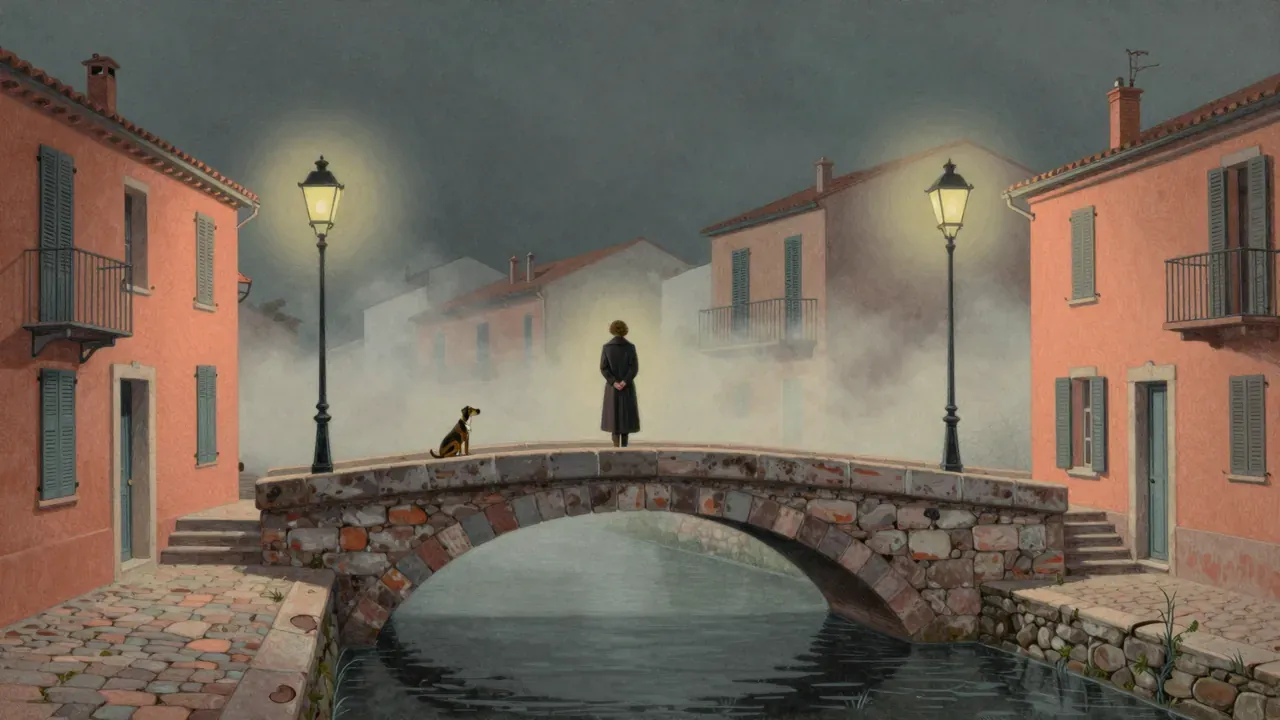
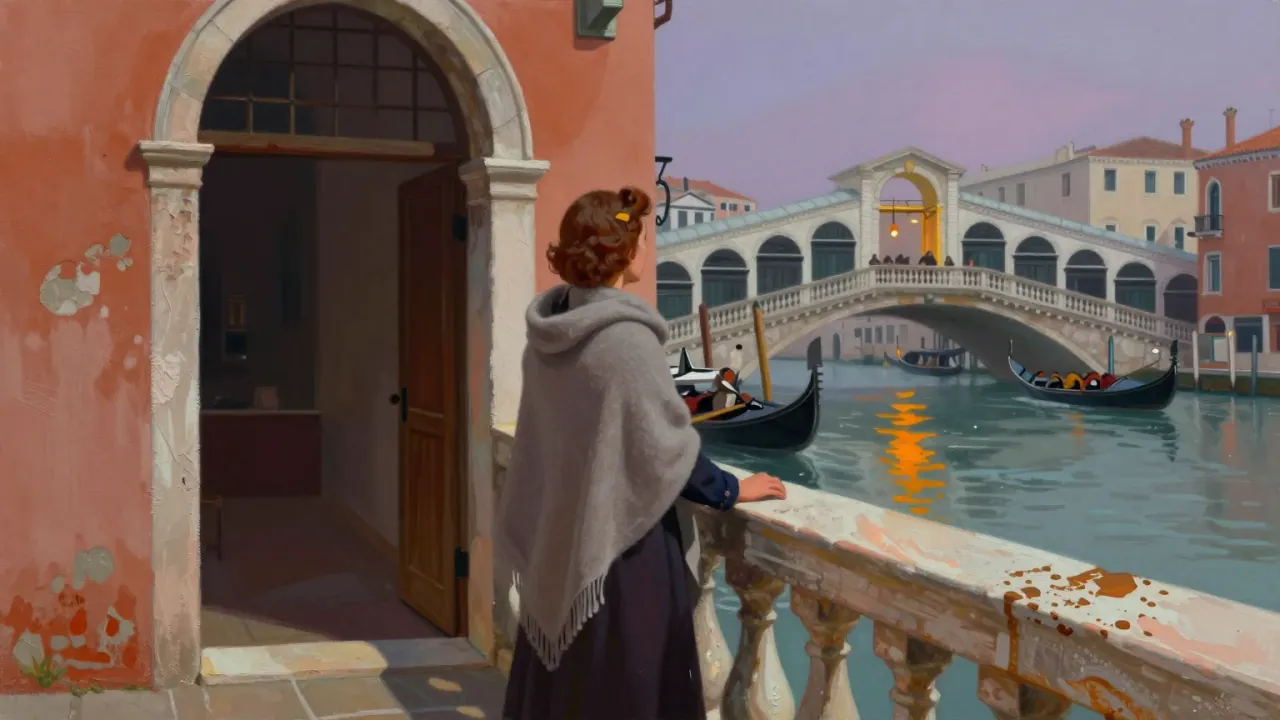
Senso is Luchino Visconti’s first colour film and a deliberate pivot from neorealism into historical melodrama. It adapts Camillo Boito’s 1883 novella not as literary fidelity but as political and psychological amplification: the private diary becomes public spectacle, the Trentine countess relocated to Venice, the war moved from background to structural force. Visconti aims to dissect romantic self-deception through the lens of national betrayal — not as moral failure alone, but as a collapse of sense, where feeling overrides duty, loyalty, and consequence. The film uses the Third Italian War of Independence not for battlefield realism but as a pressure chamber: every gesture, glance, and costume choice tightens the screw on Livia’s descent. Its ambition is formal and ideological in equal measure — to make colour operatic, history intimate, and desire fatal. It treats romance not as genre but as symptom: the fever that clouds judgment, distorts memory, and hollows out agency. This is not love story as escape; it is love story as erosion.
The shape of the story
The narrative follows Livia Serpieri’s affair with Austrian lieutenant Franz Mahler across Venice, Rome, and the Veneto countryside, compressing Boito’s reflective structure into linear, escalating crisis. Alida Valli anchors the film with physical restraint and vocal precision — her stillness speaks louder than Granger’s more gestural, dubbed performance, which leans into theatrical arrogance without fully grounding Franz’s moral vacancy. G.R. Aldo and Robert Krasker’s cinematography (completed by Giuseppe Rotunno) favours saturated, painterly compositions: interiors glow with candlelight and velvet, exteriors shimmer with Venetian haze, battlefields recede into smudged ochre horizons. Marcel Escoffier and Piero Tosi’s costumes define character before dialogue does — Valli’s gowns are armour and cage alike. Nino Rota’s adaptation of Bruckner’s Seventh Symphony gives the film its brooding, unresolved pulse, while Verdi’s Il trovatore opens the film as both cultural marker and ironic counterpoint. Editing by Mario Serandrei sustains rhythm without haste, letting silences linger and glances accrue weight.
What holds
What lands is the film’s unflinching calibration of scale and intimacy: a single close-up of Valli’s hand trembling over a letter carries the same gravity as the off-screen massacre at Custoza. The opera-house opening works precisely because it refuses exposition — politics erupt mid-aria, bodies collide, allegiances fracture in real time. The visual grammar consistently privileges texture over action: the grain of wood panelling, the sheen of wet cobblestones, the fraying edge of a lace cuff. Visconti’s direction holds Livia’s choices without absolution or condescension — her betrayal of the partisans feels inevitable, not foolish. The film’s greatest success is its tonal consistency: every frame, every cut, every musical phrase reinforces the central paradox — that heightened feeling produces diminished perception. Even the reshoot ending, imposed by censors, gains coherence in retrospect: Livia’s final walk through drunken Austrian soldiers is less punishment than culmination, the logical terminus of a world where personal desire has erased collective reality.
What slips
What does not land is Franz Mahler as a credible object of obsession. Farley Granger’s performance, though technically competent, lacks the layered ambiguity the role demands — his charm reads as shallow, his cruelty as unmoored from motive. The dubbing further distances him from emotional authenticity, making his shifts between seducer and sadist feel abrupt rather than gradual. The film’s wartime framing also falters in places: Roberto Ussoni’s rebellion remains schematic, his charisma underserved by script and performance, reducing him to plot function rather than ideological foil. Some transitions between Venice and the villa feel abrupt, sacrificing spatial logic for symbolic contrast. The Bruckner score, while majestic, occasionally overwhelms scene-specific nuance — its grandeur resists intimacy when the script requires it. And though the censorship-mandated ending gains thematic resonance, its staging — reliant on a faceless double — undercuts the very corporeality the film otherwise honours so rigorously.
The weight of feeling
The themes that matter are not love versus duty, but sensation versus cognition: how erotic infatuation disables moral calculus, how nationalism becomes aestheticised backdrop, how class privilege insulates even as it implicates. Visconti treats ‘senso’ as physiological and political — the body’s response to beauty, the mind’s surrender to fantasy, the state’s reliance on affective loyalty. The film interrogates complicity not as conscious choice but as slow attrition: Livia does not betray Italy once, but repeatedly, each small concession — a withheld truth, a diverted glance, a handed-over banknote — narrowing her field of vision until only Franz remains. Colour itself becomes thematic: the reds of uniforms and gowns bleed into one another; gold leaf glints over decay; candlelight obscures more than it reveals. There is no redemption arc, no late awakening — only the quiet horror of recognition arriving too late to alter course. This is a film about the cost of feeling deeply in a world that demands thinking clearly.
Who walks in
This film is for viewers who value compositional discipline over narrative propulsion, who find tension in stillness and meaning in fabric texture, who accept that a romance can be structurally about its own undoing. It rewards attention to costume detail, musical motif, and the weight of a held pause. It is not for those who require psychological exposition, moral clarity, or narrative symmetry — Franz’s motivations remain opaque by design, Livia’s fate unmitigated by catharsis. Those expecting Visconti’s later operatic grandeur may find Senso austere; those seeking neorealist grit will find its colour and artifice alienating. A viewer who dislikes slow-burn psychological disintegration, or who finds period formality emotionally distancing, will leave unreconciled. The film assumes patience as prerequisite, not virtue — its pace is deliberate, its judgements withheld, its endings unresolved. Without that baseline tolerance, its rigour reads as coldness.
What remains after
Yes, it is worth your evening — but only if you approach it as a study in controlled erosion, not a story with resolution. Its 117 minutes accumulate like sediment: each scene deposits a layer of visual, sonic, or behavioural evidence that reconfigures what came before. It repays rewatches not for hidden clues but for deepened perception — noticing how Valli’s posture changes across three separate balcony shots, or how Bruckner’s adagio recurs just as dialogue falls silent. Those who demand forward momentum or emotional payoff will find it withholding; those who trust form to carry meaning will find it exacting and generous. It is not entertainment in the conventional sense, nor is it didactic. Its value lies in its refusal to simplify — a rare thing in any era. To call it ‘slow’ mistakes precision for slowness. To call it ‘cold’ mistakes clarity for indifference.