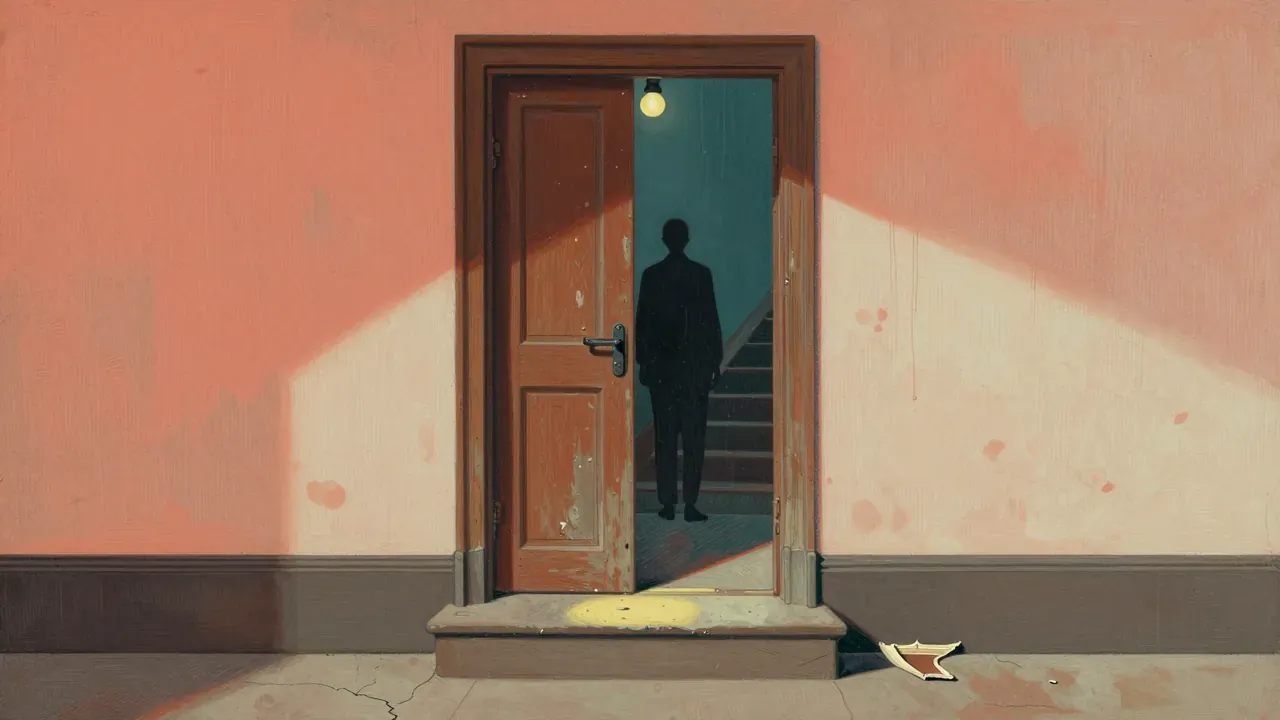
The hiring
The Servant is a tightly wound psychological drama about the erosion of class boundaries through intimacy, dependency, and performance. It adapts Robin Maugham’s 1948 novella with Harold Pinter’s signature economy: no exposition, no moral framing, no interior monologue — only behaviour, silence, and implication. Joseph Losey directs not to illustrate social decay but to stage its mechanics: how power shifts not through revolt or legislation, but through routine, repetition, and the quiet usurpation of domestic space. The film does not ask whether Tony’s downfall is deserved, nor whether Barrett’s ascent is inevitable; it treats both as logical outcomes of a system in which deference is learned, then weaponised, then internalised. Its ambition is structural rather than expositional — to make hierarchy feel tactile, visible in the angle of a glance, the placement of a glass, the duration of a pause. It refuses to locate blame in individuals and instead fixes on the architecture of control: who opens doors, who pours drinks, who decides when the lights go out. Word count: 124.
The infiltration
The story unfolds in three distinct phases — hiring, infiltration, inversion — each marked by a tightening of frame and a lowering of tonal temperature. Dirk Bogarde plays Barrett with stillness that reads first as competence, then calculation, then menace; James Fox’s Tony unravels not with shouting but with slackening posture and delayed reactions. Douglas Slocombe’s cinematography keeps Elstree Studios’ interiors claustrophobic and underlit, using doorways and mirrors to fracture perspective and suggest surveillance even when no one is watching. Reginald Mills’ editing avoids cross-cutting in favour of lingering on aftermath: a dropped cigarette, an unblinking stare, a hand withdrawing from a shoulder. John Dankworth’s score uses Cleo Laine’s voice not for emotion but for dissonance — her repetitions of ‘All Gone’ sound less like lament and more like inventory being taken. Pinter’s dialogue rarely explains; it tests, deflects, and delays. Word count: 137.
The reversal
What lands most decisively is the physical grammar of submission and dominance. Barrett’s early efficiency — the way he folds a napkin, adjusts a cufflink, positions himself just outside the frame — becomes legible as rehearsal, not service. The reversal of roles feels earned because it is shown through accumulation: Tony’s first slurred request for a drink, his second unsteady walk down the stairs, his third failure to recognise Vera’s deception. Wendy Craig’s Susan registers suspicion not through speech but through micro-tensions in her jaw and the way she holds her coat when entering the house. Even minor performances — Patrick Magee’s sardonic guest, Catherine Lacey’s brittle landlady — anchor the world in recognisable British reserve. The film’s coldness is not affectation; it is method. Every gesture serves the central thesis: that class is not inherited, but performed — and that performance, once mastered, can be transferred. Word count: 135.
The doubling
What does not land is the final act’s escalation into outright grotesquerie. Once Tony is reduced to crawling on the floor while prostitutes laugh, the film risks slipping from psychological realism into symbolic caricature. The scene where Susan kisses Barrett — then struggles against his grip — carries emotional logic but lacks spatial clarity; the blocking feels staged for shock rather than consequence. Vera’s reappearance after her departure is narratively convenient but psychologically thin: her motives remain opaque, her agency subsumed by Barrett’s design. Some supporting characters — particularly Richard Vernon’s offhand aristocrat — function more as class signifiers than people. The film’s refusal to explain Barrett’s origins or ambitions works in its favour until the very end, when ambiguity begins to read as omission. A tighter focus on the triangle of Tony, Barrett and Susan would have sharpened the film’s indictment without needing the pub interlude or the final tableau of collapse. Word count: 138.
The service
The themes that matter are not class alone, but the choreography of consent within hierarchy: how willingly Tony surrenders autonomy, how deliberately Barrett engineers that surrender, and how Susan’s intervention fails not because she misreads the situation but because she misreads the terms of engagement. The film treats addiction — to alcohol, to comfort, to illusion — as inseparable from class performance. Tony’s infantilism is not pathological but structural: he has spent his life being waited on, so he knows no other mode of existence when the waiting stops being voluntary. The house itself is the central character: its staircases, its basement, its locked cabinets all map onto social strata. The film also interrogates the myth of English restraint — showing how repression does not prevent violence, but makes it quieter, slower, more difficult to name. There is no explosion, only erosion; no villain, only a man who has learned exactly how much pressure a system can bear before it bends. Word count: 136.
The collapse
This film is for viewers who value precision over pace, implication over explanation, and discomfort over catharsis. It rewards attention to gesture, tone, and spatial relationship — those who watch films primarily for plot momentum or emotional release will find it withholding, even punishing. It is not for those who require moral clarity, narrative closure, or psychological exposition. Some critics at the time praised its subtlety while overlooking its underlying hysteria — a reading that mistakes control for calm. Anyone expecting the warmth or irony of contemporary British social realism will be alienated by its austerity. Those who respond to Brechtian distance or the slow burn of late Ozu may find it deeply resonant. Its demands are formal, not thematic: it asks for patience with silence, trust in composition, and tolerance for endings that settle like dust rather than resolve like chords. Word count: 130.
The exit
Yes, it is worth your evening — but only if you approach it as a study in controlled destabilisation, not as entertainment. Its 114 minutes pass with deliberate weight, not urgency; its rewards arrive in hindsight, not in the moment. It is not a film to watch while distracted, nor one that yields much on first viewing. Those who value craft over comfort, and who accept that some films work by subtraction — stripping away music, exposition, reaction shots — will find it exacting and unforgettable. Others may call it emotionally arid or structurally rigid, and they are not wrong: its rigour is its condition of possibility. A different edit — less reliant on repetition, more attentive to Vera’s subjectivity — might have widened its appeal without diluting its force. As it stands, it remains indispensable, not because it pleases, but because it persists. Word count: 129.