The look of it
Last Summer is Catherine Breillat’s fifteenth feature and her first in ten years — a deliberate, late-career return to the terrain of transgressive intimacy she mapped in Romance and Fat Girl. It remakes the 2019 Danish film Queen of Hearts, shifting its setting from Copenhagen to Paris and its protagonist from a child-protection lawyer to a high-powered criminal defence attorney named Anne. The film sets out not to justify or condemn but to hold steady on the slow, self-deceiving slide of a married woman into an affair with her seventeen-year-old stepson Théo — a relationship that begins with proximity, escalates through misread signals and unspoken permissions, and ends in mutual erosion. Breillat does not treat the dynamic as metaphor or allegory; she treats it as behavioural fact, observed without commentary. Her aim is neither shock nor titillation, but forensic attention to how desire bypasses reason, how power disguises itself as care, and how moral collapse often arrives not with fanfare but with silence, repetition, and the gradual thinning of consequence.
How it holds your eye
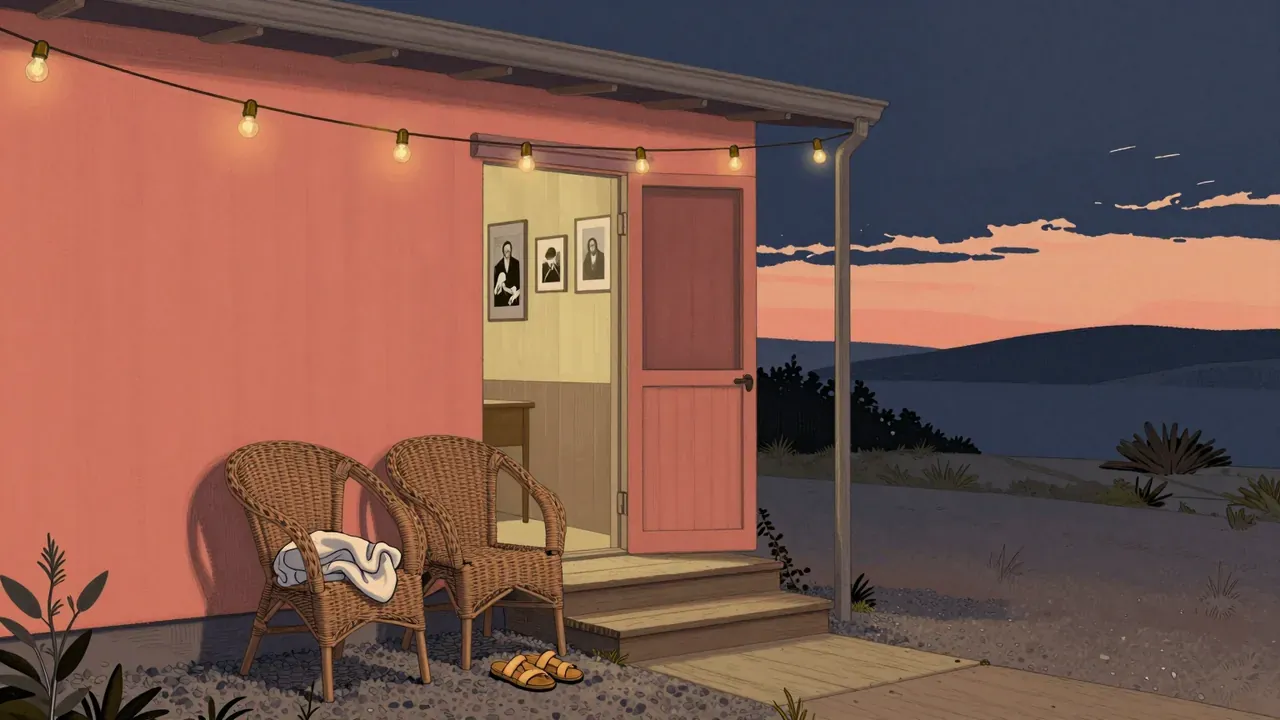
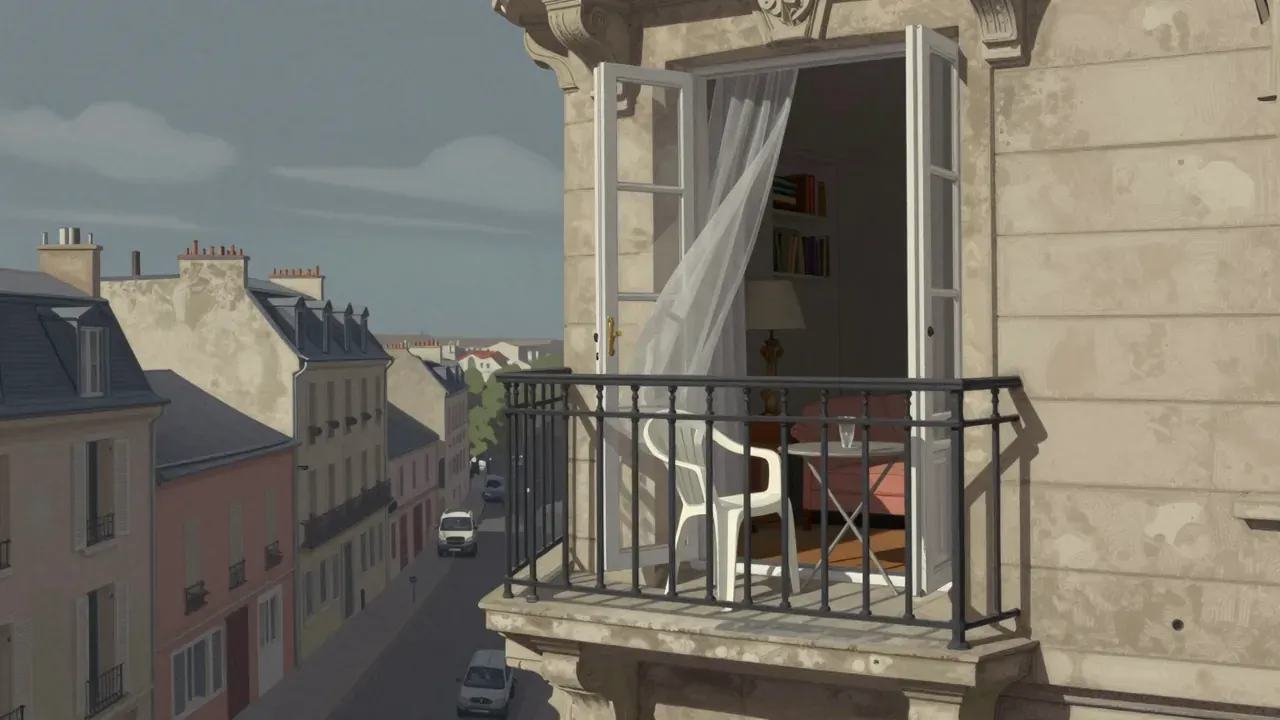
The story unfolds in three acts: arrival, entanglement, unraveling — each paced with the quiet insistence of a legal deposition. Léa Drucker plays Anne with tightly coiled stillness; her face rarely betrays more than fatigue or faint curiosity, even as her choices grow more reckless. Samuel Kircher, in his debut, avoids adolescent posturing: Théo is physically present but emotionally recessive, his vulnerability registered in posture and hesitation rather than dialogue. Jeanne Lapoirie’s cinematography keeps interiors cool and shallow-focus, favouring medium shots that withhold intimacy while insisting on proximity. Francois Quiqueré’s editing sustains tension through duration — lingering on doorways, empty chairs, hands that almost touch — rather than cutting away. Breillat and Pascal Bonitzer’s script gives no exposition about motive; characters speak plainly, often banally, which makes their actions land with greater weight. There are no score swells, no dramatic lighting shifts — just the hum of air conditioning, the clink of cutlery, the muffled sound of children playing upstairs while something irreversible happens downstairs.
What stays quiet
What lands most firmly is the film’s refusal to simplify its central relationship into victimhood or villainy. Anne is neither predatory nor passive; Théo is neither seducer nor prey. Their dynamic holds its shape because the performances and writing resist interpretation — they simply persist, like weather. The domestic texture feels exact: the way Anne folds laundry while listening to Théo talk about school, the way Pierre (Olivier Rabourdin) absentmindedly rubs Anne’s shoulder during dinner, unaware of what has already passed between her and his son. These details accumulate without emphasis, yet they anchor the film’s moral ambiguity in lived habit. The courtroom scenes — brief, procedural, unsensational — reinforce Anne’s professional competence, making her private collapse all the more disquieting. And the final act, though divisive among critics, lands precisely because it refuses catharsis: consequences arrive not as punishment but as quiet erasure — of trust, of role, of self. That restraint, sustained over 104 minutes, is the film’s most persuasive achievement.
Where it slips
What does not land is the third-act pivot toward psychological rupture — specifically, the sudden intensification of Théo’s fragility and Anne’s dissociation. Without prior groundwork in gesture or speech, these developments feel less like escalation and more like narrative necessity imposing itself. The film’s earlier rigour — its commitment to behavioural plausibility — loosens here, trading subtlety for symbolic weight: a broken glass, a missed call, a long walk in rain that seems less earned than assigned. Some viewers will find this shift honest; others will read it as evasion — a retreat from the uncomfortable steadiness of the first two acts into familiar tropes of female breakdown. Samuel Kircher’s performance, while admirably restrained, also suffers in this stretch: his character’s interiority remains opaque in ways that feel intentional early on but unresolved later. The film’s muted palette and hushed tone, so effective at building unease, begin to flatten emotional distinction — making moments meant to sting register instead as indistinct. This is not failure, but a narrowing of register where breadth was needed.
What it’s really about
The themes that matter are not those of taboo alone, but of time, authority, and the architecture of consent within asymmetrical relationships. Breillat treats the stepmother-stepson axis not as inherently erotic, but as structurally unstable — a position where care, control, and attraction blur without warning. Age difference matters less than duration of proximity, professional status matters more than blood ties, and legal competence matters least of all when desire operates outside language. The film interrogates how power accumulates invisibly: in who speaks first, who initiates touch, who decides when a conversation ends. It also examines the gendered weight of consequence — how Anne’s career, marriage, and maternal identity are all contingent on behaviour Théo is permitted to outgrow. There is no grand thesis, only repeated observation: that love and transgression share grammar, that responsibility is not binary but distributed, and that the most dangerous lies are the ones we tell ourselves about our own agency — especially when we are tired, admired, and unwatched.
Who it’s for
This film is for viewers who value precision over propulsion, discomfort over drama, and ambiguity over resolution — particularly those familiar with Breillat’s earlier work or with European arthouse traditions that treat pacing as ethical stance. It rewards patience, attention to physical detail, and tolerance for scenes that do not ‘go anywhere’ except deeper into character habit. It is not for viewers seeking narrative momentum, moral clarity, or psychological explanation — nor for those who require protagonists to be legible as either sympathetic or monstrous. Critics like Peter Bradshaw and Eric Neuhoff found it inert or naive; their verdicts stem from expecting a different kind of film — one with sharper edges, clearer stakes, or more overt provocation. A viewer who dislikes Last Summer would likely prefer Queen of Hearts, whose tighter structure and heightened emotional stakes make its transgression easier to parse. Change the rhythm, sharpen the cause-and-effect, or deepen Théo’s subjectivity — and the film would serve a different audience entirely.
Is it worth your time
Yes, it is worth your evening — but only if you approach it as a study, not a story. Its 104 minutes unfold with the deliberation of a legal transcript, demanding the same kind of attention: slow, attentive, resistant to summary. Those who watch for plot will leave frustrated; those who watch for pattern — how light falls across a face, how silence thickens before a decision, how a glance becomes permission — will find it rigorously absorbing. It is not entertainment in the conventional sense, nor is it didactic. It offers no answers, only a sustained look at what happens when social roles dissolve under sustained proximity and unexamined desire. Its value lies in its refusal to flinch, to explain, or to resolve — qualities that some will mistake for emptiness. To dismiss it as ‘muted’ or ‘tepid’ is to miss its method: Breillat does not shout transgression; she lets it settle, like dust, in the corners of a well-kept apartment.