The place it lives in
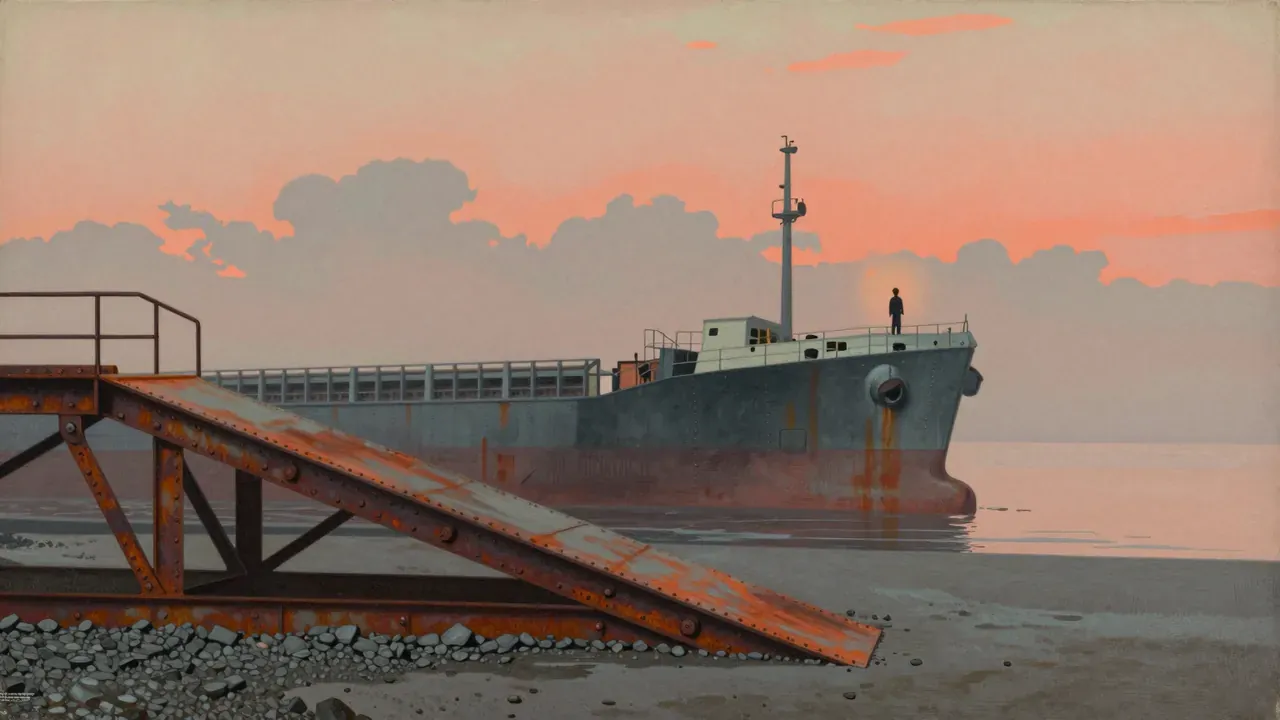
Little Odessa is James Gray’s 1994 debut feature: a Brooklyn-set crime drama centred on Joshua Shapira, a hitman returning to his Soviet Jewish immigrant family in Brighton Beach. It is trying to do two things at once — anchor a genre plot in the textures of a specific diasporic community, and treat familial estrangement as moral terrain rather than psychological backdrop. The film does not ask whether violence is wrong, but how it circulates — from the Russian mafia’s contracts, to Arkady’s beatings, to Irina’s slow dying, to Reuben’s fatal misfire behind a sheet. Gray wrote the script himself, and its structure follows Joshua’s physical re-entry into the neighbourhood: first surveillance, then proximity, then violation, then collapse. There is no voiceover, no exposition about immigration policy or Cold War history — those pressures are ambient, in the Yiddish-inflected English, the cramped apartments, the boarded-up storefronts. The title ‘Little Odessa’ names a place that exists only as rumour and memory; the film tries to make that place materially present, even as it burns.
The pace of it
The story moves with quiet inevitability, paced like a funeral procession — long takes, few cuts, minimal music. Tom Richmond’s cinematography keeps the light low and the grain high: street lamps bleed into fog, interiors are lit by single bulbs, faces half-dissolve into shadow. Tim Roth plays Joshua with stillness rather than menace; his violence arrives without warning, then recedes without commentary. Edward Furlong’s Reuben is less a character than a vessel for accumulated dread — his teenage body registers fear before his mouth does. Maximilian Schell’s Arkady is all clipped consonants and sudden movement; Vanessa Redgrave’s Irina speaks in fragments, her breath audible. There are no set-piece shootouts or chases. A killing happens off-screen; another is witnessed but not understood. The craft avoids emphasis — no close-ups on tears, no slow-motion recoil. Even the furnace scene is shot from a distance, the fire a dull orange glow behind a chain-link fence. This restraint is deliberate: the film treats consequence as cumulative, not climactic.
The weight of it
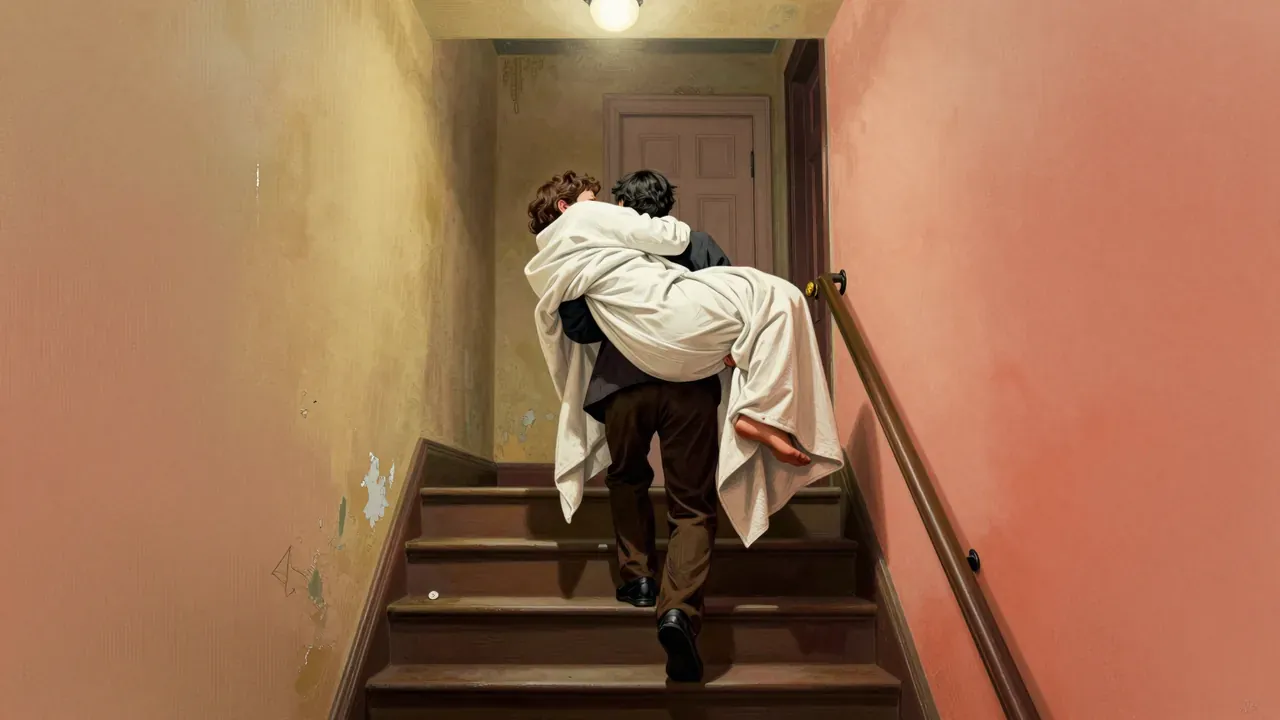
What lands is the weight of silence between people who share a language but not a grammar of care. The scenes where Joshua sits with Irina — her hand on his wrist, her voice fading mid-sentence — carry more emotional density than any confrontation with Arkady. The boardwalk sequence, where Joshua corners Sasha without raising his voice, works because the threat is in posture, not dialogue. The film’s strongest moments are domestic: Moira Kelly’s Alla folding laundry, Natalya Andrejchenko’s Sasha’s mother stirring soup, the grandmother’s birthday party where no one laughs but everyone stays seated. These are not ‘authentic’ set-dressings; they are functional spaces where grief and obligation coexist without resolution. The final image — Joshua carrying Reuben wrapped in the sheet — lands not as tragedy but as ritual: a single act of containment in a world where nothing else holds. That image lingers because it refuses catharsis. It simply is.
The gaps in it
What does not land is the Iranian jeweller subplot: it arrives without context, serves no thematic function beyond supplying a corpse, and vanishes as soon as the body is burned. The character exists only to be killed, and his death does not shift Joshua’s trajectory — he was already committed. Similarly, Boris Volkoff remains a name attached to men in overcoats; his authority is asserted but never dramatised. The film assumes familiarity with Brighton Beach’s social hierarchy, but gives no tools to read it — we see Viktor and Yuri at the garage, but never learn what they owe, or why they comply. Some performances falter under the weight of restraint: Paul Guilfoyle’s Boris feels theatrically broad next to Schell’s tightly wound Arkady. And while the ending is stark, it is also structurally abrupt — Reuben’s death occurs off-camera save for Sasha’s mistaken shot, leaving the emotional pivot unanchored. The film trusts its tone too much, mistaking absence for implication.
The inheritance in it
The themes that matter are inheritance and erasure — not of property or names, but of gesture, silence, and survival tactics. Joshua inherits his father’s violence not as choice but as vocabulary; Reuben inherits his mother’s illness not as biology but as burden. The film treats immigration not as arrival but as suspension: these characters live in Brooklyn but speak Russian at home, mourn in Odessa time zones, bury their dead according to customs no one fully remembers. The furnace is both literal and metaphorical — a place to dispose of evidence, yes, but also where identity goes to be reduced to ash and heat. Even the title ‘Little Odessa’ is a misnomer: there is no Odessa here, only its echo. The film’s moral centre is not Joshua’s guilt, but Irina’s exhaustion — her cancer is the slowest, most certain violence in the film, and the one no one can outwit. Family is not a refuge but a relay station for damage, passed down like a faulty gene.
The demand of it
This is for viewers who value atmosphere over exposition, who can sit with unresolved tension and find meaning in what is withheld. It suits those familiar with Eastern European Jewish diaspora textures — the particular blend of formality and fatigue, the way love is expressed through food or silence. It is not for viewers who need narrative propulsion, clear stakes, or moral signposting. Those expecting a conventional crime thriller will find the pacing inert; those seeking psychological realism may balk at the flat affect of key performances. Anyone requiring closure — emotional, narrative, or thematic — will leave unsatisfied. The film assumes patience as a condition of engagement. Its admirers include Claude Chabrol, whose own work shares its distrust of dramatic emphasis. A viewer who prefers Terrence Malick or early Gus Van Sant over Michael Mann or Martin Scorsese is more likely to respond. Without that baseline tolerance for stillness, the film collapses into gloom.
The end of it
Yes, it is worth your evening — but only if you watch it without expectation of reward. It is not pleasurable in the usual sense: there is no wit, no surprise, no uplift. What it offers instead is coherence — every frame, line, and pause serves the same vision of entrapment. Its ninety-eight minutes accumulate like sediment: small details (a cracked teacup, a dropped spoon, the way Arkady folds his newspaper) gain weight only in retrospect. You will not leave energised, but you may leave recalibrated — aware of how much violence lives in the space between words, how much love persists in the refusal to look away. Those who find this unrewarding are not wrong; the film makes no argument for its own necessity. But for those willing to meet it on its terms — slow, severe, unsentimental — it repays attention with precision. It is not a film to enjoy, but one to inhabit, briefly, like a room you know you must leave.