The footage, held
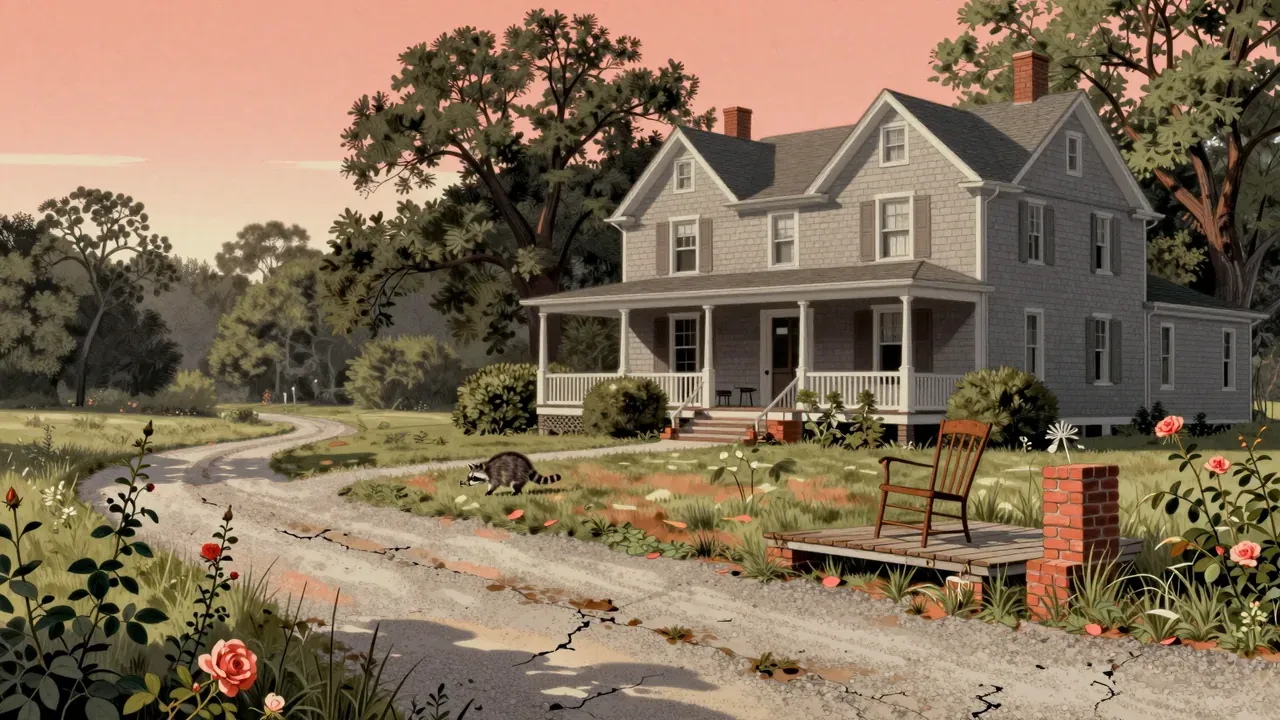
The Beales of Grey Gardens is a documentary assembled from unused footage shot by Albert and David Maysles during the 1973–74 production of Grey Gardens. It does not reinterpret or contextualise the original film but extends its chronology and texture: it shows more of the same days, same rooms, same people — chiefly ‘Big’ Edie and ‘Little’ Edie Beale — in the decaying East Hampton house. Its aim is not exposé or correction but accumulation: to deepen the portrait through repetition, digression and minor incident. It assumes familiarity with the first film, offering no recap, no voiceover, no archival inserts. The material was held for over thirty years before being edited by Ian Markiewicz, and the film’s structure reflects that latency — less a narrative than a slow re-immersion. It treats time as sedimentary: scenes recur, gestures repeat, conversations circle back. This is not a sequel in the conventional sense but a lateral expansion — a second pass through the same terrain with a slightly wider aperture and a longer exposure. (158 words)
The look of it
The film works through unbroken observation: long takes, static framing, minimal intervention. Albert Maysles keeps the interiors dim and grainy, preserving the low-contrast natural light of the Grey Gardens house; David Maysles’ sound recording captures muffled footsteps on warped floorboards and the persistent rustle of cats moving through debris. There is no score beyond diegetic music — fragments of old recordings played on a portable phonograph, including ‘You Oughta Be in Pictures’ and ‘If I Loved You’. Performance is unscripted but highly stylised: ‘Little’ Edie’s costume changes, her theatrical monologues, her negotiations with Jerry the caretaker and Lois Wright all unfold without prompting. Editing avoids emphasis — a fire in the hallway is shown matter-of-factly, not as climax. The camera lingers on pauses, on hands adjusting a hat, on a cat stepping over a pile of newspapers. Craft serves restraint: no interviews are cut short, no reactions are isolated for effect. The rhythm is that of waiting — for someone to speak, to move, to decide what comes next. (159 words)
The rhythm of return
What lands is the quiet persistence of personality under duress. ‘Little’ Edie’s wit remains sharp even when her logic frays; her self-mythologising feels less like delusion than a survival grammar honed over decades. The repeated costume changes — ten times a day, as ‘Big’ Edie liked — become a kind of ritual resistance to entropy, a way of asserting control over a collapsing environment. The presence of the cats, the caretaker Jerry, the friend Lois Wright adds social texture missing from the first film: this is not just mother and daughter in isolation but a fragile, improvised household. The porch interview where ‘Little’ Edie denies schizophrenia carries weight not because it resolves diagnosis but because it insists on agency — a refusal to be named by others’ categories. The fire scene lands not as drama but as explanation: the hole in the wall from Grey Gardens now has a cause, a date, a smell of burnt plaster. These moments do not build to revelation but to recognition — of continuity, of endurance, of how habits hold time together. (156 words)
The weight of repetition
What does not land is the assumption that more footage equals deeper understanding. Without the tight editorial discipline of the 1975 film, the 2006 version risks monotony: extended silences grow inert rather than charged; repetitions of gesture or phrase lose their resonance when detached from narrative pressure. The political asides — about the Republican Party, Catholicism, World War II boyfriends — are delivered without context or follow-up, leaving them as curiosities rather than insights. ‘Little’ Edie’s claim not to have been invited to JFK’s wedding sits uneasily beside her earlier assertions of closeness to the Kennedys, but the film offers no means to reconcile them. The absence of any archival correction or contemporary reflection leaves historical gaps unfilled — we learn nothing new about the 1972 health department raid, the legal settlement, or how the Beales lived after the first film wrapped. Some viewers will find the pacing indulgent, the structure passive, the emotional returns diminishing after the first hour. Those who expect development or resolution will leave unsatisfied. (158 words)
The work of maintenance
The themes that matter are not decay or eccentricity but maintenance: how people sustain identity when external structures collapse. The mansion is falling apart, but ‘Little’ Edie changes costumes; the plumbing fails, but she sings show tunes; the cats multiply, but she names each one. Class is present not as backdrop but as residue — in the faded grandeur of the furniture, in references to VMI and debutante balls, in the unspoken distance between the Beales and the East Hampton establishment that watched them decline. Ageing appears not as decline but as accrual: every anecdote, every costume, every cat adds another layer to a self that refuses simplification. Memory functions not as record but as repertoire — stories are told and retold, adjusted for audience, reshaped for effect. The film quietly challenges pathologising frameworks: the Beales are not case studies but subjects who insist on their own syntax, their own chronology, their own definitions of dignity. Their relationship is neither purely loving nor purely contentious but a long negotiation — one conducted in song, silence, and sudden laughter. (157 words)
The audience it presumes
This film is for those who already know Grey Gardens and want to dwell longer in its world — not to solve its mysteries but to feel its weight and rhythm more fully. It suits viewers comfortable with observational documentary, attuned to subtlety in gesture and tone, and willing to sit with ambiguity. It is not for those seeking exposition, narrative progression or psychological closure. Anyone expecting context — historical, biographical or critical — will find the film withholding. Those put off by the first film’s claustrophobia may find this more so: the frame rarely widens, the timeline rarely advances, the stakes rarely shift. A viewer who values editing as argument rather than archive will likely judge it redundant. What would change the verdict? A commentary track, a brief epilogue, even a single intertitle naming the dates of the unused footage — anything to anchor the material in time or intention. Without that, it remains a beautiful, stubborn echo. (158 words)
The time it asks for
It is worth your evening if you treat it as an extension rather than an alternative — a second movement in the same key. Its value lies in cumulative detail, not revelation: the way ‘Big’ Edie’s laugh sounds different when she’s holding a cat, the precise shade of dust motes in afternoon light, the rhythm of ‘Little’ Edie’s foot tapping under a tattered skirt. It rewards patience, not analysis. Those who watch documentaries for insight into systems — social, political, medical — will find little here. But those drawn to portraiture as an act of sustained attention will find it rich. It is not essential viewing, but it is coherent, respectful and unhurried. To call it ‘unnecessary’ mistakes economy for integrity: some portraits need more than one sitting. The film does not ask for your sympathy or your diagnosis — only your time, and your willingness to look again. (158 words)