The shape of time
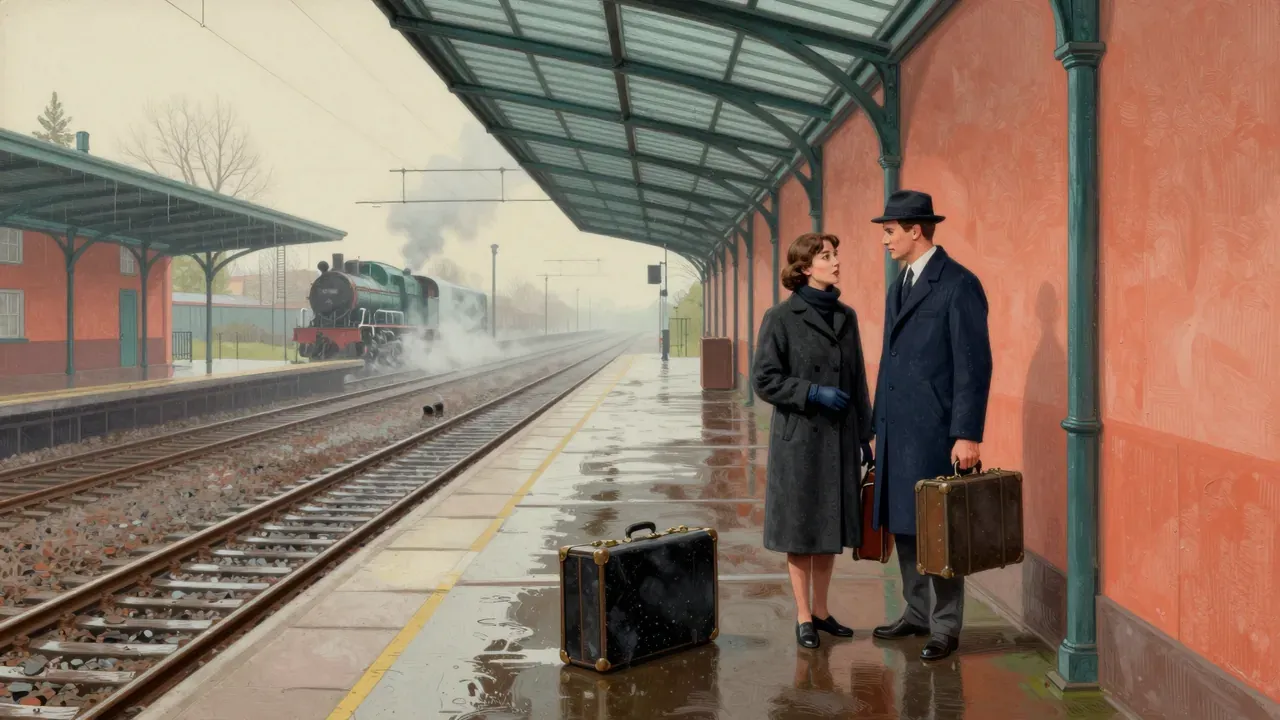
Before Midnight is the third and final chapter in Richard Linklater’s Before trilogy, following Jesse and Céline across nineteen years of intermittent connection and sustained intimacy. It is not a conventional romance but a longitudinal study in real time: a film that treats conversation as action, hesitation as plot, and emotional recalibration as narrative progression. The film attempts something rare — to dramatise the quiet erosion and stubborn persistence of love not through crisis or catastrophe, but through accumulated compromise, unspoken resentments, and the daily friction of shared domestic life. Its ambition lies in fidelity: to the characters’ voices as established over two prior films, to the rhythms of middle-aged thought, and to the particular weight of choices made and deferred. It refuses spectacle, exposition, or backstory beyond what the characters themselves recall aloud. Instead, it trusts that sustained attention to how two people speak, pause, deflect, and return — over dinner, on a walk, in a hotel room — can constitute both drama and revelation. It is a film built on duration, repetition, and variation, not escalation.
The sound of it
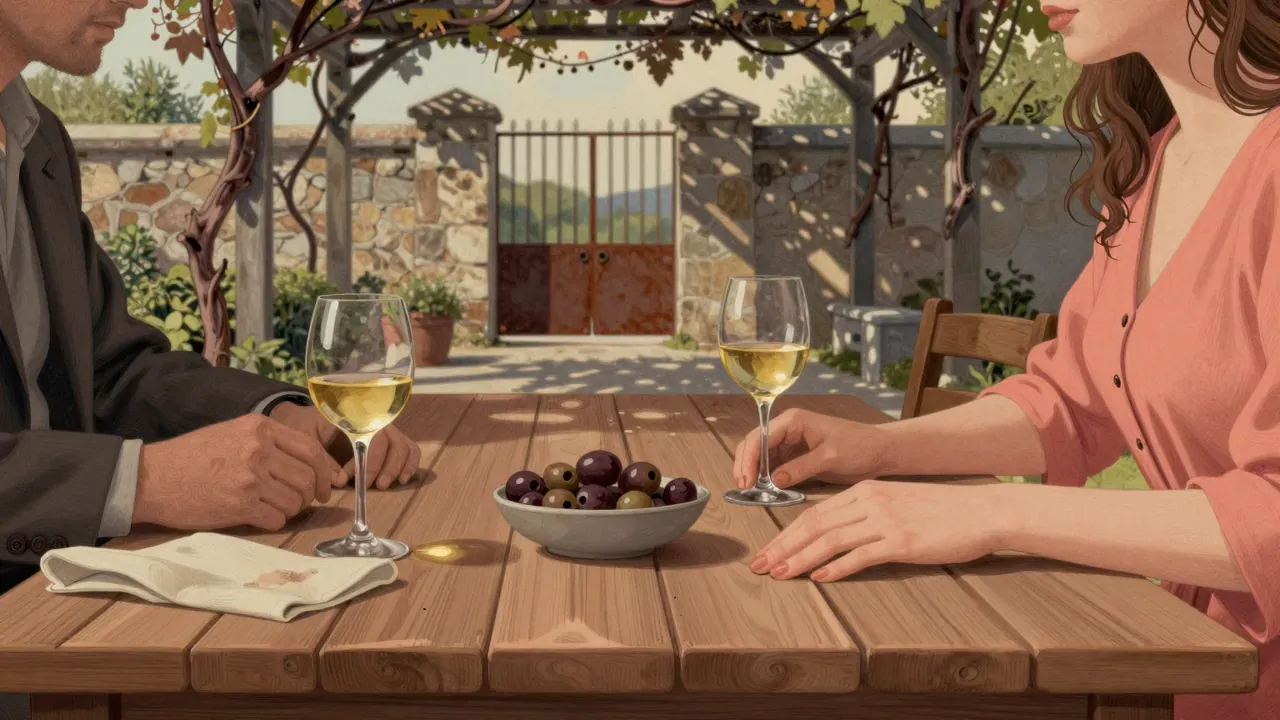
The story unfolds over one day and night in southern Greece, anchored by three extended sequences: a car ride with their twin daughters, a long dinner with friends, and a single-take argument in a hotel room. Performance is inseparable from craft: Hawke and Delpy co-wrote every line and inhabit them with granular specificity — vocal tics, hesitations, shifts in posture, the way exhaustion settles into the jaw. Christos Voudouris’s cinematography avoids flourish; his camera stays close, often static, letting scenes breathe without editorial punctuation. Sandra Adair’s editing sustains rhythm rather than momentum, holding shots just past comfort to register subtext in glances or silences. Graham Reynolds’s score is sparse, appearing only at key transitions, never underlining emotion. There are no supporting performances of note — Ariane Labed and Athina Rachel Tsangari appear briefly as friends, Walter Lassally as a local elder, Seamus Davey-Fitzpatrick as Jesse’s son Hank in a single phone call — all functional, not interpretive. The film’s structure is architectural: each scene layers exposition, character history, and thematic pressure until the final confrontation releases it all without resolution, only recalibration.
The weight of it
What lands most decisively is the authenticity of relational wear and repair. The film captures how love persists not despite contradiction but within it — how affection and irritation, loyalty and resentment, desire and fatigue coexist without cancelling one another out. The hotel-room argument works because it feels earned, not staged: its volatility arises from years of suppressed negotiation, not script-driven provocation. Jesse’s time-travel fantasy at the end lands not as whimsy but as an act of desperate, tender improvisation — a gesture that acknowledges the gap between ideal and real without surrendering either. The dinner scene succeeds in rendering intellectual sparring as emotionally charged, where debates about gender, parenting, and vocation expose fault lines beneath civility. Even minor moments — Jesse finishing the apple while Céline sleeps, her quiet correction of his misremembering of a detail — land with the weight of lived history. These are not performances of feeling but demonstrations of it, calibrated over decades of shared fictional time and nine years of real-world absence.
The look of it
What does not land is the framing device of the Greek setting. Though visually unobtrusive, the Peloponnese backdrop remains functionally inert — scenic but uninflected, offering no thematic counterpoint or cultural texture beyond generic Mediterranean light. The film makes no use of place as character, memory, or metaphor; it could be transposed to Provence or coastal Portugal without structural loss. Similarly, the presence of the twins feels narratively thin: they are heard more than seen, their personalities undefined beyond being convenient catalysts for parental self-scrutiny. The brief appearances of Hank and the friends serve exposition only, never deepening the central dyad. The film’s refusal to dramatise Céline’s professional frustration beyond dialogue leaves her career crossroads abstract rather than urgent. And while the screenplay’s verbal dexterity is undeniable, its reliance on monologue risks monotony — the first twenty minutes contain only two scenes, both talk-heavy, demanding patience that some viewers may not extend. The film assumes investment in these characters that newcomers cannot share, and offers no entry point beyond that assumption.
The heart of it
The themes that matter are the ones the film refuses to resolve: the asymmetry of sacrifice in long-term partnership, the slow accrual of regret alongside devotion, and the difference between loving someone and liking who you become with them. It interrogates time not as a measure of ageing but as a medium for identity drift — how parenthood reshapes ambition, how success hollows out old definitions of self, how grief for lost possibilities coexists with gratitude for what remains. Gender recurs not as polemic but as lived divergence: Jesse’s guilt over absent fatherhood versus Céline’s anger at invisible labour; his belief in narrative redemption versus her suspicion of tidy arcs. The film treats marriage as a continuous act of translation — between languages of need, between versions of the self, between past promises and present capacity. Crucially, it locates hope not in permanence but in repair: the willingness to re-choose, mid-argument, mid-doubt, mid-fatigue. It is less about whether love lasts than about how it bends, cracks, and sometimes, against reason, holds.
The audience for it
This film is for viewers who value dialogue as dramatic substance, who find tension in hesitation and revelation in revision, and who have lived long enough to recognise their own compromises in Jesse and Céline’s. It rewards attention to vocal inflection, pacing, and the weight of what goes unsaid. It is not for those who require plot propulsion, visual invention, or emotional catharsis on demand. Viewers expecting the romantic uplift of Before Sunrise or the wistful urgency of Before Sunset may find this too muted, too unresolved. Those unfamiliar with the prior films will lack context for the shorthand intimacy, the history embedded in a glance or a sigh. Some critics praised its honesty; others found its commitment to realism bordering on austerity. A viewer who values narrative economy over emotional payoff, or who finds prolonged verbal sparring exhausting rather than illuminating, would likely disengage. The film assumes a certain tolerance for ambiguity — and for the idea that understanding someone deeply does not guarantee agreement, let alone peace.
The time of it
Yes, it is worth your evening — provided you arrive prepared to listen, not watch. Its 109 minutes pass with the quiet insistence of real time, neither rushing nor lingering, trusting that the accumulation of small truths matters more than any single climax. It repays attention not with spectacle but with resonance: the shock of hearing your own unspoken thoughts spoken aloud by characters who have aged alongside you, even if only in fiction. Those who dismiss it as ‘just talking’ misunderstand its method — every pause, interruption, and self-correction is choreographed to reveal interiority. It is not entertainment in the transactional sense, but engagement in the durational one. Anyone seeking diversion will leave restless; anyone open to reflection will find it quietly, insistently, unforgettable. Its value lies not in what it gives but in what it returns: recognition, not relief. To miss it is not to miss a story, but a calibration — of time, of love, of what it costs to stay.