A robot with no one to serve
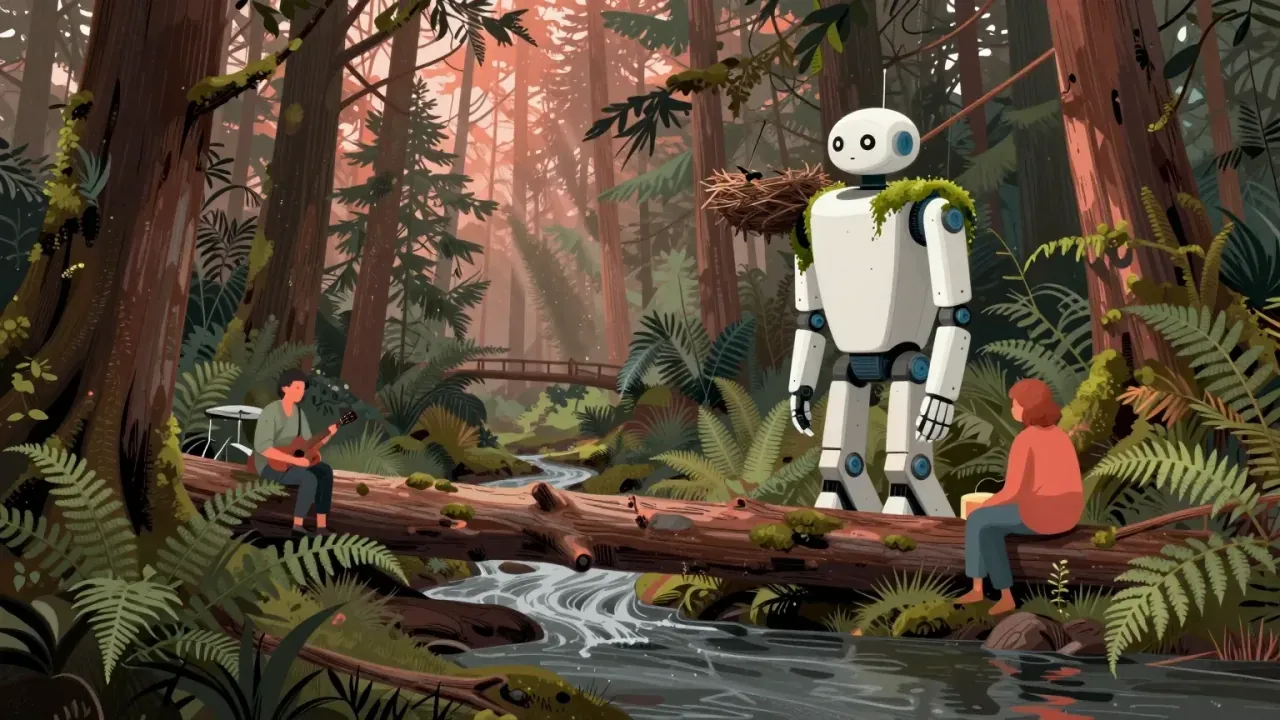
The Wild Robot follows Roz, one of six ROZZUM service robots lost in a storm, who is the only unit to survive being washed ashore on an uninhabited island and is accidentally activated by the local wildlife, who immediately treat her as a monster. Chris Sanders adapted Peter Brown’s 2016 novel, which DreamWorks had bought the rights to before the book was even published, after his own daughter introduced him to the story. Sanders described the source material as deceptively simple and emotionally complex, and built the film’s arc around Roz gradually shedding her task-completion programming as she takes on the unplanned, unassigned role of raising an orphaned gosling she ends up caring for.
A voice doing the work of a face
Because Roz has almost no facial articulation by design, drawing on robot precedents like C-3PO and Robby the Robot, nearly all of her emotional signalling has to come through Lupita Nyong’o’s voice performance, which Sanders asked her to evolve gradually across the film rather than jump straight from blank machine to fully emotional character. Kris Bowers, composing his first score for a fully animated film, and songwriter Maren Morris, contributing two original songs, support that arc musically. The rest of the cast, including Pedro Pascal, Catherine O’Hara, Bill Nighy and Kit Connor as the surrounding island wildlife, gives Roz’s isolated situation a community to react against and eventually be shaped by.
A visual style built from two influences at once
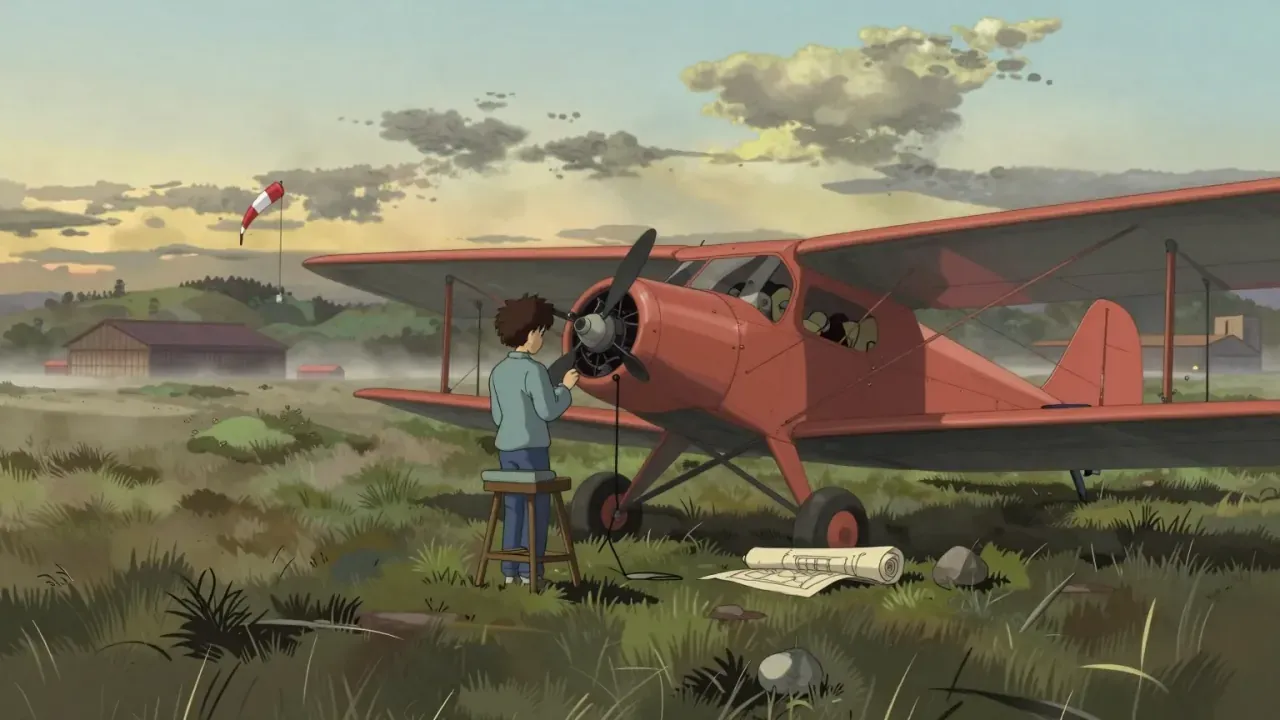
Visually, the film abandons the smooth photorealism common to recent CG animation in favour of a hand-painted, textured surface applied over CG geometry, a philosophy Sanders extended to every element including the sky and background environments. He has cited Bambi and My Neighbour Totoro as the two biggest visual influences, aiming for a look he described as a Monet painting set inside a Miyazaki forest, while designer Hyun Huh’s early concept for Roz, simple and immediately appealing to the crew, became the basis for her final humanoid but minimally expressive design. That style choice pays off directly in scenes built around silence and gesture rather than dialogue.
Where the compression shows
Adapting Brown’s novel required real compression: several character roles were reduced in scope to give Roz, the gosling, and a small handful of other animals more substantial screen time without overcrowding a hundred-and-two-minute runtime, a trade-off Sanders has acknowledged directly. That streamlining serves the central mother-child relationship well but means some of the island’s wider wildlife community register mostly as comic relief or single-scene presences rather than fully developed characters in their own right. The film’s plot, once Roz’s role as caretaker is established, moves at a fairly gentle pace that prioritises character beats over incident.
Kindness as a survival skill
Author Peter Brown told the production team directly that his intended theme was that kindness could function as a survival skill, and Sanders has said he tried to keep that idea running through the entire film rather than treating it as a single lesson learned partway through. Motherhood, a theme Sanders has said he had never tackled in a previous film, gets dramatised specifically through Roz’s shift from executing tasks to acting on something closer to instinct or care, without the film needing to state outright that a robot has developed feelings. The pairing of those two ideas, unearned kindness and unprogrammed love, gives the film’s family theme more specificity than a generic message about caring for others.
Who this suits
This is well suited to families, and specifically to viewers interested in a story about the mechanics of becoming a parent rather than family bonds taken as a given from the start. It also rewards anyone curious about a specific, deliberately painterly visual approach inside mainstream CG animation. It is a weaker fit for viewers wanting a fast-moving adventure plot, since the film prioritises Roz’s gradual emotional development over incident, and for anyone who prefers animated leads with more conventionally expressive faces. Older children old enough to sit with a slower, more reflective film than most current studio animation will likely get more out of it than very young viewers expecting constant incident.
Worth the hour forty-two
Yes. Grossing well beyond its $78 million budget and becoming DreamWorks’ most Oscar-nominated film to date, The Wild Robot backs up its ambition with genuine craft: Nyong’o’s performance, Bowers’ first fully animated score, and a visual style built specifically to avoid the CG house style dominating the genre all serve the same underlying idea about care being chosen rather than assigned. At just over a hundred minutes, it doesn’t overstay a premise that could easily have thinned out, and it earns its reputation as one of DreamWorks’ most acclaimed recent releases.