The shape of separation
Aparajito is the second film in Satyajit Ray’s Apu Trilogy, adapting parts of Bibhutibhushan Banerjee’s novels Pather Panchali and Aparajito. It follows Apu from late childhood into early adulthood, tracing his movement from Varanasi to rural Bengal and finally to Kolkata, against the slow erosion of family life. The film attempts something precise: to chart emotional distance as a structural fact—not as rupture or rebellion, but as quiet, inevitable drift. It treats adolescence not as crisis but as sedimentation: habits form, attachments loosen, grief arrives belatedly and without fanfare. Ray does not dramatise transition; he observes its residue. The film’s ambition lies in its refusal to moralise Apu’s growing detachment from his mother Sarbajaya, or to soften the ambiguity of her death’s effect on him. It seeks no catharsis, only fidelity to a psychological truth that resists sentiment—namely, that love and relief can coexist, and that mourning may follow months after loss. This is not bildungsroman as uplift, but as quiet accounting. (158 words)
The look of it
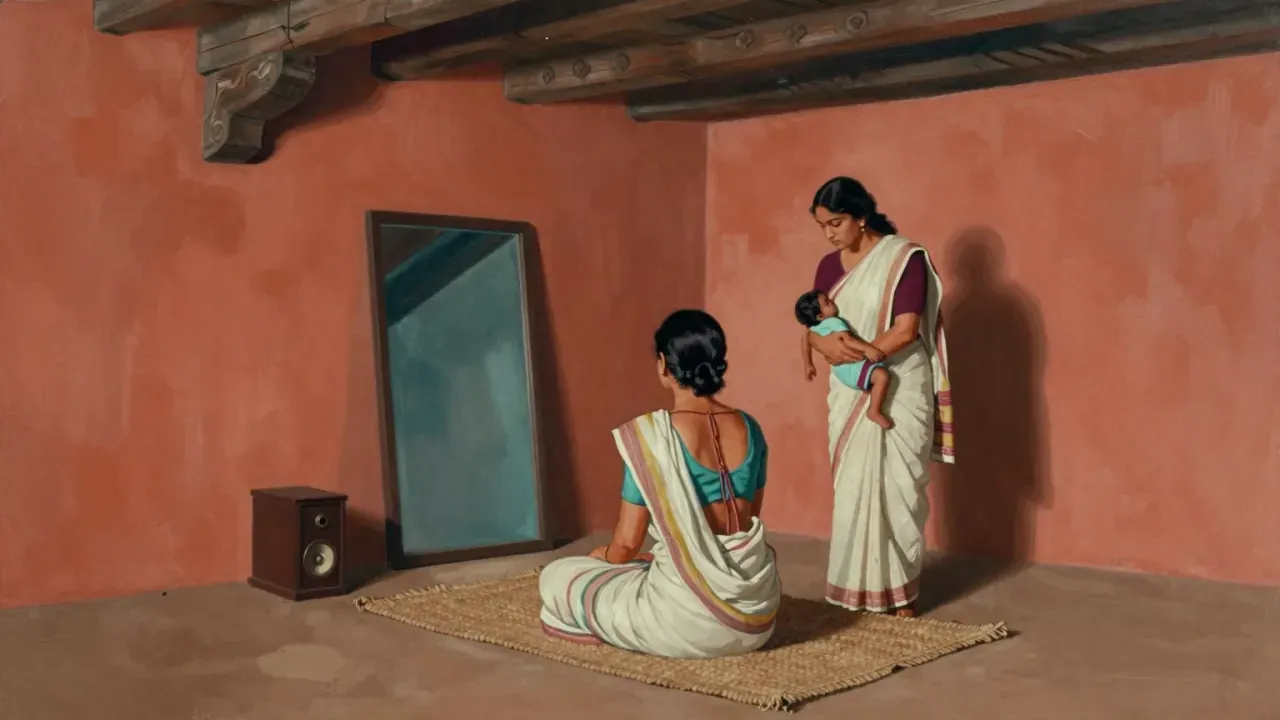
The story unfolds in measured, unemphatic episodes: Harihar’s death, the return to Mansapota, Apu’s schooling, his scholarship, departure for Kolkata, infrequent visits home, Sarbajaya’s illness and death. Smaran Ghosal’s performance as adolescent Apu carries the film—not through expressiveness, but through stillness and withdrawal. Karuna Banerjee’s Sarbajaya is grounded in physical detail: the way she folds cloth, lifts a pot, waits at a doorway. Subrata Mitra’s cinematography avoids contrast; interiors are lit with diffused bounce light, softening edges and flattening hierarchy between subject and setting. Ravi Shankar’s score uses sitar and tabla sparingly, often holding silence longer than melody. Dulal Dutta’s editing sustains duration without emphasis—scenes end before resolution, cuts land without punctuation. There are no close-ups to cue emotion, no music swells to underline sorrow. The craft works by subtraction: removing theatricality, refusing emphasis, trusting the weight of ordinary gesture and unspoken time. (159 words)
What stays after the cut
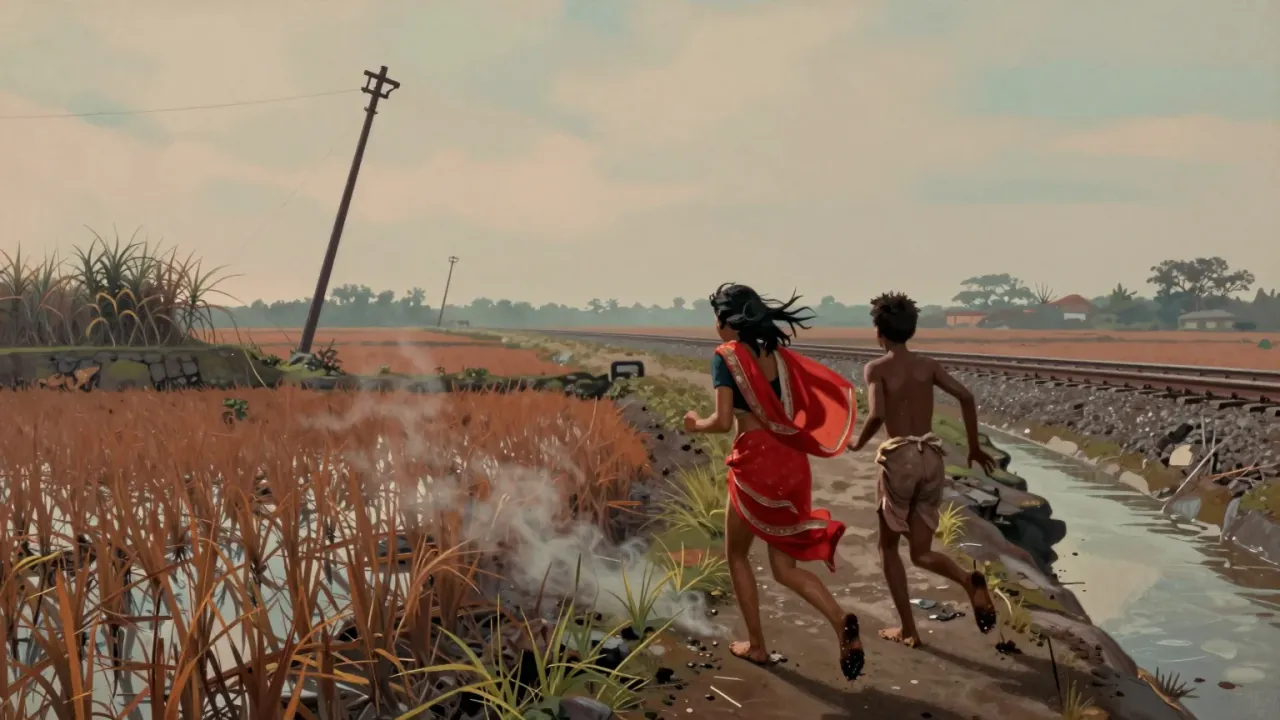
What lands is the cumulative pressure of absence. Apu’s silence when packing his suitcase, Sarbajaya’s hand resting on the train window frame as it pulls away, the empty space beside her on the charpoy where Apu once slept—these register not as moments but as absences made visible. The film’s restraint makes the mother-son relationship legible in negative space: what is withheld, postponed, unsaid. The final sequence—Apu walking alone along the railway line after learning of his mother’s death—is not tragic in the conventional sense, but structurally inevitable, like gravity. Viewers who respond to emotional realism over emotional signposting find this deeply persuasive. The film’s power lies in its refusal to ask for sympathy: it presents grief as delayed, complicated, and entangled with relief, and trusts the audience to hold that contradiction without resolution. That trust is repaid in full. The Golden Lion win was not for exoticism but for formal coherence—the way image, rhythm and silence conspire to make interior life visible. (157 words)
Where the city ends
What does not land is the city itself. Kolkata remains abstract: a place of work and study, never fully inhabited. Without Leela—the character Ray removed from the script—Apu’s attachment to urban life lacks texture. His printing-press job feels functional rather than formative; his friendships undefined. The city exerts pull, but its contours stay vague, its social grain indistinct. This is not negligence but consequence: Ray’s focus stays fixed on the relational axis between Apu and Sarbajaya, and everything else recedes into soft focus. Some viewers expect the metropolis to function as counterpoint or catalyst, as it does in later Indian cinema—but here it serves only as distance made geographical. Also, the film’s pacing assumes patience with stillness; those accustomed to narrative propulsion may read its longueurs as inertia rather than accumulation. The lack of exposition means cultural context—rituals, caste markers, educational hierarchies—goes unnamed, which deepens authenticity for some and creates opacity for others. Neither flaw undermines the core, but both limit accessibility. (156 words)
How time wears down
The themes that matter are filial distance, the asymmetry of sacrifice, and time as erosion rather than progression. The film treats parenthood not as devotion but as labour—physical, emotional, temporal—and shows how that labour becomes invisible once the child moves beyond its radius. It explores how memory rewrites feeling: Apu’s initial relief at his mother’s death is not negated by later regret; both coexist, neither cancelling the other. It questions whether ‘love’ is a state or a practice, and suggests the latter wears thin under repetition and silence. There is no critique of tradition, no indictment of poverty—only attention to how circumstance shapes affect. The film’s most persistent theme is the unreliability of our own emotional chronology: we misread our reactions in real time, and only later grasp their meaning. This is not psychology as diagnosis but as observation—how a boy’s shoulders drop when he hears news, how a woman stops combing her hair, how years pass without ceremony. These are the textures of human duration. (155 words)
Who walks with it
This film is for viewers who accept that emotional weight need not be announced, who find resonance in silence and repetition, and who trust that a glance held two seconds too long can carry more than dialogue. It suits those familiar with slow-cinema conventions or with Bengali literary realism, and those willing to sit with unresolved tension. It is not for viewers who require narrative momentum, clear moral framing, or psychological exposition. Those expecting cultural exposition—explanations of Hindu ritual, colonial education policy, or 1920s Calcutta’s class structure—will find the film withholding. Nor does it serve as entry point to Indian cinema for those unfamiliar with Pather Panchali; its emotional logic presumes continuity. A viewer who finds the first film’s ending emotionally conclusive may feel this one begins where closure should have been. But the verdict holds: its exclusions are deliberate, not deficient. To call it inaccessible is to mistake precision for obscurity. (159 words)
Why it lasts
Yes, it is worth your evening—provided you give it your undivided attention and resist the urge to ‘get’ it quickly. Its value lies not in revelation but in recalibration: it adjusts the viewer’s threshold for emotional significance, teaching attention to what lingers just below emphasis. Those who watch it on a screen while scrolling will miss its architecture—its reliance on duration, on off-screen sound, on the weight of an empty chair. It demands slowness not as aesthetic pose but as ethical condition: to witness without intervening, to grieve without performing. Critics who dismissed it locally in 1956 did so because it refused consolatory cliché; its endurance proves that refusal was its strength. Anyone who believes cinema must explain, uplift or resolve will find it withholding. But for those who accept that some truths arrive only in fragments, over time, and without fanfare—this film repays every minute. (158 words)