A wedding, and a favour economy
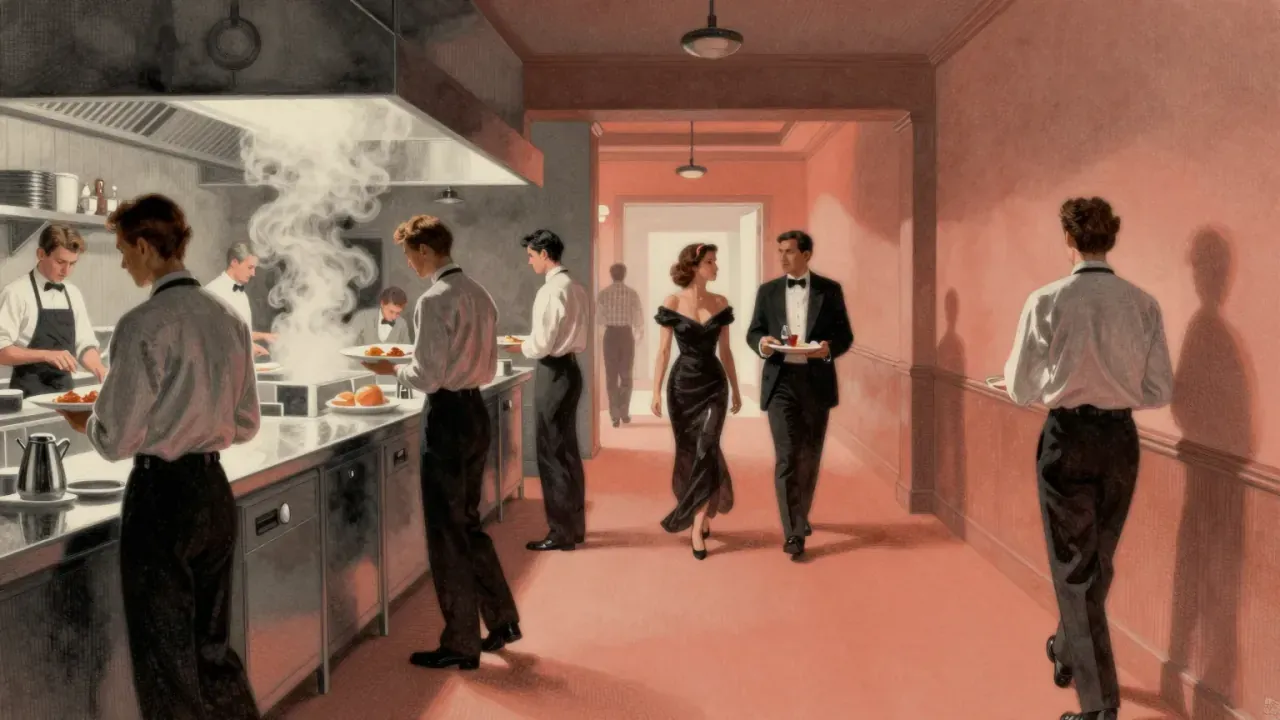
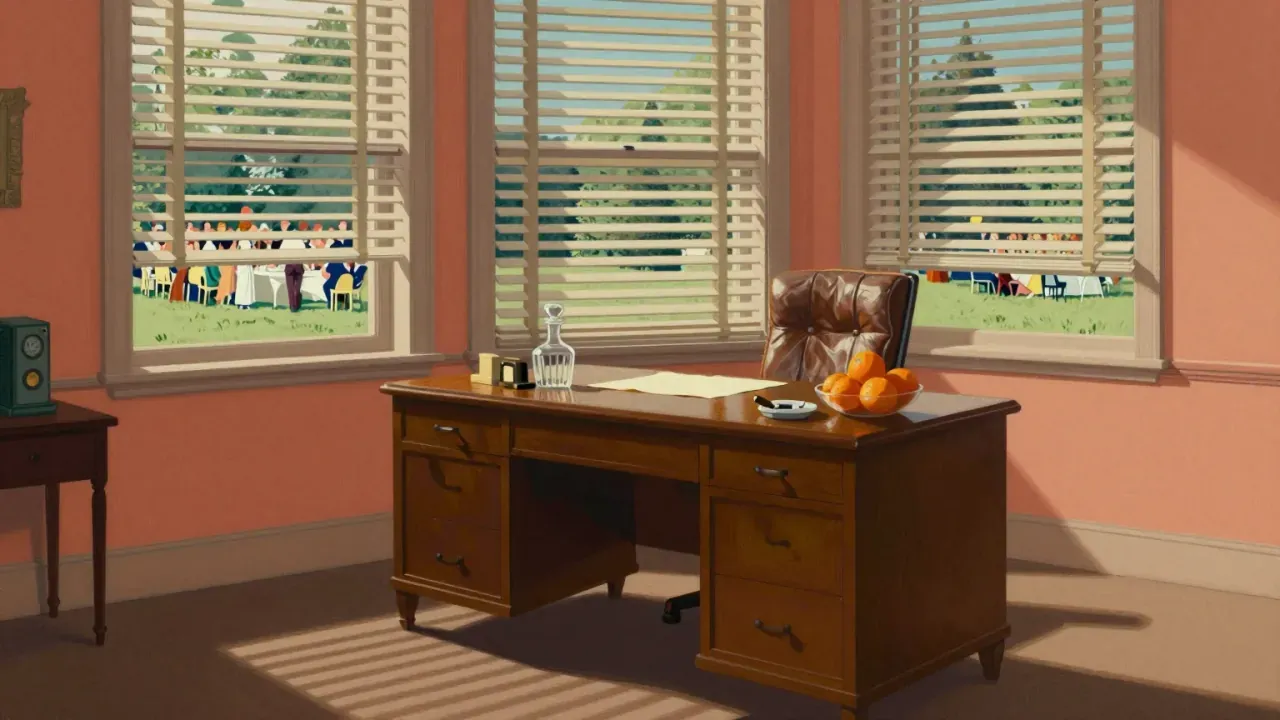
The Godfather opens at the wedding of Connie Corleone, where her father Vito, head of one of New York’s five crime families, spends the day in a darkened study granting favours to men who kneel to ask for them. His youngest son Michael, freshly home from the war and dating an outsider, tells her he wants nothing to do with the family trade. Coppola’s film then spends nearly three hours undoing that sentence, tracking Michael’s slide from bystander to heir as an assassination attempt on his father drags him into the business he swore off. Adapted from Mario Puzo’s novel, it is less interested in crime as spectacle than in succession: who inherits power, what it costs them, and how a family dresses that cost up as loyalty.
Gordon Willis lights rooms from the top
Gordon Willis lights almost every interior from above and behind, letting foreheads and eye sockets fall into shadow so that Brando’s Vito often speaks from something close to darkness, an effect the studio initially resisted as too murky for a commercial picture. Brando, cheeks packed with cotton and voice pitched into a controlled rasp, plays age and menace as a kind of weary courtesy. Pacino builds the opposite performance, starting as the most open-faced man in any scene and closing the film nearly unreadable, his transformation charted through posture and pauses rather than speeches. Nino Rota’s score, built around a wistful trumpet theme, keeps returning under scenes of violence, refusing to separate the family’s tenderness from its business.
Pacino’s stillness against Brando’s rasp
The film’s set pieces are staged with a patience most gangster pictures skip: the christening intercut with a wave of coordinated killings runs on Rota’s organ music and Pacino’s blank face rather than on action, and it is more chilling for the restraint. The dinner-table scenes, filmed in Willis’s low light with long, static takes, let the ensemble’s chemistry carry entire passages without a cut. Brando’s scenes with the actors playing his sons have a lived-in warmth that makes the family’s crimes register as a betrayal of something real rather than an abstraction, and the closing door that shuts Michael’s wife out of his study is one of the most economical endings in American film.
A courtship that the film skips past
The Sicilian interlude, where Michael hides out and marries a local girl, is thin next to everything around it: the romance exists to be erased rather than to register, and her death functions purely as plot mechanics for Michael’s return to New York. Diane Keaton’s Kay is underwritten for most of the runtime, present mainly to register shock at what Michael becomes rather than to shape the story. The film’s moral position on the violence it depicts is also carefully unexamined: every murder is framed by someone on screen as necessary, defensive or owed, and the film’s sympathy for the Corleones means it rarely forces a reckoning with the human cost outside the family circle.
Inheritance dressed as protection
The film’s real subject is inheritance: what a father passes to a son who does not want it, and how the son ends up more ruthless than the man he replaces because he has no illusions left to protect. Family loyalty and criminal enterprise are presented as the same structure wearing different clothes, with Vito’s favours-and-obligations model of power treated as a version of the American way of doing business rather than a deviation from it. New York itself barely appears as a city; it is a network of rooms, offices and back gardens where decisions get made, which suits a story more interested in private power than public life.
Two and a half hours built for patience
It suits anyone drawn to slow-built ensemble drama, actors working at the top of their craft, and a story that treats violence as a consequence of character rather than a source of thrills. Viewers who want the genre’s usual pace of shootouts and chases will find long stretches of negotiation and family dinner between the set pieces. It is not a film for anyone looking for a clear moral compass either, since it asks you to sympathise with a family while it corrupts its most decent member, and offers no character positioned to object. Those willing to sit with that discomfort, rather than have it resolved, get the most out of it.
A long sit that earns its length
At 175 minutes the film asks for a full evening and a bit more, but its pacing is built for that length rather than fighting it, and the performances from Brando, Pacino, Duvall and Caan hold attention scene to scene rather than relying on plot momentum. Its box office return, more than thirty-eight times its budget, and its sweep of that year’s major Oscars reflect an unusually wide agreement, from popular audiences to critics, that rarely holds up decades later, and here it largely still does. It is worth the evening for the performances and the craft alone, independent of its reputation.