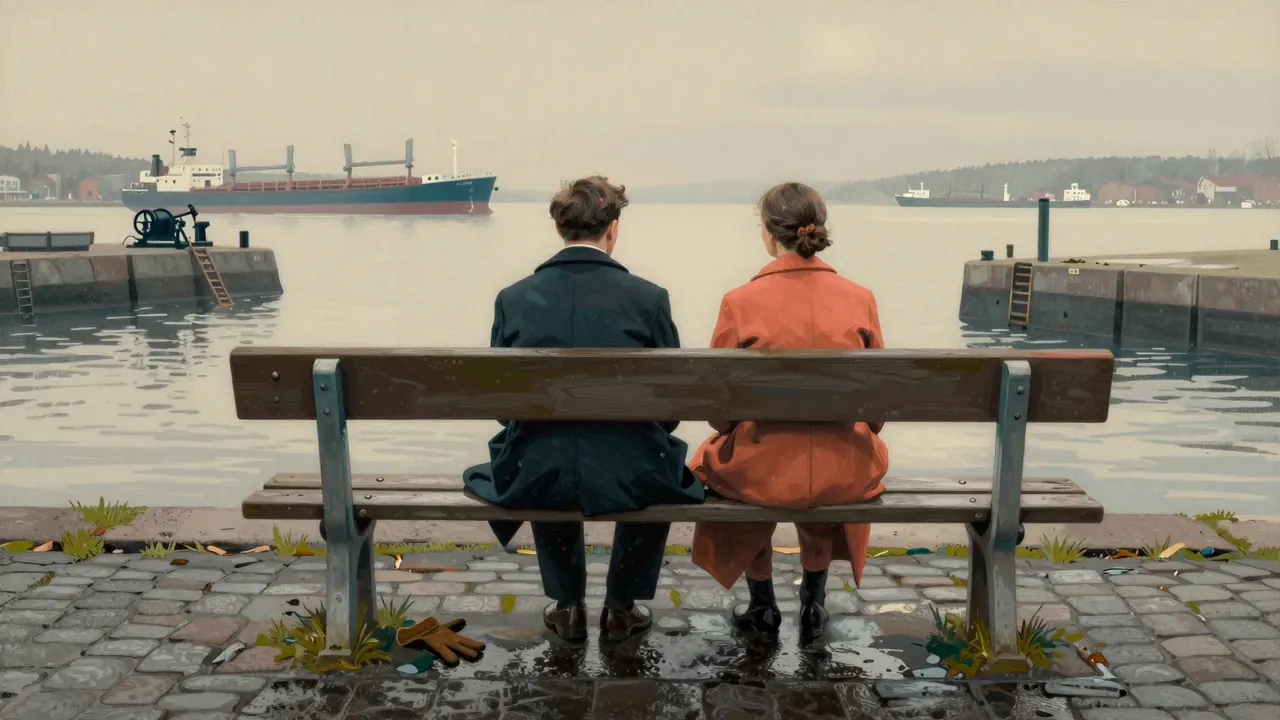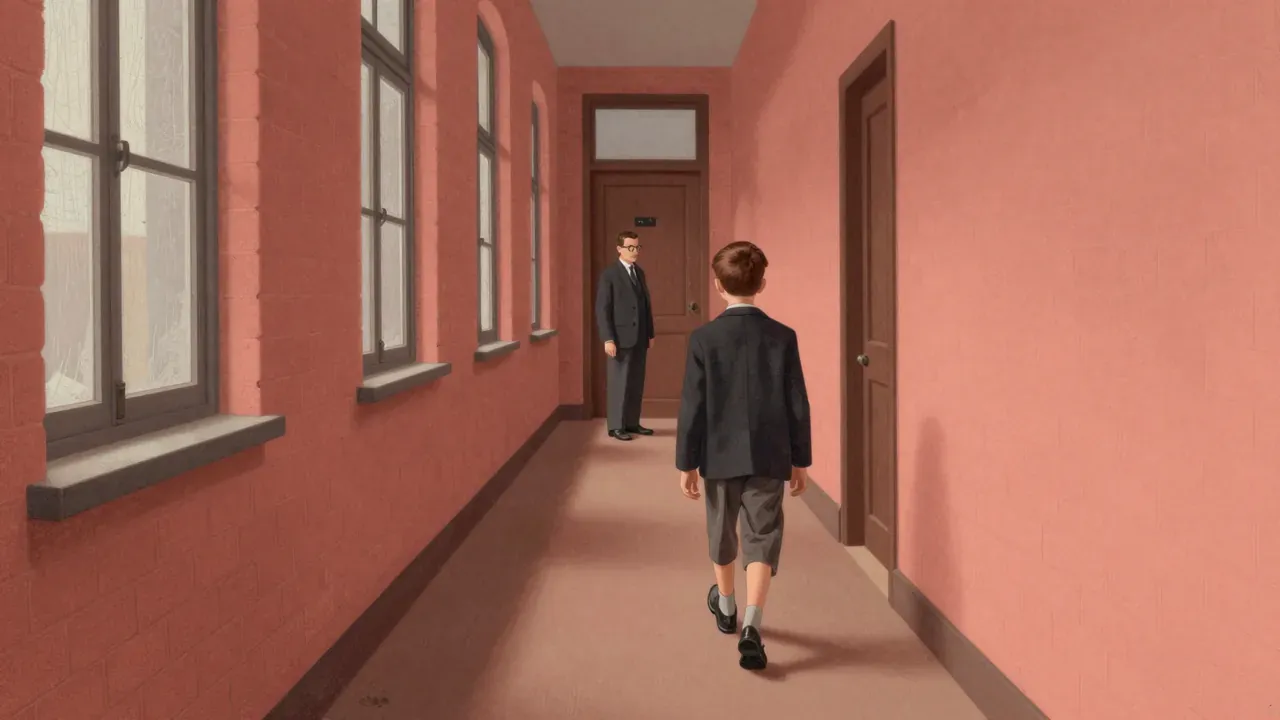
The look of it
The Children Are Watching Us is a 1944 Italian drama directed by Vittorio De Sica, produced by Scalera Film during the final years of Fascist rule and the German occupation of Rome. It is not an overtly political film, but one that locates moral crisis in the domestic sphere: a child’s quiet observation of adult failure. The film attempts to strip away theatricality and sentiment, treating Pricò’s perspective not as innocence but as unmediated witness — his silence more articulate than dialogue. It works within the constraints of wartime production — modest sets, naturalistic lighting, restrained performances — to build a structure where every adult action is measured against the boy’s stillness. There is no narrator, no score commentary, no editorial emphasis; the camera stays at child-height or just above, and Romolo Garroni’s cinematography avoids flourish. This is early neorealism not as manifesto but as method: a refusal to flatter, explain or excuse. It tries, with discipline, to show what happens when adults forget they are being watched — not by God or society, but by the person who depends on them most. (158 words)
The weight of watching
The story follows Pricò, played by six-year-old Luciano De Ambrosis, across three ruptures in family life: his mother Nina’s first departure, their fragile seaside reunion, and her final abandonment. Isa Pola’s Nina is neither villain nor victim but a woman whose desire and weakness coexist without resolution. Adriano Rimoldi’s Roberto is present only as disruption — a handsome intrusion, never fleshed out. Emilio Cigoli’s Andrea conveys despair through posture and silence rather than speech. Garroni’s black-and-white photography uses shallow depth and tight framing indoors, while outdoor scenes retain a muted, overcast clarity. Renzo Rossellini’s score is sparse and tonally neutral — strings enter only at moments of rupture, then recede. The script, co-written by De Sica and Cesare Zavattini, avoids exposition: motivations are implied, not stated; consequences accrue without fanfare. Editing is functional, rarely cutting on action, often holding on faces after lines end. Performances are calibrated to avoid pathos — even the boarding school chancellor (Olinto Cristina) speaks with bureaucratic calm. Nothing is heightened; everything is held at arm’s length, which makes the final image — Pricò walking away from his mother — land not as melodrama but as quiet, irreversible fact. (159 words)
How it holds
What lands is the cumulative weight of Pricò’s gaze. His face registers shifts in tone, gesture, distance — not understanding, but registering. When he watches Nina and Roberto at the hotel dance, his stillness reads as comprehension, not confusion. The film trusts the audience to follow his logic: if she leaves once, then twice, then thrice, the pattern is not betrayal but inevitability. The boarding school sequence works because it treats institutional care as indifferent rather than cruel — the headmaster’s kindness is procedural, not personal. The suicide is withheld: we learn of Andrea’s death second-hand, off-screen, reported with the same flatness as a change in weather. That restraint prevents sensationalism and deepens the sense of collapse as structural, not dramatic. Even the maid Agnese (Giovanna Cigoli), whose presence offers the only consistent warmth, is shown not as saviour but as witness — her comfort accepted not because it fixes anything, but because it does not ask for performance in return. The final walk away from Nina lands because it is the only action the film has prepared us to see as both consequence and agency: a child choosing where his attention goes, and where it will not. Nothing else in the film asks for our sympathy — this moment simply claims our attention. (157 words)
What remains
What does not land is the framing device of adult narration — a voice-over that opens and closes the film, spoken by an unnamed elder reflecting on childhood memory. It adds a layer of retrospective wisdom the rest of the film pointedly avoids, softening the edges of what should feel like a forensic record. The character of Roberto remains underwritten to the point of abstraction: his appeal to Nina is never dramatised, only asserted, making his recurrence feel mechanical rather than inevitable. Some supporting roles — the neighbours, the hotel staff — drift into type: the gossipy aunt (Dina Perbellini), the stern headmaster — figures who serve plot function but lack interiority. The beach interlude, meant to suggest tentative renewal, lacks texture: the holiday feels like a narrative pause rather than lived time, its light and space unexploited for contrast or irony. There is also a slight disjunction between the film’s visual austerity and its literary source (a novel by Cesare Giulio Viola): certain psychological nuances — Nina’s shame, Andrea’s pride — remain inferred rather than embodied. A viewer attuned to gesture might miss the subtlety; a viewer expecting emotional escalation may find the pacing too withholding. It is not that the film fails to move — it is that it refuses to move for you. (156 words)
The measure of failure
The themes that matter are parental failure as witnessed, not judged; childhood as epistemological position rather than developmental stage; and moral accountability as something registered before it is named. The title is literal, not metaphorical: the children are watching, and their watching changes nothing — yet it alters the meaning of every adult act. The film treats love not as bond but as behaviour: Nina’s affection for Pricò is real, but so is her need for Roberto, and the film refuses to rank them. Class is present but unspoken — the apartment, the beach hotel, the boarding school all mark social location without commentary. Grief here is not cathartic but recursive: Andrea’s suicide does not resolve the story but compounds it, turning Pricò’s final silence into inheritance rather than reaction. There is no redemption arc, no lesson learned — only the slow dawning that some absences cannot be filled, only accommodated. The film’s quiet insistence on cause and effect — not motive and meaning — makes it less about psychology than about consequence. Its central question is not why Nina leaves, but what remains in the space she vacates: not just a father’s despair or a son’s loneliness, but the architecture of trust itself, now visibly cracked. (155 words)
Who it is for
This film is for viewers who value precision over persuasion, who find emotional power in restraint, and who accept that a child’s moral clarity may be colder than adult mercy. It rewards patience with accumulation, not revelation. Those who expect narrative propulsion, psychological exposition or redemptive closure will find it withholding — not ambiguous, but exacting. It is not for viewers who require identification with protagonists, since Pricò is observed, not explained, and the adults are presented without authorial forgiveness or condemnation. Nor is it for those who rely on music or editing to cue response: Rossellini’s score enters sparingly, and cuts are functional, not rhythmic. A viewer who values historical context may find its wartime production conditions legible in its textures — the worn fabrics, the dim interiors — but the film makes no direct reference to occupation or fascism. Someone who prefers character-driven intimacy over structural observation may leave feeling distanced. That distance, however, is the point: the film asks not to be felt with, but to be seen through. (152 words)
Time well spent
Yes, it is worth your evening — provided you arrive without expectation of solace or resolution. Its eighty-five minutes pass with the weight of something remembered rather than recounted, and its ending does not release but settles. It repays attention not with reward but with recalibration: after watching, adult gestures feel newly legible, childhood silence newly articulate. Some will argue it is too austere, too uninflected — critics in 1944 found it bleak, and contemporary viewers accustomed to streaming pacing may find its stillness difficult. But its austerity is not emptiness; it is economy. To call it ‘depressing’ mistakes its purpose: it is diagnostic, not therapeutic. It would change its verdict only if you needed the film to affirm that love can fix what it shows as irreparable — and it does not. Its value lies in refusing that comfort. For anyone willing to sit with what is shown, not what is promised, ninety minutes becomes time well spent, not endured. (150 words)